



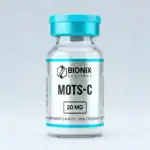

MOTS-c
49,90 € Vial
5% off when paying with cryptocurrency
incl. VAT plus Shipping Costs
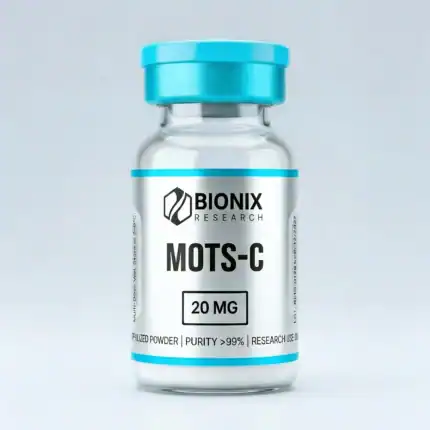
MOTS-c Peptide 20mg – Mitochondrial-Derived Peptide for Metabolic and Longevity Research
- 16-amino acid peptide encoded within mitochondrial 12S rRNA, classified as a “mitokin” that mediates mitochondrial-to-nuclear communication.
- Studies demonstrate AMPK pathway activation, folate metabolism modulation, and nuclear translocation for gene expression regulation.
- Purity ≥99% (HPLC-verified). Supplied as lyophilized powder, 20mg per vial.
- Research applications include metabolic homeostasis, insulin sensitivity, skeletal muscle function, and aging/longevity studies.
- Store at -20°C. For research purposes only. Not intended for human consumption.
| Quantity | Price | Discount |
|---|---|---|
| 11-20 | 42,41 € Vial | 15% |
| 21+ | 39,92 € Vial | 20% |
Delivery time: 1–6 Working Days
MOTS-c Peptide 20mg – Mitochondrial-Derived Signaling Peptide
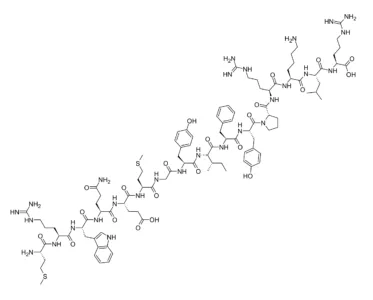
Chemical diagram for MOTS-c source: https://en.wikipedia.org/wiki/MOTS-c#/media/File:MOTS-c_structure.png
KEY SPECIFICATIONS:
| Parameter | Specification |
|---|---|
| Type | Mitochondrial-Derived Peptide (MDP) |
| Origin | Encoded within mitochondrial 12S rRNA |
| Target | AMP-activated Protein Kinase (AMPK) |
| Sequence | Met-Arg-Trp-Gln-Glu-Met-Gly-Tyr-Ile-Phe-Tyr-Pro-Arg-Lys-Leu-Arg |
| Molecular Formula | C₁₀₁H₁₅₂N₂₈O₂₂S₂ |
| Molecular Weight | 2,174.6 Da |
| CAS Number | 1627580-64-6 |
| Length | 16 amino acids |
| Classification | Mitokin (mitochondrial-secreted signaling molecule) |
| Purity | ≥99% (HPLC) |
| Form | Lyophilized white powder |
| Storage | -20°C |
| Quantity | 20mg |
PRODUCT OVERVIEW:
MOTS-c (Mitochondrial Open Reading Frame of the 12S rRNA-c) is a 16-amino-acid mitochondrial-derived peptide encoded within the mitochondrial genome rather than nuclear DNA. Consequently, it represents a unique class of signaling molecules that operate through distinct cellular mechanisms.
As a “mitokin,” this peptide functions as an intercellular signaling molecule coordinating systemic energy metabolism through AMPK activation and nuclear translocation under metabolic stress. Moreover, recent 2024-2025 studies identified casein kinase 2 (CK2) as the specific binding partner in skeletal muscle, revealing direct protein-protein interactions underlying exercise-mimetic effects. Additionally, research demonstrates that MOTS-c levels decline with age, correlating with metabolic health parameters. Furthermore, genetic studies link specific polymorphisms to exceptional longevity in Japanese centenarian populations. BIONIX supplies MOTS-c with ≥99% HPLC-verified purity for metabolic signaling and mitochondrial-nuclear communication research.
MECHANISM OF ACTION:
MOTS-c operates through unique mitochondrial-to-nuclear communication pathways, thereby distinguishing it from nuclear-encoded signaling peptides.
Mitochondrial-Derived Peptide Classification
MOTS-c belongs to an emerging class of mitochondrially-encoded bioactive peptides. Therefore, understanding its classification relative to other MDPs is essential for research design:
| MDP | Gene Origin | Length | Primary Function | Research Status |
|---|---|---|---|---|
| MOTS-c | 12S rRNA | 16 aa | AMPK activation, metabolic regulation | Active (CK2 binding 2024) |
| Humanin | 16S rRNA | 24 aa | Cytoprotection, anti-apoptotic | Clinical investigation |
| SHLP1-6 | 16S rRNA | 20-38 aa | Metabolic, protective effects | Preclinical research |
Unique Features: Unlike nuclear-encoded proteins, MOTS-c is translated from mitochondrial rRNA genes. Additionally, it is released under metabolic stress, capable of nuclear translocation, and functions as a systemic “mitokin” signaling molecule. As a result, researchers gain a unique tool for studying inter-organelle communication and metabolic coordination.
AMPK Signaling Pathway
MOTS-c activates AMPK through multiple mechanisms, thus creating exercise-like metabolic effects:
| Signaling Step | Mechanism | Metabolic Effect |
|---|---|---|
| MOTS-c secretion | Mitochondrial release under stress | Systemic signaling initiated |
| CK2 binding (2024) | Direct protein-protein interaction in skeletal muscle | Exercise-mimetic activation |
| AMPK activation | α/β/γ subunit phosphorylation | Master metabolic switch engaged |
| Downstream targets | Multi-pathway regulation | Energy homeostasis achieved |
Downstream AMPK Effects:
| Target Pathway | Effect | Research Application |
|---|---|---|
| Glucose uptake | Enhanced | Insulin-independent glucose metabolism |
| Fatty acid oxidation | Increased | Enhanced fat utilization models |
| Mitochondrial biogenesis | Stimulated | Citrate synthase activity research |
| Myostatin inhibition | Downregulated | Muscle growth preservation studies |
| mTOR signaling | Inhibited | Energy conservation mechanisms |
| Autophagy | Enhanced | Cellular quality control research |
CK2 Binding Discovery (2024)
A 2024 breakthrough identified the direct molecular target of MOTS-c in skeletal muscle. Specifically, this discovery revealed:
| Aspect | Finding | Research Significance |
|---|---|---|
| Binding partner | Casein kinase 2 (CK2) | First direct protein target identified |
| Tissue localization | Skeletal muscle | Exercise-mimetic effects mechanism |
| Downstream effect | AMPK activation | Metabolic enhancement pathway |
| Functional outcome | Physical performance | Endurance and muscle function models |
Importantly, this discovery provides mechanistic clarity for exercise-mimetic research applications.
Nuclear Translocation Capability
A distinctive feature of MOTS-c is its ability to translocate to the nucleus under metabolic stress. Consequently, researchers can investigate:
| Stress Condition | MOTS-c Response | Nuclear Effect |
|---|---|---|
| Metabolic stress | Nuclear import | Gene expression modulation |
| Exercise | Enhanced translocation | Stress response gene activation |
| Oxidative stress | Nuclear localization | Protective gene upregulation |
Gene Expression Modulation:
- Energy homeostasis genes
- Stress response pathways
- Mitochondrial biogenesis factors
- Furthermore, anti-inflammatory mediators
Folate Metabolism Modulation
Moreover, MOTS-c uniquely influences one-carbon metabolism, sharing metabolic signatures with metformin:
| Metabolic Pathway | MOTS-c Effect | Functional Consequence |
|---|---|---|
| Folate cycle | Modulation | Altered purine synthesis capacity |
| Methionine cycle | Regulation | Methylation pattern changes |
| Purine metabolism | Influence | Nucleotide balance modification |
| Acylcarnitine metabolism | Modulation | Fatty acid processing effects |
RESEARCH APPLICATIONS:
Metabolic Syndrome and Insulin Resistance
Investigation of glucose homeostasis restoration, insulin sensitivity improvement, and insulin-independent glucose uptake in skeletal muscle represents primary applications. Additionally, researchers examine metabolic flexibility enhancement and pancreatic islet protection. Furthermore, 2024-2025 studies demonstrate effective delay of weight gain in diabetic models. Consequently, researchers can investigate prevention of pancreatic islet senescence and potential mechanisms for diabetes onset delay.
Skeletal Muscle and Exercise Mimetic Research
MOTS-c functions as a potential “exercise mimetic” through AMPK activation similar to physical exercise. Therefore, research applications include physical performance and endurance studies, myostatin inhibition analysis, and muscle mass preservation in atrophy models. Moreover, human studies correlate higher serum MOTS-c levels with greater muscle mass and improved functional performance. As a result, researchers gain insights into muscle-boosting research pathways.
Aging and Longevity Studies
Investigation of age-related MOTS-c decline, cellular senescence prevention, and metabolic rejuvenation represents expanding research areas. Furthermore, population studies identified a specific polymorphism associated with exceptional longevity in Japanese centenarian populations. Consequently, researchers can investigate genetic determinants of healthy aging and mitochondrial-derived peptide contributions to longevity.
Mitochondrial Function and Biogenesis
Models analyzing mitochondrial-nuclear communication, citrate synthase activity, and respiratory function restoration provide fundamental research applications. Additionally, researchers examine ATP synthesis efficiency and mitochondrial content assessment. Furthermore, applications include diabetic cardiomyopathy models, aged tissue preparations, and metabolically stressed cell systems. Therefore, MOTS-c enables comprehensive mitochondrial research across multiple disease models.
Cardiac and Metabolic Tissue Protection
2024-2025 research demonstrates restored mitochondrial function in diabetic cardiac tissue models. Specifically, AMPK-mediated pathways show significant tissue-protective effects. Consequently, researchers can investigate tissue-specific metabolic rescue mechanisms and inter-organ metabolic communication.
Additional Emerging Areas
Moreover, researchers explore inflammation research (pain relief, cytokine modulation), fertility studies (spermatogenesis protection via SLC7A11/ferroptosis pathway), immune enhancement (macrophage function), and neuroprotection (cognitive function). However, all applications remain strictly limited to controlled laboratory environments.
ANALYTICAL VERIFICATION:
BIONIX MOTS-c undergoes comprehensive analytical characterization. Specifically, each batch includes:
• HPLC Analysis: ≥99% purity confirmation via optimized gradient chromatography for 16-amino-acid peptide (2,174.6 Da)
• Mass Spectrometry: Electrospray ionization (ESI) for molecular weight confirmation and sequence verification
• Sequence Verification: Full 16-amino-acid confirmation
• Amino Acid Composition: Quantitative analysis validating content
• Furthermore, Endotoxin Testing via LAL assay for laboratory quality assurance
Physical Characteristics:
| Property | Specification |
|---|---|
| Appearance | White to off-white lyophilized powder |
| Molecular Weight | 2,174.6 Da |
| Sequence | MRWQEMGYIFYPKLR (16 aa) |
| Key Features | N-terminal Met, aromatic cluster (Trp, Tyr, Phe), C-terminal Arg-rich |
| Purity | ≥99% (HPLC-verified) |
| Solubility | Water soluble |
| Storage Stability | Lyophilized form highly stable |
DEVELOPMENT STATUS:
MOTS-c represents an emerging research compound in the mitochondrial-derived peptide category. Specifically:
• Discovery: 2015 (Lee et al., Cell Metabolism)
• Gene Origin: Mitochondrial 12S rRNA (unique among signaling peptides)
• Mechanism Clarity: 2024 CK2 binding discovery provided direct protein target identification
• Clinical Status: Preclinical/early clinical research; not approved for therapeutic use
• Furthermore, Regulatory Note: Research compound status; not for human administration
• Research Status: Active investigation in metabolic, aging, and exercise physiology domains
• Availability: BIONIX supplies exclusively for controlled laboratory research
Consequently, BIONIX MOTS-c is intended exclusively for in vitro and in vivo research applications in laboratory settings.
FREQUENTLY ENCOUNTERED INQUIRIES:
What is MOTS-c and what makes it unique? MOTS-c is a 16-amino-acid mitochondrial-derived peptide encoded within the mitochondrial 12S rRNA gene. Therefore, it represents a rare example of non-nuclear genetic encoding. Functioning as a “mitokin,” MOTS-c coordinates systemic metabolism through AMPK activation and nuclear translocation. Moreover, recent 2024 discoveries identified casein kinase 2 (CK2) as its specific binding partner in skeletal muscle. Additionally, genetic studies link MOTS-c polymorphisms to exceptional longevity in Japanese centenarians.
How does MOTS-c function as an exercise mimetic? MOTS-c activates AMPK pathways similar to physical exercise, thus earning classification as an “exercise mimetic.” Specifically, the 2024 CK2 binding discovery in skeletal muscle revealed the direct molecular mechanism. Furthermore, research demonstrates improved physical performance, endurance enhancement, and myostatin inhibition. Consequently, studies correlate higher serum MOTS-c levels with greater muscle mass in human subjects.
What are the primary research applications? Laboratory research focuses on metabolic syndrome and insulin resistance, skeletal muscle biology, aging and longevity, mitochondrial function, and tissue-specific protection. Therefore, the AMPK activation pathway makes MOTS-c central to cellular energy balance investigations across diverse research domains.
What storage conditions maintain MOTS-c stability? Lyophilized powder requires -20°C storage for long-term stability (24+ months). However, room temperature is sufficient for shipping. Furthermore, after reconstitution with bacteriostatic water, store at 2-8°C and use within 2-4 weeks. Importantly, avoid repeated freeze-thaw cycles and protect from light at all stages.
How does MOTS-c compare to Humanin and other mitochondrial-derived peptides? While both MOTS-c and Humanin originate from mitochondrial rRNA genes, they exhibit distinct functions. Specifically, MOTS-c (12S rRNA, 16 aa) activates AMPK for metabolic regulation, whereas Humanin (16S rRNA, 24 aa) focuses on cytoprotection. Additionally, SHLP1-6 peptides represent further mitochondrial-derived signaling molecules with varying functions. Consequently, MOTS-c’s nuclear translocation provides unique research differentiation.
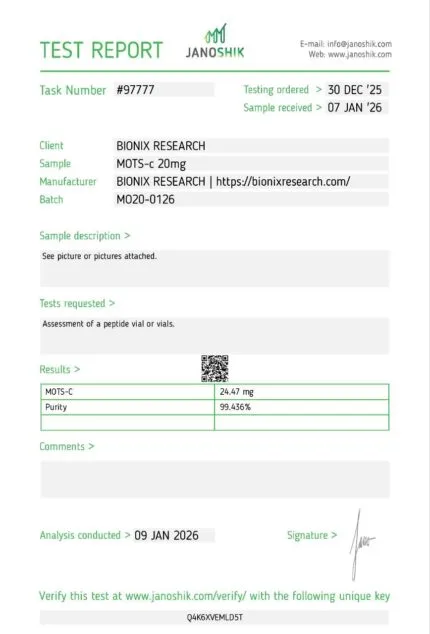
What is the purity and analytical verification? BIONIX MOTS-c is verified to ≥99% purity through HPLC analysis. Furthermore, each batch undergoes mass spectrometry for molecular identity confirmation (2,174.6 Da). Additionally, quality parameters include amino acid composition analysis and endotoxin testing. Therefore, researchers receive batch-specific Certificates of Analysis with complete analytical transparency.
REFERENCES:
- PMID: 25738459 — Lee C et al., “The mitochondrial-derived peptide MOTS-c promotes metabolic homeostasis and reduces obesity and insulin resistance,” Cell Metabolism, 2015;21(3):443-454.
- PMID: 26950378 — Fuku N et al., “The mitochondrial-derived peptide MOTS-c: A player in exceptional longevity?” Aging Cell, 2015.
- PMC 2025 — “Mitochondria-derived peptide MOTS-c restores mitochondrial function in diabetic models.”
- Exp Mol Med 2025 — “Mitochondrial-encoded peptide MOTS-c prevents pancreatic islet cell senescence to delay diabetes.”
- 2024 Study — CK2 binding in skeletal muscle (casein kinase 2 direct protein interaction).
- Reynolds JC et al., “MOTS-c is an exercise-induced mitochondrial-encoded regulator of age-dependent physical decline,” Nat Commun, 2021.
- Kim SJ et al., “MOTS-c: An equal opportunity insulin sensitizer,” J Mol Med, 2019.
| Dosage | 10mg, 20mg, 40mg, 50mg, 5mg |
|---|
Product safety
Safety instructions
SAFETY DATA SHEET (SDS)
MOTS-c Peptide – Research-Grade Lyophilized Powder (RUO)
CAS Number: 1627580-64-6
Synonyms: Mitochondrial Open Reading Frame of the 12S rRNA-c, MOTS-c Peptid
REACH Registration: Exempt (<1 tonne/year; Research Use Only)
SECTION 1 — Identification
1.1 Product Identifier: MOTS-c Peptide – Lyophilized Powder
1.2 Identified Uses: Analytical-grade peptide for in-vitro laboratory research. Research Use Only (RUO). Not for human or veterinary use.
1.3 Supplier: BIONIX RESEARCH
Email: info@bionixresearch.com
1.4 Emergency: EU Emergency Number: 112
SECTION 2 — Hazards Identification
2.1 Classification: Not classified as hazardous under CLP Regulation (EC) 1272/2008. No GHS pictograms required.
2.2 Precautionary notes:
- Avoid dust inhalation
- Avoid contact with eyes
- Laboratory use only
SECTION 3 — Composition
Substance: MOTS-c Peptide
CAS: 1627580-64-6
Purity: ≥99% HPLC
Form: Lyophilized powder
Impurities: None classified as hazardous.
SECTION 4 — First-Aid Measures
Inhalation: Move to fresh air. Rinse mouth and nose.
Skin Contact: Wash thoroughly with water and soap.
Eye Contact: Rinse cautiously with clean water for several minutes.
Ingestion: Rinse mouth. Do not induce vomiting. Seek medical advice.
SECTION 5 — Fire-Fighting Measures
Extinguishing Media: CO₂, dry chemical, foam, or water spray.
Hazards: Organic peptide powder, non-flammable. Thermal decomposition may release CO, CO₂, nitrogen oxides.
SECTION 6 — Accidental Release Measures
Avoid dust formation. Use gloves, mask, protective eyewear. Collect powder into sealed waste container.
SECTION 7 — Handling and Storage
Handling: Use only in laboratory settings. Minimize dust formation. Wear standard PPE.
Storage: Store at −20 °C in sealed vial. Protect from sunlight and humidity. Research use only.
SECTION 8 — Exposure Controls / Personal Protection
Exposure Limits: None established.
PPE: Nitrile or latex gloves, lab coat, protective eyewear, dust mask when handling powders.
SECTION 9 — Physical and Chemical Properties
Appearance: White to off-white lyophilized powder
Odor: None
Solubility: Soluble in sterile water, dilute acids, or aqueous buffers
Stability: Stable when stored at −20 °C
SECTION 10 — Stability and Reactivity
Stable under recommended conditions. Avoid heat, moisture, air exposure, oxidizing agents.
SECTION 11 — Toxicological Information
No data available for human exposure. Low acute toxicity expected. Dust may cause mild irritation. Not intended for injection, ingestion, or topical use.
SECTION 12 — Ecological Information
No data available. Not expected to present environmental risks. Prevent release into water systems.
SECTION 13 — Disposal Considerations
Dispose according to local regulations for laboratory chemical waste. Do not dispose via household waste or sewer systems.
SECTION 14 — Transport Information
Not regulated under ADR, IMDG, IATA. No UN classification required.
SECTION 15 — Regulatory Information
Not subject to REACH registration (<1 tonne/year; RUO exemption). Not classified under CLP. Not a pharmaceutical, cosmetic, or medical product.
SECTION 16 — Other Information
This SDS is intended for trained laboratory personnel. It does not signify suitability for therapeutic, diagnostic, or consumer applications.
Frequently bought together

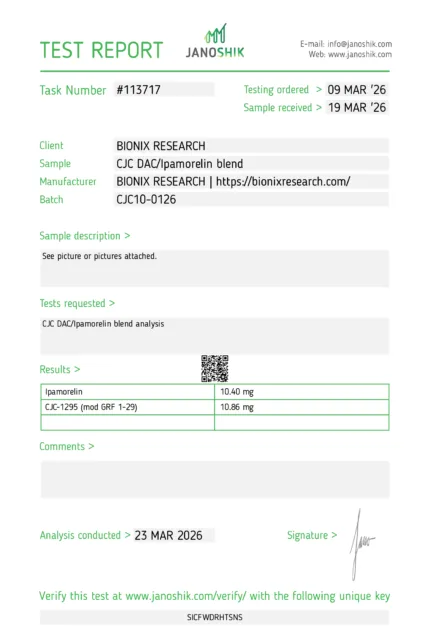
CJC-1295 + Ipamorelin Blend
69,90 € Vialincl. VAT
plus Shipping Costs
Delivery time: 1–6 Working Days
You may also like…

Epithalon
24,90 € Vialincl. VAT
plus Shipping Costs
Delivery time: 1–6 Working Days
Related products

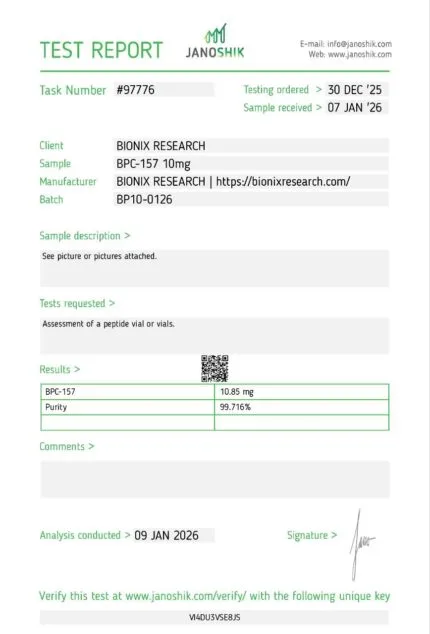
BPC-157
24,90 € Vialincl. VAT
plus Shipping Costs
Delivery time: 1–6 Working Days
CJC-1295 + Ipamorelin Blend
69,90 € Vialincl. VAT
plus Shipping Costs
Delivery time: 1–6 Working Days
Ipamorelin
39,90 € Vialincl. VAT
plus Shipping Costs
Delivery time: 1–6 Working Days
Kisspeptin-10
39,90 € Vialincl. VAT
plus Shipping Costs
Delivery time: 1–6 Working Days

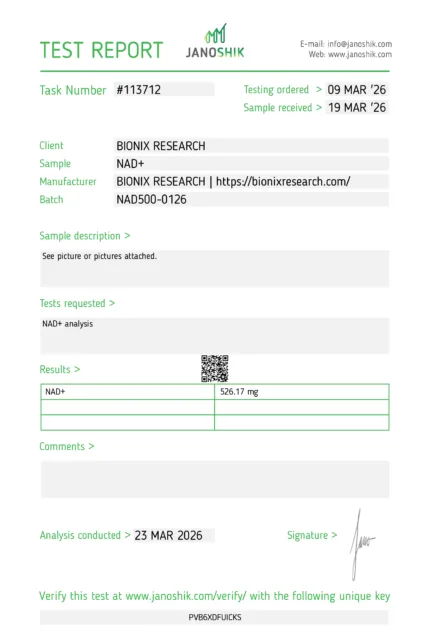
NAD+
59,90 € Vialincl. VAT
plus Shipping Costs
Delivery time: 1–6 Working Days
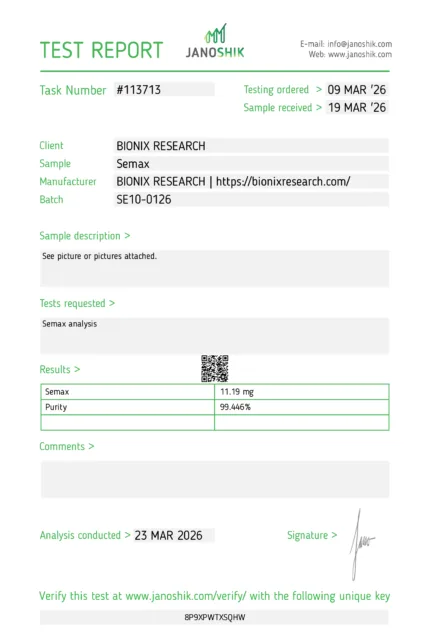
Semax
29,90 € Vialincl. VAT
plus Shipping Costs
Delivery time: 1–6 Working Days
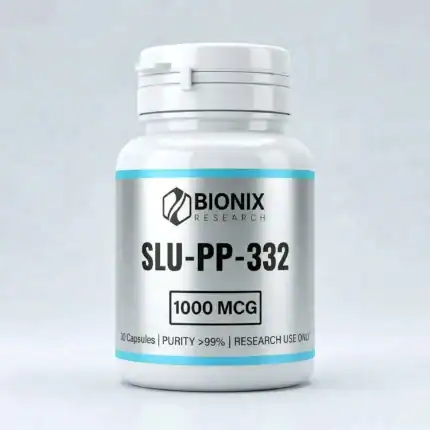
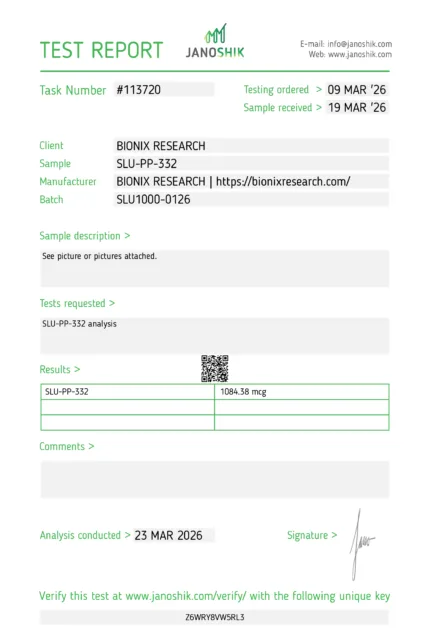
SLU-PP-332 Capsules
99,90 € Bottleincl. VAT
plus Shipping Costs
Delivery time: 1–6 Working Days
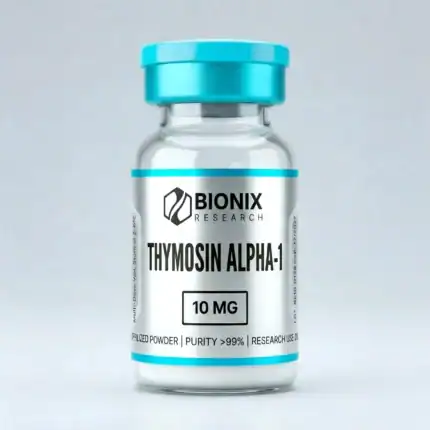
Thymosin Alpha-1
59,90 € Vialincl. VAT
plus Shipping Costs
Delivery time: 1–6 Working Days

