



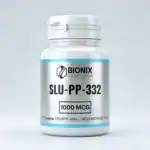
SLU-PP-332 Capsules
99,90 € Bottle
5% off when paying with cryptocurrency
incl. VAT plus Shipping Costs
SLU-PP-332 1000 mcg Capsules – Selective Pan-ERR Agonist for Metabolic Research
- Synthetic ERRα/β/γ agonist classified as an “exercise mimetic” for metabolic research applications.
- Activates PGC-1α-dependent gene expression, promoting mitochondrial biogenesis and fatty acid oxidation.
- Preclinical studies demonstrate 70% improved endurance and 12% weight reduction without exercise. Purity ≥99% (HPLC-verified).
- Supplied as pre-dosed capsules. Research applications include mitochondrial function, lipid metabolism, and endurance models.
- Store at -20°C, protected from light. For research purposes only. Not intended for human consumption.
| Quantity | Price | Discount |
|---|---|---|
| 11-20 | 84,92 € Bottle | 15% |
| 21+ | 79,92 € Bottle | 20% |
Delivery time: 1–6 Working Days
SLU-PP-332 1000mcg Capsules
KEY SPECIFICATIONS
| Parameter | Specification |
|---|---|
| Type | Synthetic hydrazide derivative |
| Target Receptors | ERRα, ERRβ, ERRγ |
| Molecular Formula | C₁₈H₁₄N₂O₂ |
| Molecular Weight | 290.32 g/mol |
| CAS Number | 303760-60-3 |
| Form | Capsules (30 per container) |
| Purity | ≥99% (HPLC) |
| Quantity | 30 1000mcg capsules |
| Storage | -20°C |
PRODUCT OVERVIEW
SLU-PP-332 is a selective pan-ERR agonist that functions as an exercise-mimetic research compound by activating metabolic pathways typically stimulated by physical training. This synthetic hydrazide derivative modulates the ERRα-PGC-1α axis, enabling investigation of mitochondrial biogenesis, fatty acid oxidation, and muscle fiber type transformation without exercise variables.
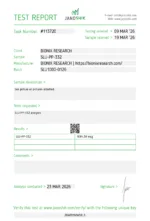
Preclinical research demonstrates 70% longer running endurance and 12% body weight reduction in metabolic models. BIONIX supplies laboratory-grade SLU-PP-332 with ≥99% purity and batch-specific COA.
MECHANISM OF ACTION
SLU-PP-332 activates the Estrogen-Related Receptor family (ERRα, ERRβ, ERRγ)—orphan nuclear receptors that function as master regulators of energy metabolism. Unlike estrogen receptors, ERRs do not bind estrogen but regulate genes essential for oxidative phosphorylation and mitochondrial function.
Primary Pathway:
| ERR Subtype | Primary Function |
|---|---|
| ERRα | Master regulator of mitochondrial biogenesis, oxidative metabolism, fatty acid oxidation |
| ERRβ | Tissue-specific metabolic regulation, developmental energy homeostasis |
| ERRγ | Oxidative muscle fiber maintenance, metabolic adaptation |
The ERRα-PGC-1α Axis: SLU-PP-332 stabilizes ERRα interaction with PGC-1α (peroxisome proliferator-activated receptor gamma coactivator 1-alpha), the master transcriptional co-activator of mitochondrial biogenesis. This recruitment activates gene programs for:
• Mitochondrial DNA replication and membrane formation
• Electron transport chain assembly
• Fatty acid oxidation enzyme expression
• Type IIa oxidative muscle fiber promotion
The Exercise-Mimetic Effect: By activating ERRα-mediated transcription, SLU-PP-332 triggers the same genetic adaptations normally requiring weeks of endurance training—enhanced oxidative capacity, increased mitochondrial density, and improved metabolic flexibility—without physical exercise protocols.
Comparative Profile:
| Property | SLU-PP-332 | GW501516 (Cardarine) |
|---|---|---|
| Receptor Target | ERRα/β/γ | PPARδ |
| Primary Effect | Mitochondrial biogenesis | Fatty acid oxidation |
| Exercise Mimicry | Yes | Yes |
| Mechanism | ERR-PGC-1α axis | PPARδ transcription |
| Development Status | Preclinical | Discontinued (safety) |
RESEARCH APPLICATIONS
Mitochondrial Biogenesis Research: Investigation of cellular mechanisms for forming new mitochondria and increasing oxidative capacity. SLU-PP-332 serves as a chemical probe for activating the PGC-1α/ERRα complex, enabling controlled study of organelle biogenesis without exercise confounders.
Exercise-Mimetics Research: Analysis of endurance adaptation mechanisms through ERR pathway activation. Preclinical studies (2023-2024) demonstrate 70% longer treadmill running time and 45% greater distance capacity without increased physical activity—providing a tool to isolate metabolic adaptations from mechanical training effects.
Lipid Metabolism Studies: Examination of fatty acid oxidation and substrate switching in skeletal muscle. SLU-PP-332 enables investigation of metabolic flexibility, β-oxidation pathway kinetics, and lipid droplet mobilization mechanisms in controlled experimental conditions.
Metabolic Syndrome Models: Research on insulin sensitivity, adiposity resistance, and energy expenditure. Mouse studies demonstrate 12% body weight reduction in obese models alongside improved metabolic markers—supporting obesity and metabolic disease mechanism investigations.
Muscle Fiber Type Analysis: Investigation of oxidative fiber transformation. SLU-PP-332 promotes Type IIa oxidative fiber characteristics and increased mitochondrial density, enabling research on muscle plasticity and endurance phenotype development.
ANALYTICAL VERIFICATION
BIONIX SLU-PP-332 undergoes comprehensive analytical characterization:
• HPLC Analysis: ≥99% purity confirmation via optimized chromatographic separation
• Mass Spectrometry: Identity verification and molecular weight confirmation (290.32 g/mol)
• Stability Testing: Shelf-life validation under specified storage conditions
Physical Characteristics:
| Property | Specification |
|---|---|
| Appearance | Capsule form |
| Quantity | 30 1000mcg capsules per container |
| Purity | ≥99% (HPLC-verified) |
DEVELOPMENT STATUS
SLU-PP-332 remains in preclinical development:
• Preclinical Stage: Animal studies completed, human trials pending
• Regulatory Status: Not FDA or EMA approved
• WADA Classification: Prohibited substance (S4.5 Metabolic Modulators)
• Research Applications: Metabolic research, mitochondrial studies, exercise mimetics
SLU-PP-332 is intended exclusively for laboratory research purposes.
FREQUENTLY ENCOUNTERED INQUIRIES
What is the ERR mechanism and how does SLU-PP-332 function?
SLU-PP-332 activates Estrogen-Related Receptors (ERRα, ERRβ, ERRγ)—nuclear receptors regulating metabolic gene expression. By stabilizing ERRα interaction with PGC-1α, it activates transcription of genes for mitochondrial biogenesis and oxidative metabolism, mimicking exercise adaptations without physical training.
How does SLU-PP-332 differ from GW501516 (Cardarine)?
SLU-PP-332 targets ERR receptors while GW501516 activates PPARδ. Both induce metabolic effects but through distinct signaling pathways—SLU-PP-332 emphasizes mitochondrial biogenesis via ERR-PGC-1α, whereas GW501516 focuses on PPARδ-mediated fatty acid oxidation.
What were the key preclinical findings?
Mouse studies demonstrated 70% longer running time, 45% greater distance, and 12% body weight reduction in obese models—all without increased physical activity. Muscle analysis revealed increased Type IIa oxidative fiber content and enhanced mitochondrial markers.
What are the primary research applications?
Mitochondrial biogenesis research, exercise-mimetic pathway investigation, lipid metabolism analysis, metabolic syndrome models, and muscle fiber type transformation studies. All applications limited to controlled laboratory environments.
What storage conditions are required?
Store capsules at -20°C for long-term stability. Avoid repeated freeze-thaw cycles and protect from light and moisture.
Is SLU-PP-332 approved for human use?
Negative. SLU-PP-332 is intended exclusively for laboratory research. No human clinical trials have been completed. Not FDA or EMA approved.
References
- Narkar VA et al., “AMPK and PPARδ agonists are exercise mimetics,” Cell, 2008;134(3):405-415. PMID: 18674809
- Fan W et al., “PPARδ promotes running endurance by preserving glucose,” J Biol Chem, 2004;279(7):5241-5248. PMID: 14638679
- Billon C et al., “The ERR family of nuclear receptors: from metabolism to cancer,” Cell Metab, 2022;34(1):69-84. PMID: 34756173
| Dosage | 1 Stk., 100 Stk., 30 Stk., 50 Stk. |
|---|
Product safety
Safety instructions
SAFETY DATA SHEET (SDS)
SLU-PP-332 – Research-Grade Capsules (RUO)
CAS Number: 303760-60-3
Synonyms: Selective Pan-ERR Agonist, ERRα Agonist
REACH Registration: Exempt (<1 tonne/year; Research Use Only)
SECTION 1 — Identification
1.1 Product Identifier: SLU-PP-332 – Capsules
1.2 Identified Uses: Analytical-grade compound for in-vitro laboratory research. Research Use Only (RUO). Not for human or veterinary use.
1.3 Supplier: BIONIX RESEARCH
Email: info@bionixresearch.com
1.4 Emergency: EU Emergency Number: 112
SECTION 2 — Hazards Identification
2.1 Classification: Not classified as hazardous under CLP Regulation (EC) 1272/2008. No GHS pictograms required.
2.2 Precautionary notes:
- Avoid dust inhalation
- Avoid contact with eyes
- Laboratory use only
SECTION 3 — Composition
Substance: SLU-PP-332
CAS: 303760-60-3
Purity: ≥99% HPLC
Form: Capsules
Impurities: None classified as hazardous.
SECTION 4 — First-Aid Measures
Inhalation: Move to fresh air. Rinse mouth and nose.
Skin Contact: Wash thoroughly with water and soap.
Eye Contact: Rinse cautiously with clean water for several minutes.
Ingestion: Rinse mouth. Do not induce vomiting. Seek medical advice.
SECTION 5 — Fire-Fighting Measures
Extinguishing Media: CO₂, dry chemical, foam, or water spray.
Hazards: Organic compound, non-flammable. Thermal decomposition may release CO, CO₂, nitrogen oxides.
SECTION 6 — Accidental Release Measures
Avoid dust formation. Use gloves, mask, protective eyewear. Collect powder into sealed waste container.
SECTION 7 — Handling and Storage
Handling: Use only in laboratory settings. Minimize dust formation. Wear standard PPE.
Storage: Store at −20 °C in sealed container. Protect from sunlight and humidity. Research use only.
SECTION 8 — Exposure Controls / Personal Protection
Exposure Limits: None established.
PPE: Nitrile or latex gloves, lab coat, protective eyewear, dust mask when handling powders.
SECTION 9 — Physical and Chemical Properties
Appearance: Capsules containing white to off-white powder
Odor: None
Solubility: Soluble in sterile water, dilute acids, or aqueous buffers
Stability: Stable when stored at −20 °C
SECTION 10 — Stability and Reactivity
Stable under recommended conditions. Avoid heat, moisture, air exposure, oxidizing agents.
SECTION 11 — Toxicological Information
No data available for human exposure. Low acute toxicity expected. Dust may cause mild irritation. Not intended for injection, ingestion, or topical use.
SECTION 12 — Ecological Information
No data available. Not expected to present environmental risks. Prevent release into water systems.
SECTION 13 — Disposal Considerations
Dispose according to local regulations for laboratory chemical waste. Do not dispose via household waste or sewer systems.
SECTION 14 — Transport Information
Not regulated under ADR, IMDG, IATA. No UN classification required.
SECTION 15 — Regulatory Information
Not subject to REACH registration (<1 tonne/year; RUO exemption). Not classified under CLP. Not a pharmaceutical, cosmetic, or medical product.
SECTION 16 — Other Information
This SDS is intended for trained laboratory personnel. It does not signify suitability for therapeutic, diagnostic, or consumer applications.
You may also like…
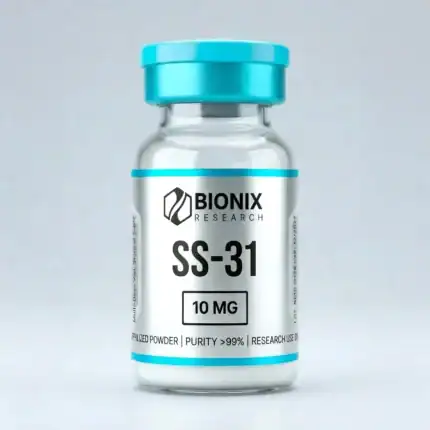
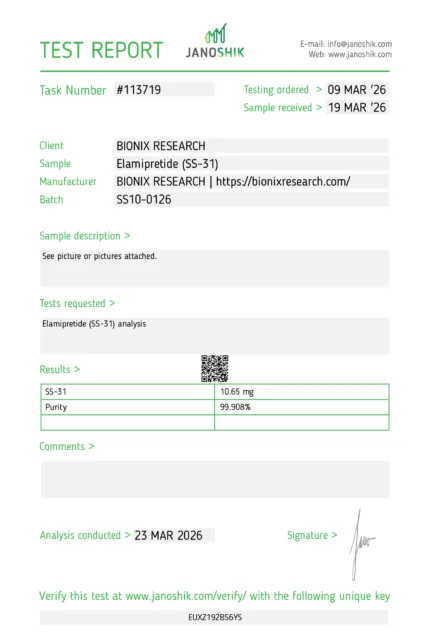
SS-31 (Elamipretide) Peptide
49,90 € Vialincl. VAT
plus Shipping Costs
Delivery time: 1–6 Working Days
Related products

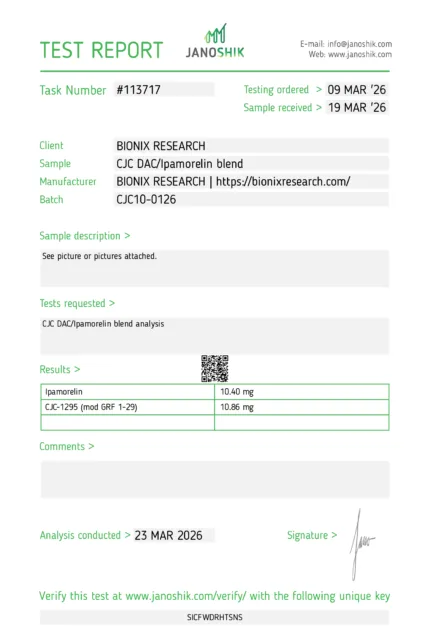
CJC-1295 + Ipamorelin Blend
69,90 € Vialincl. VAT
plus Shipping Costs
Delivery time: 1–6 Working Days
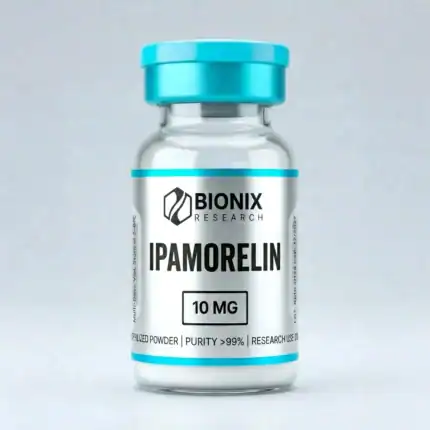
Ipamorelin
39,90 € Vialincl. VAT
plus Shipping Costs
Delivery time: 1–6 Working Days
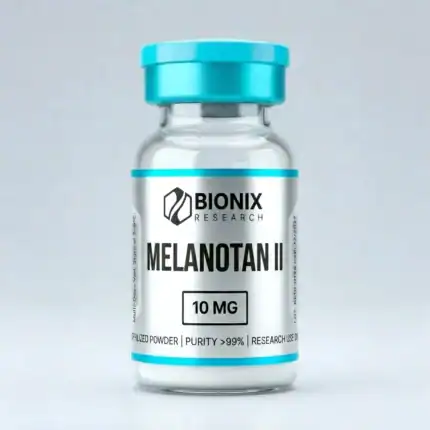
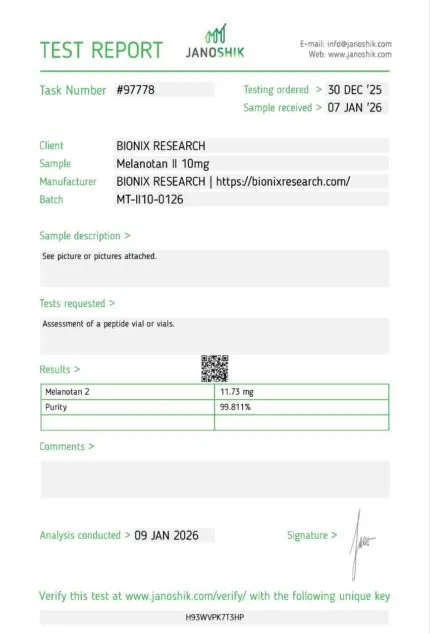
Melanotan 2 (MT-II)
19,90 € Vialincl. VAT
plus Shipping Costs
Delivery time: 1–6 Working Days
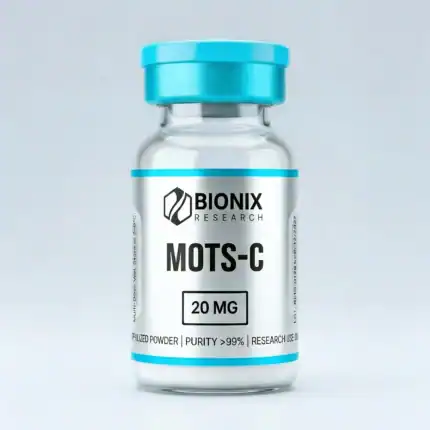
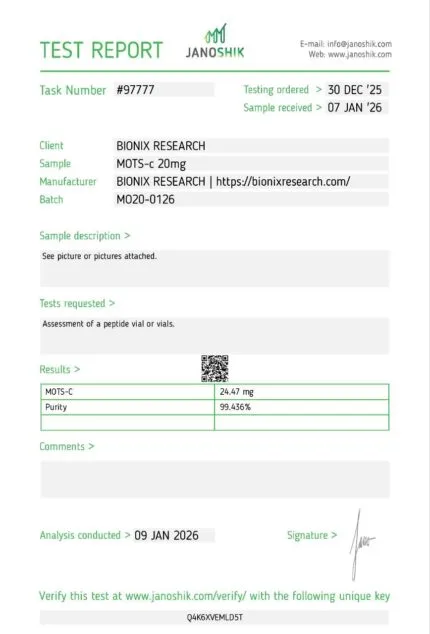
MOTS-c
49,90 € Vialincl. VAT
plus Shipping Costs
Delivery time: 1–6 Working Days

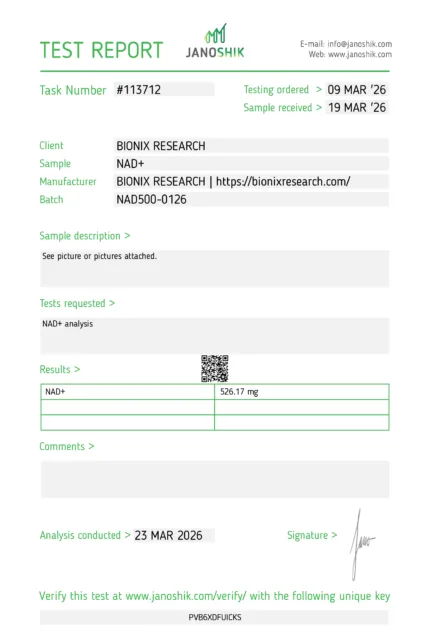
NAD+
59,90 € Vialincl. VAT
plus Shipping Costs
Delivery time: 1–6 Working Days
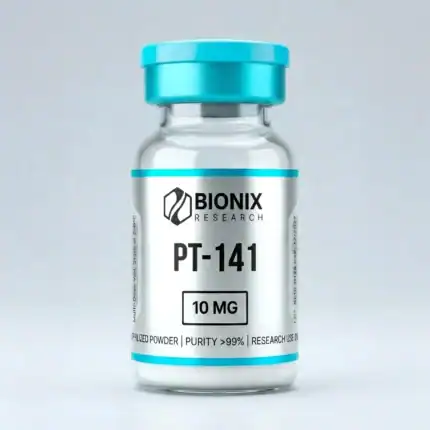
PT-141 (Bremelanotide)
29,90 € Vialincl. VAT
plus Shipping Costs
Delivery time: 1–6 Working Days
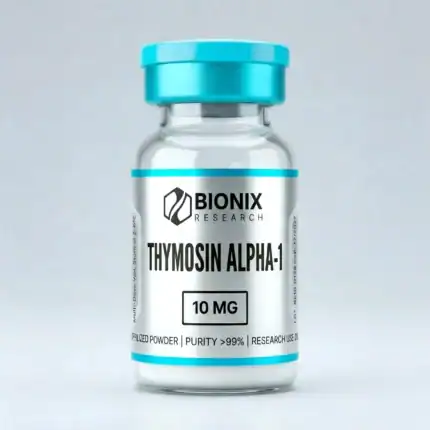
Thymosin Alpha-1
59,90 € Vialincl. VAT
plus Shipping Costs
Delivery time: 1–6 Working Days
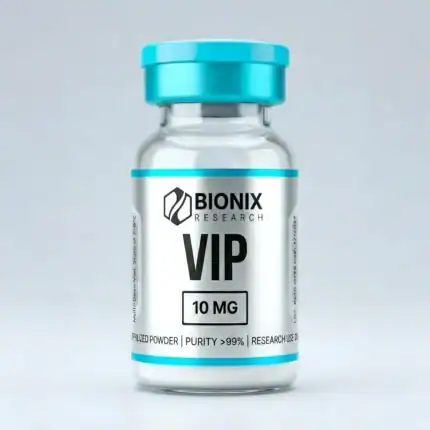
VIP Peptide – Vasoactive Intestinal Peptide
69,90 € Vialincl. VAT
plus Shipping Costs
Delivery time: 1–6 Working Days

