



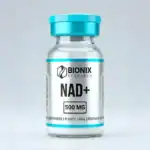
NAD+
59,90 € Vial
5% off when paying with cryptocurrency
incl. VAT plus Shipping Costs
NAD+ 500mg – Nicotinamide Adenine Dinucleotide for Metabolic and Aging Research
- Essential coenzyme present in all living cells, functioning as electron acceptor in redox reactions and substrate for sirtuins (SIRT1/SIRT3) and PARPs.
- Research demonstrates NAD+ availability correlates with mitochondrial function, oxidative phosphorylation capacity, and cellular aging parameters.
- Purity ≥99% (HPLC-verified). Supplied as lyophilized powder, 500mg per vial.
- Research applications include energy metabolism, mitochondrial biogenesis, cellular senescence, neurodegeneration, and inflammation models.
- Store at -20°C. For research purposes only. Not intended for human consumption.
| Quantity | Price | Discount |
|---|---|---|
| 11-20 | 50,92 € Vial | 15% |
| 21+ | 47,92 € Vial | 20% |
Delivery time: 1–6 Working Days
NAD+ 500mg – Nicotinamide Adenine Dinucleotide

Chemical diagram for NAD+ source: https://en.wikipedia.org/wiki/Nicotinamide_adenine_dinucleotide#/media/File:NAD+.svg
KEY SPECIFICATIONS
| Parameter | Specification |
|---|---|
| Type | Essential redox coenzyme (dinucleotide) |
| Target | Mitochondrial ETC, Sirtuins (SIRT1-7), PARPs, CD38 |
| Molecular Formula | C₂₁H₂₇N₇O₁₄P₂ |
| Molecular Weight | 663.43 g/mol |
| CAS Number | 53-84-9 |
| Structure | Dinucleotide (nicotinamide + adenine linked by phosphates) |
| Redox Form | Oxidized (NAD+) / Reduced (NADH) |
| Solubility | Water soluble |
| Form | Lyophilized powder |
| Purity | ≥99% (HPLC) |
| Quantity | 500mg |
| Storage | -20°C |
PRODUCT OVERVIEW
NAD+ (Nicotinamide Adenine Dinucleotide) is a fundamental coenzyme present in all living cells, serving dual roles as electron carrier in redox reactions and essential substrate for regulatory enzymes including sirtuins and PARPs. As a central component of cellular energy metabolism, NAD+ is critical for oxidative phosphorylation, DNA repair, and epigenetic regulation. Research demonstrates NAD+ levels decline 10-80% across tissues with aging, driven by increased CD38/PARP activity and reduced NAMPT expression—contributing to mitochondrial dysfunction, sirtuin hypoactivity, and cellular senescence in experimental models. NAD+ supplementation studies activate SIRT1/SIRT3, enhance mitochondrial biogenesis, and improve oxidative phosphorylation parameters. BIONIX supplies NAD+ with ≥99% purity for metabolic, aging, and biochemical research applications.
MECHANISM OF ACTION
NAD+ functions through two primary mechanisms: electron carrier in redox reactions and consumable substrate for regulatory enzymes controlling cellular metabolism, DNA repair, and stress responses.
Sirtuin-Mediated Deacetylation (SIRT1-7):
| Sirtuin | Location | Primary Function | Research Relevance |
|---|---|---|---|
| SIRT1 | Nucleus/cytoplasm | Histone deacetylation, PGC-1α activation | Mitochondrial biogenesis regulation |
| SIRT2 | Cytoplasm | Cell cycle regulation, tubulin deacetylation | Mitosis and cytoskeleton studies |
| SIRT3 | Mitochondria | Metabolic enzyme regulation, SOD2 activation | ROS management, oxidative stress |
| SIRT4 | Mitochondria | ADP-ribosyltransferase activity | Glutaminase regulation |
| SIRT5 | Mitochondria | Desuccinylase, demalonylase activity | Post-translational modification |
| SIRT6 | Nucleus | DNA repair, telomere maintenance | Genomic stability research |
| SIRT7 | Nucleolus | rRNA transcription regulation | Ribosomal function |
Metabolic Pathways and ATP Generation:
| Pathway | NAD+ Role | ATP Contribution | Research Application |
|---|---|---|---|
| Glycolysis | Accepts electrons from G3P | 2 NADH → ~5 ATP | Glucose metabolism assays |
| Pyruvate Oxidation | Accepts electrons from pyruvate | 2 NADH → ~5 ATP | Mitochondrial entry studies |
| Citric Acid Cycle | Accepts electrons (3 sites) | 6 NADH → ~15 ATP | TCA flux analysis |
| β-Oxidation | Accepts electrons from fatty acids | Multiple NADH | Lipid metabolism research |
| Oxidative Phosphorylation | NADH donates to Complex I | ~2.5 ATP per NADH | ETC function measurement |
NAD+-Consuming Enzymes:
| Enzyme Family | Function | NAD+ Consumption | Research Significance |
|---|---|---|---|
| Sirtuins (SIRT1-7) | Deacetylation | 1 NAD+ per reaction | Epigenetic and metabolic regulation |
| PARPs (PARP1-4) | DNA repair signaling | High consumption on activation | DNA damage response studies |
| CD38 | Age-related NAD+ decline | Major consumption in aging | Inflammation and senescence research |
Redox Cycling (NAD+ vs NADH):
| Parameter | NAD+ (Oxidized) | NADH (Reduced) |
|---|---|---|
| Electron Status | Accepts electrons | Donates electrons |
| Primary Location | Cytoplasm, mitochondria | Mitochondria (ETC) |
| Metabolic Role | Dehydrogenase substrate | Complex I electron donor |
| Sirtuin/PARP Substrate | Yes (consumed) | No |
| NAD+/NADH Ratio | High = oxidative state | Low = reductive state |
NAD+ Biosynthesis Pathways:
| Pathway | Key Enzymes | Steps | Efficiency | Research Note |
|---|---|---|---|---|
| Salvage Pathway | NAMPT, NMNAT1-3 | 2 steps | ~85% of synthesis | Primary route; NAMPT rate-limiting |
| De Novo Pathway | Multiple enzymes | 8+ steps | Low efficiency | Tryptophan → NAD+; liver/kidney |
| Preiss-Handler | NAPRT, NMNAT | 3-4 steps | Moderate | Nicotinic acid → NAD+ |
Proposed Mechanism Cascade:
NAD+ Availability → Sirtuin Activation → PGC-1α Deacetylation →
Mitochondrial Biogenesis / FOXO Activation → Stress Resistance Genes /
PARP Activity → DNA Repair Capability / CD38 Activity → NAD+ Depletion (aging)
Comparative Profile:
| Property | NAD+ | NMN | NR (Nicotinamide Riboside) |
|---|---|---|---|
| Structure | Dinucleotide (663.43 g/mol) | Mononucleotide | Nucleoside |
| Direct Sirtuin Substrate | Yes | Precursor (requires conversion) | Precursor (requires conversion) |
| Cell Permeability | Limited | Moderate | High |
| Stability | Moderate in solution | More stable | Most stable |
| Metabolism | Consumed by SIRTs, PARPs, CD38 | Converted to NAD+ | Converted to NMN → NAD+ |
| Research Focus | Direct coenzyme studies | NAD+ elevation | Oral bioavailability |
| Precursor Receptor | N/A | NMN transporters | NRKs |
| Clinical Status | Endogenous coenzyme | Research compound | Research compound |
RESEARCH APPLICATIONS
• Mitochondrial Function and Metabolism: Oxygen consumption rate (OCR) analysis via Seahorse XF platform, NAD+/NADH ratio determination through enzymatic assays and LC-MS, ATP production quantification via luciferase assays, mitochondrial membrane potential assessment (JC-1, TMRM), Complex I activity measurement via spectrophotometric analysis. Investigation of respiratory chain function, mitochondrial biogenesis, and coupling efficiency between catabolism and oxidative phosphorylation.
• Cellular Aging and Senescence: Senescence marker analysis including β-galactosidase activity, p16INK4a/p21 expression, senescence-associated secretory phenotype (SASP) quantification, and telomere dysfunction-induced foci (TIF) assessment. Aging model systems: replicative senescence in fibroblasts, stress-induced premature senescence, Werner syndrome (WRN knockout) models, and Hutchinson-Gilford progeria models. Research demonstrates NAD+ precursor supplementation restores mitochondrial NAD+ and salvage enzyme expression (NAMPT/NMNAT1), reducing senescence markers.
• Neurodegeneration Research: Alzheimer’s model investigations of mitochondrial dysfunction, cognition parameters, and oxidative stress markers. Parkinson’s research focusing on dopaminergic neuron survival and energy metabolism. ALS studies examining motor neuron protection and axonal transport. Ataxia-telangiectasia research on neuromotor coordination. Studies show dose-dependent brain NAD+ increases with supplementation, correlating with improved mitochondrial health, reduced oxidative stress, and enhanced autophagy.
• Inflammation and Immune Function: NF-κB pathway regulation through SIRT1-mediated p65/RelA deacetylation, reducing transcriptional activity and pro-inflammatory cytokine expression (TNF-α, IL-6, IL-1β). Macrophage polarization studies (M1/M2 balance), dendritic cell maturation analysis, and T cell exhaustion/metabolism investigations. Research demonstrates intracellular NAD+ availability correlates with pro/anti-inflammatory response balance in immune cell populations.
• DNA Repair and Genomic Stability: PARP-dependent DNA damage response kinetics analysis, PARP inhibitor combination studies, genomic instability model investigations, and replication stress analysis under controlled conditions. Research examines interplay between DNA repair capacity and cellular energy metabolism through NAD+ availability modulation.
• Metabolic Flux and Biosynthesis: Salvage pathway flux analysis measuring NAMPT/NMNAT enzyme activity, de novo pathway investigation via tryptophan metabolism studies, and Preiss-Handler pathway assessment through niacin supplementation models. CD38-mediated NAD+ consumption research in aging and inflammatory contexts.
ANALYTICAL VERIFICATION
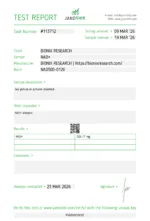
BIONIX NAD+ Coenzyme undergoes comprehensive analytical characterization:
• HPLC Analysis: Gradient separation with UV detection confirming ≥99% purity; separates NAD+ from nicotinamide, ADP-ribose, and degradation products • Mass Spectrometry: Exact molecular weight confirmation (663.43 g/mol) and molecular structure verification (C₂₁H₂₇N₇O₁₄P₂) • Identity Confirmation: NAD+ vs NADH differentiation, dinucleotide structure validation • Water Content: Karl Fischer analysis • Residual Solvent Testing: Manufacturing process validation • Stability Verification: Redox state assessment
Physical Characteristics:
| Property | Specification |
|---|---|
| Appearance | White to off-white lyophilized powder |
| Molecular Weight | 663.43 g/mol |
| Molecular Formula | C₂₁H₂₇N₇O₁₄P₂ |
| Structure | Dinucleotide (nicotinamide moiety + adenine moiety) |
| Components | 2 ribose sugars, phosphate bridge |
| Solubility | Water soluble |
| Purity | ≥99% (HPLC-verified) |
DEVELOPMENT STATUS
• Natural Occurrence: Endogenous coenzyme present in all living cells; essential for life • Research History: 100+ years of biochemical investigation; fundamental to metabolic biology • Clinical Applications: Not FDA or EMA approved as therapeutic agent; research compound only • Current Research: Mitochondrial function, aging biology, neurodegeneration, metabolic disease • Recent Findings: 2025 Werner syndrome research; CD38 inhibition studies; NAD+ precursor comparisons • Regulatory Status: Endogenous metabolite; research use only • WADA Status: Research compound (verify current prohibited list)
BIONIX NAD+ is supplied exclusively for laboratory research purposes—not for therapeutic use, human administration, veterinary, or clinical applications.
FREQUENTLY ENCOUNTERED INQUIRIES
What role does NAD+ play in energy metabolism?
NAD+ functions as an essential electron acceptor in redox reactions of glycolysis and the citric acid cycle. Research demonstrates correlations between NAD+ availability and mitochondrial parameters including oxidative phosphorylation capacity, ATP production, and respiratory chain function. As the primary electron carrier in over 400 enzymatic reactions, NAD+ is reduced to NADH during catabolic reactions and regenerated at Complex I of the electron transport chain, coupling electron flow to ATP synthesis through chemiosmosis (~2.5 ATP per NADH).
How does NAD+ function as a sirtuin substrate?
Sirtuins (SIRT1-7) are NAD+-dependent deacetylases that consume one NAD+ molecule per deacetylation reaction, producing nicotinamide and O-acetyl-ADP-ribose. This consumption couples sirtuin activity directly to cellular metabolic state—when NAD+ is abundant, sirtuin activity is high; when NAD+ is depleted, sirtuin function is impaired. SIRT1 and SIRT3 are particularly important for PGC-1α deacetylation (mitochondrial biogenesis), FOXO activation (stress resistance), and NF-κB regulation (inflammation control).
How is NAD+ used in aging research?
Transcriptome analyses in aging-relevant models report differential expression patterns of nuclear and mitochondrial genes associated with altered NAD+ levels. Research demonstrates NAD+ declines 10-80% in various tissues with age, driven by increased CD38/PARP activity and reduced NAMPT expression. This decline correlates with impaired sirtuin activity, mitochondrial dysfunction, and cellular senescence. Studies show NAD+ precursor supplementation restores mitochondrial NAD+ and salvage enzyme expression (NAMPT/NMNAT1), reducing senescence markers in Werner syndrome and progeria models.
What is the relationship between NAD+ and DNA repair?
PARPs (Poly(ADP-ribose) polymerases) consume NAD+ during DNA damage response, using it to synthesize poly(ADP-ribose) chains that recruit repair machinery to strand breaks. Excessive DNA damage can lead to PARP hyperactivation and NAD+ depletion, creating a feedback loop of metabolic dysfunction. Research investigates this interplay between DNA repair capacity and cellular energy metabolism through NAD+ availability modulation, particularly in contexts of genomic instability and replication stress.
What applications does NAD+ have in neurodegeneration research?
In mouse models of neurodegenerative diseases, NAD+ supplementation is associated with neuron survival markers, oxidative stress indicators, and mitochondrial parameters. Studies in Alzheimer’s models demonstrate dose-dependent increases in brain NAD+ correlating with improved mitochondrial health, reduced oxidative damage, and enhanced autophagy markers. Parkinson’s disease research focuses on dopaminergic neuron survival and energy metabolism. Applications are limited to preclinical model systems.
What are the NAD+ biosynthesis pathways?
Three primary pathways synthesize NAD+: (1) Salvage pathway (~85% of synthesis) using nicotinamide via NAMPT (rate-limiting) and NMNAT enzymes—primary recycling route; (2) De novo pathway from tryptophan through quinolinic acid—low efficiency, important in liver/kidney; (3) Preiss-Handler pathway from nicotinic acid via NAPRT and NMNAT—utilizes dietary niacin. Understanding these pathways is essential for metabolic flux studies and aging research investigating NAD+ decline mechanisms.
REFERENCES
- PMID: 26785480 — NAD+ in aging, metabolism, and neurodegeneration (Science, 2015)
- PMID: 22682224 — NAD+ precursor nicotinamide riboside enhances oxidative metabolism (Cell Metab, 2012)
- PMID: 29514064 — NAD+ intermediates: biology and therapeutic potential of NMN and NR (Cell Metab, 2018)
- PMID: 26956191 — NAD+ and sirtuins in aging and disease (Trends Cell Biol, 2014)
- PMID: 27322007 — CD38 dictates age-related NAD decline via SIRT3-dependent mechanism (Cell Metab, 2016)
- PMC, 2025 — Promising results with NAD supplementation in rare diseases
- Multiple studies — NAD+ redox cycling in over 400 enzymatic reactions
| Dosage | 1000mg, 500mg |
|---|
Product safety
Safety instructions
SAFETY DATA SHEET (SDS)
NAD+ (Nicotinamidadenindinukleotid) – Research-Grade Lyophilized Powder (RUO)
CAS Number: 53-84-9
Synonyms: Nicotinamide adenine dinucleotide, β-NAD+, Coenzyme I
REACH Registration: Exempt (<1 tonne/year; Research Use Only)
SECTION 1 — Identification
1.1 Product Identifier: NAD+ (Nicotinamidadenindinukleotid) – Lyophilized Powder
1.2 Identified Uses: Analytical-grade coenzyme for in-vitro laboratory research. Research Use Only (RUO). Not for human or veterinary use.
1.3 Supplier: BIONIX RESEARCH
Email: info@bionixresearch.com
1.4 Emergency: EU Emergency Number: 112
SECTION 2 — Hazards Identification
2.1 Classification: Not classified as hazardous under CLP Regulation (EC) 1272/2008. No GHS pictograms required.
2.2 Precautionary notes:
- Avoid dust inhalation
- Avoid contact with eyes
- Laboratory use only
SECTION 3 — Composition
Substance: NAD+ (Nicotinamidadenindinukleotid)
CAS: 53-84-9
Purity: ≥99% HPLC
Form: Lyophilized powder
Impurities: None classified as hazardous.
SECTION 4 — First-Aid Measures
Inhalation: Move to fresh air. Rinse mouth and nose.
Skin Contact: Wash thoroughly with water and soap.
Eye Contact: Rinse cautiously with clean water for several minutes.
Ingestion: Rinse mouth. Do not induce vomiting. Seek medical advice.
SECTION 5 — Fire-Fighting Measures
Extinguishing Media: CO₂, dry chemical, foam, or water spray.
Hazards: Organic coenzyme powder, non-flammable. Thermal decomposition may release CO, CO₂, nitrogen oxides.
SECTION 6 — Accidental Release Measures
Avoid dust formation. Use gloves, mask, protective eyewear. Collect powder into sealed waste container.
SECTION 7 — Handling and Storage
Handling: Use only in laboratory settings. Minimize dust formation. Wear standard PPE.
Storage: Store at −20 °C in sealed vial. Protect from sunlight and humidity. Research use only.
SECTION 8 — Exposure Controls / Personal Protection
Exposure Limits: None established.
PPE: Nitrile or latex gloves, lab coat, protective eyewear, dust mask when handling powders.
SECTION 9 — Physical and Chemical Properties
Appearance: White to off-white lyophilized powder
Odor: None
Solubility: Soluble in sterile water, dilute acids, or aqueous buffers
Stability: Stable when stored at −20 °C
SECTION 10 — Stability and Reactivity
Stable under recommended conditions. Avoid heat, moisture, air exposure, oxidizing agents.
SECTION 11 — Toxicological Information
No data available for human exposure. Low acute toxicity expected. Dust may cause mild irritation. Not intended for injection, ingestion, or topical use.
SECTION 12 — Ecological Information
No data available. Not expected to present environmental risks. Prevent release into water systems.
SECTION 13 — Disposal Considerations
Dispose according to local regulations for laboratory chemical waste. Do not dispose via household waste or sewer systems.
SECTION 14 — Transport Information
Not regulated under ADR, IMDG, IATA. No UN classification required.
SECTION 15 — Regulatory Information
Not subject to REACH registration (<1 tonne/year; RUO exemption). Not classified under CLP. Not a pharmaceutical, cosmetic, or medical product.
SECTION 16 — Other Information
This SDS is intended for trained laboratory personnel. It does not signify suitability for therapeutic, diagnostic, or consumer applications.
Related products

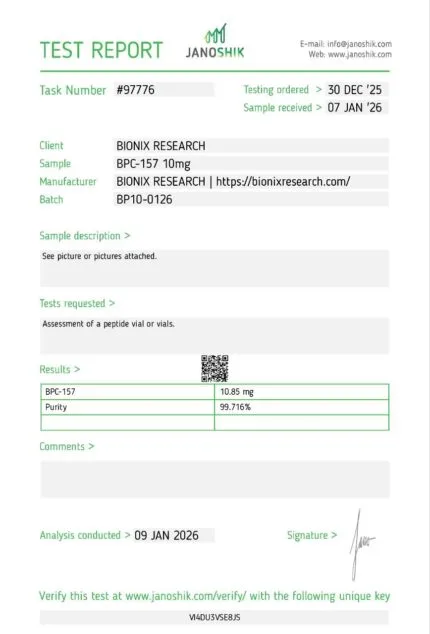
BPC-157
24,90 € Vialincl. VAT
plus Shipping Costs
Delivery time: 1–6 Working Days
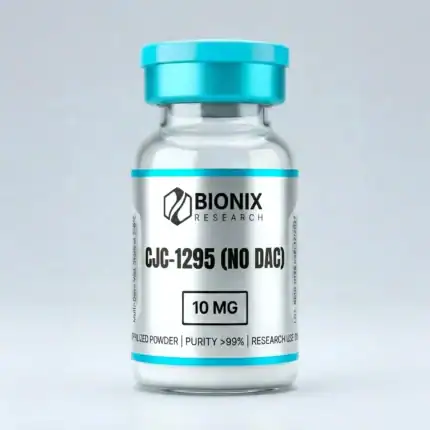
CJC-1295 No DAC
54,90 € Vialincl. VAT
plus Shipping Costs
Delivery time: 1–6 Working Days
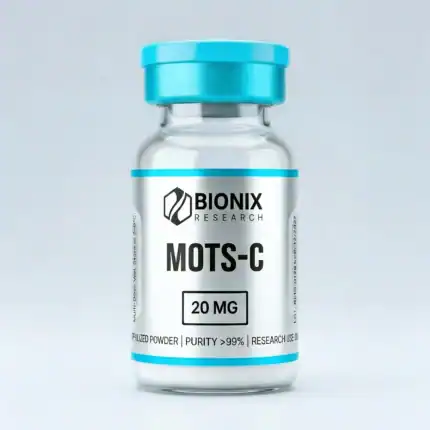
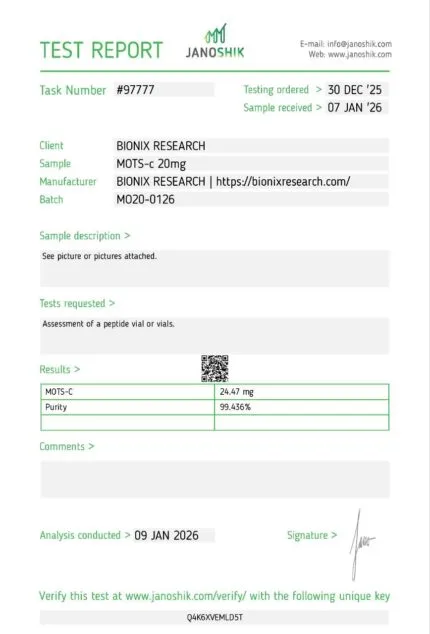
MOTS-c
49,90 € Vialincl. VAT
plus Shipping Costs
Delivery time: 1–6 Working Days
PT-141 (Bremelanotide)
29,90 € Vialincl. VAT
plus Shipping Costs
Delivery time: 1–6 Working Days
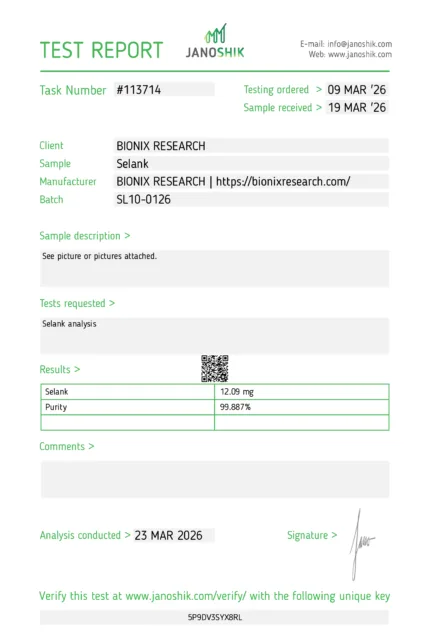
Selank
29,90 € Vialincl. VAT
plus Shipping Costs
Delivery time: 1–6 Working Days
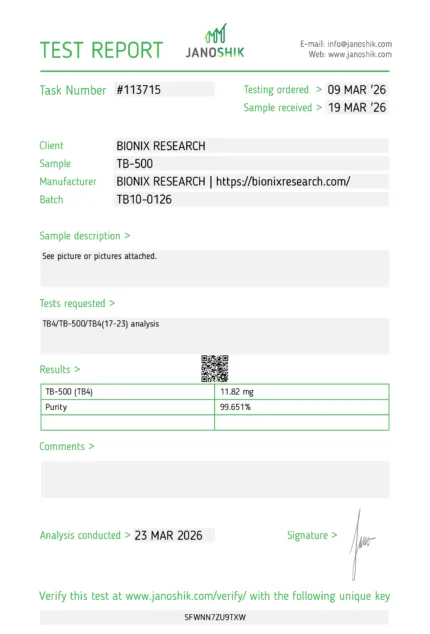
TB-500 (Thymosin Beta-4)
49,90 € Vialincl. VAT
plus Shipping Costs
Delivery time: 1–6 Working Days
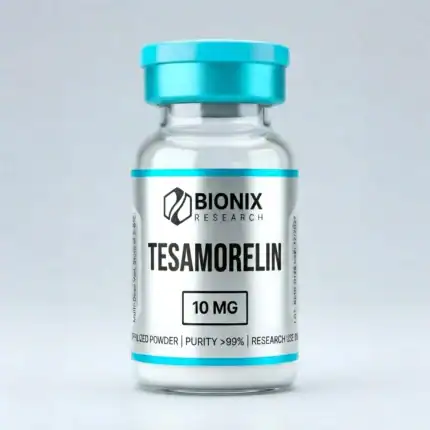
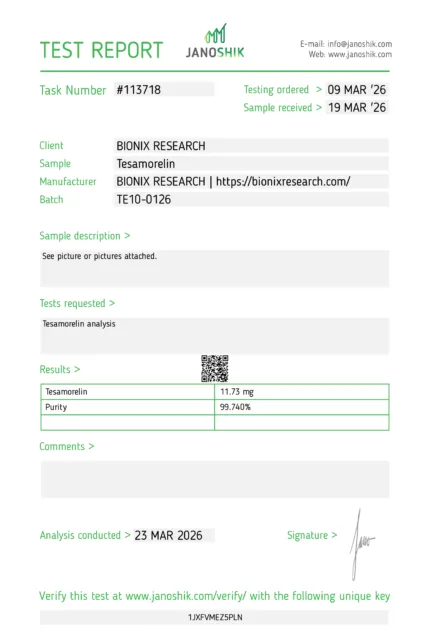
Tesamorelin
79,90 € Vialincl. VAT
plus Shipping Costs
Delivery time: 1–6 Working Days
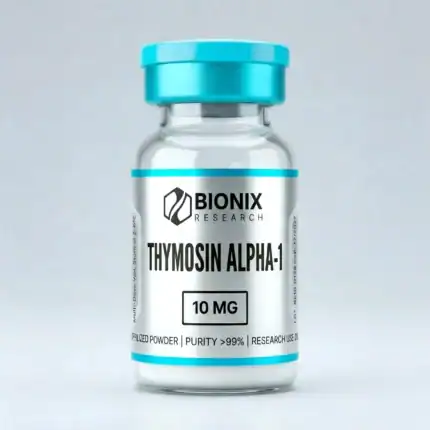
Thymosin Alpha-1
59,90 € Vialincl. VAT
plus Shipping Costs
Delivery time: 1–6 Working Days

