


Ipamorelin
39,90 € Vial
5% off when paying with cryptocurrency
incl. VAT plus Shipping Costs
Ipamorelin Peptide 10mg – Selective GHS-R1a Agonist for Growth Hormone Secretion Research
- Synthetic pentapeptide growth hormone secretagogue that selectively binds to the ghrelin receptor (GHS-R1a) to stimulate pituitary GH release.
- Studies demonstrate high receptor selectivity with minimal effects on ACTH, cortisol, prolactin, or other pituitary hormones—distinguishing it from other GH-releasing peptides.
- Purity ≥99% (HPLC-verified). Supplied as lyophilized powder, 10mg per vial.
- Research applications include somatotropic signaling, receptor pharmacology, body composition studies, and musculoskeletal research.
- Store at -20°C. For research purposes only. Not intended for human consumption.
| Quantity | Price | Discount |
|---|---|---|
| 11-20 | 33,92 € Vial | 15% |
| 21+ | 31,92 € Vial | 20% |
Delivery time: 1–6 Working Days
Ipamorelin Peptide 10mg – Selective Growth Hormone Secretagogue

Chemical diagram for Ipamorelin source: https://en.wikipedia.org/wiki/Ipamorelin#/media/File:Ipamorelin.svg
KEY SPECIFICATIONS:
| Parameter | Specification |
|---|---|
| Type | Synthetic pentapeptide GH secretagogue |
| Target Receptor | Growth Hormone Secretagogue Receptor (GHS-R1a / Ghrelin Receptor) |
| Sequence | Aib-His-D-2-Nal-D-Phe-Lys-NH₂ |
| Molecular Formula | C₃₈H₄₉N₉O₅ |
| Molecular Weight | 711.9 g/mol |
| CAS Number | 170851-70-4 |
| Length | 5 amino acids |
| C-terminus | Amidated (-NH₂) |
| Key Features | Aib (N-terminus), D-amino acids (positions 3, 4) |
| Purity | ≥99% (HPLC) |
| Form | Lyophilized Powder |
| Storage | -20°C |
| Quantity | 10mg |
PRODUCT OVERVIEW:
Ipamorelin is a synthetic pentapeptide growth hormone secretagogue that selectively binds to the Growth Hormone Secretagogue Receptor (GHS-R1a), also known as the ghrelin receptor. Unlike other GH-releasing peptides such as GHRP-2 or GHRP-6, Ipamorelin demonstrates exceptionally low cross-reactivity with other pituitary receptors. Consequently, it produces minimal effects on ACTH, cortisol, prolactin, FSH, LH, or TSH.
Furthermore, the structural architecture incorporates both natural and modified amino acids, including D-amino acids at strategic positions that protect against proteolytic cleavage. Specifically, the non-natural amino acid α-aminoisobutyric acid (Aib) at the N-terminal position provides additional stability and optimizes receptor binding affinity. Therefore, BIONIX supplies Ipamorelin with ≥99% HPLC-verified purity for selective GHS-R1a pharmacology research.
MECHANISM OF ACTION:
Ipamorelin operates through highly selective GHS-R1a receptor activation, thereby distinguishing it from broader-acting GH secretagogues.
Structural Design and Stability
Ipamorelin’s structure incorporates strategic modifications that enhance stability and receptor selectivity:
| Position | Amino Acid | Type | Research Function |
|---|---|---|---|
| 1 | Aib (α-aminoisobutyric acid) | Non-natural | Conformational constraint, N-terminal protection |
| 2 | Histidine (His) | Natural | Receptor binding affinity |
| 3 | D-2-Naphthylalanine (D-2-Nal) | D-amino acid, aromatic | Receptor interaction, protease resistance |
| 4 | D-Phenylalanine (D-Phe) | D-amino acid, aromatic | Receptor interaction, protease resistance |
| 5 | Lysine-amide (Lys-NH₂) | Natural, amidated | Positive charge, receptor binding |
D-Amino Acid Protection: D-amino acids at positions 3 and 4 create stereochemical barriers that prevent recognition by proteolytic enzymes. As a result, biological half-life extends significantly compared to peptides composed exclusively of L-amino acids.
Aib (α-Aminoisobutyric Acid): The non-natural amino acid Aib at the N-terminus provides conformational constraints that optimize receptor binding. Additionally, it protects against aminopeptidase degradation.
GHS-R1a Signaling Pathway
The GHS-R1a receptor is a Class A G-protein-coupled receptor (GPCR) that primarily couples to Gq/11 proteins. Consequently, Ipamorelin activates the following cascade:
| Signaling Step | Component | Effect |
|---|---|---|
| Ligand binding | GHS-R1a extracellular domain | Conformational activation |
| G-protein coupling | Gq/11 α-subunit | GDP→GTP exchange |
| Effector activation | Phospholipase C-β (PLC-β) | PIP₂ hydrolysis |
| Second messengers | IP₃ + DAG | Dual pathway engagement |
| Calcium signaling | IP₃ receptor (ER) | Intracellular Ca²⁺ release |
| PKC activation | DAG | Kinase cascade |
| Secretion | Vesicle exocytosis | GH release |
Molecular Cascade Details:
IP₃ Pathway: PLC-β hydrolyzes PIP₂ → IP₃ + DAG. Subsequently, IP₃ binds receptors on the endoplasmic reticulum, triggering calcium release. Consequently, calcium-dependent vesicle fusion occurs via SNARE proteins, resulting in GH exocytosis from somatotrophs.
DAG/PKC Pathway: DAG activates protein kinase C (PKC), which phosphorylates downstream targets. Furthermore, this pathway modulates ion channels and secretory machinery, thereby amplifying the secretory response.
Receptor Selectivity Profile
Ipamorelin demonstrates exceptional selectivity compared to other GH secretagogues. Therefore, researchers can isolate pure GHS-R1a effects:
| Hormone | Ipamorelin Effect | GHRP-2 Effect | GHRP-6 Effect |
|---|---|---|---|
| Growth Hormone | ↑↑↑ (high, selective) | ↑↑↑ | ↑↑↑ |
| ACTH | — (minimal) | ↑ | ↑↑ |
| Cortisol | — (minimal) | ↑ | ↑↑ |
| Prolactin | — (minimal) | ↑ | ↑ |
| FSH | — (no effect) | — | — |
| LH | — (no effect) | — | — |
| TSH | — (no effect) | — | — |
Research Significance: This selectivity allows researchers to isolate GHS-R1a-mediated effects without confounding variables. Consequently, studies investigating pure GH secretion responses benefit from Ipamorelin’s clean pharmacological profile.
Downstream IGF-1 Effects
Ipamorelin-stimulated GH release leads to downstream effects mediated by insulin-like growth factor-1 (IGF-1):
| Process | GH Effect | IGF-1 Mediation |
|---|---|---|
| Hepatic production | Stimulates IGF-1 synthesis | Systemic IGF-1 elevation |
| Peripheral tissues | Local IGF-1 expression | Autocrine/paracrine effects |
| Anabolic signaling | mTOR pathway activation | Enhanced protein synthesis |
| Metabolic effects | Lipolysis, glucose metabolism | Tissue-specific responses |
RESEARCH APPLICATIONS:
Growth Hormone Signaling and Receptor Pharmacology
The primary research application of Ipamorelin lies in investigating GH release mechanisms. Specifically, researchers examine:
• Receptor Characterization: Ligand-receptor binding kinetics (Kd, Bmax), structure-activity relationships (SAR), receptor desensitization, and cross-talk with other GPCRs
• Signaling Analysis: Calcium flux (Fluo-4, Fura-2), IP₃ production quantification, PKC activation via phospho-antibodies, GH secretion (RIA, ELISA), and gene expression (qPCR)
• Dose-Response Studies: EC50 determination, maximal response characterization, temporal dynamics, and pulse amplitude/duration analysis
Body Composition and Metabolic Research
Experimental studies utilize Ipamorelin to investigate GH-IGF-1 axis effects. Furthermore, applications include:
• Muscle Research: Protein synthesis (mTOR pathway), satellite cell activation, myosin heavy chain expression, and myofibrillar formation
• Metabolic Studies: Glucose metabolism, insulin sensitivity, lipolysis in adipose tissue, hepatic glucose output, and energy expenditure
• Model Systems: Myocyte cultures (C2C12, primary cells), adipocyte differentiation models, whole-animal metabolic chambers, and body composition analysis (DEXA, MRI)
Musculoskeletal and Orthopedic Research
Ipamorelin enables investigation of GH axis roles in tissue regeneration. Consequently, applications include:
• Bone Research: Osteoblast differentiation, mineralization markers, osteocalcin expression, alkaline phosphatase activity, collagen type I synthesis, and bone density assessment
• Tendon and Ligament Studies: Fibroblast proliferation, collagen synthesis (types I, III), biomechanical properties, and healing process characterization
• Cartilage Investigation: Chondrocyte function, proteoglycan synthesis, aggrecan expression, collagen type II, and extracellular matrix maintenance
Furthermore, a 2026 PMC review highlights therapeutic peptides, including GH secretagogues, as emerging adjuncts in orthopedic injury management.
Gastrointestinal Motility Research
Moreover, emerging research investigates potential effects on GI motility:
• Smooth muscle contractility and enteric nervous system signaling
• Gastric emptying parameters and postoperative function models
• GHS-R1a expression in GI tissues and ghrelin pathway interactions
• Inflammatory mediator modulation in gut tissues
Neuroendocrine Research
Ipamorelin serves in studies of pituitary function and hypothalamic-pituitary axis regulation. Specifically:
• GH gene expression regulation and somatotroph secretory mechanisms
• Feedback loop characterization and GHRH/somatostatin interactions
• Receptor trafficking and internalization studies
However, all applications remain strictly limited to controlled laboratory research environments.
Comparative Analysis: Ipamorelin vs. Other GH Secretagogues
| Parameter | Ipamorelin | GHRP-2 | GHRP-6 |
|---|---|---|---|
| Receptor | GHS-R1a (selective) | GHS-R1a + others | GHS-R1a + others |
| GH stimulation | High, pulsatile | High | High |
| Cortisol effect | Minimal | Moderate elevation | Moderate-high |
| Prolactin effect | Minimal | Moderate elevation | Moderate |
| ACTH effect | Minimal | Elevated | Elevated |
| Selectivity | Highest | Moderate | Lower |
| Half-life | ~2 hours | ~2-3 hours | ~2-3 hours |
| Research utility | Pure GHS-R1a studies | Broader hormone effects | Broader effects |
Selection Criteria:
• Choose Ipamorelin for: Isolated GHS-R1a studies, clean GH secretion research, selective receptor pharmacology, minimal confounding variables
• Choose GHRP-2/GHRP-6 for: Studies requiring broader hormonal activation, comparative selectivity research, multi-axis investigations
ANALYTICAL VERIFICATION:
BIONIX Ipamorelin undergoes comprehensive analytical characterization. Specifically:
• HPLC Analysis: ≥99% purity via reversed-phase chromatography with C18 columns, acetonitrile/water gradients, and TFA ion-pairing. Detection at 214 nm and 280 nm confirms aromatic amino acid content
• Mass Spectrometry: Electrospray ionization (ESI) or MALDI provides exact molecular weight confirmation (711.9 g/mol) and sequence verification. Furthermore, tandem MS/MS enables fragmentation analysis for complete sequence validation
• D-Configuration Verification: Confirmation of D-amino acid stereochemistry at positions 3 and 4
• Additional Parameters: Amino acid composition, residual solvent testing, water content (Karl-Fischer), endotoxin testing (LAL), and peptide content determination
Physical Characteristics:
| Property | Specification |
|---|---|
| Appearance | White to off-white lyophilized powder |
| Molecular Weight | 711.9 g/mol |
| Sequence | Aib-His-D-2-Nal-D-Phe-Lys-NH₂ |
| Key Modifications | Aib (position 1), D-2-Nal (position 3), D-Phe (position 4) |
| Purity | ≥99% (HPLC-verified) |
| Solubility | Water soluble |
| Physicochemical | Excellent aqueous buffer solubility |
DEVELOPMENT STATUS:
Ipamorelin is an established research compound with extensive pharmacological characterization:
• Discovery: 1998 (Raun et al., first selective GH secretagogue)
• Receptor: High-affinity GHS-R1a agonist with documented binding kinetics
• Mechanism: Well-characterized Gq/PLC signaling cascade
• Clinical Status: Research compound; not approved for therapeutic use
• Regulatory Note: WADA prohibited substance (growth hormone secretagogue category)
• Research Status: Extensively utilized in GH axis, receptor pharmacology, and metabolic studies
• Availability: BIONIX supplies exclusively for controlled laboratory research
Consequently, BIONIX Ipamorelin is intended exclusively for laboratory research applications.
FREQUENTLY ENCOUNTERED INQUIRIES:
What distinguishes Ipamorelin from other GHRPs? Ipamorelin demonstrates exceptional selectivity for the GHS-R1a receptor with minimal activity on other pituitary hormones. Specifically, it produces negligible effects on ACTH, cortisol, and prolactin compared to GHRP-2 and GHRP-6. Therefore, researchers can study GHS-R1a activation effects in isolation without confounding variables. Consequently, Ipamorelin provides the cleanest pharmacological profile among GH secretagogues.
What is the purity specification? All BIONIX Ipamorelin batches are HPLC-verified to ≥99% purity. Furthermore, each batch includes mass spectrometry confirmation (711.9 g/mol) and a batch-specific Certificate of Analysis. Additionally, D-configuration verification ensures proper stereochemistry at positions 3 and 4. Therefore, researchers receive a defined chemical agent with minimal impurities.
What are the primary research applications? Studies investigate Ipamorelin in GH signaling pathway research, body composition analysis, orthopedic/musculoskeletal applications, GI motility research, neuroendocrine studies, and receptor pharmacology. Moreover, applications extend to metabolic process investigation and tissue regeneration research. However, all uses remain strictly limited to laboratory environments.
How should Ipamorelin be stored? The lyophilized powder requires -20°C storage for long-term stability (up to 24 months). Additionally, protect from light and moisture. Furthermore, after reconstitution, store at 2-8°C and use within several days to 2 weeks. Consequently, proper storage maintains the D-amino acid configuration and peptide integrity essential for selective receptor binding.
How is Ipamorelin reconstituted for research protocols? Reconstitute in sterile bacteriostatic water or appropriate buffer. Specifically, add solvent slowly along the vessel wall and gently swirl rather than shake to prevent foam formation. Furthermore, excessive shaking can lead to aggregation or denaturation. Subsequently, visually inspect for clarity before use. Finally, store the reconstituted solution at 2-8°C with light protection.
Why is selectivity important for GH secretagogue research? Selective GHS-R1a activation enables researchers to isolate specific receptor-mediated effects. Unlike non-selective GHRPs that activate multiple hormone axes, Ipamorelin provides clean data on GHS-R1a signaling. Consequently, studies examining pure GH secretion, receptor pharmacology, or metabolic effects benefit from minimized confounding variables. Therefore, Ipamorelin represents the preferred choice for mechanistic GHS-R1a research.
REFERENCES:
- PMID: 9838201 — Svensson J et al., “Effects of the ghrelin receptor agonist ipamorelin on gastric emptying in rats,” J Endocrinol Invest, 1998.
- PMID: 9838202 — Raun K et al., “Ipamorelin, the first selective growth hormone secretagogue,” Eur J Endocrinol, 1998;139(5):552-561.
- PMID: 9928010 — Bowers CY et al., “Growth hormone-releasing peptide (GHRP),” Ann NY Acad Sci, 1998.
- PMID: 8778601 — Howard AD et al., “A receptor in pituitary and hypothalamus that functions in growth hormone release,” Science, 1996;273(5277):974-977.
- Ghigo E et al., “Growth hormone-releasing peptides,” Eur J Endocrinol, 1997;136(5):445-460.
- PMC 2026 — “Therapeutic Peptides in Orthopaedics: Applications, Challenges and Future Directions.”
| Dosage | 10mg, 20mg, 40mg, 50mg, 5mg |
|---|
Product safety
Safety instructions
SAFETY DATA SHEET (SDS)
Ipamorelin Peptide – Research-Grade Lyophilized Powder (RUO)
CAS Number: 170851-70-4
Synonyms: Ipamorelin
REACH Registration: Exempt (<1 tonne/year; Research Use Only)
SECTION 1 — Identification
1.1 Product Identifier: Ipamorelin Peptide – Lyophilized Powder
1.2 Identified Uses: Analytical-grade peptide for in-vitro laboratory research. Research Use Only (RUO). Not for human or veterinary use.
1.3 Supplier: BIONIX RESEARCH
Email: info@bionixresearch.com
1.4 Emergency: EU Emergency Number: 112
SECTION 2 — Hazards Identification
2.1 Classification: Not classified as hazardous under CLP Regulation (EC) 1272/2008. No GHS pictograms required.
2.2 Precautionary notes:
- Avoid dust inhalation
- Avoid contact with eyes
- Laboratory use only
SECTION 3 — Composition
Substance: Ipamorelin
CAS: 170851-70-4
Purity: ≥99% HPLC
Form: Lyophilized powder
Impurities: None classified as hazardous.
SECTION 4 — First-Aid Measures
Inhalation: Move to fresh air. Rinse mouth and nose.
Skin Contact: Wash thoroughly with water and soap.
Eye Contact: Rinse cautiously with clean water for several minutes.
Ingestion: Rinse mouth. Do not induce vomiting. Seek medical advice.
SECTION 5 — Fire-Fighting Measures
Extinguishing Media: CO₂, dry chemical, foam, or water spray.
Hazards: Organic peptide powder, non-flammable. Thermal decomposition may release CO, CO₂, nitrogen oxides.
SECTION 6 — Accidental Release Measures
Avoid dust formation. Use gloves, mask, protective eyewear. Collect powder into sealed waste container.
SECTION 7 — Handling and Storage
Handling: Use only in laboratory settings. Minimize dust formation. Wear standard PPE.
Storage: Store at −20 °C in sealed vial. Protect from sunlight and humidity. Research use only.
SECTION 8 — Exposure Controls / Personal Protection
Exposure Limits: None established.
PPE: Nitrile or latex gloves, lab coat, protective eyewear, dust mask when handling powders.
SECTION 9 — Physical and Chemical Properties
Appearance: White to off-white lyophilized powder
Odor: None
Solubility: Soluble in sterile water, dilute acids, or aqueous buffers
Stability: Stable when stored at −20 °C
SECTION 10 — Stability and Reactivity
Stable under recommended conditions. Avoid heat, moisture, air exposure, oxidizing agents.
SECTION 11 — Toxicological Information
No data available for human exposure. Low acute toxicity expected. Dust may cause mild irritation. Not intended for injection, ingestion, or topical use.
SECTION 12 — Ecological Information
No data available. Not expected to present environmental risks. Prevent release into water systems.
SECTION 13 — Disposal Considerations
Dispose according to local regulations for laboratory chemical waste. Do not dispose via household waste or sewer systems.
SECTION 14 — Transport Information
Not regulated under ADR, IMDG, IATA. No UN classification required.
SECTION 15 — Regulatory Information
Not subject to REACH registration (<1 tonne/year; RUO exemption). Not classified under CLP. Not a pharmaceutical, cosmetic, or medical product.
SECTION 16 — Other Information
This SDS is intended for trained laboratory personnel. It does not signify suitability for therapeutic, diagnostic, or consumer applications.
You may also like…

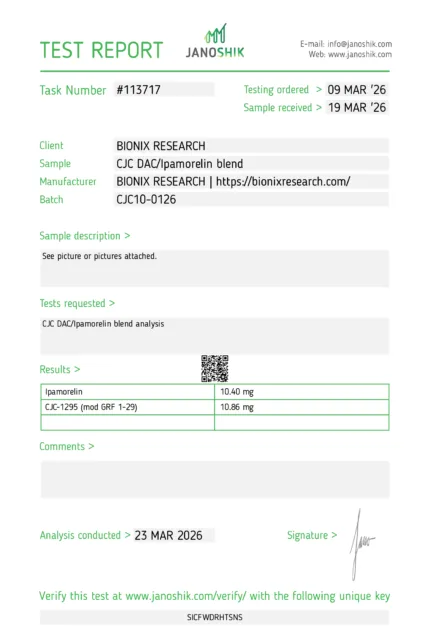
CJC-1295 + Ipamorelin Blend
69,90 € Vialincl. VAT
plus Shipping Costs
Delivery time: 1–6 Working Days
Related products
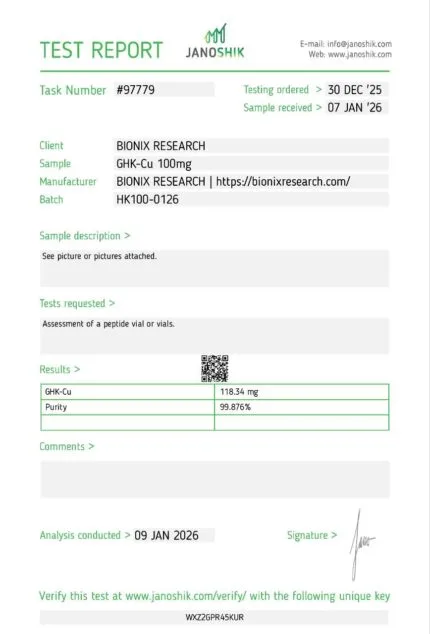
GHK-Cu
29,90 € Vialincl. VAT
plus Shipping Costs
Delivery time: 1–6 Working Days
Kisspeptin-10
39,90 € Vialincl. VAT
plus Shipping Costs
Delivery time: 1–6 Working Days
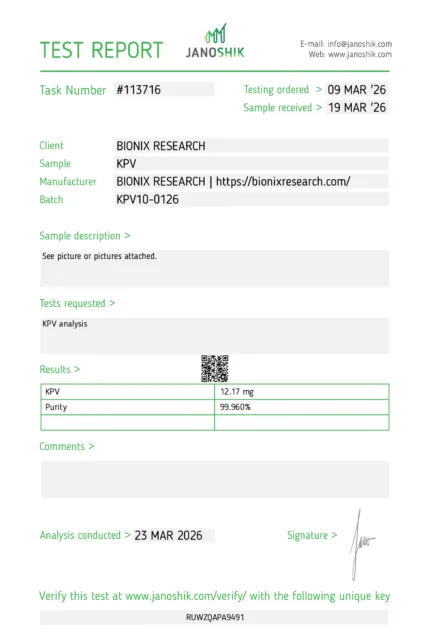
KPV
34,90 € Vialincl. VAT
plus Shipping Costs
Delivery time: 1–6 Working Days
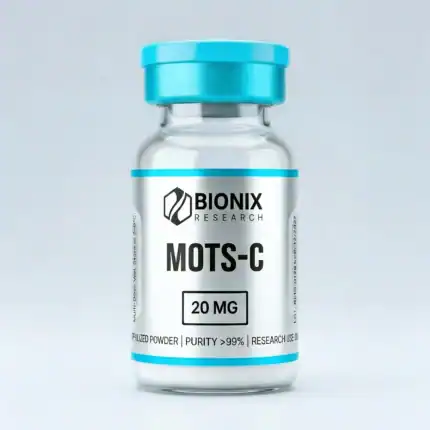
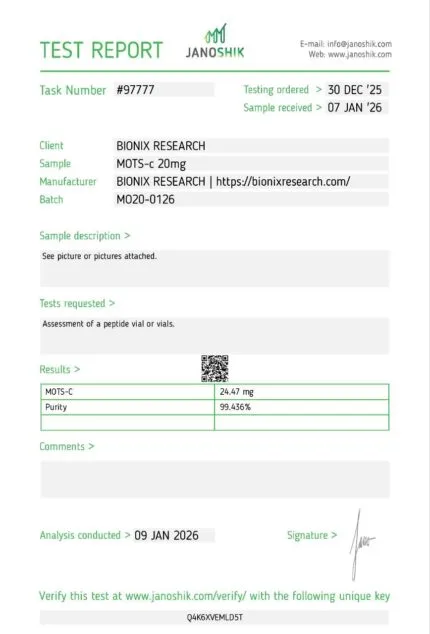
MOTS-c
49,90 € Vialincl. VAT
plus Shipping Costs
Delivery time: 1–6 Working Days

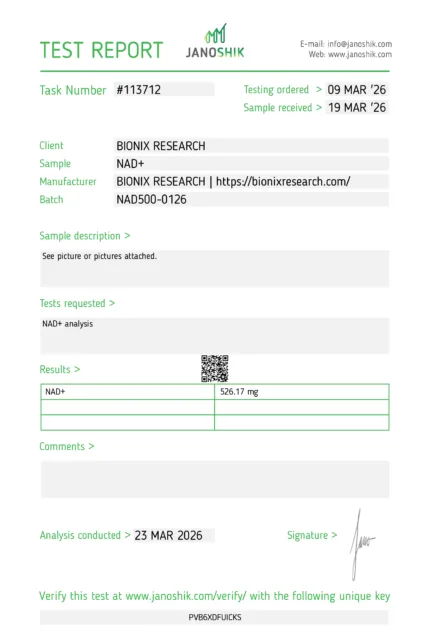
NAD+
59,90 € Vialincl. VAT
plus Shipping Costs
Delivery time: 1–6 Working Days
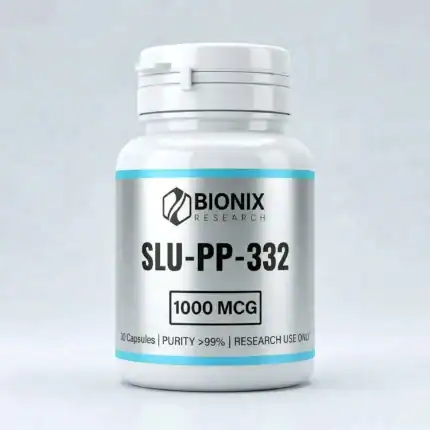
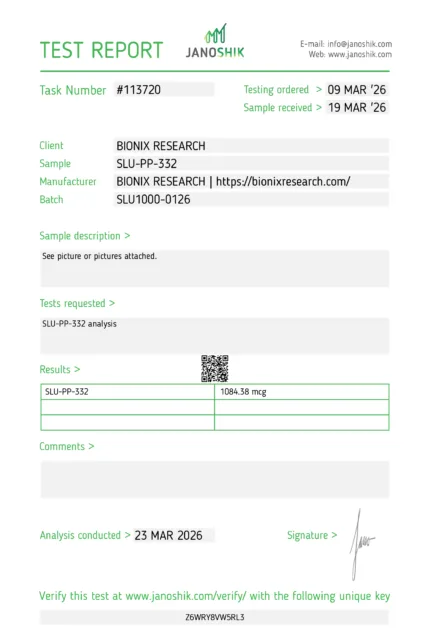
SLU-PP-332 Capsules
99,90 € Bottleincl. VAT
plus Shipping Costs
Delivery time: 1–6 Working Days
SNAP-8
14,90 € Vialincl. VAT
plus Shipping Costs
Delivery time: 1–6 Working Days
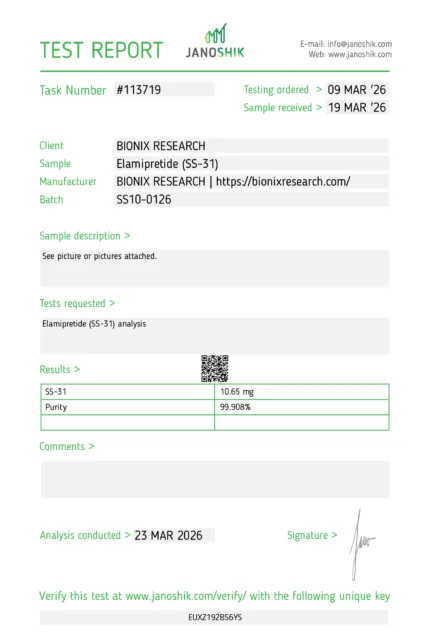
SS-31 (Elamipretide) Peptide
49,90 € Vialincl. VAT
plus Shipping Costs
Delivery time: 1–6 Working Days

