


SNAP-8
14,90 € Vial
5% off when paying with cryptocurrency
incl. VAT plus Shipping Costs
SNAP-8 Peptide 10mg – Acetyl Octapeptide-3 for SNARE Complex Research
- Synthetic octapeptide functioning as a competitive SNAP-25 analog, modulating SNARE complex formation and vesicle fusion dynamics.
- Studies demonstrate dose-dependent inhibition of neurotransmitter release through disruption of the Syntaxin/SNAP-25/VAMP protein assembly.
- Purity ≥99% (HPLC-verified). Supplied as lyophilized powder, 10mg per vial.
- Research applications include SNARE complex dynamics, exocytosis mechanisms, neurotransmitter release modulation, and membrane fusion studies.
- Store at -20°C. For research purposes only. Not intended for human consumption.
| Quantity | Price | Discount |
|---|---|---|
| 11-20 | 12,66 € Vial | 15% |
| 21+ | 11,92 € Vial | 20% |
Delivery time: 1–6 Working Days
SNAP-8 Peptide 10mg – Acetyl Octapeptide-3
KEY SPECIFICATIONS
| Parameter | Specification |
|---|---|
| Type | Synthetic octapeptide (SNAP-25 analog) |
| Target | SNARE Complex (Syntaxin, SNAP-25, VAMP) |
| Sequence | Ac-Glu-Glu-Met-Gln-Arg-Arg-Ala-Asp-NH₂ |
| Molecular Formula | C₄₁H₇₀N₁₆O₁₆S |
| Molecular Weight | 1,075.16 g/mol |
| CAS Number | 868844-74-0 |
| Length | 8 amino acids |
| Parent Protein | SNAP-25 (N-terminal analog) |
| Stability Modifications | N-acetylation, C-amidation |
| Form | Lyophilized powder |
| Purity | ≥99% (HPLC) |
| Quantity | 10mg |
| Storage | -20°C |
PRODUCT OVERVIEW
SNAP-8 (Acetyl Octapeptide-3) is a synthetic octapeptide engineered as a structural analog of SNAP-25 (Synaptosomal-Associated Protein, 25 kDa)—a critical component of the SNARE complex responsible for vesicle fusion and neurotransmitter release. Laboratory research demonstrates SNAP-8 functions as a competitive inhibitor of SNARE complex formation by mimicking the N-terminal region of SNAP-25, competing for binding sites on Syntaxin and VAMP (Vesicle-Associated Membrane Protein), disrupting functional fusion complexes. Blanes-Mira et al. (2002) documented dose-dependent reductions in catecholamine release from chromaffin cell models. Monteiro et al. (2006) demonstrated reduced mEPSC frequency with preserved amplitude in hippocampal neurons—confirming presynaptic, reversible mechanism. BIONIX supplies SNAP-8 with ≥99% purity for neurobiological and exocytosis research.
MECHANISM OF ACTION
SNAP-8 exerts effects through competitive inhibition of SNARE complex assembly—the molecular machinery essential for calcium-triggered vesicle fusion and neurotransmitter release.
SNARE Complex Architecture:
| Protein | Location | Function | Contribution |
|---|---|---|---|
| Syntaxin-1 | Presynaptic plasma membrane | t-SNARE | One α-helix to four-helix bundle |
| SNAP-25 | Presynaptic plasma membrane | t-SNARE | Two α-helices (SNAP-25A, SNAP-25B) |
| VAMP/Synaptobrevin | Synaptic vesicle membrane | v-SNARE | One α-helix to four-helix bundle |
Assembly proceeds through “zippering” from N-terminus toward C-terminus, generating mechanical force for membrane fusion.
SNAP-8 Competitive Inhibition Mechanism:
| Step | Normal Physiology | With SNAP-8 | Result |
|---|---|---|---|
| 1. Initial binding | SNAP-25 engages Syntaxin | SNAP-8 competes for Syntaxin site | Competitive displacement |
| 2. VAMP recruitment | Complete four-helix bundle forms | Incomplete/unstable complex | Assembly disruption |
| 3. Zippering | N→C terminal zippering generates force | Truncated peptide cannot support zippering | No mechanical force |
| 4. Membrane fusion | Vesicle fuses with plasma membrane | Fusion impaired/prevented | Reduced exocytosis |
| 5. Neurotransmitter release | Normal transmitter release | Reduced release | Modulated transmission |
SNAP-8 contains only eight amino acids versus full α-helical domains of native SNAP-25—cannot form stable four-helix bundle.
Electrophysiological Evidence:
| Parameter | Observation | Research Significance |
|---|---|---|
| mEPSC frequency | Reduced following SNAP-8 | Confirms presynaptic mechanism |
| mEPSC amplitude | Preserved unchanged | Vesicle content unaffected |
| Localization | Presynaptic effects only | Postsynaptic receptors unchanged |
| Reversibility | Effects reversed upon washout | Competitive (not irreversible) inhibition |
Monteiro et al. (2006) in hippocampal neuronal cultures demonstrated SNAP-8 specifically targets vesicle fusion probability without affecting vesicular content or postsynaptic receptor function.
Structural Design Features:
| Feature | Amino Acids | Function | Evidence |
|---|---|---|---|
| QRRR motif | Gln-Arg-Arg-Arg (positions 4-6) | Critical for Syntaxin binding | López et al., 2015 |
| Electrostatic interaction | Arg residues | Bind negatively charged Syntaxin | Structure-activity |
| N-acetylation | N-terminal | Protease resistance, enhanced stability | Acetyl group |
| C-amidation | C-terminal | Carboxypeptidase protection, membrane interaction | Amide group |
López et al. (2015) confirmed alanine substitution of arginine residues results in near-complete loss of inhibitory function—establishing QRRR as critical activity motif.
Proposed Inhibition Pathway:
SNAP-8 → Syntaxin Binding Competition → SNAP-25 Displacement →
Incomplete SNARE Complex Assembly → Zippering Failure →
No Mechanical Force Generation → Vesicle Fusion Blocked →
Reduced Neurotransmitter Release (Reversible Upon Washout)
Comparative Profile:
| Property | SNAP-8 | Argireline | Leuphasyl |
|---|---|---|---|
| Sequence Length | 8 amino acids | 6 amino acids | 5 amino acids |
| Molecular Weight | 1,075.16 g/mol | 888.9 g/mol | Variable |
| Target | SNARE complex (SNAP-25 site) | SNARE complex (SNAP-25 site) | Enkephalinase pathway |
| Mechanism | Competitive SNAP-25 inhibition | Competitive SNAP-25 inhibition | Indirect neuromodulation |
| Potency | Enhanced vs. Argireline | Reference standard | Different mechanism |
| QRRR Motif | Present (positions 4-6) | Present (truncated) | Absent |
| Reversibility | Fully reversible | Fully reversible | Reversible |
| Research Focus | SNARE dynamics, exocytosis | SNARE dynamics | Neuropeptide research |
SNAP-8 represents advanced derivative of Argireline—engineered with two additional amino acids for enhanced binding affinity and inhibitory potency.
RESEARCH APPLICATIONS
• SNARE Complex Dynamics: Primary tool for investigating protein-protein interactions during vesicle fusion. Binding site characterization: mapping critical interaction domains within SNARE complex by competing with endogenous SNAP-25 (López et al., 2015 QRRR motif identification). Assembly kinetics: temporal analysis of complex formation by applying peptide at defined stimulation timepoints to identify critical assembly windows and rate-limiting steps. Competitive binding assays: tool compound for developing SNARE-targeted screening assays; displacement of fluorescently-labeled SNAP-8 enables identification of novel SNARE modulators.
• Neurotransmitter Release Modulation: Controlled manipulation of synaptic transmission in neuronal culture models. Glutamatergic transmission (hippocampal neurons—mEPSC frequency/amplitude analysis). Catecholamine release (chromaffin cells—amperometric detection; Blanes-Mira et al., 2002 IC₅₀ in micromolar range, basal secretion unaffected). GABAergic transmission (cortical interneurons—mIPSC analysis). Dopamine release (midbrain cultures—HPLC quantification). Specificity for regulated (stimulated) versus constitutive secretion.
• Neuromodulation and Synaptic Plasticity: Investigation of short-term plasticity mechanisms: high-frequency stimulation increases SNAP-8 susceptibility—SNARE complex availability becomes rate-limiting during intense activity (implications for paired-pulse depression and synaptic fatigue). Release probability studies: modulating SNARE complex formation to investigate how release probability affects synaptic strength and information processing. Reversible action enables within-experiment comparisons of normal versus SNARE-compromised transmission.
• Membrane Fusion and Vesicle Trafficking: Beyond neuronal systems: endocrine secretion (insulin-secreting β-cells—regulated hormone release requirements), immune cell degranulation (mast cells, basophils, cytotoxic T-cells—inflammatory mediator and cytotoxic granule release without genetic manipulation), constitutive versus regulated secretion (selectivity for calcium-triggered exocytosis enables pathway distinction and distinct molecular requirement identification).
• Structure-Activity Relationship Studies: Systematic amino acid substitution investigations: alanine scanning of QRRR motif, N-terminus modifications, C-terminus truncation effects. Electrostatic interaction mapping: quantifying Syntaxin binding affinity variants. Membrane permeability optimization: acetylation/amidation modifications for cellular uptake. Fluorescent labeling strategies: FITC/rhodamine conjugates for imaging SNARE complex assembly in real time.
ANALYTICAL VERIFICATION
BIONIX SNAP-8 undergoes comprehensive analytical characterization:
• HPLC Analysis: Gradient separation confirms ≥99% purity; separates octapeptide from impurities, QRRR motif truncations, and synthesis byproducts • Mass Spectrometry: Exact molecular weight confirmation (1,075.16 g/mol) and Ac-Glu-Glu-Met-Gln-Arg-Arg-Ala-Asp-NH₂ sequence verification including N-acetylation and C-amidation • Amino Acid Analysis: Composition quantification • Terminal Modification Verification: Acetyl and amide group confirmation • Endotoxin Testing: LAL assay for cell culture applications
Physical Characteristics:
| Property | Specification |
|---|---|
| Appearance | White to off-white lyophilized powder |
| Molecular Weight | 1,075.16 g/mol |
| Sequence | Ac-Glu-Glu-Met-Gln-Arg-Arg-Ala-Asp-NH₂ |
| Amino Acids | 8 residues |
| Critical Motif | QRRR (Gln-Arg-Arg-Arg, positions 4-6) |
| Modifications | N-acetylation, C-amidation |
| Parent Analog | SNAP-25 N-terminal region |
| Purity | ≥99% (HPLC-verified) |
DEVELOPMENT STATUS
• Origin: Synthetic SNAP-25 N-terminal analog; engineered from Argireline platform • Research History: 20+ years of SNARE complex investigation; established tool in exocytosis research • Mechanism: Competitive SNAP-25 inhibition; QRRR motif mediates Syntaxin binding • Clinical Status: Not FDA or EMA approved; research compound only • Key Studies: Blanes-Mira et al. (2002)—catecholamine release; Monteiro et al. (2006)—mEPSC electrophysiology; López et al. (2015)—structure-activity/QRRR motif • WADA Status: Research compound (verify current prohibited list)
BIONIX SNAP-8 is supplied exclusively for laboratory research purposes—not for therapeutic use, human administration, veterinary, or clinical applications.
FREQUENTLY ENCOUNTERED INQUIRIES
What is SNAP-8 and how does it work?
SNAP-8 (Acetyl Octapeptide-3, 1,075.16 g/mol) is a synthetic SNAP-25 analog with sequence Ac-Glu-Glu-Met-Gln-Arg-Arg-Ala-Asp-NH₂. Research demonstrates it functions as a competitive inhibitor, binding to Syntaxin and VAMP in place of native SNAP-25. This competition disrupts functional SNARE complex assembly—preventing the four-helix bundle zippering required for membrane fusion. Result: reduced vesicle fusion and neurotransmitter release. Mechanism is fully reversible upon washout, making SNAP-8 suitable for controlled temporal experiments in exocytosis research.
What is the QRRR motif and why is it important?
The QRRR motif (Gln-Arg-Arg-Arg at positions 4-6) is the critical structural element mediating SNAP-8’s biological activity. These arginine residues engage in electrostatic interactions with negatively charged residues on Syntaxin—enabling competitive binding. López et al. (2015) demonstrated that alanine substitution of any arginine in this motif results in near-complete loss of inhibitory function. The QRRR sequence represents the minimal essential element for SNARE-targeted competitive inhibition.
How does SNAP-8 differ from Argireline?
SNAP-8 is an advanced derivative of Argireline (Acetyl Hexapeptide-3) containing eight amino acids versus Argireline’s six. Both share the same fundamental mechanism—competitive SNAP-25 inhibition within the SNARE complex. However, SNAP-8 was engineered with enhanced binding affinity and inhibitory potency, demonstrating superior efficacy in vesicle fusion inhibition assays. The two additional residues (Met-Gln at positions 3-4) extend the QRRR motif proximity to Syntaxin, improving competitive displacement. For research requiring maximum SNARE modulation, SNAP-8 provides more robust effects.
What research models is SNAP-8 used in?
Primary applications: chromaffin cell cultures (catecholamine release—amperometric detection), hippocampal neuronal cultures (synaptic transmission—patch-clamp, mEPSC analysis), endocrine cell models (regulated secretion—insulin release assays), immune cell degranulation (mast cells, cytotoxic T-cells), and SNARE binding assays (fluorescence-based, surface plasmon resonance). Structure-activity studies utilize systematic amino acid substitutions (alanine scanning). All applications restricted to controlled laboratory environments.
What electrophysiological evidence supports SNAP-8’s mechanism?
Monteiro et al. (2006) demonstrated in hippocampal neuronal cultures: reduced miniature excitatory postsynaptic current (mEPSC) frequency following SNAP-8 application—indicating reduced vesicle fusion probability. Critically, individual mEPSC amplitudes remained unchanged—confirming vesicular neurotransmitter content and postsynaptic receptor function were unaffected. Effects reversed upon peptide washout. This pattern confirms SNAP-8 specifically targets the probability of presynaptic vesicle fusion (SNARE-dependent) without downstream effects.
Is SNAP-8 approved for clinical use?
Negative. SNAP-8 is a research compound designed for investigating SNARE complex biology and exocytosis mechanisms. It is not FDA or EMA approved for therapeutic indications. Originating from structural studies of SNAP-25 (physiological SNARE component), SNAP-8 has been investigated exclusively in in vitro and preclinical models for understanding vesicle trafficking, neurotransmitter release, and membrane fusion. BIONIX supplies research-grade material for laboratory use only—not for human therapeutic application, clinical administration, or diagnostic purposes.
REFERENCES
- PMID: 18498522 — A synthetic hexapeptide (Argireline) with antiwrinkle activity; SNAP-8 development basis (Int J Cosmet Sci, 2002)
- PMID: 16442237 — Inhibition of transmitter release by botulinum neurotoxins in hippocampal neurons; SNAP-8 mEPSC electrophysiology (Neuroscience, 2006)
- PMID: 25559405 — Design, synthesis and biological evaluation of SNAP-25 analogues; QRRR motif critical for Syntaxin binding (Peptides, 2015)
- PMID: 9774100 — Crystal structure of a SNARE complex involved in synaptic exocytosis at 2.4 Å resolution (Nature, 1998)
- PMID: 16912722 — SNAREs—engines for membrane fusion (Nat Rev Mol Cell Biol, 2006)
- Multiple studies — SNAP-8 competitive inhibition and reversible exocytosis modulation
| Dosage | 10mg, 20mg, 40mg, 50mg, 5mg |
|---|
Product safety
Safety instructions
SAFETY DATA SHEET (SDS)
SNAP-8 Peptid – Research-Grade Lyophilized Powder (RUO)
CAS Number: 868844-74-0
Synonyms: Acetyl Octapeptide-3
REACH Registration: Exempt (<1 tonne/year; Research Use Only)
SECTION 1 — Identification
1.1 Product Identifier: SNAP-8 Peptid – Lyophilized Powder
1.2 Identified Uses: Analytical-grade peptide for in-vitro laboratory research. Research Use Only (RUO). Not for human or veterinary use.
1.3 Supplier: BIONIX RESEARCH
Email: info@bionixresearch.com
1.4 Emergency: EU Emergency Number: 112
SECTION 2 — Hazards Identification
2.1 Classification: Not classified as hazardous under CLP Regulation (EC) 1272/2008. No GHS pictograms required.
2.2 Precautionary notes:
- Avoid dust inhalation
- Avoid contact with eyes
- Laboratory use only
SECTION 3 — Composition
Substance: SNAP-8 Peptid
CAS: 868844-74-0
Purity: ≥99% HPLC
Form: Lyophilized powder
Impurities: None classified as hazardous.
SECTION 4 — First-Aid Measures
Inhalation: Move to fresh air. Rinse mouth and nose.
Skin Contact: Wash thoroughly with water and soap.
Eye Contact: Rinse cautiously with clean water for several minutes.
Ingestion: Rinse mouth. Do not induce vomiting. Seek medical advice.
SECTION 5 — Fire-Fighting Measures
Extinguishing Media: CO₂, dry chemical, foam, or water spray.
Hazards: Organic peptide powder, non-flammable. Thermal decomposition may release CO, CO₂, nitrogen oxides.
SECTION 6 — Accidental Release Measures
Avoid dust formation. Use gloves, mask, protective eyewear. Collect powder into sealed waste container.
SECTION 7 — Handling and Storage
Handling: Use only in laboratory settings. Minimize dust formation. Wear standard PPE.
Storage: Store at −20 °C in sealed vial. Protect from sunlight and humidity. Research use only.
SECTION 8 — Exposure Controls / Personal Protection
Exposure Limits: None established.
PPE: Nitrile or latex gloves, lab coat, protective eyewear, dust mask when handling powders.
SECTION 9 — Physical and Chemical Properties
Appearance: White to off-white lyophilized powder
Odor: None
Solubility: Soluble in sterile water, dilute acids, or aqueous buffers
Stability: Stable when stored at −20 °C
SECTION 10 — Stability and Reactivity
Stable under recommended conditions. Avoid heat, moisture, air exposure, oxidizing agents.
SECTION 11 — Toxicological Information
No data available for human exposure. Low acute toxicity expected. Dust may cause mild irritation. Not intended for injection, ingestion, or topical use.
SECTION 12 — Ecological Information
No data available. Not expected to present environmental risks. Prevent release into water systems.
SECTION 13 — Disposal Considerations
Dispose according to local regulations for laboratory chemical waste. Do not dispose via household waste or sewer systems.
SECTION 14 — Transport Information
Not regulated under ADR, IMDG, IATA. No UN classification required.
SECTION 15 — Regulatory Information
Not subject to REACH registration (<1 tonne/year; RUO exemption). Not classified under CLP. Not a pharmaceutical, cosmetic, or medical product.
SECTION 16 — Other Information
This SDS is intended for trained laboratory personnel. It does not signify suitability for therapeutic, diagnostic, or consumer applications.
Related products

Bacteriostatic (BAC) Water
9,90 € Vialincl. VAT
plus Shipping Costs
Delivery time: 1–6 Working Days

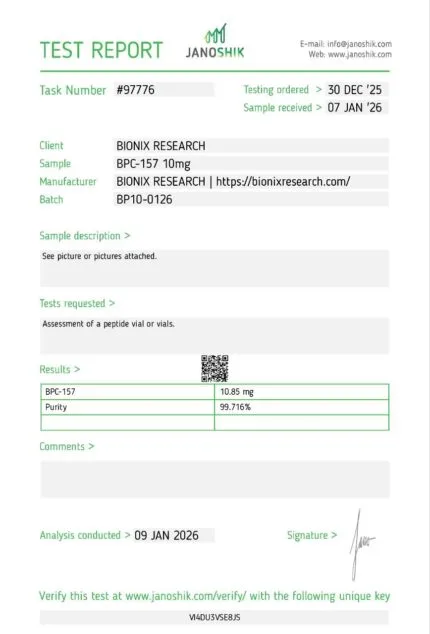
BPC-157
24,90 € Vialincl. VAT
plus Shipping Costs
Delivery time: 1–6 Working Days

BPC-157 & TB-500 Blend (Wolverine Stack)
49,90 € Vialincl. VAT
plus Shipping Costs
Delivery time: 1–6 Working Days

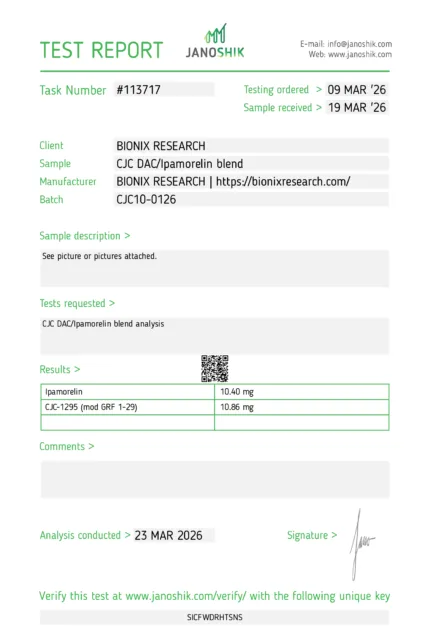
CJC-1295 + Ipamorelin Blend
69,90 € Vialincl. VAT
plus Shipping Costs
Delivery time: 1–6 Working Days
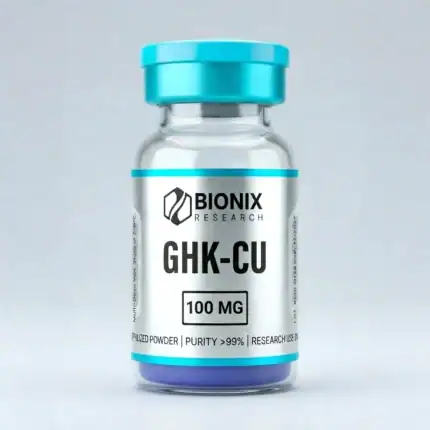
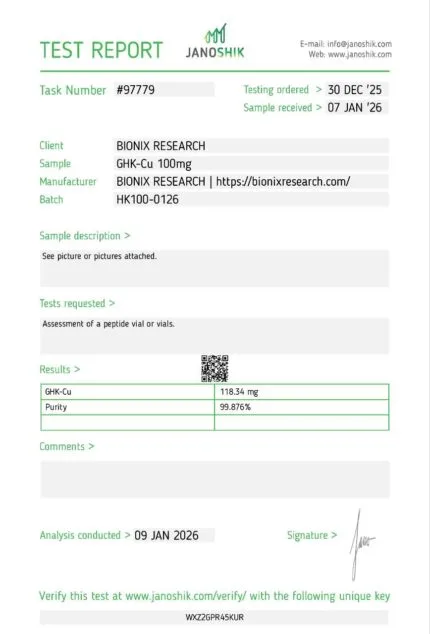
GHK-Cu
29,90 € Vialincl. VAT
plus Shipping Costs
Delivery time: 1–6 Working Days
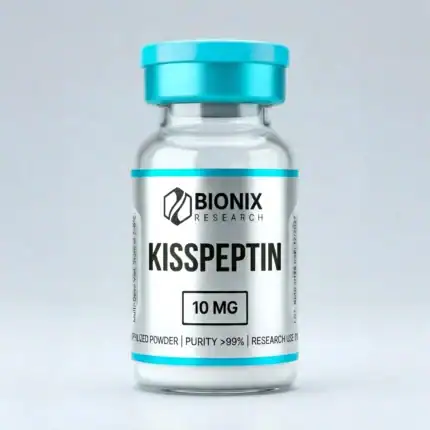
Kisspeptin-10
39,90 € Vialincl. VAT
plus Shipping Costs
Delivery time: 1–6 Working Days
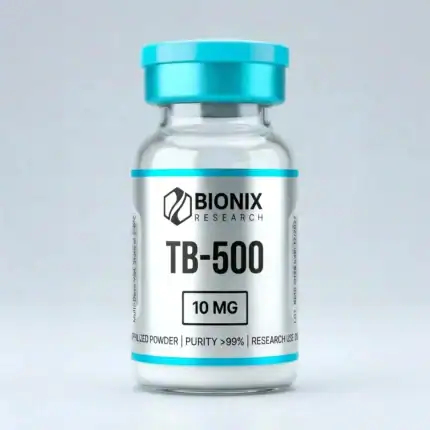
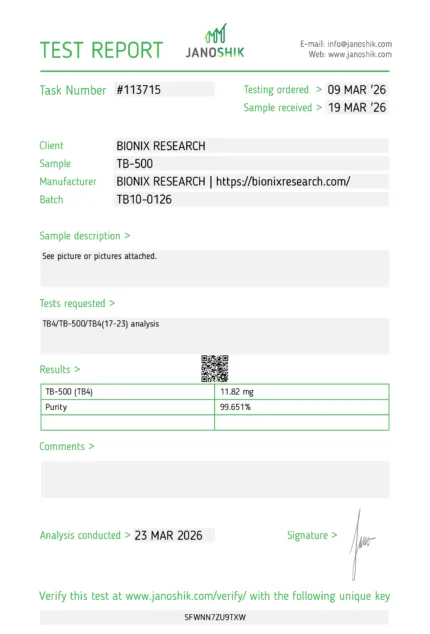
TB-500 (Thymosin Beta-4)
49,90 € Vialincl. VAT
plus Shipping Costs
Delivery time: 1–6 Working Days
Thymosin Alpha-1
59,90 € Vialincl. VAT
plus Shipping Costs
Delivery time: 1–6 Working Days

