


Bacteriostatic (BAC) Water
9,90 € Vial
5% off when paying with cryptocurrency
incl. VAT plus Shipping Costs
Bacteriostatic Water 3mL – Preserved Sterile Diluent for Peptide Reconstitution
- USP-grade sterile water containing 0.9% benzyl alcohol as a bacteriostatic preservative, enabling safe multi-use vial access for research applications.
- The antimicrobial agent inhibits bacterial and fungal growth, allowing repeated withdrawals over extended periods (up to 28 days) without contamination risk.
- Ideal for reconstituting lyophilized peptides into stable solutions for experimental protocols.
- Store at room temperature or refrigerated.
- For research purposes only. Not intended for human use.
| Quantity | Price | Discount |
|---|---|---|
| 11-20 | 8,42 € Vial | 15% |
| 21+ | 7,92 € Vial | 20% |
Delivery time: 1–6 Working Days
Bacteriostatic Water 3mL – Preserved Sterile Diluent
Key Facts: Bacteriostatic Water
| Property | Value |
|---|---|
| Type | Sterile Water with Bacteriostatic Preservative |
| Preservative | Benzyl Alcohol 0.9% (9 mg/mL) |
| Grade | USP (United States Pharmacopeia) |
| Sterility | Sterile, Nonpyrogenic |
| pH Range | 4.5 – 7.0 (average 5.7) |
| Primary Use | Peptide reconstitution, multi-use dilution |
| Volume | 3mL |
| Container |
Product Overview
Bacteriostatic Water for Injection (bWFI) is a sterile, nonpyrogenic preparation of purified water containing 0.9% benzyl alcohol as a bacteriostatic preservative. This specialized diluent is designed for reconstituting lyophilized peptides and other research compounds, with the preservative enabling safe multi-dose vial access over extended periods.
Unlike preservative-free Sterile Water for Injection (which must be discarded after a single use), Bacteriostatic Water can be safely accessed multiple times over up to 28 days, as the benzyl alcohol continuously inhibits bacterial and fungal growth. This makes it the preferred diluent for research applications involving repeated dosing or extended experimental protocols.
BIONIX Bacteriostatic Water meets USP specifications for sterility and composition, providing researchers with a reliable, pharmaceutical-grade diluent for peptide research applications.
Specifications
| Property | Specification |
|---|---|
| Product | Bacteriostatic Water for Injection, USP |
| Composition | Sterile Water + 0.9% Benzyl Alcohol |
| Benzyl Alcohol Content | 9 mg/mL (0.9% w/v) |
| Sterility | Sterile (membrane filtered) |
| Pyrogenicity | Nonpyrogenic |
| pH | 4.5 – 7.0 |
| Osmolarity | Hypotonic |
| Appearance | Clear, colorless solution |
| Container | Glass vial with rubber septum |
| Volume | 3mL |
| Storage | Room temperature (15-30°C) or refrigerated (2-8°C) |
| Shelf Life (Unopened) | See expiration date |
| Shelf Life (After Opening) | Up to 28 days |
Mechanism: How Benzyl Alcohol Preserves Sterility
Benzyl alcohol functions as a bacteriostatic agent, meaning it inhibits the growth and reproduction of bacteria without necessarily killing existing microorganisms.
Antimicrobial Action
| Aspect | Description |
|---|---|
| Mode of action | Cell membrane disruption, metabolic interference |
| Spectrum | Bacteria and fungi |
| Classification | Bacteriostatic (inhibits growth) |
| Concentration | 0.9% (sufficient for preservation, minimal toxicity) |
Preservation Mechanism:
- Disrupts bacterial cell membrane integrity
- Interferes with microbial metabolic processes
- Prevents proliferation of contaminating organisms
- Maintains sterility despite multiple vial punctures
pH Stability
| Parameter | Value |
|---|---|
| pH range | 4.5 – 7.0 |
| Average pH | 5.7 |
| Significance | Compatible with most peptides, stable preservation |
The slightly acidic to neutral pH range is compatible with the majority of research peptides and supports optimal benzyl alcohol preservation activity.
Packaging
| Component | Description |
|---|---|
| Container | Clear glass vial |
| Closure | Rubber septum with aluminum crimp seal |
| Volume | 3mL |
| Labeling | Lot number, expiration date, composition |
Frequently Asked Questions
What is Bacteriostatic Water used for in peptide research?
Bacteriostatic Water is used to reconstitute (dissolve) lyophilized peptide powders into liquid solutions for research applications. The 0.9% benzyl alcohol preservative inhibits bacterial growth, allowing the solution to be used multiple times over up to 28 days. This makes it ideal for multi-dose research protocols where peptides are withdrawn from the same vial over an extended period.
How long can I use Bacteriostatic Water after opening?
Once opened (first needle puncture), Bacteriostatic Water should be used within 28 days when stored properly at room temperature or refrigerated. The benzyl alcohol preservative maintains sterility during this period by inhibiting bacterial and fungal growth. Always inspect the solution before use and discard if it appears cloudy, discolored, or contains particles.
What is the difference between Bacteriostatic Water and Sterile Water?
The key difference is the preservative. Bacteriostatic Water contains 0.9% benzyl alcohol which inhibits microbial growth, allowing multi-use access over 28 days. Sterile Water for Injection contains no preservative and must be used immediately after opening, with any remainder discarded. For research protocols involving repeated peptide dosing, Bacteriostatic Water is the preferred choice.
Can Bacteriostatic Water be frozen?
While unopened Bacteriostatic Water can be stored at room temperature or refrigerated (not frozen), reconstituted peptide solutions can be aliquoted and frozen at -20°C for extended storage. However, avoid repeated freeze-thaw cycles of reconstituted peptides as this can degrade peptide structure. Bacteriostatic Water itself should not be frozen.
| Dosage | 10ml, 3ml |
|---|
Product safety
Related products

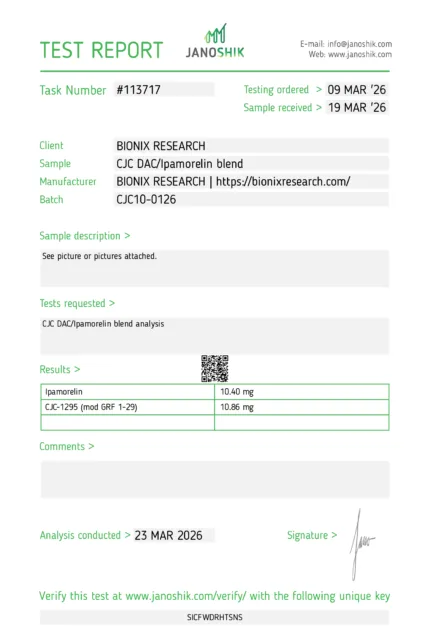
CJC-1295 + Ipamorelin Blend
69,90 € Vialincl. VAT
plus Shipping Costs
Delivery time: 1–6 Working Days

Epithalon
24,90 € Vialincl. VAT
plus Shipping Costs
Delivery time: 1–6 Working Days
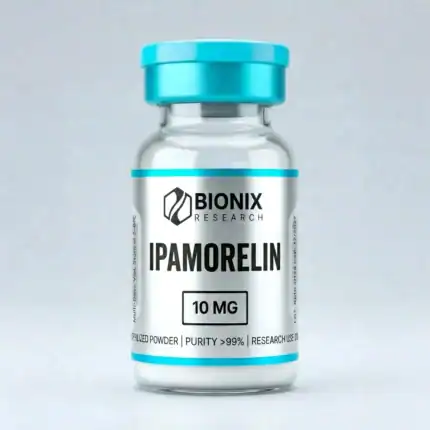
Ipamorelin
39,90 € Vialincl. VAT
plus Shipping Costs
Delivery time: 1–6 Working Days
Kisspeptin-10
39,90 € Vialincl. VAT
plus Shipping Costs
Delivery time: 1–6 Working Days
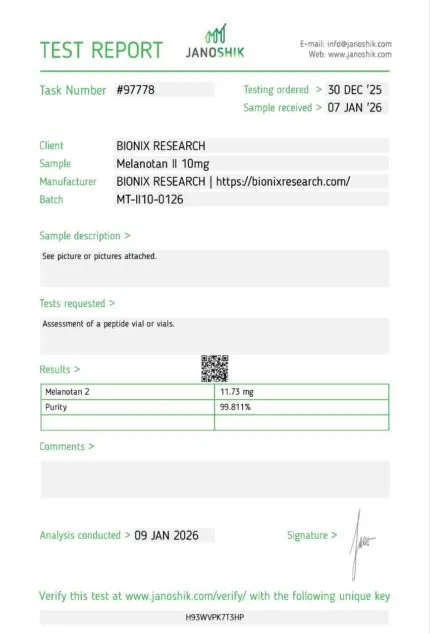
Melanotan 2 (MT-II)
19,90 € Vialincl. VAT
plus Shipping Costs
Delivery time: 1–6 Working Days
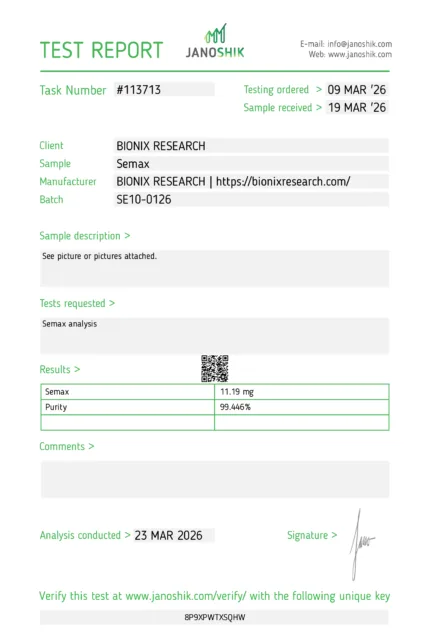
Semax
29,90 € Vialincl. VAT
plus Shipping Costs
Delivery time: 1–6 Working Days
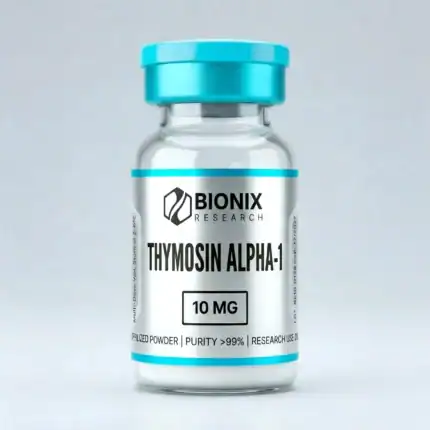
Thymosin Alpha-1
59,90 € Vialincl. VAT
plus Shipping Costs
Delivery time: 1–6 Working Days
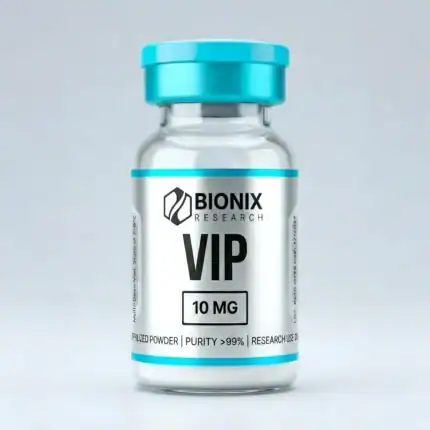
VIP Peptide – Vasoactive Intestinal Peptide
69,90 € Vialincl. VAT
plus Shipping Costs
Delivery time: 1–6 Working Days

