


Thymalin / Thymulin
39,90 €
5% off when paying with cryptocurrency
incl. VAT plus Shipping Costs
Thymalin 20mg – Thymus-Derived Immune Peptide
- Synthetic nonapeptide structurally related to the natural thymic hormone thymulin.
- Zinc-dependent immunomodulatory peptide for T-cell differentiation and thymic function research.
- Forms essential 1:1 complex with Zn²⁺ for biological activity. Research applications include immunomodulation, hematopoiesis, immunosenescence, and thymus-immune axis studies.
- Purity ≥99% (HPLC-verified). Supplied as lyophilized powder, 20mg per vial.
- Store at -20°C. For research purposes only. Not intended for human consumption.
| Quantity | Price | Discount |
|---|---|---|
| 11-20 | 33,92 € | 15% |
| 21+ | 31,92 € | 20% |
Delivery time: 1–6 Working Days
Thymalin / Thymulin 20mg Peptide

Chemical diagram for Thymalin by NEUROtiker – Own work, Public Domain, https://commons.wikimedia.org/w/index.php?curid=2231106
KEY SPECIFICATIONS
| Parameter | Specification |
|---|---|
| Type | Synthetic nonapeptide |
| Target | Immunomodulation, T-cell differentiation |
| Molecular Formula | C₃₃H₅₄N₁₂O₁₅ |
| Molecular Weight | 858.9 Da |
| CAS Number | 63958-90-7 |
| Sequence | Pyr-Ala-Lys-Ser-Gln-Gly-Gly-Ser-Asn |
| Zinc Requirement | Essential for biological activity (1:1 Zn²⁺ complex) |
| Form | Lyophilized powder |
| Purity | ≥99% (HPLC) |
| Quantity | 20mg |
| Storage | -20°C |
PRODUCT OVERVIEW
Thymalin is a synthetic nonapeptide structurally related to the endogenous thymic hormone thymulin. This immunomodulatory research peptide serves as a tool for investigating T-cell differentiation, hematopoietic stem cell mechanisms, and thymic-mediated immune regulation.
A defining characteristic is its absolute zinc dependency—thymalin requires 1:1 Zn²⁺ complex formation for biological activity, creating a direct link between trace element status and immune function in experimental models. BIONIX supplies Thymalin with ≥99% purity and complete analytical verification for controlled laboratory research.
MECHANISM OF ACTION
Thymalin operates through thymic hormone pathways, modulating T-cell development and immune system homeostasis. The peptide interacts with thymic epithelial cells and T-cell precursors to influence immune cell maturation and function.
The Zinc-Thymalin Complex:
| Zinc Status | Thymalin Activity | Research Implication |
|---|---|---|
| Zinc-bound (1:1) | Biologically active | Full receptor engagement |
| Zinc-free | Inactive | No biological function |
| Zinc-deficient | Impaired activity | Models deficiency states |
Primary Immunomodulatory Pathways:
T-Cell Differentiation: Thymalin promotes maturation of immature T-cell precursors into functional T cells, enhancing CD3, CD4, and CD8 marker expression. This supports thymic education processes including self vs. non-self recognition mechanisms.
Hematopoietic Support: Research indicates effects on bone marrow precursor development and lymphoid lineage commitment, supporting stem cell niche interactions and differentiation pathway analysis.
Cytokine Modulation: The peptide influences production of IL-2, IL-6, and other immunomodulatory cytokines, supporting balanced Th1/Th2 responses and potential regulatory effects on inflammatory processes.
Age-Related Immune Context: Thymalin research addresses thymic involution—age-related decrease in thymic function correlating with reduced circulating thymic peptides and T-cell dysfunction (immunosenescence).
Comparative Profile:
| Property | Thymalin | Thymosin Alpha-1 | Thymulin (FTS) |
|---|---|---|---|
| Structure | Nonapeptide | 28 amino acids | Nonapeptide |
| Zinc Requirement | Essential | None | Essential |
| Primary Target | T-cell differentiation | T-cells, DCs, NK cells | T-cell maturation |
| Mechanism | Thymic hormone pathway | TLR2/TLR9 activation | Thymic hormone pathway |
| Clinical Data | Limited (preclinical) | Extensive (approved) | Limited (preclinical) |
RESEARCH APPLICATIONS
Hematopoietic Stem Cell Research: Investigation of bone marrow precursor development, lymphoid lineage commitment, stem cell niche interactions, and differentiation pathway mechanisms in controlled laboratory models.
T-Cell Differentiation Studies: Analysis of E-rosette formation, CD marker expression patterns, thymic selection processes, and T-cell receptor development in experimental systems.
Immunomodulation Research: Studies on immune response balancing, regulatory T-cell function, cytokine network modulation, and immune tolerance mechanisms in cell culture and animal models.
Immunosenescence Models: Investigation of age-related immune decline including thymic involution, T-cell repertoire restoration, age-related immune dysfunction, and zinc-thymalin interactions in aging research.
Circadian Rhythm Studies: Research examining diurnal immune variation, neuroendocrine-immune interactions, and timing-dependent immune responses mediated by thymic peptide fluctuations.
Inflammation Research: Preclinical evaluation in acute and chronic inflammation models, including inflammatory cytokine modulation and tissue-specific immune response analysis.
Tumor Immunology: Studies on tumor immune surveillance, anti-tumor immune responses, and immune checkpoint interactions in tumor-bearing animal models.
ANALYTICAL VERIFICATION
BIONIX Thymalin undergoes comprehensive analytical characterization:
• HPLC Analysis: ≥99% purity confirmation via optimized chromatographic separation
• Mass Spectrometry: Identity verification and molecular weight confirmation (858.9 Da)
• Amino Acid Analysis: Sequence confirmation (Pyr-Ala-Lys-Ser-Gln-Gly-Gly-Ser-Asn)
• Endotoxin Testing: Laboratory quality assurance
Physical Characteristics:
| Property | Specification |
|---|---|
| Appearance | White to off-white lyophilized powder |
| Molecular Weight | 858.9 Da |
| Sequence | Pyr-Ala-Lys-Ser-Gln-Gly-Gly-Ser-Asn |
| N-Terminus | Pyroglutamic acid (Pyr) |
| Purity | ≥99% (HPLC-verified) |
DEVELOPMENT STATUS
Thymalin remains a preclinical research compound:
• Regulatory Status: Not FDA or EMA approved
• Historical Use: Some Eastern European countries (non-Western markets)
• Clinical Stage: No registered therapeutic trials in major Western regulatory systems
• Research Applications: Preclinical immunology, mechanistic studies
• Availability: Laboratory research only
Thymalin is intended exclusively for laboratory research purposes.
FREQUENTLY ENCOUNTERED INQUIRIES
What is the zinc dependency of Thymalin?
Thymalin demonstrates absolute zinc dependence for biological activity. The peptide forms a 1:1 complex with Zn²⁺, and only the zinc-bound configuration exhibits receptor engagement and immunomodulatory function. Researchers must ensure appropriate zinc availability in experimental systems or specifically study zinc-free conditions to model deficiency states.
How does Thymalin relate to thymulin?
Thymalin is structurally related to thymulin (formerly Facteur Thymique Sérique or FTS), sharing the nonapeptide structure and zinc dependency. Both represent thymic hormones involved in T-cell development. While functionally similar, distinct receptor interactions may exist, supporting complementary research applications.
What are the primary research applications?
T-cell differentiation studies, hematopoietic stem cell research, immunosenescence models, zinc-immune interaction studies, cytokine modulation research, circadian immune rhythm investigations, and tumor immunology studies. All applications limited to controlled laboratory environments.
How should Thymalin be stored?
Lyophilized powder requires -20°C storage for long-term stability. Post-reconstitution, store at 2-8°C and use within 7-14 days. For extended storage of reconstituted solution, prepare aliquots and freeze at -20°C, avoiding repeated freeze-thaw cycles.
What differentiates Thymalin from Thymosin Alpha-1?
Thymalin is a 9-amino-acid zinc-dependent nonapeptide, while Thymosin Alpha-1 contains 28 amino acids and operates via TLR2/TLR9 activation without zinc requirement. Thymosin Alpha-1 has extensive clinical approval (35+ countries), whereas Thymalin remains in preclinical research status.
Is Thymalin approved for therapeutic use?
Negative. Thymalin is not FDA or EMA approved. It has limited historical use in some Eastern European regions but lacks regulatory approval in major Western markets. This product is intended exclusively for laboratory research.
| Dosage | 10mg, 20mg, 40mg, 50mg, 5mg |
|---|
Product safety
Safety instructions
SAFETY DATA SHEET (SDS)
Thymalin 20mg – Research-Grade Lyophilized Powder (RUO)
CAS Number: 63958-90-7
Synonyms: Thymalin
REACH Registration: Exempt (<1 tonne/year; Research Use Only)
SECTION 1 — Identification
1.1 Product Identifier: Thymalin 20mg – Lyophilized Powder
1.2 Identified Uses: Analytical-grade peptide for in-vitro laboratory research. Research Use Only (RUO). Not for human or veterinary use.
1.3 Supplier: BIONIX RESEARCH
Email: info@bionixresearch.com
1.4 Emergency: EU Emergency Number: 112
SECTION 2 — Hazards Identification
2.1 Classification: Not classified as hazardous under CLP Regulation (EC) 1272/2008. No GHS pictograms required.
2.2 Precautionary notes:
- Avoid dust inhalation
- Avoid contact with eyes
- Laboratory use only
SECTION 3 — Composition
Substance: Thymalin 20mg
CAS: 63958-90-7
Purity: ≥99% HPLC
Form: Lyophilized powder
Impurities: None classified as hazardous.
SECTION 4 — First-Aid Measures
Inhalation: Move to fresh air. Rinse mouth and nose.
Skin Contact: Wash thoroughly with water and soap.
Eye Contact: Rinse cautiously with clean water for several minutes.
Ingestion: Rinse mouth. Do not induce vomiting. Seek medical advice.
SECTION 5 — Fire-Fighting Measures
Extinguishing Media: CO₂, dry chemical, foam, or water spray.
Hazards: Organic peptide powder, non-flammable. Thermal decomposition may release CO, CO₂, nitrogen oxides.
SECTION 6 — Accidental Release Measures
Avoid dust formation. Use gloves, mask, protective eyewear. Collect powder into sealed waste container.
SECTION 7 — Handling and Storage
Handling: Use only in laboratory settings. Minimize dust formation. Wear standard PPE.
Storage: Store at −20 °C in sealed vial. Protect from sunlight and humidity. Research use only.
SECTION 8 — Exposure Controls / Personal Protection
Exposure Limits: None established.
PPE: Nitrile or latex gloves, lab coat, protective eyewear, dust mask when handling powders.
SECTION 9 — Physical and Chemical Properties
Appearance: White to off-white lyophilized powder
Odor: None
Solubility: Soluble in sterile water, dilute acids, or aqueous buffers
Stability: Stable when stored at −20 °C
SECTION 10 — Stability and Reactivity
Stable under recommended conditions. Avoid heat, moisture, air exposure, oxidizing agents.
SECTION 11 — Toxicological Information
No data available for human exposure. Low acute toxicity expected. Dust may cause mild irritation. Not intended for injection, ingestion, or topical use.
SECTION 12 — Ecological Information
No data available. Not expected to present environmental risks. Prevent release into water systems.
SECTION 13 — Disposal Considerations
Dispose according to local regulations for laboratory chemical waste. Do not dispose via household waste or sewer systems.
SECTION 14 — Transport Information
Not regulated under ADR, IMDG, IATA. No UN classification required.
SECTION 15 — Regulatory Information
Not subject to REACH registration (<1 tonne/year; RUO exemption). Not classified under CLP. Not a pharmaceutical, cosmetic, or medical product.
SECTION 16 — Other Information
This SDS is intended for trained laboratory personnel. It does not signify suitability for therapeutic, diagnostic, or consumer applications.
Related products
CJC-1295 No DAC
54,90 € Vialincl. VAT
plus Shipping Costs
Delivery time: 1–6 Working Days

Epithalon
24,90 € Vialincl. VAT
plus Shipping Costs
Delivery time: 1–6 Working Days
Ipamorelin
39,90 € Vialincl. VAT
plus Shipping Costs
Delivery time: 1–6 Working Days

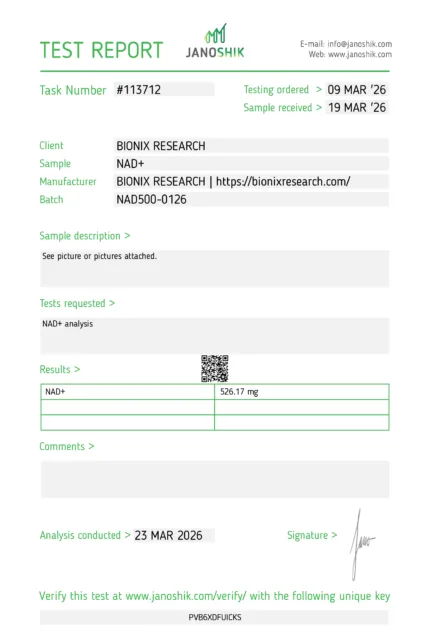
NAD+
59,90 € Vialincl. VAT
plus Shipping Costs
Delivery time: 1–6 Working Days
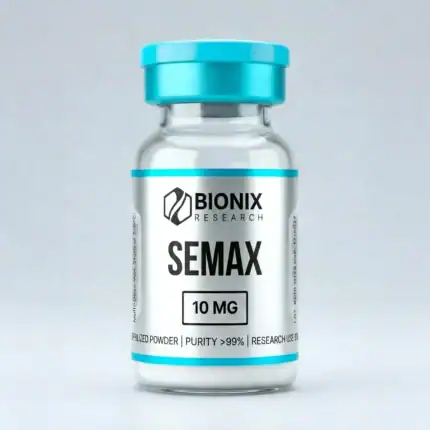
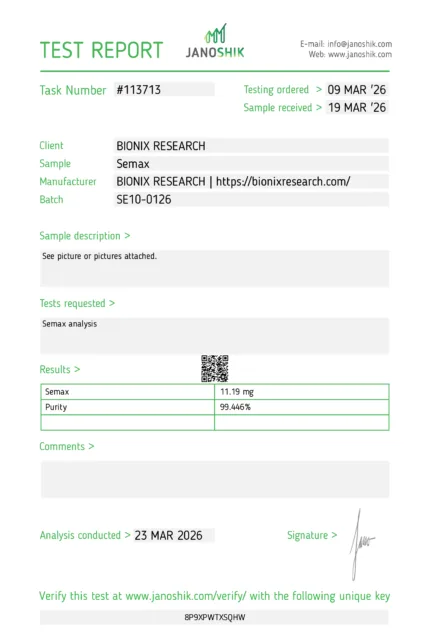
Semax
29,90 € Vialincl. VAT
plus Shipping Costs
Delivery time: 1–6 Working Days
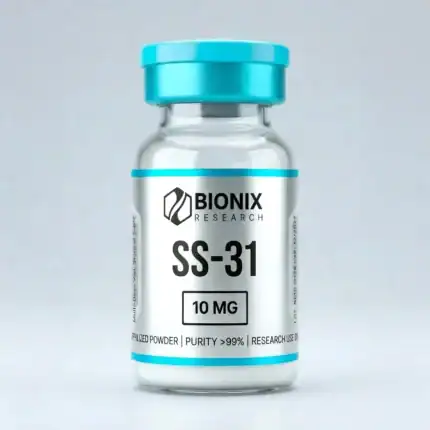
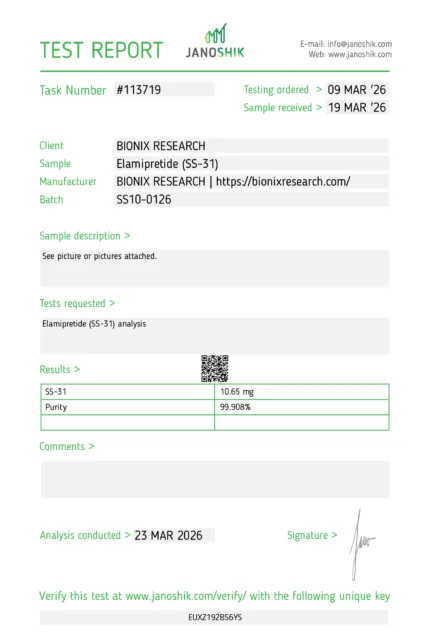
SS-31 (Elamipretide) Peptide
49,90 € Vialincl. VAT
plus Shipping Costs
Delivery time: 1–6 Working Days
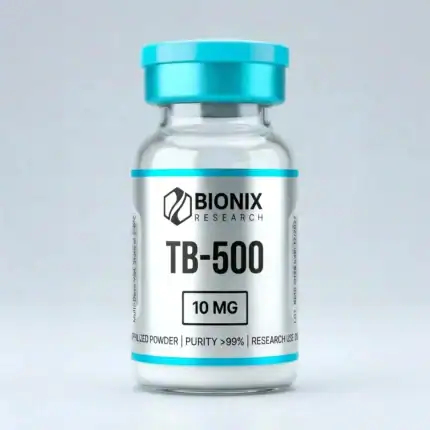
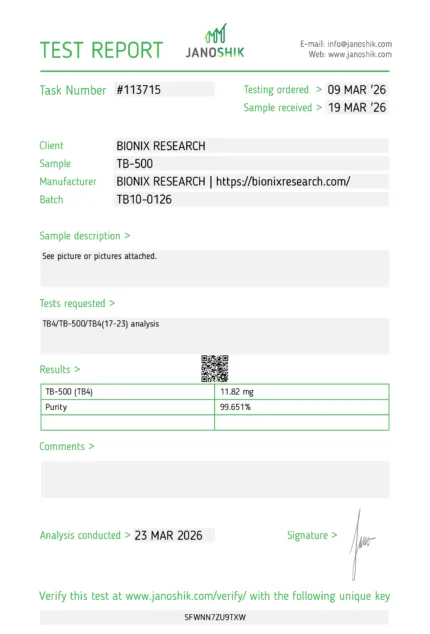
TB-500 (Thymosin Beta-4)
49,90 € Vialincl. VAT
plus Shipping Costs
Delivery time: 1–6 Working Days
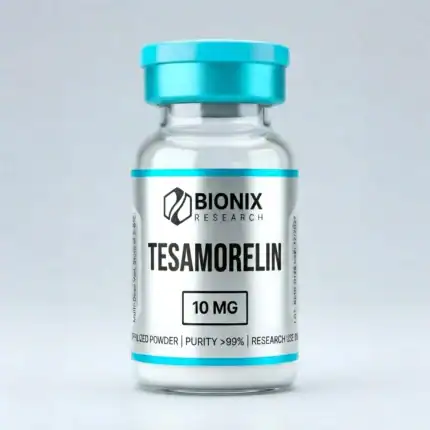
Tesamorelin
79,90 € Vialincl. VAT
plus Shipping Costs
Delivery time: 1–6 Working Days

