


CJC-1295 No DAC
54,90 € Vial
5% off when paying with cryptocurrency
incl. VAT plus Shipping Costs
CJC-1295 No DAC (Mod GRF 1-29) Peptide 10mg – Tetrasubstituted GHRH Analog for Endocrine Research
- Synthetic tetrasubstituted analog of Growth Hormone-Releasing Hormone (GHRH 1-29), designed for enhanced stability against enzymatic degradation while maintaining natural pulsatile release characteristics.
- Studies demonstrate GHRH receptor activation, adenylyl cyclase stimulation, and cAMP signaling pathway engagement.
- Purity ≥99% (HPLC-verified). Supplied as lyophilized powder, 10mg per vial.
- Research applications include GHRH receptor binding studies, pituitary function models, and structure-activity relationship analyses.
- Store at -20°C. For research purposes only. Not intended for human consumption.
| Quantity | Price | Discount |
|---|---|---|
| 11-20 | 46,67 € Vial | 15% |
| 21+ | 43,92 € Vial | 20% |
Delivery time: 1–6 Working Days
CJC-1295 No DAC (Mod GRF 1-29) Peptide 10mg – Tetrasubstituted GHRH Analog
KEY SPECIFICATIONS:
| Parameter | Specification |
|---|---|
| Type | Tetrasubstituted GHRH analog |
| Target | Growth Hormone-Releasing Hormone Receptor (GHRH-R) |
| Synonyms | Modified GRF 1-29, Mod GRF (1-29) |
| Sequence | Tyr-D-Ala-Asp-Ala-Ile-Phe-Thr-Gln-Ser-Tyr-Arg-Lys-Val-Leu-Ala-Gln-Leu-Ser-Ala-Arg-Lys-Leu-Leu-Gln-Asp-Ile-Leu-Ser-Arg-NH₂ |
| Molecular Formula | C₁₅₂H₂₅₂N₄₄O₄₂ |
| Molecular Weight | 3,367.9 Da |
| CAS Number | 863288-34-0 |
| Length | 29 amino acids |
| C-terminus | Amidated (-NH₂) |
| Key Modification | D-Alanine at position 2 (DPP-4 resistance) |
| Purity | ≥99% (HPLC) |
| Form | Lyophilized Powder |
| Storage | -20°C |
| Quantity | 10mg |
PRODUCT OVERVIEW:
CJC-1295 No DAC, also known as Modified GRF 1-29, is a tetrasubstituted synthetic analog of natural Growth Hormone-Releasing Hormone (GHRH 1-29). Specifically, this peptide improves stability against enzymatic degradation while maintaining natural pulsatile release characteristics. Unlike the DAC (Drug Affinity Complex) version, this peptide lacks albumin-binding conjugation. Consequently, it exhibits a shorter half-life that more closely mimics physiological GHRH dynamics.
Research demonstrates that the D-Alanine at position 2 creates significant resistance to dipeptidyl peptidase-4 (DPP-4). Furthermore, this modification extends bioavailability while preserving receptor binding affinity. Therefore, the absence of DAC modification makes this variant particularly suitable for studies requiring precise control of pulsatile hormone dynamics. BIONIX supplies CJC-1295 No DAC with ≥99% HPLC-verified purity.
MECHANISM OF ACTION:
CJC-1295 No DAC acts as an agonist at the GHRH receptor, initiating a well-characterized signaling cascade.
Structural Modifications
The peptide incorporates four strategic amino acid substitutions compared to native GHRH (1-29):
| Position | Native GHRH | Modified GRF | Purpose |
|---|---|---|---|
| Position 2 | Ala (L) | D-Ala (D) | DPP-4 resistance (primary) |
| Position 8 | Asn | Gln | Enhanced stability |
| Position 15 | Gly | Ala | Structural stability |
| Position 27 | Met | Leu/Nle | Oxidation resistance |
D-Alanine at Position 2: This modification is critical for research applications. Native GHRH is rapidly cleaved between positions 2 and 3 by DPP-4, resulting in a plasma half-life of only ~7 minutes. Consequently, the D-amino acid configuration creates a stereochemical barrier preventing DPP-4 recognition. As a result, bioavailability extends to ~30 minutes.
Additional Stabilizing Modifications: The remaining substitutions address other degradation pathways including deamidation (Asn→Gln), backbone flexibility (Gly→Ala), and methionine oxidation (Met→Leu/Nle). Therefore, the tetrasubstituted structure provides comprehensive metabolic stability.
GHRH Receptor Signaling
The GHRH-R is a Class B G-protein-coupled receptor expressed on anterior pituitary somatotrophs:
| Signaling Step | Component | Effect |
|---|---|---|
| Ligand binding | GHRH-R extracellular domain | Conformational change |
| G-protein coupling | Gs α-subunit | GDP→GTP exchange |
| Effector activation | Adenylyl cyclase | Catalytic activation |
| Second messenger | cAMP | Intracellular increase |
| Kinase cascade | PKA | Protein phosphorylation |
| Gene transcription | CREB | GH gene expression |
| Secretion | Vesicle exocytosis | GH release |
Additionally, GHRH-R activation involves voltage-gated calcium channels. Consequently, calcium influx triggers vesicle fusion and rapid GH exocytosis. Moreover, this dual signaling enables acute secretory responses in research models.
No DAC vs DAC Comparison
Crucially, the absence of DAC modification determines release characteristics:
| Parameter | CJC-1295 No DAC | CJC-1295 DAC |
|---|---|---|
| Half-life | ~30 minutes | 5.8-9.2 days |
| Mechanism | Direct GHRH-R agonism | Albumin binding + agonism |
| Release pattern | Pulsatile, acute spikes | Continuous, sustained |
| Peak effect | 1-4 hours | 2-4 hours (sustained) |
| Duration | ~24 hours or less | 6+ days |
| IGF-1 response | Transient | Sustained (9-11 days) |
| Research application | Acute signaling studies | Long-term exposure studies |
| Receptor occupancy | Intermittent | Continuous |
| Desensitization risk | Lower | Higher potential |
Pulsatile Significance: No DAC signaling more closely mimics natural hypothalamic release patterns. Consequently, this may be important for maintaining normal receptor sensitivity and feedback regulation in research models.
Comparison to Native GHRH
| Parameter | Native GHRH 1-29 | CJC-1295 No DAC |
|---|---|---|
| Half-life | ~7 minutes | ~30 minutes |
| DPP-4 susceptibility | High | Low |
| Oxidation susceptibility | High (Met²⁷) | Low |
| Deamidation tendency | Moderate | Reduced |
| GHRH-R binding | Reference | Maintained |
| Practical utility | Limited | Extended research windows |
RESEARCH APPLICATIONS:
GHRH Receptor Binding Studies
CJC-1295 No DAC enables investigation of ligand-receptor interactions. Specifically:
• Assay Types: Radioligand binding (Kd, Bmax), competition binding (IC50, Ki), surface plasmon resonance (kon, koff), fluorescence polarization
• Research Questions: How do tetrasubstituted modifications affect binding kinetics? What structure-activity relationships exist for GHRH analogs? How does DPP-4 resistance translate to extended receptor occupancy?
cAMP Signaling Assays
Analysis of adenylyl cyclase activation and downstream pathways:
| Assay Method | Principle | Research Application |
|---|---|---|
| cAMP ELISA | Competitive immunoassay | Quantitative cAMP levels |
| FRET sensors | Real-time dynamics | Temporal cAMP changes |
| Luciferase reporters | CRE-driven transcription | Gene expression readout |
| PKA assays | Substrate phosphorylation | Kinase activity |
Downstream Readouts: CREB phosphorylation (Ser133), GH gene transcription (qPCR), and GH secretion (RIA, ELISA).
Structure-Activity Relationship Studies
Comparative analysis of GHRH analogs in research:
• Parameters: Receptor binding affinity, potency (EC50), efficacy (maximal response), metabolic stability
• Comparisons: Native GHRH, Sermorelin, various substituted analogs, DPP-4-sensitive vs. resistant variants
Pituitary Function Models
Investigation of somatotroph physiology. Consequently, model systems include:
• Primary pituitary cell cultures
• GH3 cell line (rat pituitary tumor)
• Perfused pituitary preparations
• In vivo pituitary function testing
Measured Parameters: GH release kinetics, desensitization/tachyphylaxis, receptor internalization, and feedback regulation mechanisms.
Pharmacokinetic Studies
Peptide stability and distribution analysis. Specifically:
• Plasma half-life determination
• DPP-4 degradation kinetics
• Tissue distribution patterns
• Modified vs. unmodified peptide comparisons
Pulsatile Dynamics Research
Studies requiring physiological release patterns:
• Acute signaling responses
• Receptor desensitization kinetics
• Intermittent vs. continuous occupancy effects
• Washout and recovery protocols
However, all applications remain strictly limited to controlled laboratory research environments.
ANALYTICAL VERIFICATION:
BIONIX CJC-1295 No DAC undergoes comprehensive analytical characterization:
• HPLC Analysis: ≥99% purity via reversed-phase gradient chromatography, separating sample components based on chemical interactions
• Mass Spectrometry: Exact molecular weight confirmation (3,367.9 Da) and sequence verification including D-Ala² modification
• D-Ala² Verification: Stereochemistry confirmation for DPP-4 resistance
• Additional Parameters: Amino acid composition, residual solvent testing, peptide content, endotoxin testing (LAL)
Physical Characteristics:
| Property | Specification |
|---|---|
| Appearance | White to off-white lyophilized powder |
| Molecular Weight | 3,367.9 Da |
| Sequence | 29 amino acids (tetrasubstituted) |
| Key Feature | D-Ala² (position 2) |
| Purity | ≥99% (HPLC-verified) |
| Solubility | Water soluble |
| Stability | Lyophilized >24 months at -20°C |
DEVELOPMENT STATUS:
CJC-1295 No DAC represents an established research tool for GHRH receptor studies:
• Discovery: 2005 (Jetté et al., tetrasubstituted analog design)
• Mechanism: Well-characterized Class B GPCR activation via Gs/cAMP pathway
• Clinical Status: Research compound; not approved for therapeutic use
• Regulatory Note: WADA prohibited substance (growth hormone secretagogue category)
• No DAC Rationale: Shorter half-life preserves physiological pulsatility essential for acute signaling studies
• DAC Distinction: DAC version (albumin-binding) is distinct compound with different pharmacokinetics
• Availability: BIONIX supplies exclusively for controlled laboratory research
Unlike the DAC variant, No DAC format enables investigation of pulsatile hormone dynamics. Consequently, researchers select this variant for acute signaling studies and pharmacokinetic analysis.
FREQUENTLY ENCOUNTERED INQUIRIES:
What distinguishes CJC-1295 No DAC from the DAC version? CJC-1295 No DAC lacks Drug Affinity Complex conjugation. Consequently, it exhibits a shorter half-life (~30 minutes vs. 5.8-9.2 days) and pulsatile release characteristics. Unlike the DAC version’s continuous receptor stimulation, No DAC more closely mimics natural GHRH release patterns. Therefore, No DAC is preferred for acute signaling studies, while DAC suits long-term exposure research.
How is this peptide used in laboratory research? Studies employ CJC-1295 No DAC to investigate GHRH receptor binding kinetics, adenylyl cyclase activation, and cAMP signaling pathways. Furthermore, researchers utilize it for structure-activity relationship studies comparing GHRH analogs, pituitary function models, and pharmacokinetic analysis of peptide stability.
What are the four amino acid substitutions? The tetrasubstituted structure contains: D-Alanine at position 2 (critical DPP-4 resistance), Glutamine at position 8 (deamidation protection), Alanine at position 15 (structural stability), and Leucine/Norleucine at position 27 (oxidation resistance). Specifically, the D-Ala² modification provides primary metabolic stability, extending half-life from ~7 minutes to ~30 minutes.
What storage conditions maintain stability? Lyophilized powder requires -20°C storage for long-term stability (up to 24 months). Additionally, protect from light and moisture. Furthermore, avoid repeated freeze-thaw cycles. Consequently, after reconstitution, store at 2-8°C and use within 2-4 weeks, or prepare aliquots and freeze for extended storage.
Why choose No DAC over DAC for research? No DAC is preferred for studies requiring precise control of pulsatile hormone dynamics, acute signaling responses, and receptor desensitization kinetics. Specifically, the shorter half-life allows cleaner washout between doses and more physiological receptor occupancy patterns. However, DAC variants better suit long-term exposure protocols and cumulative effect studies.
What is the mechanism of DPP-4 resistance? Native GHRH is rapidly cleaved between positions 2 and 3 by DPP-4. Consequently, the D-Ala² modification creates a stereochemical barrier preventing enzyme recognition. As a result, the peptide maintains structural integrity in plasma, extending research observation windows while preserving full GHRH receptor binding affinity.
REFERENCES:
- PMID: 15961554 — Jetté L et al., “Human Growth Hormone-Releasing Factor (hGRF)1–29-Albumin Bioconjugates Activate the GRF Receptor,” Endocrinology, 2005.
- PMID: 3531238 — Frohman LA et al., “Rapid enzymatic degradation of growth hormone-releasing hormone,” J Clin Invest, 1986.
- PMID: 12109870 — Izdebski J et al., “New potent hGH-RH analogues with increased resistance to enzymatic degradation,” J Pept Sci, 2002.
- PMID: 16352683 — Teichman SL et al., “Prolonged Stimulation of Growth Hormone by CJC-1295,” J Clin Endocrinol Metab, 2006.
- Mayo KE et al., “International Union of Pharmacology. XXXV. The glucagon receptor family,” Pharmacol Rev, 2003.
| Dosage | 10mg, 20mg, 40mg, 50mg, 5mg |
|---|
Product safety
Safety instructions
SAFETY DATA SHEET (SDS)
CJC-1295 No DAC (Mod GRF 1-29) Peptide – Lyophilized Powder (RUO)
CAS Number: 863288-34-0
Synonyms: Mod GRF 1-29
REACH Registration: Exempt (<1 tonne/year; Research Use Only)
SECTION 1 — Identification
1.1 Product Identifier: CJC-1295 No DAC (Mod GRF 1-29) Peptide – Lyophilized Powder
1.2 Identified Uses: Analytical-grade peptide for in-vitro laboratory research. Research Use Only (RUO). Not for human or veterinary use.
1.3 Supplier: BIONIX RESEARCH
Email: info@bionixresearch.com
1.4 Emergency: EU Emergency Number: 112
SECTION 2 — Hazards Identification
2.1 Classification: Not classified as hazardous under CLP Regulation (EC) 1272/2008. No GHS pictograms required.
2.2 Precautionary notes:
- Avoid dust inhalation
- Avoid contact with eyes
- Laboratory use only
SECTION 3 — Composition
Substance: CJC-1295 No DAC (Mod GRF 1-29) Peptide
CAS: 863288-34-0
Purity: ≥99% HPLC
Form: Lyophilized powder
Impurities: None classified as hazardous.
SECTION 4 — First-Aid Measures
Inhalation: Move to fresh air. Rinse mouth and nose.
Skin Contact: Wash thoroughly with water and soap.
Eye Contact: Rinse cautiously with clean water for several minutes.
Ingestion: Rinse mouth. Do not induce vomiting. Seek medical advice.
SECTION 5 — Fire-Fighting Measures
Extinguishing Media: CO₂, dry chemical, foam, or water spray.
Hazards: Organic peptide powder, non-flammable. Thermal decomposition may release CO, CO₂, nitrogen oxides.
SECTION 6 — Accidental Release Measures
Avoid dust formation. Use gloves, mask, protective eyewear. Collect powder into sealed waste container.
SECTION 7 — Handling and Storage
Handling: Use only in laboratory settings. Minimize dust formation. Wear standard PPE.
Storage: Store at −20 °C in sealed vial. Protect from sunlight and humidity. Research use only.
SECTION 8 — Exposure Controls / Personal Protection
Exposure Limits: None established.
PPE: Nitrile or latex gloves, lab coat, protective eyewear, dust mask when handling powders.
SECTION 9 — Physical and Chemical Properties
Appearance: White to off-white lyophilized powder
Odor: None
Solubility: Soluble in sterile water, dilute acids, or aqueous buffers
Stability: Stable when stored at −20 °C
SECTION 10 — Stability and Reactivity
Stable under recommended conditions. Avoid heat, moisture, air exposure, oxidizing agents.
SECTION 11 — Toxicological Information
No data available for human exposure. Low acute toxicity expected. Dust may cause mild irritation. Not intended for injection, ingestion, or topical use.
SECTION 12 — Ecological Information
No data available. Not expected to present environmental risks. Prevent release into water systems.
SECTION 13 — Disposal Considerations
Dispose according to local regulations for laboratory chemical waste. Do not dispose via household waste or sewer systems.
SECTION 14 — Transport Information
Not regulated under ADR, IMDG, IATA. No UN classification required.
SECTION 15 — Regulatory Information
Not subject to REACH registration (<1 tonne/year; RUO exemption). Not classified under CLP. Not a pharmaceutical, cosmetic, or medical product.
SECTION 16 — Other Information
This SDS is intended for trained laboratory personnel. It does not signify suitability for therapeutic, diagnostic, or consumer applications.
You may also like…

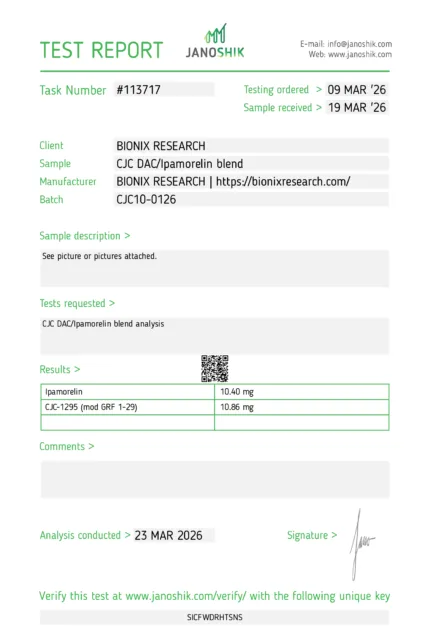
CJC-1295 + Ipamorelin Blend
69,90 € Vialincl. VAT
plus Shipping Costs
Delivery time: 1–6 Working Days
Related products

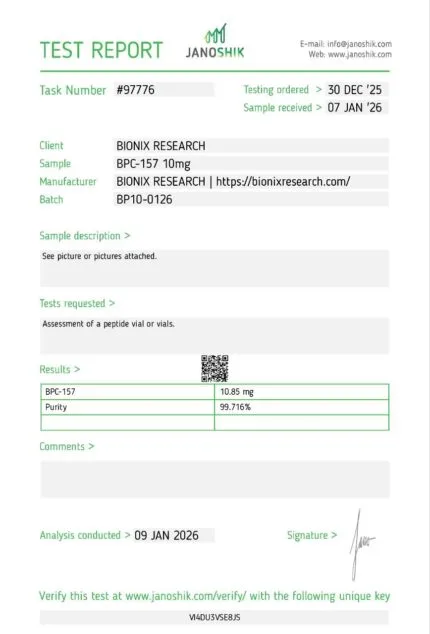
BPC-157
24,90 € Vialincl. VAT
plus Shipping Costs
Delivery time: 1–6 Working Days

BPC-157 & TB-500 Blend (Wolverine Stack)
49,90 € Vialincl. VAT
plus Shipping Costs
Delivery time: 1–6 Working Days

Epithalon
24,90 € Vialincl. VAT
plus Shipping Costs
Delivery time: 1–6 Working Days
Kisspeptin-10
39,90 € Vialincl. VAT
plus Shipping Costs
Delivery time: 1–6 Working Days
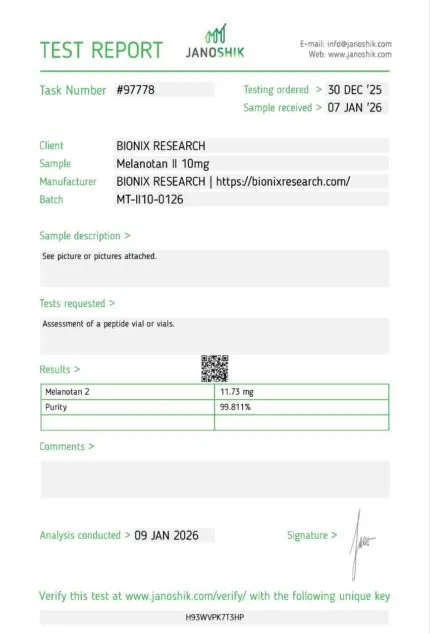
Melanotan 2 (MT-II)
19,90 € Vialincl. VAT
plus Shipping Costs
Delivery time: 1–6 Working Days
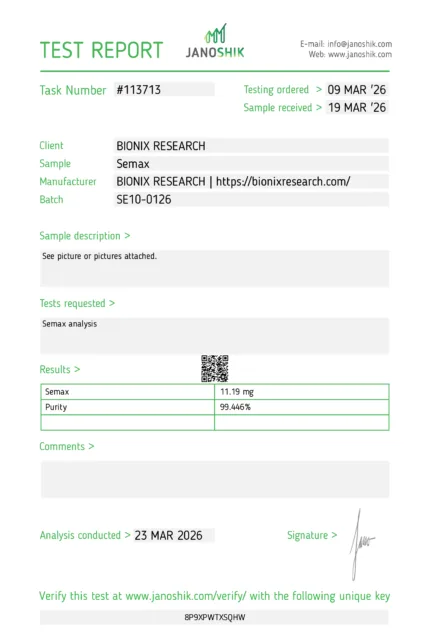
Semax
29,90 € Vialincl. VAT
plus Shipping Costs
Delivery time: 1–6 Working Days
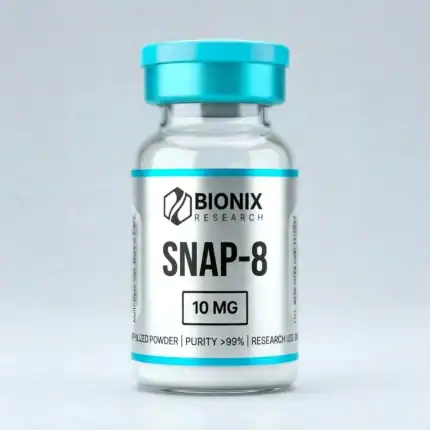
SNAP-8
14,90 € Vialincl. VAT
plus Shipping Costs
Delivery time: 1–6 Working Days
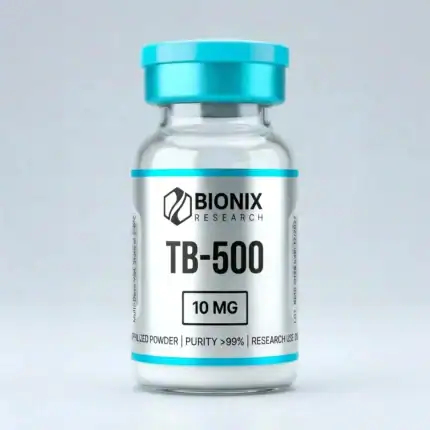
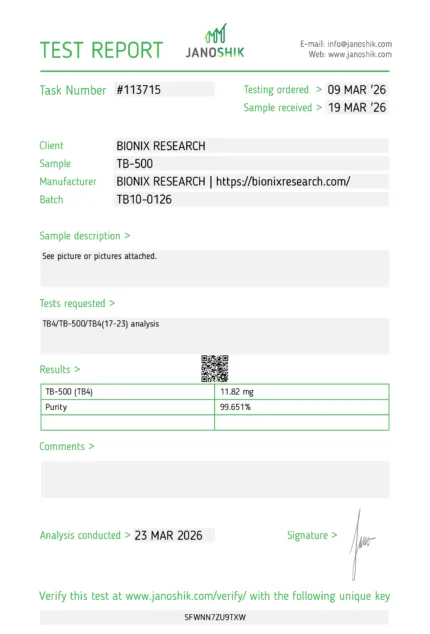
TB-500 (Thymosin Beta-4)
49,90 € Vialincl. VAT
plus Shipping Costs
Delivery time: 1–6 Working Days

