


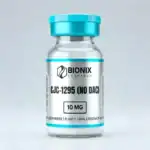
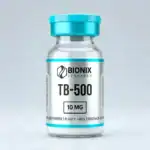
BPC-157 & TB-500 Blend (Wolverine Stack)
49,90 € Vial
5% off when paying with cryptocurrency
incl. VAT plus Shipping Costs
BPC-157 & TB-500 Blend (Wolverine Stack) – Dual Peptide Formulation for Tissue Repair Research
- Synergistic combination of BPC-157 (pentadecapeptide) and TB-500 (Thymosin Beta-4 fragment), targeting complementary pathways in tissue regeneration models.
- Studies demonstrate BPC-157 modulates VEGF expression and NO-mediated signaling while TB-500 regulates actin dynamics and cell migration.
- Purity ≥99% each component (HPLC-verified). Supplied as lyophilized powder, 10mg BPC-157 + 10mg TB-500 per vial.
- Research applications include wound healing, tendon/ligament regeneration, angiogenesis, and fibroblast migration studies.
- Store at -20°C. For research purposes only. Not intended for human consumption.
| Quantity | Price | Discount |
|---|---|---|
| 11-20 | 42,41 € Vial | 15% |
| 21+ | 39,92 € Vial | 20% |
Delivery time: 1–6 Working Days
BPC-157 & TB-500 Blend (Wolverine Stack) – Dual Peptide Research Formulation
KEY SPECIFICATIONS
| Parameter | BPC-157 | TB-500 |
|---|---|---|
| Type | Synthetic pentadecapeptide | Thymosin Beta-4 fragment |
| Target | VEGFR2, GHR, NO pathway | G-Actin, cytoskeletal dynamics |
| Sequence | Gly-Glu-Pro-Pro-Pro-Gly-Lys-Pro-Ala-Asp-Asp-Ala-Gly-Leu-Val | Ac-[TB4 1-43 fragment sequence] |
| Molecular Formula | C₆₂H₉₈N₁₆O₂₂ | C₂₁₂H₃₅₀N₅₆O₇₈S |
| Molecular Weight | 1,419.5 Da | 4,963.5 Da |
| CAS Number | 137525-51-0 | 77591-33-4 |
| Length | 15 amino acids | 43 amino acids |
| Origin | Gastric juice protein fragment | Thymosin Beta-4 active region |
| Purity | ≥99% (HPLC) | ≥99% (HPLC) |
Blend Configuration:
| Parameter | Specification |
|---|---|
| BPC-157 Content | 10mg |
| TB-500 Content | 10mg |
| Total Content | 20mg |
| Form | Co-lyophilized powder |
| Storage | -20°C |
PRODUCT OVERVIEW
The BPC-157 & TB-500 Blend combines two extensively researched synthetic peptides for investigating synergistic effects in tissue repair and regeneration models. BPC-157 (Body Protection Compound-157) is a 15-amino-acid pentadecapeptide derived from human gastric juice proteins, studied for effects on VEGF receptor expression, NO-mediated signaling, and growth hormone pathways. TB-500 represents the active region of Thymosin Beta-4, a 43-amino-acid peptide regulating actin polymerization and cellular motility. Together, these peptides address multiple rate-limiting steps in tissue repair: the transcriptional environment for regeneration (BPC-157) and the physical mechanics of cell movement and tissue organization (TB-500). A comprehensive review of 36 studies (1993-2024) confirms BPC-157’s role in promoting healing through growth factor upregulation, with complementary evidence supporting TB-500’s effects on cell migration and angiogenesis. BIONIX supplies this blend with both components individually HPLC-verified to ≥99% purity for tissue repair research.
MECHANISM OF ACTION
The BPC-157 & TB-500 combination targets distinct rate-limiting steps in tissue repair, creating potential for synergistic effects across multiple phases of regeneration.
BPC-157: Signaling and Gene Expression:
| Pathway | Mechanism | Functional Effect | Research Evidence |
|---|---|---|---|
| VEGF/VEGFR2 | Receptor expression upregulation | Enhanced angiogenesis, vascular support | Growth factor response |
| NO/NOS System | Nitric oxide synthase modulation | Improved endothelial function, vasodilation | NO pathway activation |
| Growth Hormone Receptor | GHR expression increase | Enhanced growth factor sensitivity | Receptor signaling |
| FAK-Paxillin | Focal adhesion kinase activation | Promoted cell migration and adhesion | Chang et al., 2011 |
| Anti-inflammatory | Cytokine profile modulation | Reduced inflammatory response | Multiple studies |
Chang et al. (2011) demonstrated BPC-157 promotes tendon fibroblast survival and enhances migration in scratch assays by up to 40% through FAK activation and MAPK signaling pathways.
TB-500: Actin Dynamics and Cell Motility:
| Mechanism | Effect | Research Application | Evidence |
|---|---|---|---|
| G-Actin Sequestration | Binds monomeric actin, prevents premature polymerization | Maintains actin pool for rapid reorganization | Cytoskeletal dynamics |
| Lamellipodium Formation | Promotes leading-edge protrusions | Enhanced directed cell migration | Migration assays |
| Filopodium Extension | Supports exploratory projections | Improved wound sensing and closure | Time-lapse imaging |
| Cytokine Modulation | Alters inflammatory profiles | Anti-inflammatory effects | Cell culture studies |
Philp et al. (2004) demonstrated TB-500 increases endothelial cell migration by up to 50% and accelerates tube formation in Matrigel assays—correlating with increased monomeric actin availability for cytoskeletal reorganization.
Synergistic Repair Phase Model:
| Repair Phase | BPC-157 Contribution | TB-500 Contribution | Combined Effect |
|---|---|---|---|
| Inflammation | Anti-inflammatory signaling, cytokine modulation | Inflammatory profile shift | Accelerated resolution |
| Cell Recruitment | Growth factor upregulation, chemotaxis | Enhanced motility via actin dynamics | Faster mobilization |
| Proliferation | Cell survival, anti-apoptotic effects | Progenitor differentiation support | Increased viable cells |
| Angiogenesis | VEGF/VEGFR2 upregulation | Endothelial migration enhancement | Enhanced vascularization |
| Remodeling | MMP expression, collagen synthesis | Fibroblast migration for matrix | Improved tissue quality |
Proposed Synergistic Pathway:
BPC-157 → VEGF/VEGFR2 Upregulation + GHR Expression + NO Pathway →
Transcriptional Environment for Repair /
TB-500 → G-Actin Sequestration → Lamellipodia/Filopodia Formation →
Cell Migration + Cytoskeletal Reorganization /
Combined → Signaling + Mechanical Execution → Enhanced Tissue Regeneration
Comparative Profile:
| Parameter | BPC-157 Alone | TB-500 Alone | BPC-157 & TB-500 Blend |
|---|---|---|---|
| Primary Target | VEGFR2, GHR, NO pathway | G-Actin, cytoskeleton | Multiple complementary targets |
| Mechanism Level | Transcriptional/signaling | Structural/mechanical | Both levels simultaneously |
| Angiogenesis | VEGF-dependent | Migration-dependent | Dual mechanism support |
| Cell Migration | FAK-mediated signaling | Actin-mediated motility | Signaling + execution |
| Research Complexity | Single pathway | Single pathway | Synergy investigation |
| Experimental Design | Standard controls | Standard controls | Factorial design capable |
RESEARCH APPLICATIONS
• Wound Healing Models: Primary application for investigating combined effects on repair kinetics. Endpoints include wound closure rate (digital planimetry, ImageJ), collagen deposition (Masson’s trichrome, hydroxyproline assay), tensile strength (mechanical testing), re-epithelialization (histological assessment), and angiogenesis (CD31 immunostaining, vessel density). Experimental approaches: scratch assays quantifying fibroblast migration, BrdU incorporation for proliferation, Collagen Type I/III expression, time-lapse imaging for migration dynamics.
• Tendon and Ligament Regeneration: Tendon repair represents primary research focus. BPC-157 evidence (Chang et al., 2011): promotes tendon fibroblast survival, enhances migration, upregulates growth factor expression, improves structural and biomechanical recovery in rat tendon rupture models. TB-500 contribution: supports connective tissue repair via actin regulation, enhances fibroblast mobility to injury sites, promotes progenitor cell differentiation. Blend enables investigation of whether simultaneous signaling pathway activation and cytoskeletal reorganization produce accelerated healing versus individual peptides.
• Angiogenesis Research: Vascular support is rate-limiting for tissue repair. Blend addresses angiogenesis through complementary mechanisms: tube formation (Matrigel) assays measuring VEGF-mediated vessel formation and endothelial migration; CAM (chick chorioallantoic membrane) assays for blood vessel branching and network density; aortic ring sprouting for ex vivo vascularization; VEGF expression quantification (qPCR, ELISA). Dual mechanism investigation: whether VEGF upregulation (BPC-157) combined with enhanced endothelial migration (TB-500) produces synergistic vascularization.
• Cytoskeletal Dynamics Studies: Live-cell microscopy of migration dynamics, actin polymerization visualization (phalloidin staining), focal adhesion turnover analysis, lamellipodium/filopodium formation kinetics. Molecular analysis: FAK phosphorylation status, MAPK pathway activation, actin/G-actin ratio quantification, Rho GTPase activity assays. Investigation of coordination between BPC-157-mediated gene expression and TB-500-enabled cellular mechanics.
• Combination and Synergy Studies: Factorial experimental designs comparing individual peptides versus blend across multiple concentrations and time points. Statistical analysis of interaction effects to determine synergistic, additive, or antagonistic relationships. Dose-optimization studies identifying optimal ratios for specific tissue types and repair phases. Mechanistic dissection studies using pathway-specific inhibitors to attribute effects to BPC-157 versus TB-500 components.
ANALYTICAL VERIFICATION
BIONIX BPC-157 & TB-500 Blend undergoes comprehensive analytical characterization:
• Individual HPLC Analysis: Each component verified to ≥99% purity through High-Performance Liquid Chromatography; separate chromatograms confirm absence of cross-contamination • Mass Spectrometry: Exact molecular weight confirmation—BPC-157 (1,419.5 Da) and TB-500 (4,963.5 Da); verifies correct sequences and modifications • Amino Acid Analysis: Composition quantification for both peptides • Residual Solvent Testing: Manufacturing process validation • Peptide Content Determination: Concentration verification • Moisture Content Analysis: Lyophilization quality assessment • Endotoxin Testing: LAL assay for cell culture applications
Physical Characteristics:
| Property | BPC-157 Component | TB-500 Component |
|---|---|---|
| Appearance | White lyophilized powder | White lyophilized powder |
| Molecular Weight | 1,419.5 Da | 4,963.5 Da |
| Sequence | 15 AA pentadecapeptide | 43 AA fragment |
| Purity | ≥99% (HPLC-verified) | ≥99% (HPLC-verified) |
| Blend Form | Co-lyophilized combined powder | Co-lyophilized combined powder |
DEVELOPMENT STATUS
• BPC-157 Research: 30+ years of investigation; derived from human gastric juice proteins; extensive tendon/wound healing research (Chang et al., 2011; Sikiric et al., 2011) • TB-500 Research: Thymosin Beta-4 fragment with established actin-binding properties; extensive angiogenesis and cell migration studies (Philp et al., 2004; Goldstein & Kleinman, 2015) • Combined Research: 36 studies review (1993-2024) confirms complementary mechanisms; emerging interest in synergistic effects • Clinical Status: Not FDA or EMA approved; research compounds only • Regulatory Classification: Research peptides exclusively • WADA Status: Research compounds (verify current prohibited list)
BIONIX BPC-157 & TB-500 Blend is supplied exclusively for laboratory research purposes—not for therapeutic use, human administration, veterinary, or clinical applications.
FREQUENTLY ENCOUNTERED INQUIRIES
How does the BPC-157 and TB-500 combination work?
Research indicates BPC-157 modulates gene expression and signaling pathways critical for cell survival and angiogenesis—including VEGF receptor upregulation, NO-mediated signaling, and growth hormone receptor expression—while TB-500 regulates actin dynamics enabling physical cell movement and cytoskeletal reorganization. These complementary mechanisms address different rate-limiting steps: the transcriptional environment for repair (BPC-157) and cellular mechanics of tissue organization (TB-500). The blend enables investigation of whether simultaneous pathway activation produces synergistic effects beyond individual peptides.
What is the difference between BPC-157 and TB-500 mechanisms?
BPC-157 operates at the transcriptional/signaling level: upregulating VEGFR2 expression, activating FAK-paxillin pathways, modulating NO/NOS systems, and influencing growth hormone receptor signaling. These effects enhance the cellular decision-making environment for repair. TB-500 operates at the structural/mechanical level: sequestering G-actin monomers to maintain pools for rapid polymerization, promoting lamellipodia and filopodia formation for directed migration, and enabling the physical execution of cell movement required for wound closure and tissue organization.
What research models is this blend suitable for?
Primary applications: wound healing models (closure kinetics, collagen deposition, angiogenesis), tendon and ligament regeneration studies (fibroblast migration, biomechanical recovery), angiogenesis research (tube formation, vessel density, endothelial migration), cytoskeletal dynamics studies (live-cell imaging, actin polymerization, focal adhesion turnover), and combination/synergy studies (factorial designs comparing individual versus combined effects). All applications restricted to controlled laboratory environments.
What quality standards are maintained?
Both peptides individually verified to ≥99% purity via HPLC before co-lyophilization. Batch-specific Certificate of Analysis includes mass spectrometric identity confirmation for both BPC-157 (1,419.5 Da) and TB-500 (4,963.5 Da), complete documentation of quality parameters for both components, and verification of absence of cross-contamination. Dual verification ensures experimental reproducibility and consistent peptide ratios.
How should the blend be reconstituted and stored?
Lyophilized powder: store at -20°C (stable up to 24 months). Reconstitution: allow vial to reach room temperature, add sterile pyrogen-free water or buffer (20ml for combined 1 mg/ml stock of each peptide), gently swirl until dissolved. Aliquot immediately into single-use portions. Post-reconstitution: store at 2-8°C (1-2 weeks), -20°C (1-3 months aliquoted), or -80°C (6-12 months aliquoted). Avoid repeated freeze-thaw cycles. Maintain aseptic conditions throughout.
Can the peptides be purchased separately?
Affirmative. BIONIX offers BPC-157 and TB-500 as individual products for researchers requiring separate administration, different concentration ratios, or independent control groups in experimental designs. The blend format is optimized for studies specifically investigating synergistic effects where simultaneous administration is the primary research question. Individual products enable mechanistic dissection studies attributing specific effects to either component.
REFERENCES
- PMID: 21030673 — BPC-157 promotes tendon fibroblast survival and migration (40% increase) (J Appl Physiol, 2011)
- PMID: 15037014 — TB-500 increases endothelial migration (50%) and tube formation (Mech Ageing Dev, 2004)
- PMID: 25961954 — TB-500 modulates fibrotic pathways in liver models (Int J Mol Sci, 2015)
- Sikiric P et al., 2011 — Stable gastric pentadecapeptide BPC 157: novel therapy in GI tract (Curr Pharm Des)
- Goldstein AL, Kleinman HK., 2015 — Thymosin β4: Actin-sequestering protein repairs injured tissues (Trends Mol Med)
- PMC, 2024 — Emerging use of BPC-157 in orthopaedic sports medicine (36 studies review, 1993-2024)
| Dosage | 10mg, 20mg, 40mg, 50mg, 5mg |
|---|
Product safety
Safety instructions
SAFETY DATA SHEET (SDS)
BPC-157 & TB-500 Blend – Research-Grade Lyophilized Powder (RUO)
CAS Number: 137525-51-0 (BPC-157), 77591-33-4 (TB-500)
Synonyms: BPC-157 TB-500 Blend
REACH Registration: Exempt (<1 tonne/year; Research Use Only)
SECTION 1 — Identification
1.1 Product Identifier: BPC-157 & TB-500 Blend – Lyophilized Powder
1.2 Identified Uses: Analytical-grade peptide for in-vitro laboratory research. Research Use Only (RUO). Not for human or veterinary use.
1.3 Supplier: BIONIX RESEARCH
Email: info@bionixresearch.com
1.4 Emergency: EU Emergency Number: 112
SECTION 2 — Hazards Identification
2.1 Classification: Not classified as hazardous under CLP Regulation (EC) 1272/2008. No GHS pictograms required.
2.2 Precautionary notes:
- Avoid dust inhalation
- Avoid contact with eyes
- Laboratory use only
SECTION 3 — Composition
Substance: BPC-157 & TB-500 Blend
CAS: 137525-51-0 (BPC-157), 77591-33-4 (TB-500)
Purity: ≥99% HPLC
Form: Lyophilized powder
Impurities: None classified as hazardous.
SECTION 4 — First-Aid Measures
Inhalation: Move to fresh air. Rinse mouth and nose.
Skin Contact: Wash thoroughly with water and soap.
Eye Contact: Rinse cautiously with clean water for several minutes.
Ingestion: Rinse mouth. Do not induce vomiting. Seek medical advice.
SECTION 5 — Fire-Fighting Measures
Extinguishing Media: CO₂, dry chemical, foam, or water spray.
Hazards: Organic peptide powder, non-flammable. Thermal decomposition may release CO, CO₂, nitrogen oxides.
SECTION 6 — Accidental Release Measures
Avoid dust formation. Use gloves, mask, protective eyewear. Collect powder into sealed waste container.
SECTION 7 — Handling and Storage
Handling: Use only in laboratory settings. Minimize dust formation. Wear standard PPE.
Storage: Store at −20 °C in sealed vial. Protect from sunlight and humidity. Research use only.
SECTION 8 — Exposure Controls / Personal Protection
Exposure Limits: None established.
PPE: Nitrile or latex gloves, lab coat, protective eyewear, dust mask when handling powders.
SECTION 9 — Physical and Chemical Properties
Appearance: White to off-white lyophilized powder
Odor: None
Solubility: Soluble in sterile water, dilute acids, or aqueous buffers
Stability: Stable when stored at −20 °C
SECTION 10 — Stability and Reactivity
Stable under recommended conditions. Avoid heat, moisture, air exposure, oxidizing agents.
SECTION 11 — Toxicological Information
No data available for human exposure. Low acute toxicity expected. Dust may cause mild irritation. Not intended for injection, ingestion, or topical use.
SECTION 12 — Ecological Information
No data available. Not expected to present environmental risks. Prevent release into water systems.
SECTION 13 — Disposal Considerations
Dispose according to local regulations for laboratory chemical waste. Do not dispose via household waste or sewer systems.
SECTION 14 — Transport Information
Not regulated under ADR, IMDG, IATA. No UN classification required.
SECTION 15 — Regulatory Information
Not subject to REACH registration (<1 tonne/year; RUO exemption). Not classified under CLP. Not a pharmaceutical, cosmetic, or medical product.
SECTION 16 — Other Information
This SDS is intended for trained laboratory personnel. It does not signify suitability for therapeutic, diagnostic, or consumer applications.
Related products

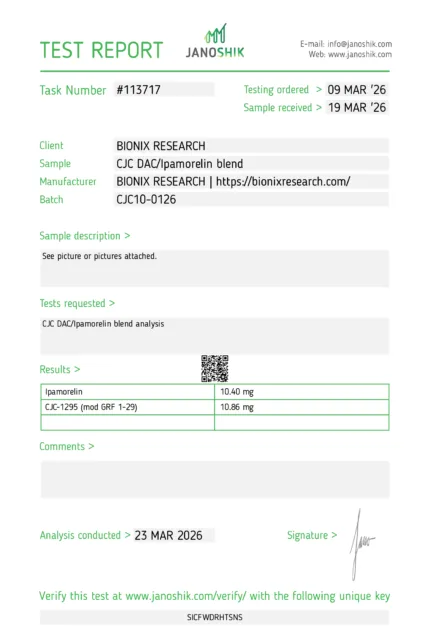
CJC-1295 + Ipamorelin Blend
69,90 € Vialincl. VAT
plus Shipping Costs
Delivery time: 1–6 Working Days
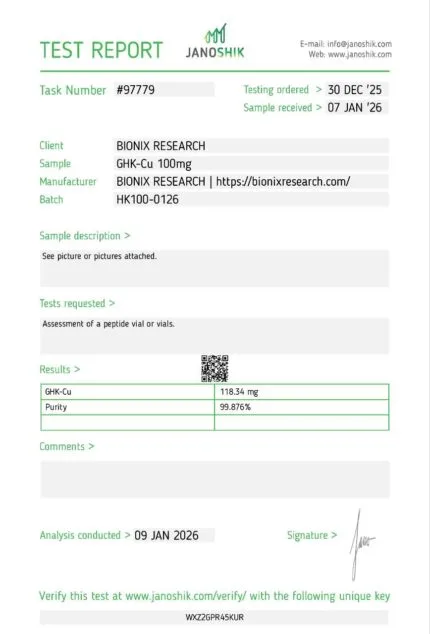
GHK-Cu
29,90 € Vialincl. VAT
plus Shipping Costs
Delivery time: 1–6 Working Days
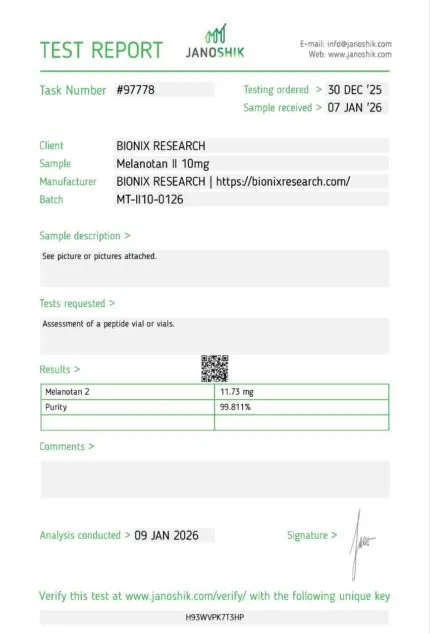
Melanotan 2 (MT-II)
19,90 € Vialincl. VAT
plus Shipping Costs
Delivery time: 1–6 Working Days

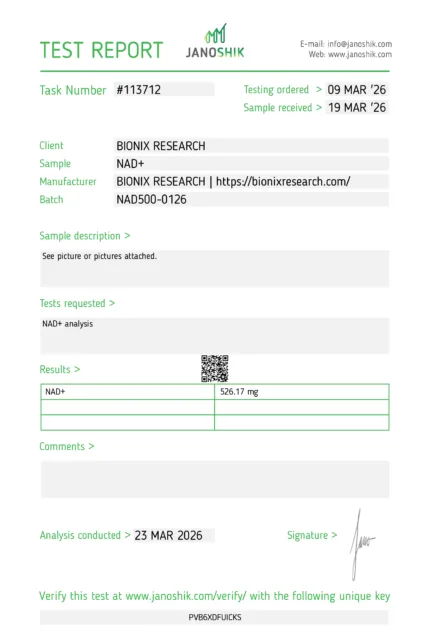
NAD+
59,90 € Vialincl. VAT
plus Shipping Costs
Delivery time: 1–6 Working Days
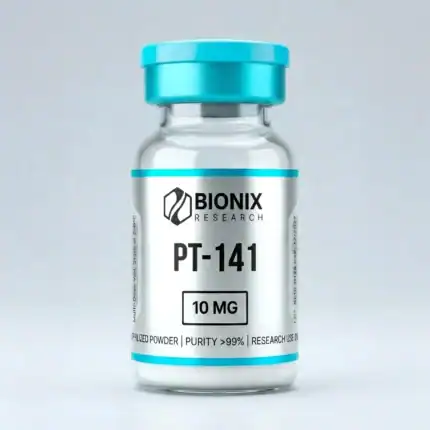
PT-141 (Bremelanotide)
29,90 € Vialincl. VAT
plus Shipping Costs
Delivery time: 1–6 Working Days
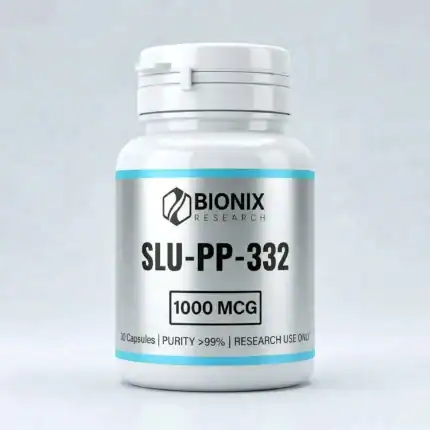
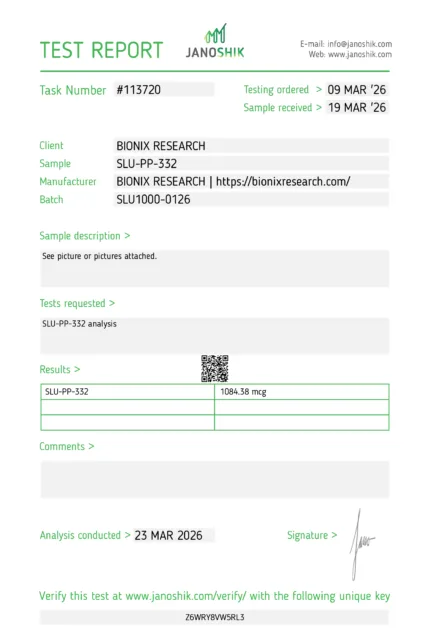
SLU-PP-332 Capsules
99,90 € Bottleincl. VAT
plus Shipping Costs
Delivery time: 1–6 Working Days
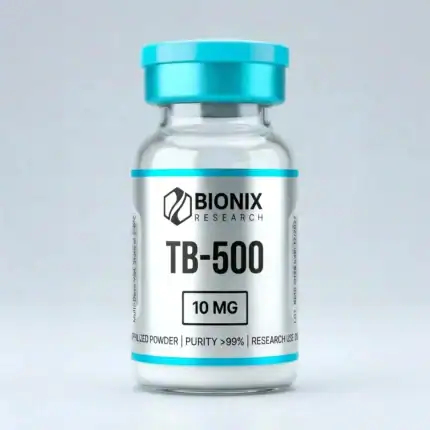
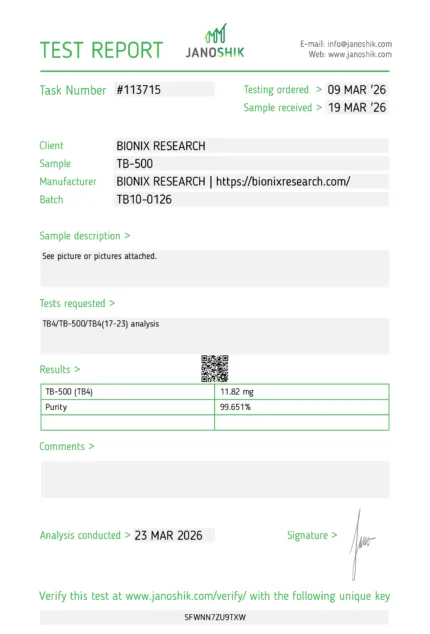
TB-500 (Thymosin Beta-4)
49,90 € Vialincl. VAT
plus Shipping Costs
Delivery time: 1–6 Working Days
Thymalin / Thymulin
39,90 €incl. VAT
plus Shipping Costs
Delivery time: 1–6 Working Days

