



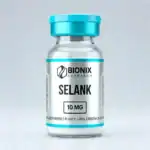


Selank
29,90 € Vial
5% off when paying with cryptocurrency
incl. VAT plus Shipping Costs
Selank 10mg – Synthetic Heptapeptide for Neurobiological Research
- Stabilized Tuftsin analog with dual mechanism targeting GABA-A receptors and enkephalin-degrading enzymes.
- Preclinical studies demonstrate anxiolytic effects without sedation—distinct from benzodiazepine-class compounds.
- Purity ≥99% (HPLC-verified). Supplied as lyophilized powder, 10mg per vial.
- Research applications include GABAergic neurotransmission, nootropic models, and immunomodulation studies.
- Store at -20°C. For research purposes only. Not intended for human consumption.
| Quantity | Price | Discount |
|---|---|---|
| 11-20 | 25,42 € Vial | 15% |
| 21+ | 23,92 € Vial | 20% |
Delivery time: 1–6 Working Days
Selank 10mg Peptide

Chemical diagram for Selank by Edgar181 (talk) – Own work, Public Domain, https://commons.wikimedia.org/w/index.php?curid=9559689
KEY SPECIFICATIONS
| Parameter | Specification |
|---|---|
| Type | Synthetic heptapeptide (Tuftsin analog) |
| Target | GABA-A receptors, enkephalin-degrading enzymes |
| Molecular Formula | C₃₃H₅₇N₁₁O₉ |
| Molecular Weight | 751.9 g/mol |
| CAS Number | 129954-34-3 |
| Sequence | Thr-Lys-Pro-Arg-Pro-Gly-Pro |
| Stability Modification | C-terminal Pro-Gly-Pro extension |
| Form | Lyophilized powder |
| Purity | ≥99% (HPLC) |
| Quantity | 10mg |
| Storage | -20°C |
PRODUCT OVERVIEW
Selank is a synthetic heptapeptide analog of the endogenous immunomodulatory peptide Tuftsin, engineered for enhanced metabolic stability in laboratory research. The C-terminal Pro-Gly-Pro extension protects against rapid serum peptidase degradation, extending half-life and bioavailability in experimental models.
Selank demonstrates dual mechanisms: allosteric modulation of GABA-A receptors and inhibition of enkephalin-degrading enzymes. Preclinical studies reveal significant effects on neurochemical signaling, gene expression regulation, and neuroimmune interactions. BIONIX supplies Selank with ≥99% purity for neuropharmacological and neuroimmunological research applications.
MECHANISM OF ACTION
Selank engages cellular signaling through a multi-target mechanism. As a stabilized Tuftsin derivative (Thr-Lys-Pro-Arg), it retains immunomodulatory affinity while demonstrating enhanced enzymatic resistance against proteolytic degradation.
GABAergic Neurotransmission Modulation:
Selank functions as a positive allosteric modulator of GABA-A receptor complexes, enhancing [³H]GABA binding affinity:
| Target | Mechanism | Research Effect |
|---|---|---|
| GABA-A Receptor | Positive allosteric modulation | Enhanced GABA affinity, increased chloride conductance |
| GABA Transporters | Gene expression regulation | Modulated neuronal GABA uptake |
| Receptor Subunits | mRNA level influence | Altered subunit composition in frontal cortex/hippocampus |
Consequences in neuronal cultures: • Enhanced hyperpolarization of neuronal membranes
• Reduced neuronal firing rates
• Dampening of overexcited neural networks
• Non-cumulative interactions with benzodiazepine sites
Enkephalinase Inhibition:
Selank inhibits enkephalin-degrading enzymes, increasing endogenous enkephalin stability:
| Enzyme | Inhibition Effect | Research Outcome |
|---|---|---|
| Neutral Endopeptidase (NEP) | Competitive inhibition | Increased enkephalin half-life |
| Aminopeptidase N | Activity reduction | Enhanced opioid peptide stability |
| Enkephalinase | Targeted inhibition | Accumulation of endogenous enkephalins |
Key Finding: Studies in anxiety models demonstrated increased leu-enkephalin half-life (tau₁/₂) correlating with anxiolytic activity markers.
Neurotrophic Factor Influence: Research indicates Selank may influence BDNF expression in hippocampal regions—critical for neuronal survival, synaptic plasticity, emotion regulation, and memory consolidation.
Neurotransmitter System Effects:
| System | Observed Research Effect |
|---|---|
| Serotonin (5-HT) | Metabolic pathway modulation |
| Dopamine | Concentration balance effects |
| Noradrenaline | Vigilance and attention regulation |
Gene Expression Profiling: Rodent studies demonstrate Selank significantly affects mRNA levels encoding: • GABA transporters
• GABA-A receptor subunits
• Neurochemical signaling components
• Cytokines (IL-6) and chemokines
• Bcl6 gene (immune development)
Comparative Profile:
| Property | Selank | Semax | Diazepam |
|---|---|---|---|
| Type | Heptapeptide (Tuftsin analog) | Heptapeptide (ACTH analog) | Benzodiazepine |
| Primary Target | GABA-A, enkephalinase | BDNF/TrkB, neurogenesis | GABA-A agonist |
| Research Focus | Anxiety, cognition, immunity | Neuroprotection, stroke, cognition | Anxiety, sedation |
| Sedative Effects | None observed | None observed | Significant |
| BDNF Influence | Moderate | Strong | None |
| Enkephalinase Inhibition | Yes | No | No |
| Metabolic Stability | Enhanced (C-terminal modification) | Enhanced (PGP sequence) | High |
| Clinical Status | Russia approved (nasal spray) | Russia approved | Global prescription drug |
| Research Applications | Anxiolytic, nootropic, immunomodulation | Neuroprotection, cognition | Anxiolytic reference |
RESEARCH APPLICATIONS
Anxiolytic Research Models: Investigation of anxiety-related behaviors in preclinical models without sedative effects. Studies demonstrate attenuation of aversive signs in withdrawal models, increased tactile sensitivity thresholds, and reduction of anxiety-like behaviors in elevated plus maze tests—distinguishing it from benzodiazepine-class compounds.
Nootropic Research: Analysis of cognitive function through BDNF upregulation, neurotransmitter balance optimization, and enhanced attention, learning, and memory consolidation markers in laboratory models.
Gene Expression Studies: Transcriptional profiling examining how neuropeptide interventions modulate neuronal excitability at mRNA levels—focusing on GABA transporters and GABA-A receptor subunits in frontal cortex and hippocampus.
Immunomodulation Research: Investigation of immune function in spleen tissue models, analyzing cytokine expression (IL-6), chemokine production, and Bcl6 gene expression—highlighting neuroimmune interface interactions.
Electrophysiological Analysis: Tissue slice preparations characterizing allosteric GABA receptor modulations, mapping chloride ion channel kinetics under synthetic peptide influence.
Neurotransmitter Balance Studies: Research on serotonin, dopamine, and noradrenaline pathway modulation—examining vigilance, attention, and emotional regulation mechanisms.
ANALYTICAL VERIFICATION
BIONIX Selank undergoes comprehensive analytical characterization:
• HPLC Analysis: ≥99% purity confirmation via optimized chromatographic separation
• Mass Spectrometry (MS): Identity verification and molecular weight confirmation (751.9 g/mol)
• Sequence Confirmation: Thr-Lys-Pro-Arg-Pro-Gly-Pro validation
• Endotoxin Testing: Laboratory quality assurance
• Stability Assessment: Pro-Gly-Pro extension verification
Physical Characteristics:
| Property | Specification |
|---|---|
| Appearance | White to off-white lyophilized powder |
| Molecular Weight | 751.9 g/mol |
| Sequence | Thr-Lys-Pro-Arg-Pro-Gly-Pro |
| Stability Feature | C-terminal Pro-Gly-Pro extension |
| Purity | ≥99% (HPLC-verified) |
DEVELOPMENT STATUS
Selank has distinct regulatory status by region:
• Russia: Approved for anxiety treatment; available as nasal spray formulation
• European Union: Not approved for clinical use; research compound only
• United States: Not FDA approved; research use only
• Research Status: Extensive preclinical studies; clinical data primarily from Russian studies
• Global Research: Ongoing investigations in neurological, immunological, and cognitive domains
• WADA Status: Research compound (check current prohibited list)
BIONIX Selank is supplied exclusively for laboratory research purposes—not for human therapeutic use, clinical administration, or diagnostic applications.
FREQUENTLY ENCOUNTERED INQUIRIES
What is Selank’s mechanism of action?
Selank operates through dual mechanisms: (1) positive allosteric modulation of GABA-A receptors, enhancing GABA binding and chloride conductance; (2) competitive inhibition of enkephalin-degrading enzymes (NEP, aminopeptidase N), increasing endogenous enkephalin stability. Additionally, research indicates effects on BDNF expression and neurotransmitter system modulation (serotonin, dopamine, noradrenaline).
How does Selank differ from Semax?
Both are Russian-developed heptapeptides with enhanced metabolic stability, but operate through distinct mechanisms. Selank targets GABA-A receptors and enkephalinase (anxiolytic/cognitive focus), while Semax primarily influences BDNF/TrkB pathways and neurogenesis (neuroprotective focus). Selank is a Tuftsin analog; Semax is an ACTH analog. Neither produces sedative effects observed with benzodiazepines.
What is the significance of the Pro-Gly-Pro extension?
The C-terminal Pro-Gly-Pro sequence provides exceptional stability against serum peptidases that degrade native Tuftsin within minutes. This structural enhancement extends half-life, improves bioavailability in experimental models, and enables precise long-term observations with reduced dosing frequency requirements.
What are the primary research applications?
Anxiolytic behavior models (without sedation), nootropic/cognitive function studies, GABAergic neurotransmission research, gene expression profiling of neurochemical receptors, immunomodulation and neuroimmune interface studies, and electrophysiological GABA receptor characterization. All applications limited to controlled laboratory environments.
What storage conditions are required?
Lyophilized powder requires -20°C storage for long-term stability (up to 24 months). Post-reconstitution, store at 2-8°C and use within 4 weeks. For extended storage of reconstituted solution, prepare aliquots and freeze at -20°C, avoiding repeated freeze-thaw cycles.
Is Selank approved for clinical use?
Selank is approved for anxiety treatment in Russia as a nasal spray formulation. It is not FDA or EMA approved and is available exclusively for laboratory research in the EU and USA. BIONIX supplies research-grade material for laboratory use only—not for human therapeutic application.
REFERENCES
- PMID: 26903870 — Selank affects GABAergic neurotransmission gene expression (Front Pharmacol, 2016)
- PMID: 11420065 — Inhibitory effect on enkephalin-degrading enzymes (Bull Exp Biol Med, 2001)
- PMID: 21831414 — Expression of inflammation-related genes under Selank (Regul Pept, 2011)
- Preclinical Studies — Anxiolytic effects and withdrawal model attenuation
- Neurochemical Research — Neurotransmitter system modulation mechanisms
- Gene Expression Studies — GABA transporter and receptor subunit mRNA analysis
| Dosage | 10mg, 20mg, 40mg, 50mg, 5mg |
|---|
Product safety
Safety instructions
SAFETY DATA SHEET (SDS)
Selank – Research-Grade Lyophilized Powder (RUO)
CAS Number: 129954-34-3
Synonyms: Thr-Lys-Pro-Arg-Pro-Gly-Pro
REACH Registration: Exempt (<1 tonne/year; Research Use Only)
SECTION 1 — Identification
1.1 Product Identifier: Selank – Lyophilized Powder
1.2 Identified Uses: Analytical-grade peptide for in-vitro laboratory research. Research Use Only (RUO). Not for human or veterinary use.
1.3 Supplier: BIONIX RESEARCH
Email: info@bionixresearch.com
1.4 Emergency: EU Emergency Number: 112
SECTION 2 — Hazards Identification
2.1 Classification: Not classified as hazardous under CLP Regulation (EC) 1272/2008. No GHS pictograms required.
2.2 Precautionary notes:
- Avoid dust inhalation
- Avoid contact with eyes
- Laboratory use only
SECTION 3 — Composition
Substance: Selank
CAS: 129954-34-3
Purity: ≥99% HPLC
Form: Lyophilized powder
Impurities: None classified as hazardous.
SECTION 4 — First-Aid Measures
Inhalation: Move to fresh air. Rinse mouth and nose.
Skin Contact: Wash thoroughly with water and soap.
Eye Contact: Rinse cautiously with clean water for several minutes.
Ingestion: Rinse mouth. Do not induce vomiting. Seek medical advice.
SECTION 5 — Fire-Fighting Measures
Extinguishing Media: CO₂, dry chemical, foam, or water spray.
Hazards: Organic peptide powder, non-flammable. Thermal decomposition may release CO, CO₂, nitrogen oxides.
SECTION 6 — Accidental Release Measures
Avoid dust formation. Use gloves, mask, protective eyewear. Collect powder into sealed waste container.
SECTION 7 — Handling and Storage
Handling: Use only in laboratory settings. Minimize dust formation. Wear standard PPE.
Storage: Store at −20 °C in sealed vial. Protect from sunlight and humidity. Research use only.
SECTION 8 — Exposure Controls / Personal Protection
Exposure Limits: None established.
PPE: Nitrile or latex gloves, lab coat, protective eyewear, dust mask when handling powders.
SECTION 9 — Physical and Chemical Properties
Appearance: White to off-white lyophilized powder
Odor: None
Solubility: Soluble in sterile water, dilute acids, or aqueous buffers
Stability: Stable when stored at −20 °C
SECTION 10 — Stability and Reactivity
Stable under recommended conditions. Avoid heat, moisture, air exposure, oxidizing agents.
SECTION 11 — Toxicological Information
No data available for human exposure. Low acute toxicity expected. Dust may cause mild irritation. Not intended for injection, ingestion, or topical use.
SECTION 12 — Ecological Information
No data available. Not expected to present environmental risks. Prevent release into water systems.
SECTION 13 — Disposal Considerations
Dispose according to local regulations for laboratory chemical waste. Do not dispose via household waste or sewer systems.
SECTION 14 — Transport Information
Not regulated under ADR, IMDG, IATA. No UN classification required.
SECTION 15 — Regulatory Information
Not subject to REACH registration (<1 tonne/year; RUO exemption). Not classified under CLP. Not a pharmaceutical, cosmetic, or medical product.
SECTION 16 — Other Information
This SDS is intended for trained laboratory personnel. It does not signify suitability for therapeutic, diagnostic, or consumer applications.
Related products

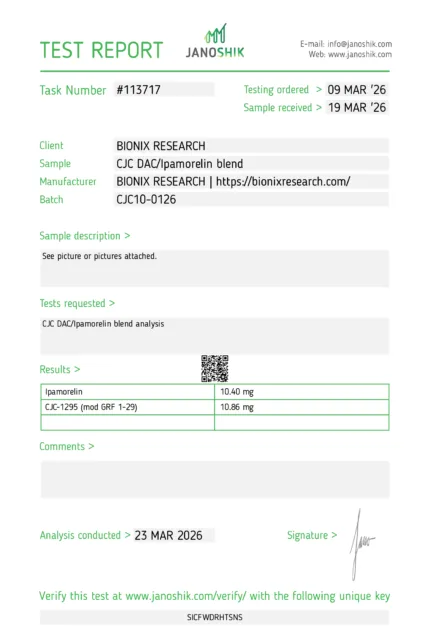
CJC-1295 + Ipamorelin Blend
69,90 € Vialincl. VAT
plus Shipping Costs
Delivery time: 1–6 Working Days

Epithalon
24,90 € Vialincl. VAT
plus Shipping Costs
Delivery time: 1–6 Working Days
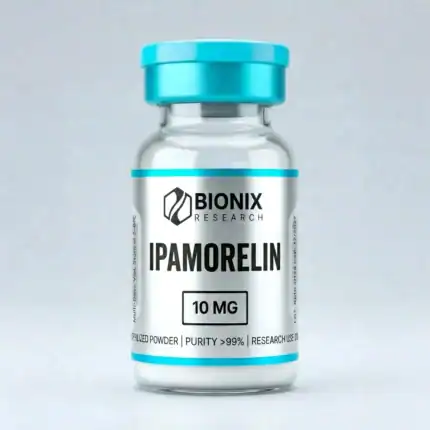
Ipamorelin
39,90 € Vialincl. VAT
plus Shipping Costs
Delivery time: 1–6 Working Days
Kisspeptin-10
39,90 € Vialincl. VAT
plus Shipping Costs
Delivery time: 1–6 Working Days
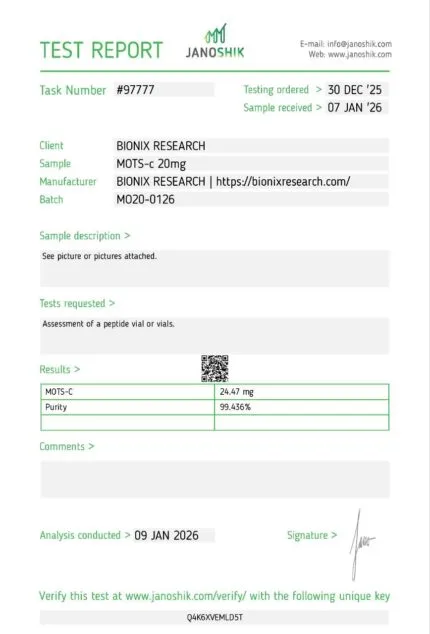
MOTS-c
49,90 € Vialincl. VAT
plus Shipping Costs
Delivery time: 1–6 Working Days
SNAP-8
14,90 € Vialincl. VAT
plus Shipping Costs
Delivery time: 1–6 Working Days
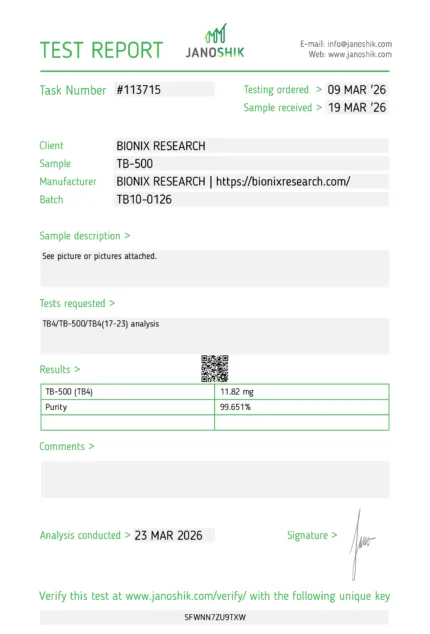
TB-500 (Thymosin Beta-4)
49,90 € Vialincl. VAT
plus Shipping Costs
Delivery time: 1–6 Working Days
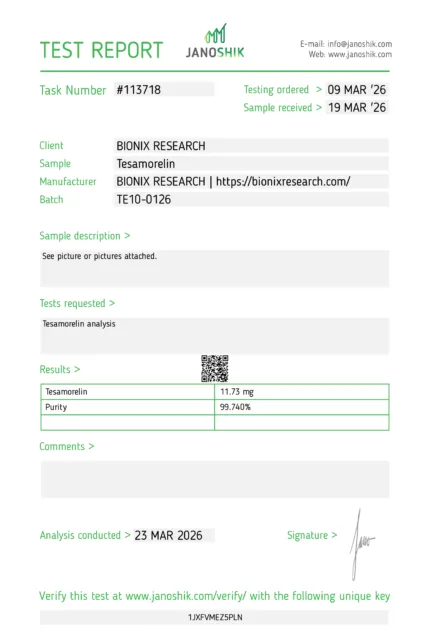
Tesamorelin
79,90 € Vialincl. VAT
plus Shipping Costs
Delivery time: 1–6 Working Days

