


VIP Peptide – Vasoactive Intestinal Peptide
69,90 € Vial
5% off when paying with cryptocurrency
incl. VAT plus Shipping Costs
VIP Peptide 10mg – Vasoactive Intestinal Peptide for Neuroimmune Research
- 28-amino acid neuropeptide acting as a VPAC1/VPAC2 receptor agonist, modulating neuroimmune signaling pathways across multiple tissue systems.
- Preclinical studies demonstrate neuroprotective effects with reduced β-amyloid accumulation in Alzheimer’s models and regulatory T-cell induction in immunomodulation research.
- Purity ≥99% (HPLC-verified). Supplied as lyophilized powder, 10mg per vial.
- Research applications include neuroprotection, immunomodulation, fibrosis models, epithelial barrier integrity, and inflammatory pathway studies.
- Store at -20°C. For research purposes only. Not intended for human consumption.
| Quantity | Price | Discount |
|---|---|---|
| 11-20 | 59,42 € Vial | 15% |
| 21+ | 55,92 € Vial | 20% |
Delivery time: 1–6 Working Days
VIP Peptide 10mg – Vasoactive Intestinal Peptide

https://go.drugbank.com/structures/DB18634/image.svg
KEY SPECIFICATIONS
| Parameter | Specification |
|---|---|
| Type | Synthetic 28-amino-acid neuropeptide |
| Target | VPAC1/VPAC2 G-Protein Coupled Receptors |
| Molecular Formula | C₁₄₇H₂₃₇N₄₃O₄₃S |
| Molecular Weight | ~3,326.7 g/mol |
| CAS Number | XXXXX-XX-X |
| Sequence | HSDAVFTDNYTRLRKQMAVKKYLNSILN |
| Secondary Structure | Amphipathic α-helix (receptor binding) |
| Source | Porcine intestinal tissue analog |
| Form | Lyophilized powder |
| Purity | ≥99% (HPLC) |
| Quantity | 10mg |
| Storage | -20°C |
PRODUCT OVERVIEW
VIP (Vasoactive Intestinal Peptide) is a 28-amino acid neuropeptide originally isolated from porcine intestinal tissue and subsequently identified as a critical mediator of neuroimmune communication. The peptide functions as a high-affinity agonist for VPAC1 and VPAC2 receptors—G-protein coupled receptors that activate cAMP-dependent signaling cascades across diverse cell populations. Research demonstrates pleiotropic effects spanning neuroprotection, immunomodulation, and tissue homeostasis. Korkmaz et al. (2019) documented β-amyloid reduction and brain atrophy prevention in Alzheimer’s models. Delgado et al. (2004) established VIP’s role in regulatory T-cell induction and Th1→Th2 cytokine profile shifts. VIP serves as a preferred neuropeptide tool for investigating GPCR-mediated neuroimmune signaling. BIONIX supplies VIP with ≥99% purity for cell culture assays and preclinical research.
MECHANISM OF ACTION
VIP exerts biological effects primarily through VPAC1 and VPAC2 receptors—GPCRs activating distinct but overlapping intracellular signaling cascades reflecting its role as a master regulator of neuroimmune communication.
VPAC Receptor Signaling:
| Receptor | Expression | Coupling | Primary Effects |
|---|---|---|---|
| VPAC1 | Lung, liver, brain, lymphoid tissues | Gαs → cAMP/PKA | Anti-inflammatory, ILC3 recruitment |
| VPAC2 | Smooth muscle, CNS, endocrine tissues | Gαs/Gαq | Neuronal excitation, calcium mobilization |
Signal Transduction Pathways:
| Pathway Component | Mechanism | Functional Outcome |
|---|---|---|
| Adenylyl Cyclase | Gαs activation | cAMP elevation |
| Protein Kinase A (PKA) | Phosphorylation cascade | Anti-apoptotic gene transcription |
| CREB Transcription Factor | Phosphorylation/activation | Neuroprotective gene upregulation |
| NF-κB Pathway | Inhibition | Reduced pro-inflammatory cytokines |
| PLC/Ca²⁺ (VPAC2) | Gαq activation | Neuronal excitation, neurotransmitter release |
Neuroimmune Communication:
| Function | Mechanism | Research Application |
|---|---|---|
| Treg Induction | FoxP3 upregulation | Autoimmunity models |
| Cytokine Shift | Th1→Th2 profile modification | Inflammation studies |
| DC Modulation | Tolerogenic phenotype | Transplant rejection models |
| ILC3 Recruitment | VPAC1-dependent gut homing | Mucosal immunity research |
Alpha-Helical Structure Features:
| Domain | Residues | Function |
|---|---|---|
| N-Terminal | 1-7 | Receptor selectivity |
| Central | 8-21 | Receptor binding affinity |
| C-Terminal | 22-28 | Signal transduction activation |
| Overall | 1-28 | Amphipathic helix (hydrophobic core, hydrophilic surface) |
Proposed Signaling Pathway:
VIP Binding → VPAC1/VPAC2 Activation → Gαs Coupling → Adenylyl Cyclase →
cAMP Elevation → PKA Activation → CREB Phosphorylation →
Anti-inflammatory Gene Transcription + Neuroprotective Response
Comparative Profile:
| Property | VIP | PACAP-38 | Secretin |
|---|---|---|---|
| Amino Acids | 28 | 38 | 27 |
| Molecular Weight | ~3,326.7 g/mol | ~4,335 g/mol | ~3,052 g/mol |
| Receptor Affinity | VPAC1 = VPAC2 | PAC1 > VPAC1 > VPAC2 | Secretin receptor only |
| Primary Signaling | cAMP/PKA + PLC | cAMP/PKA + PLC | cAMP/PKA only |
| Immunomodulation | Strong | Moderate | Weak |
| Neuroprotection | Documented | Documented | Limited |
| Research Status | Extensive preclinical | Preclinical | GI applications only |
| Clinical Evidence | COVID-19 trials | Limited | Established pancreatology |
| Half-Life | ~1-2 minutes | ~3-5 minutes | ~2-4 minutes |
RESEARCH APPLICATIONS
• Neuroprotection and Neurodegenerative Models: 5xFAD Alzheimer’s mouse model research documenting β-amyloid accumulation reduction and brain atrophy prevention via microglial modulation. Parkinson’s disease models showing dopaminergic neuron protection against oxidative stress. CREB-mediated neuroprotective gene transcription and enhanced cellular antioxidant capacity through PKA activation. GnRH neuron excitation studies via VPAC2-mediated KCa3.1 inhibition and circadian rhythm modulation in suprachiasmatic nucleus models.
• Immunomodulation and Autoimmunity Research: Regulatory T-cell induction via FoxP3 upregulation and Th1→Th2 cytokine profile shifts (IFN-γ, IL-2 reduction; IL-4, IL-10 elevation). Dendritic cell tolerogenic phenotype induction relevant to transplant rejection models. NF-κB inhibition in macrophages for anti-inflammatory pathway analysis. 2024 research confirms VPAC1-dependent ILC3 (innate lymphoid cell) recruitment to intestinal tissue enhancing IL-22 production and mucosal immunity—independent of microbiota signaling.
• Fibrosis Research: Antifibrotic properties in pulmonary and cardiac fibrosis models via TGF-β signaling inhibition and myofibroblast differentiation blockade (α-SMA expression reduction). Smad pathway modulation (Smad2/3 inhibition, Smad7 activation). Epithelial-mesenchymal transition (EMT) prevention with E-cadherin preservation. Collagen deposition reduction quantified through hydroxyproline analysis. VIP positions as valuable tool for fibrosis prevention and reversal strategy investigations.
• Epithelial Barrier Integrity: Seo et al. (2019) demonstrated in necrotizing enterocolitis models that VIP significantly reduces tight junction disruption and maintains epithelial barrier function. Mechanisms include enhanced Occludin and Claudin-3 expression, PKA-mediated tight junction stabilization, reduced MLCK activity, and accelerated post-injury epithelial regeneration. Applications extend to inflammatory bowel disease models, intestinal permeability studies, and mucosal barrier function assays.
• Respiratory and Antiviral Research: 2024-2025 clinical studies demonstrated improved survival in critically ill COVID-19 patients through respiratory failure marker reduction, TMPRSS2/ACE2 activity inhibition (37-76% reduction), ACE2 shedding induction, and cytokine storm mediator suppression. VIP functions as master regulator of pulmonary neuroimmune homeostasis.
ANALYTICAL VERIFICATION
BIONIX VIP Peptide undergoes comprehensive analytical characterization:
• HPLC Analysis: High-Performance Liquid Chromatography with gradient separation confirms ≥99% purity; separates target peptide from synthesis byproducts and degradation products • Mass Spectrometry: Exact molecular weight confirmation (~3,326.7 g/mol) and peptide sequence verification • Amino Acid Analysis: HSDAVFTDNYTRLRKQMAVKKYLNSILN composition quantification • Endotoxin Testing: LAL assay for cell culture compatibility • Microbiological Screening: Sterility assurance protocols
Physical Characteristics:
| Property | Specification |
|---|---|
| Appearance | White to off-white lyophilized powder |
| Molecular Weight | ~3,326.7 g/mol |
| Sequence | HSDAVFTDNYTRLRKQMAVKKYLNSILN |
| Secondary Structure | Amphipathic α-helix |
| Receptor Target | VPAC1/VPAC2 GPCRs |
| Peptide Family | Secretin/glucagon superfamily |
| Purity | ≥99% (HPLC-verified) |
DEVELOPMENT STATUS
• Research History: Extensively characterized neuropeptide with 40+ years of investigation; porcine intestinal origin → synthetic analog development • Clinical Investigation: COVID-19 clinical trials (2024-2025) demonstrating respiratory benefits and cytokine storm suppression • Regulatory Status: Not FDA or EMA approved for therapeutic use; research compound only in most jurisdictions • Research Applications: Neurodegeneration, immunomodulation, fibrosis, epithelial barrier, pulmonary research • Recent Findings: 2024 ILC3 recruitment studies; 2024-2025 COVID-19 survival data; ongoing TMPRSS2/ACE2 pathway research • WADA Status: Research compound (verify current prohibited list)
BIONIX VIP Peptide is supplied exclusively for laboratory research purposes—not for therapeutic use, human administration, veterinary, or clinical applications.
FREQUENTLY ENCOUNTERED INQUIRIES
What is VIP Peptide and what is it used for in research?
VIP (Vasoactive Intestinal Peptide) is a 28-amino acid neuropeptide used in laboratory research to investigate neuroimmune signaling, GPCR-mediated signal transduction through VPAC1 and VPAC2 receptors, and cellular protection mechanisms. Primary applications include neuroprotection studies (β-amyloid models), immunomodulation (Treg induction, Th1→Th2 shifts), epithelial barrier function (tight junction integrity), fibrosis pathway analysis (TGF-β inhibition), and respiratory immunology (ILC3 recruitment, COVID-19 mechanisms). VIP serves as a model substance for understanding cAMP/PKA/CREB cascade activation and NF-κB pathway modulation.
How does VIP compare to other neuroimmune peptides?
VIP is one of the most comprehensively characterized neuroimmune peptides with balanced affinity for both VPAC1 and VPAC2 receptors. Compared to PACAP-38 (38 amino acids), VIP shows stronger immunomodulatory effects and has advanced further in clinical research (COVID-19 trials). Unlike secretin, which primarily targets gastrointestinal functions through its specific receptor, VIP demonstrates broad activity across neurological, immunological, pulmonary, and epithelial systems. VIP’s extensive preclinical validation across multiple disease models positions it as a preferred translational research tool.
What research models is VIP Peptide typically investigated in?
VIP is studied across diverse experimental systems: neuronal cultures for neuroprotection and Alzheimer’s model analysis (5xFAD mouse); immune cell assays (T-cells, dendritic cells, macrophages, ILC3s) for immunomodulation; epithelial cell monolayers for barrier function and tight junction studies (Occludin/Claudin-3); fibroblast cultures for TGF-β/fibrosis pathway research; and respiratory models for ACE2/TMPRSS2 pathway investigation. Additional applications include necrotizing enterocolitis models, circadian rhythm studies, and transplant rejection models. All applications limited to controlled laboratory environments.
What purity does BIONIX VIP Peptide have?
Each batch is HPLC-verified for ≥99% purity. Mass spectrometry confirms exact molecular mass (~3,326.7 g/mol) and HSDAVFTDNYTRLRKQMAVKKYLNSILN sequence identity. Bacterial endotoxin testing (LAL) ensures suitability for cell culture applications. Batch-specific Certificates of Analysis documenting HPLC chromatograms, mass spectra, and purity assessments are available with every shipment, providing researchers with validation data for experimental documentation and publication requirements.
What storage conditions are required for VIP Peptide?
Lyophilized powder requires -20°C storage for long-term stability (up to 24 months). Protect from light and moisture. Post-reconstitution: store at 2-8°C for 1-2 weeks (short-term use) or aliquot and freeze at -20°C (1-3 months) or -80°C (6-12 months). Allow vial to equilibrate to room temperature before opening to prevent condensation. Avoid repeated freeze-thaw cycles as these compromise peptide structure and biological activity.
Is VIP Peptide approved for clinical use?
Negative. VIP has been investigated in clinical trials including 2024-2025 COVID-19 studies demonstrating respiratory benefits, but has not received FDA or EMA approval for therapeutic indications. VIP remains a research compound available exclusively for laboratory investigation. BIONIX supplies research-grade material for controlled experimental use only—not for human therapeutic application, clinical administration, or diagnostic purposes.
REFERENCES
- PMID: 30506167 — VIP decreases β-amyloid accumulation and prevents brain atrophy in 5xFAD Alzheimer’s model (J Mol Neurosci, 2019)
- PMID: 15169929 — VIP significance in immunomodulation, regulatory T-cell induction (Pharmacol Rev, 2004)
- PMID: 31427055 — VIP decreases inflammation and tight junction disruption in NEC models (J Pediatr Surg, 2019)
- PMID: 29163367 — VIP: from gene to behavior and back, cAMP/PKA/CREB signaling (Front Endocrinol, 2017)
- Nature, 2020 — Feeding-dependent VIP neuron-ILC3 circuit regulates intestinal barrier (Talbot et al.) #
- PMC, 2025 — Vasoactive Intestinal Peptide (VIP) in COVID-19 Therapy (Yavuz ST et al.) • PNAS, 2021 — Host defense and ILC3 recruitment via VPAC1
| Dosage | 10mg, 20mg, 40mg, 50mg, 5mg |
|---|
Product safety
Safety instructions
SAFETY DATA SHEET (SDS)
VIP Peptide – Research-Grade Lyophilized Powder (RUO)
CAS Number: Not assigned
Synonyms: Vasoactive Intestinal Peptide
REACH Registration: Exempt (<1 tonne/year; Research Use Only)
SECTION 1 — Identification
1.1 Product Identifier: VIP Peptide – Lyophilized Powder
1.2 Identified Uses: Analytical-grade peptide for in-vitro laboratory research. Research Use Only (RUO). Not for human or veterinary use.
1.3 Supplier: BIONIX RESEARCH
Email: info@bionixresearch.com
1.4 Emergency: EU Emergency Number: 112
SECTION 2 — Hazards Identification
2.1 Classification: Not classified as hazardous under CLP Regulation (EC) 1272/2008. No GHS pictograms required.
2.2 Precautionary notes:
- Avoid dust inhalation
- Avoid contact with eyes
- Laboratory use only
SECTION 3 — Composition
Substance: VIP Peptide (Vasoactive Intestinal Peptide)
CAS: Not assigned
Purity: ≥99% HPLC
Form: Lyophilized powder
Impurities: None classified as hazardous.
SECTION 4 — First-Aid Measures
Inhalation: Move to fresh air. Rinse mouth and nose.
Skin Contact: Wash thoroughly with water and soap.
Eye Contact: Rinse cautiously with clean water for several minutes.
Ingestion: Rinse mouth. Do not induce vomiting. Seek medical advice.
SECTION 5 — Fire-Fighting Measures
Extinguishing Media: CO₂, dry chemical, foam, or water spray.
Hazards: Organic peptide powder, non-flammable. Thermal decomposition may release CO, CO₂, nitrogen oxides.
SECTION 6 — Accidental Release Measures
Avoid dust formation. Use gloves, mask, protective eyewear. Collect powder into sealed waste container.
SECTION 7 — Handling and Storage
Handling: Use only in laboratory settings. Minimize dust formation. Wear standard PPE.
Storage: Store at −20 °C in sealed vial. Protect from sunlight and humidity. Research use only.
SECTION 8 — Exposure Controls / Personal Protection
Exposure Limits: None established.
PPE: Nitrile or latex gloves, lab coat, protective eyewear, dust mask when handling powders.
SECTION 9 — Physical and Chemical Properties
Appearance: White to off-white lyophilized powder
Odor: None
Solubility: Soluble in sterile water, dilute acids, or aqueous buffers
Stability: Stable when stored at −20 °C
SECTION 10 — Stability and Reactivity
Stable under recommended conditions. Avoid heat, moisture, air exposure, oxidizing agents.
SECTION 11 — Toxicological Information
No data available for human exposure. Low acute toxicity expected. Dust may cause mild irritation. Not intended for injection, ingestion, or topical use.
SECTION 12 — Ecological Information
No data available. Not expected to present environmental risks. Prevent release into water systems.
SECTION 13 — Disposal Considerations
Dispose according to local regulations for laboratory chemical waste. Do not dispose via household waste or sewer systems.
SECTION 14 — Transport Information
Not regulated under ADR, IMDG, IATA. No UN classification required.
SECTION 15 — Regulatory Information
Not subject to REACH registration (<1 tonne/year; RUO exemption). Not classified under CLP. Not a pharmaceutical, cosmetic, or medical product.
SECTION 16 — Other Information
This SDS is intended for trained laboratory personnel. It does not signify suitability for therapeutic, diagnostic, or consumer applications.
Related products

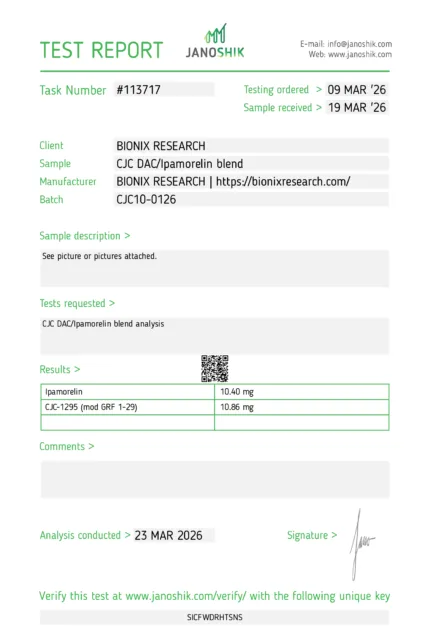
CJC-1295 + Ipamorelin Blend
69,90 € Vialincl. VAT
plus Shipping Costs
Delivery time: 1–6 Working Days

Epithalon
24,90 € Vialincl. VAT
plus Shipping Costs
Delivery time: 1–6 Working Days
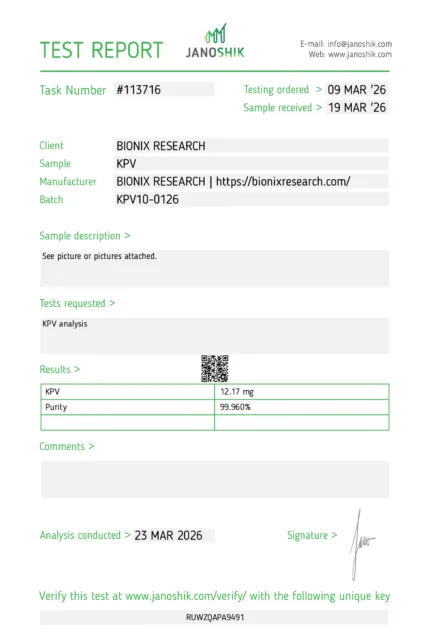
KPV
34,90 € Vialincl. VAT
plus Shipping Costs
Delivery time: 1–6 Working Days
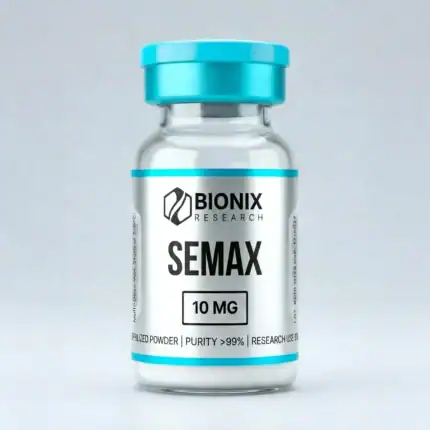
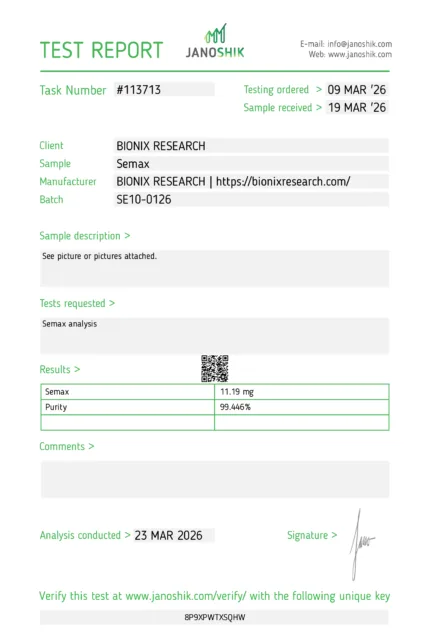
Semax
29,90 € Vialincl. VAT
plus Shipping Costs
Delivery time: 1–6 Working Days
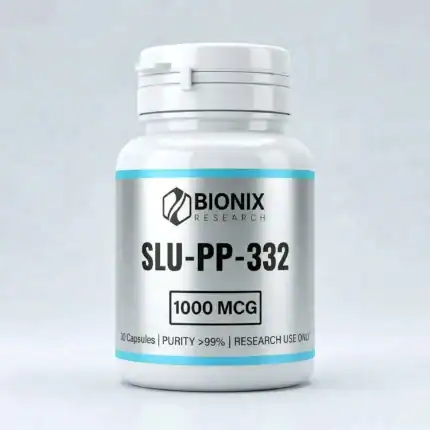
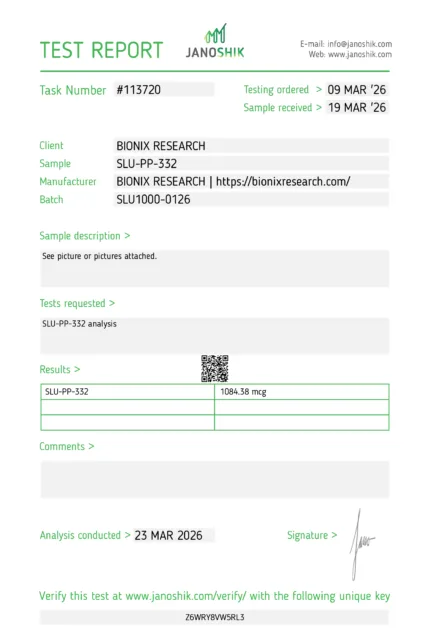
SLU-PP-332 Capsules
99,90 € Bottleincl. VAT
plus Shipping Costs
Delivery time: 1–6 Working Days
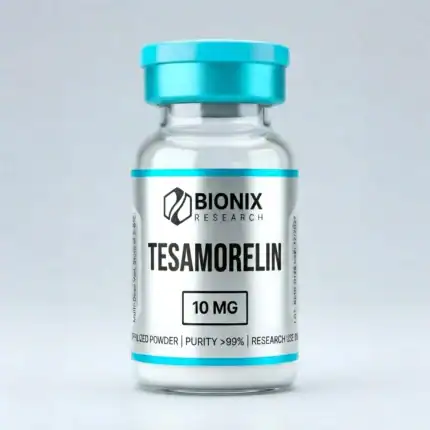
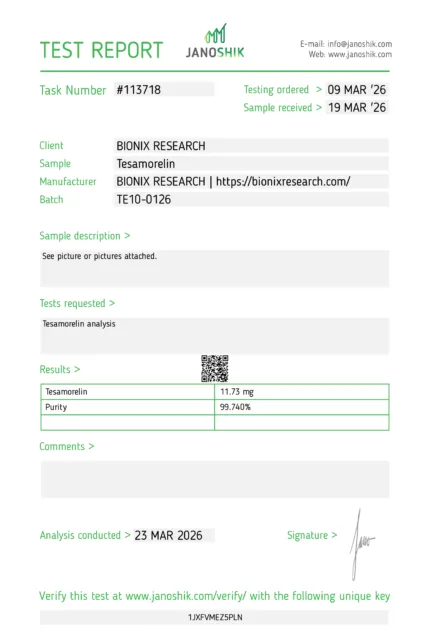
Tesamorelin
79,90 € Vialincl. VAT
plus Shipping Costs
Delivery time: 1–6 Working Days
Thymalin / Thymulin
39,90 €incl. VAT
plus Shipping Costs
Delivery time: 1–6 Working Days
Thymosin Alpha-1
59,90 € Vialincl. VAT
plus Shipping Costs
Delivery time: 1–6 Working Days

