


Thymosin Alpha-1
59,90 € Vial
5% off when paying with cryptocurrency
incl. VAT plus Shipping Costs
Thymosin Alpha-1 10mg – 28-Amino-Acid Immunomodulatory Peptide
- Acetylated thymic peptide analog targeting Toll-like receptors, dendritic cells, and T-lymphocyte differentiation pathways.
- Clinical studies demonstrate enhanced CD4+ T-cell populations and improved CD4+/CD8+ ratios in immunocompromised models.
- Purity ≥99% (HPLC-verified). Supplied as lyophilized powder, 10mg per vial.
- Research applications include immunomodulation, oncology models, vaccine adjuvant studies, and neuroimmune investigations.
- Store at -20°C. For research purposes only. Not intended for human consumption.
| Quantity | Price | Discount |
|---|---|---|
| 11-20 | 50,92 € Vial | 15% |
| 21+ | 47,92 € Vial | 20% |
Delivery time: 1–6 Working Days
Thymosin Alpha-1 10mg Peptide

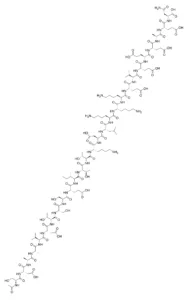
Chemical diagram for Thymosin Alpha-1 by Meodipt (talk) – Own work, Public Domain, https://commons.wikimedia.org/w/index.php?curid=180743089
KEY SPECIFICATIONS
| Parameter | Specification |
|---|---|
| Type | Synthetic 28-amino-acid peptide |
| Target | TLR2, TLR9, Dendritic Cells, T-Lymphocytes, NK Cells |
| Molecular Formula | C₁₂₉H₂₁₅N₃₃O₅₅ |
| Molecular Weight | 3108.3 g/mol |
| CAS Number | 62304-98-7 |
| Sequence | Ac-Ser-Asp-Ala-Ala-Val-Asp-Thr-Ser-Ser-Glu-Ile-Thr-Thr-Lys-Asp-Leu-Lys-Glu-Lys-Lys-Glu-Val-Val-Glu-Glu-Ala-Glu-Asn-OH |
| Stability Modification | N-terminal acetylation |
| Form | Lyophilized powder |
| Purity | ≥99% (HPLC) |
| Quantity | 10mg |
| Storage | -20°C |
PRODUCT OVERVIEW
Thymosin Alpha-1 (Ta1) is a synthetic 28-amino-acid peptide analog of the naturally occurring thymic hormone. The N-terminal acetylation provides enhanced stability against aminopeptidase degradation. Research demonstrates modulation of Toll-like receptor signaling (TLR2, TLR9), dendritic cell maturation, and T-lymphocyte differentiation. Studies document effects on MHC Class II upregulation, CD4+/CD8+ ratio restoration (MD=4.53 and MD=0.42 in 2025 meta-analysis), and enhanced NK cell cytotoxicity. 2024-2025 research demonstrates synergistic effects with PD-1/PD-L1 checkpoint inhibitors. With approval in 35+ countries and extensive clinical investigation history, Ta1 is among the most studied immunomodulatory peptides available. BIONIX supplies Ta1 with ≥99% purity for immunological research applications.
MECHANISM OF ACTION
Thymosin Alpha-1 operates through multiple interconnected immunological pathways, enhancing both innate and adaptive immune responses in experimental systems.
TLR Signaling Pathways:
| Component | Mechanism | Research Outcome |
|---|---|---|
| TLR2/TLR9 | Receptor binding and modulation | Initiation of immune signaling cascades |
| MyD88 Pathway | NF-κB and AP-1 activation | Transcription factor regulation |
| MAPK Signaling | ERK, JNK, p38 phosphorylation | Immune cell functional modulation |
| Cytokine Genes | Altered expression patterns | Th1 response enhancement |
Dendritic Cell and T-Cell Mechanisms:
| Cell Type | Effect | Functional Consequence |
|---|---|---|
| Dendritic Cells | MHC Class II, CD80, CD86 upregulation | Enhanced antigen presentation |
| CD4+ T-Cells | Expansion and differentiation | Restored helper T-cell populations |
| CD4+/CD8+ Ratio | Improved balance (MD=4.53/0.42) | Immune homeostasis restoration |
| NK Cells | Perforin and granzyme-B upregulation | Enhanced cytotoxic activity |
N-Terminal Acetylation Stability:
| Modification | Position | Function |
|---|---|---|
| Acetylation | N-terminal | Blocks aminopeptidase degradation |
| Peptide Bond Stability | All positions | Resistance to exopeptidase attack |
| Bioavailability | Systemic | Extended half-life in biological systems |
Proposed Signaling Pathway:
Thymosin Alpha-1 → TLR2/TLR9 Binding → MyD88-Dependent Pathway →
NF-κB/AP-1 Activation → Dendritic Cell Maturation → T-Cell Activation →
Th1 Cytokine Release (IFN-γ, IL-2, IL-12) + NK Enhancement
Comparative Profile:
| Property | Thymosin Alpha-1 | Thymosin Beta-4 | Interleukin-2 |
|---|---|---|---|
| Amino Acids | 28 | 43 | 133 |
| Molecular Weight | 3108.3 g/mol | ~4963 g/mol | ~15.4 kDa |
| Primary Target | TLRs, DCs, T-Cells | Actin sequestration | IL-2 Receptor |
| Research Focus | Immunomodulation, oncology | Tissue repair, regeneration | T-cell proliferation |
| Mechanism | Multi-pathway immune enhancement | Cytoskeletal regulation | Direct stimulation |
| Clinical Status | Approved (35+ countries) | Research phase | FDA-approved (limited) |
| Safety Profile | Favorable | Under investigation | Significant toxicity |
| Checkpoint Synergy | Demonstrated | Not established | Complex interactions |
| Stability Feature | N-acetylation | Native structure | Recombinant protein |
RESEARCH APPLICATIONS
• Immunomodulation and Cytokine Research: Th1/Th2 cytokine balance studies analyzing IFN-γ, IL-2, and IL-12 production. Antigen presentation assays, co-stimulation studies, and vaccine adjuvant development. Phase 1 clinical trial (NCT06821100) currently investigating Ta1 as COVID-19 vaccine enhancer for immunogenicity evaluation.
• Oncology and Checkpoint Inhibitor Synergy: Antiproliferative activity in tumor cell lines, cell cycle arrest (G0/G1 phase), apoptosis induction, and MHC Class I upregulation. 2024-2025 studies demonstrate synergistic effects with PD-1/PD-L1 inhibitors—tripled response rates in melanoma lung metastasis models when combined with dacarbazine. NSCLC research shows improved survival with concurrent chemoradiotherapy and consolidative immunotherapy.
• Severe Acute Pancreatitis Models: 2025 meta-analysis of 5 RCTs (n=706) demonstrated increased CD4+ T-cell populations (MD=4.53), improved CD4+/CD8+ ratios (MD=0.42), reduced inflammatory markers, and infection prevention. Establishes Ta1 as valuable tool for investigating immune dysregulation in acute inflammatory conditions.
• Neuroimmune Interaction Studies: Preclinical mouse models correlating systemic immunomodulation with BDNF hippocampal expression, doublecortin neuronal plasticity markers, bidirectional immune-CNS communication, and cognitive performance in spatial learning paradigms.
• Hepatitis and Viral Infection Models: Research history in hepatitis B and C models documenting enhanced viral clearance in combination protocols, improved immune reconstitution, and reduced inflammatory liver damage markers.
• Dendritic Cell Activation Research: TLR-dependent dendritic cell maturation studies in antifungal and infectious disease models, investigating Th1 polarization mechanisms and enhanced antigen presentation capacity.
ANALYTICAL VERIFICATION
BIONIX Thymosin Alpha-1 undergoes comprehensive analytical characterization:
• HPLC Analysis: Reversed-phase chromatography with gradient separation and UV detection at 214 nm confirms ≥99% purity; separates target peptide from impurities, byproducts, and degradation products • Mass Spectrometry: ESI-MS for precise molecular weight (3108.3 g/mol); MS/MS verifies amino acid sequence through fragmentation analysis • Water Content: Karl Fischer titration determination • Amino Acid Analysis: Peptide content verification • Endotoxin Testing: LAL assay for cell culture applications • Microbiological Testing: Sterility assurance protocols
Physical Characteristics:
| Property | Specification |
|---|---|
| Appearance | White to off-white lyophilized powder |
| Molecular Weight | 3108.3 g/mol |
| Amino Acid Length | 28 residues |
| Sequence | Ac-Ser-Asp-Ala-Ala-Val-Asp-Thr-Ser-Ser-Glu-Ile-Thr-Thr-Lys-Asp-Leu-Lys-Glu-Lys-Lys-Glu-Val-Val-Glu-Glu-Ala-Glu-Asn-OH |
| Stability Feature | N-terminal acetylation |
| Peptide Origin | Thymic hormone analog |
| Purity | ≥99% (HPLC-verified) |
DEVELOPMENT STATUS
• Research History: Extensive clinical investigation in hepatitis, oncology, and critical care; over 50 peer-reviewed publications • Clinical Applications: Approved as Zadaxin/Thymalfasin in 35+ countries (China, Southeast Asia, South America, Europe) for hepatitis treatment and cancer immunotherapy adjuvant use; 30+ years clinical use • United States: Not FDA-approved; Orphan Drug designation for hepatocellular carcinoma and malignant melanoma • European Union: Available exclusively for laboratory research • Current Trials: PD-1/PD-L1 checkpoint inhibitor synergy studies, vaccine adjuvant applications (NCT06821100), critical care immunomodulation • Recent Evidence: 2025 severe acute pancreatitis meta-analysis; 2024-2025 oncology combination studies • WADA Status: Research compound (verify current prohibited list)
BIONIX Thymosin Alpha-1 is supplied exclusively for laboratory research purposes—not for therapeutic use, human administration, veterinary, or clinical applications in non-approved jurisdictions.
FREQUENTLY ENCOUNTERED INQUIRIES
What is Thymosin Alpha-1 and how does it work?
Thymosin Alpha-1 is a synthetic 28-amino-acid peptide analog of the naturally occurring thymic hormone with N-terminal acetylation for enhanced stability. Research demonstrates modulation of immune signals through Toll-like receptor (TLR2, TLR9) pathways, MyD88-dependent NF-κB/AP-1 activation, MAPK signaling, and dendritic cell maturation. Mechanisms include MHC Class II and CD80/CD86 upregulation, CD4+ T-cell expansion, and Th1 cytokine enhancement (IFN-γ, IL-2).
What is the difference between Thymosin Alpha-1 and Thymosin Beta-4?
Distinct peptides with different mechanisms and research applications. Thymosin Alpha-1 (28 amino acids) targets TLR pathways and T-cell enhancement for immunomodulation and oncology research with N-acetylation stability. Thymosin Beta-4 (43 amino acids) focuses on actin sequestration and tissue repair/regeneration. Ta1 is approved in 35+ countries for clinical immunotherapy; TB4 remains in research phases.
What purity does BIONIX Thymosin Alpha-1 have?
Each batch is HPLC-verified for ≥99% purity with mass spectrometry confirming molecular identity (3108.3 g/mol) and amino acid sequence integrity. Batch-specific Certificates of Analysis document all quality parameters including HPLC chromatograms, mass spectra, purity assessments, and are available with every shipment.
What storage conditions are required?
Lyophilized powder requires -20°C storage for long-term stability (up to 24 months). Protect from moisture and light. Post-reconstitution, store at 2-8°C for 7-10 days or aliquot and freeze at -20°C (1-3 months) or -80°C (6-12 months). Avoid repeated freeze-thaw cycles and allow vial to equilibrate to room temperature before opening.
Is Thymosin Alpha-1 approved for clinical use?
Ta1 (marketed as Zadaxin/Thymalfasin) is approved in over 35 countries for hepatitis treatment and cancer immunotherapy adjuvant use with 30+ years clinical history. It is not FDA-approved in the United States (Orphan Drug designation only) and is available in the EU exclusively for laboratory research. BIONIX supplies research-grade material for laboratory use only—not for human therapeutic application.
How is Thymosin Alpha-1 reconstituted?
Reconstitute in sterile water, PBS, or appropriate buffer based on experimental requirements. Gently swirl until fully dissolved—avoid vortexing to prevent aggregation and structural damage. Select concentration based on experimental design and aliquot immediately into single-use portions. Maintain aseptic conditions throughout reconstitution and storage.
REFERENCES
• PMID: PMC12640775 — Thymosin α1 elevates lymphocyte counts in advanced cancer (2025)
• Transl Lung Cancer Res, 2025 — Long-term thymosin α1 integration with chemoradiotherapy in LA-NSCLC
• Front Immunol, 2025 — Thymosin alpha 1 in severe acute pancreatitis: Meta-analysis (5 RCTs, n=706)
• NCT06821100 — Thymalfasin as Vaccine Enhancer (COVID-19 Phase 1), 2025
• Cancer Manag Res, 2025 — Thymosin α1 combined with PD-1/PD-L1 inhibitor plus chemotherapy
• Preclinical Data — TLR-dependent dendritic cell activation in antifungal models
• Approved Product — Zadaxin/Thymalfasin (35+ country regulatory approvals)
| Dosage | 10mg, 20mg, 40mg, 50mg, 5mg |
|---|
Product safety
Safety instructions
SAFETY DATA SHEET (SDS)
Thymosin Alpha-1 Peptid – Research-Grade Lyophilized Powder (RUO)
CAS Number: 62304-98-7
Synonyms: Thymosin Alpha-1
REACH Registration: Exempt (<1 tonne/year; Research Use Only)
SECTION 1 — Identification
1.1 Product Identifier: Thymosin Alpha-1 Peptid – Lyophilized Powder
1.2 Identified Uses: Analytical-grade peptide for in-vitro laboratory research. Research Use Only (RUO). Not for human or veterinary use.
1.3 Supplier: BIONIX RESEARCH
Email: info@bionixresearch.com
1.4 Emergency: EU Emergency Number: 112
SECTION 2 — Hazards Identification
2.1 Classification: Not classified as hazardous under CLP Regulation (EC) 1272/2008. No GHS pictograms required.
2.2 Precautionary notes:
- Avoid dust inhalation
- Avoid contact with eyes
- Laboratory use only
SECTION 3 — Composition
Substance: Thymosin Alpha-1 Peptid
CAS: 62304-98-7
Purity: ≥99% HPLC
Form: Lyophilized powder
Impurities: None classified as hazardous.
SECTION 4 — First-Aid Measures
Inhalation: Move to fresh air. Rinse mouth and nose.
Skin Contact: Wash thoroughly with water and soap.
Eye Contact: Rinse cautiously with clean water for several minutes.
Ingestion: Rinse mouth. Do not induce vomiting. Seek medical advice.
SECTION 5 — Fire-Fighting Measures
Extinguishing Media: CO₂, dry chemical, foam, or water spray.
Hazards: Organic peptide powder, non-flammable. Thermal decomposition may release CO, CO₂, nitrogen oxides.
SECTION 6 — Accidental Release Measures
Avoid dust formation. Use gloves, mask, protective eyewear. Collect powder into sealed waste container.
SECTION 7 — Handling and Storage
Handling: Use only in laboratory settings. Minimize dust formation. Wear standard PPE.
Storage: Store at −20 °C in sealed vial. Protect from sunlight and humidity. Research use only.
SECTION 8 — Exposure Controls / Personal Protection
Exposure Limits: None established.
PPE: Nitrile or latex gloves, lab coat, protective eyewear, dust mask when handling powders.
SECTION 9 — Physical and Chemical Properties
Appearance: White to off-white lyophilized powder
Odor: None
Solubility: Soluble in sterile water, dilute acids, or aqueous buffers
Stability: Stable when stored at −20 °C
SECTION 10 — Stability and Reactivity
Stable under recommended conditions. Avoid heat, moisture, air exposure, oxidizing agents.
SECTION 11 — Toxicological Information
No data available for human exposure. Low acute toxicity expected. Dust may cause mild irritation. Not intended for injection, ingestion, or topical use.
SECTION 12 — Ecological Information
No data available. Not expected to present environmental risks. Prevent release into water systems.
SECTION 13 — Disposal Considerations
Dispose according to local regulations for laboratory chemical waste. Do not dispose via household waste or sewer systems.
SECTION 14 — Transport Information
Not regulated under ADR, IMDG, IATA. No UN classification required.
SECTION 15 — Regulatory Information
Not subject to REACH registration (<1 tonne/year; RUO exemption). Not classified under CLP. Not a pharmaceutical, cosmetic, or medical product.
SECTION 16 — Other Information
This SDS is intended for trained laboratory personnel. It does not signify suitability for therapeutic, diagnostic, or consumer applications.
Related products
CJC-1295 No DAC
54,90 € Vialincl. VAT
plus Shipping Costs
Delivery time: 1–6 Working Days
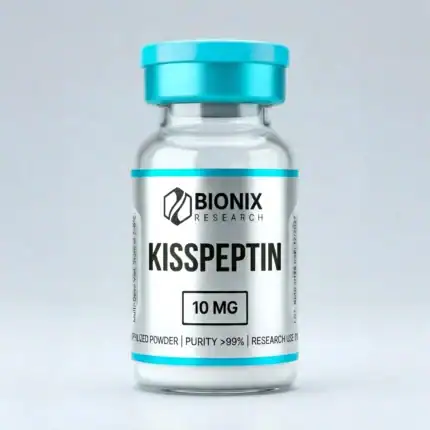
Kisspeptin-10
39,90 € Vialincl. VAT
plus Shipping Costs
Delivery time: 1–6 Working Days
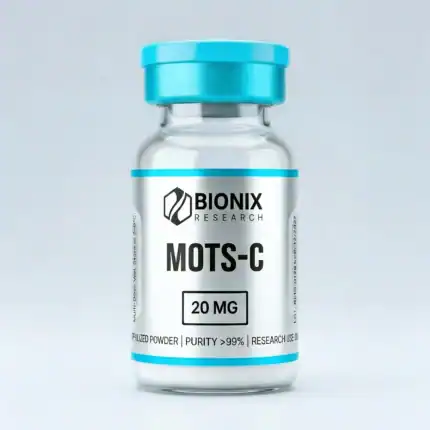
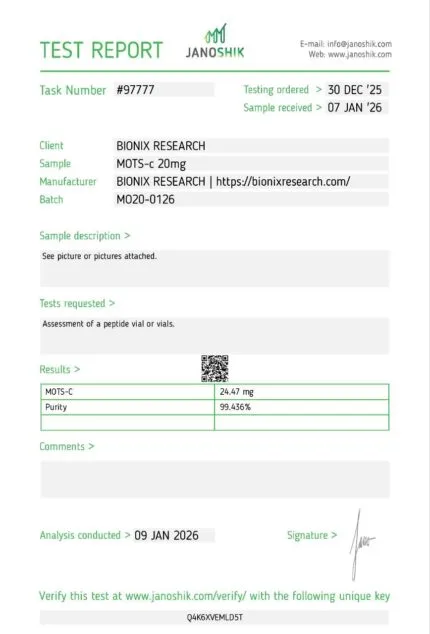
MOTS-c
49,90 € Vialincl. VAT
plus Shipping Costs
Delivery time: 1–6 Working Days
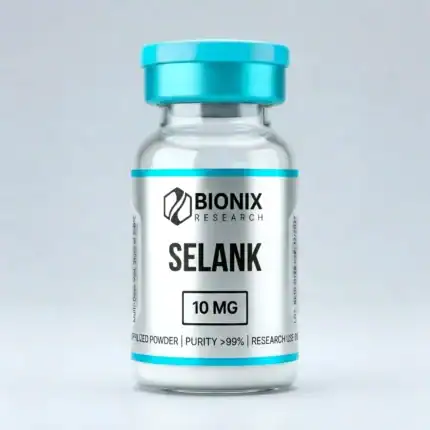
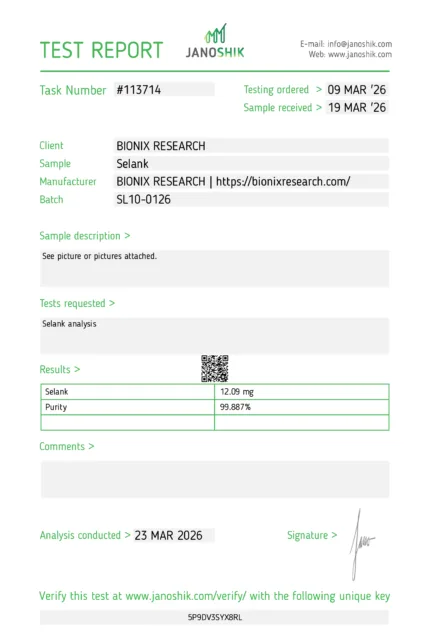
Selank
29,90 € Vialincl. VAT
plus Shipping Costs
Delivery time: 1–6 Working Days
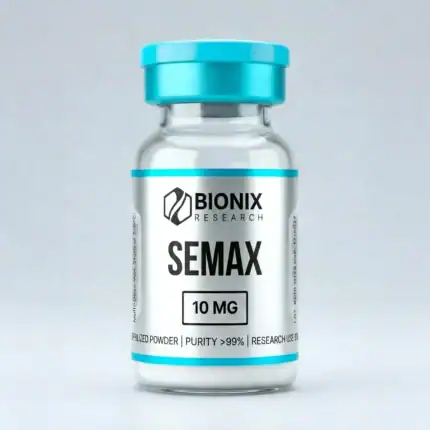
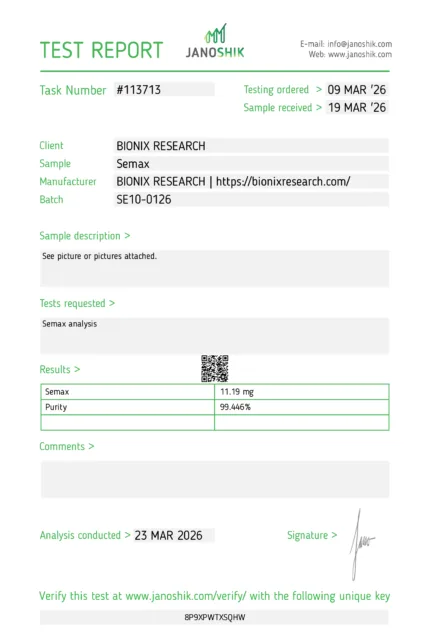
Semax
29,90 € Vialincl. VAT
plus Shipping Costs
Delivery time: 1–6 Working Days
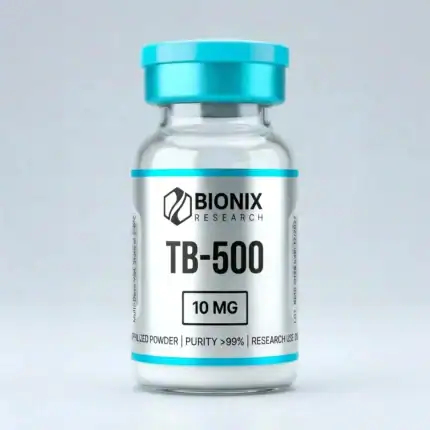
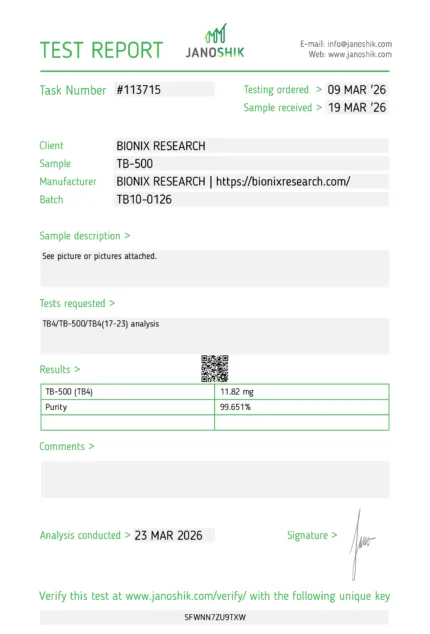
TB-500 (Thymosin Beta-4)
49,90 € Vialincl. VAT
plus Shipping Costs
Delivery time: 1–6 Working Days
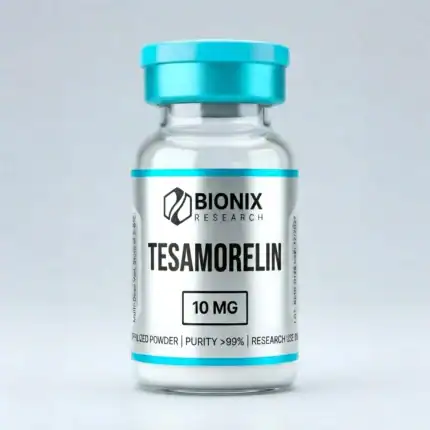
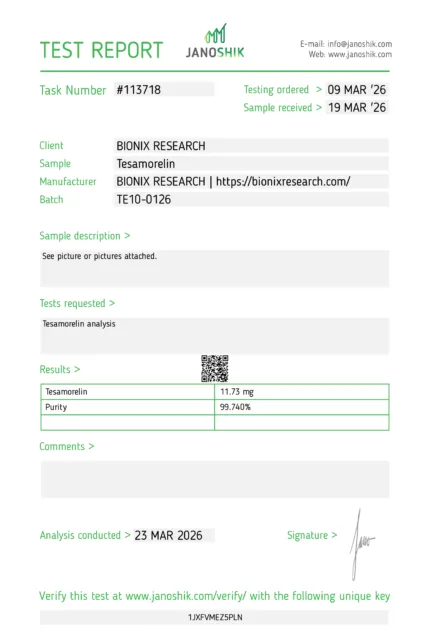
Tesamorelin
79,90 € Vialincl. VAT
plus Shipping Costs
Delivery time: 1–6 Working Days
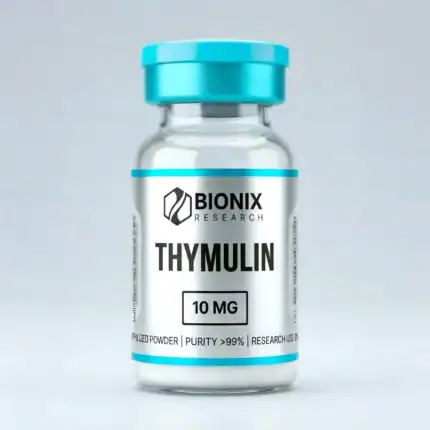
Thymalin / Thymulin
39,90 €incl. VAT
plus Shipping Costs
Delivery time: 1–6 Working Days

