



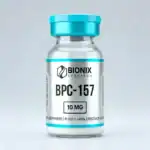
BPC-157
24,90 € Vial
5% off when paying with cryptocurrency
incl. VAT plus Shipping Costs
BPC-157 Peptide 10mg – Body Protection Compound for Tissue Regeneration Research
- Synthetic pentadecapeptide derived from human gastric juice protein, modulating nitric oxide (NO) system and angiogenesis signaling pathways.
- A comprehensive review of 36 studies (1993-2024) confirms effects on growth factor upregulation, VEGF/VEGFR2 expression, and FAK-paxillin cell migration pathways.
- Purity ≥99% (HPLC-verified). Supplied as lyophilized powder, 10mg per vial.
- Research applications include wound healing, tendon/ligament models, gastroprotection, angiogenesis, and neuroprotection studies.
- Store at -20°C. For research purposes only. Not intended for human consumption.
| Quantity | Price | Discount |
|---|---|---|
| 11-20 | 21,17 € Vial | 15% |
| 21+ | 19,92 € Vial | 20% |
Delivery time: 1–6 Working Days
BPC-157 Peptide 10mg – Body Protection Compound

Chemical diagram for BPC-157 by User:Innerstream – Own work, Public Domain, https://commons.wikimedia.org/w/index.php?curid=154789519
KEY SPECIFICATIONS
| Parameter | Specification |
|---|---|
| Type | Synthetic pentadecapeptide |
| Target | NO System, VEGF/VEGFR2, FAK-Paxillin, EGR-1 |
| Sequence | Gly-Glu-Pro-Pro-Pro-Gly-Lys-Pro-Ala-Asp-Asp-Ala-Gly-Leu-Val |
| Molecular Formula | C₆₂H₉₈N₁₆O₂₂ |
| Molecular Weight | 1,419.53 g/mol |
| CAS Number | 137525-51-0 |
| Length | 15 amino acids |
| Origin | Gastric juice protein fragment |
| Isoelectric Point | ~4.2 |
| Form | Lyophilized powder |
| Purity | ≥99% (HPLC) |
| Quantity | 10mg |
| Storage | -20°C |
PRODUCT OVERVIEW
BPC-157 (Body Protection Compound-157) is a synthetic pentadecapeptide derived from a partial sequence of a naturally occurring gastric protective protein. The 15-amino acid sequence (Gly-Glu-Pro-Pro-Pro-Gly-Lys-Pro-Ala-Asp-Asp-Ala-Gly-Leu-Val) demonstrates remarkable stability in gastric juice conditions and has been extensively investigated in regenerative research models for over 30 years. A comprehensive 2024 review of 36 studies (1993-2024) confirms BPC-157 promotes healing through growth factor upregulation, VEGF/VEGFR2 expression modulation, and NO system regulation. The peptide activates the FAK-paxillin pathway essential for cell migration, while influencing EGR-1 and growth hormone receptor expression. Research demonstrates effects across wound healing, tendon regeneration, gastroprotection, and angiogenesis models. BIONIX supplies BPC-157 with ≥99% purity for tissue repair research.
MECHANISM OF ACTION
BPC-157’s mechanism involves multiple interconnected signaling systems regulating tissue homeostasis and repair through NO modulation, angiogenesis promotion, and cell migration enhancement.
NO System Modulation:
| Component | BPC-157 Effect | Functional Consequence |
|---|---|---|
| eNOS (endothelial NOS) | Activity modulation | Improved endothelial function |
| NO bioavailability | Homeostatic regulation | Vascular tone stabilization |
| NO-deficient states | Counter-regulatory upregulation | Restored microcirculation |
| NO-excess states | Balancing moderation | Prevented oxidative damage |
BPC-157 provides counter-regulatory mechanism—upregulating NO when deficient, moderating when excessive—maintaining vascular homeostasis in damaged tissue models.
VEGF/Angiogenesis Pathway:
| Pathway Component | Effect | Research Model |
|---|---|---|
| VEGF expression | Upregulation | Wound healing, tendon models |
| VEGFR2 | Increased expression | Endothelial cell studies |
| Akt-eNOS axis | Activation | Vascular formation assays |
| Neovascularization | Enhanced | Tissue regeneration models |
BPC-157 stimulates VEGFR2, Akt-eNOS axis activation, and sustained NO synthesis, promoting new blood vessel formation. Effects persist for weeks despite short half-life (<30 minutes), suggesting self-sustaining gene expression cascades (Akt1, VEGFR2, eNOS).
FAK-Paxillin Cell Migration Pathway:
| Pathway Step | BPC-157 Effect | Cellular Outcome |
|---|---|---|
| FAK activation | Phosphorylation increase | Enhanced focal adhesion turnover |
| Paxillin recruitment | Increased | Improved cell-matrix adhesion |
| Fibroblast migration | Stimulated (~40% increase) | Accelerated wound closure |
| Tenocyte migration | Enhanced | Improved tendon repair |
Chang et al. (2011) demonstrated BPC-157 stimulates fibroblast and tenocyte migration through FAK-Paxillin activation.
Structural Stability Features:
| Feature | Amino Acids | Function |
|---|---|---|
| Triple proline | Pro-Pro-Pro | Structural rigidity, protease resistance |
| Acidic residues | Glu, Asp-Asp | Water solubility, pH stability |
| Glycine termini | N- and C-terminal | Conformational flexibility |
| Bond structure | No disulfide bonds | Simplified handling, reconstitution |
BPC-157’s stability in gastric juice (pH 1-2) is exceptional among bioactive peptides—attributed to compact structure and pepsin resistance.
Proposed Mechanism Pathway:
BPC-157 → NO System Modulation → Vascular Homeostasis /
VEGF/VEGFR2 Upregulation → Akt-eNOS Activation → Angiogenesis /
FAK-Paxillin Activation → Cell Migration (40% increase) /
EGR-1 Upregulation → Growth Factor Sensitivity → Tissue Regeneration
Comparative Profile:
| Property | BPC-157 | TB-500 | GHK-Cu |
|---|---|---|---|
| Origin | Gastric juice protein | Thymosin Beta-4 fragment | Blood plasma |
| Amino Acids | 15 | 7 | 3 + copper |
| Molecular Weight | 1,419.53 Da | 889 Da | 340 Da |
| Primary Target | NO/VEGF pathways | G-actin cytoskeleton | Copper-mediated genes |
| Mechanism | Signaling/transcriptional | Structural/mechanical | Epigenetic/regenerative |
| Stability | Extreme pH resistant | N-acetylated | Copper-dependent |
| Solubility | Water soluble (no DMSO) | Water soluble | Water soluble |
| Research Focus | Angiogenesis, gastroprotection | Cell migration, actin | Skin, tissue repair |
| Key Feature | Triple proline stability | G-actin sequestration | Copper ion binding |
RESEARCH APPLICATIONS
• Wound Healing Models: Extensively studied across all three healing phases. Inflammation phase: cytokine modulation, reduced excessive inflammation. Proliferation phase: enhanced fibroblast migration and proliferation (40% increase per Chang et al.). Remodeling phase: improved collagen organization and tissue strength. Endpoints: wound closure rate (planimetry, ImageJ), granulation tissue (histological scoring), collagen organization (Picrosirius red), re-epithelialization (H&E), tensile strength (mechanical testing).
• Tendon and Ligament Research: Major focus due to limited vascularization in these tissues. Achilles tendon transection models: biomechanical strength assessment, collagen fiber alignment, VEGF expression quantification, histological healing scores. Chang et al. (2011) demonstrated enhanced cell survival, migration, and outgrowth in vitro and in vivo. BPC-157 addresses the challenge of hypovascular tissue repair through angiogenesis promotion.
• Gastroprotection Research: Origin from gastric protective protein makes GI research particularly relevant. Epithelial cell protection from NSAIDs and ethanol, mucosal barrier integrity maintenance, anastomosis and fistula healing models (colo-cutaneous, recto-vaginal), ulcer healing mechanisms. Research suggests accelerated healing at tissue junctions through simultaneous angiogenesis promotion and extracellular matrix stabilization.
• Angiogenesis Studies: Angiogenic potential investigated through multiple assays: HUVEC tube formation (network complexity), endothelial migration (cells/field), aortic ring sprouting (sprout length/number), VEGF/VEGFR2 expression (qPCR, Western blot), CAM assay (vessel density). Mechanism investigation focuses on Akt-eNOS axis activation and sustained NO synthesis for neovascularization.
• Neuroprotection Research: Emerging gut-brain axis investigations: pro-inflammatory cytokine reduction in hippocampus, neuronal integrity preservation after trauma, dopaminergic and serotonergic system interactions, behavioral studies in rodent models. Neuroprotective effects examined in Parkinson’s-like, Alzheimer’s-like, and neurotoxic exposure models.
• Inflammation and Cytokine Modulation: ERK1/2 pathway activation, reduction of inflammatory cytokines (TNF-α, IL-6), AKT phosphorylation enhancement, KRAS expression modulation. BPC-157’s counter-regulatory NO modulation provides anti-inflammatory effects without complete immunosuppression.
ANALYTICAL VERIFICATION
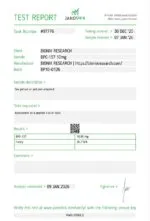
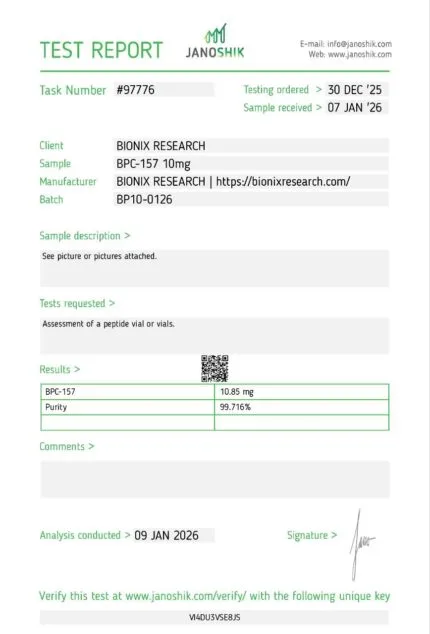
BIONIX BPC-157 undergoes comprehensive analytical characterization:
• HPLC Analysis: Gradient separation confirms ≥99% purity; separates pentadecapeptide from impurities, deletion sequences, and synthesis byproducts • Mass Spectrometry: Exact molecular weight confirmation (1,419.53 g/mol) and Gly-Glu-Pro-Pro-Pro-Gly-Lys-Pro-Ala-Asp-Asp-Ala-Gly-Leu-Val sequence verification • Amino Acid Analysis: Composition quantification • Structural Confirmation: Triple proline integrity verification • Endotoxin Testing: LAL assay for cell culture applications
Physical Characteristics:
| Property | Specification |
|---|---|
| Appearance | White to off-white lyophilized powder |
| Molecular Weight | 1,419.53 g/mol |
| Sequence | Gly-Glu-Pro-Pro-Pro-Gly-Lys-Pro-Ala-Asp-Asp-Ala-Gly-Leu-Val |
| Amino Acids | 15 residues |
| Structure | Linear polar peptide |
| Key Feature | Triple proline (Pro-Pro-Pro) |
| Solubility | Highly water soluble (no DMSO required) |
| Purity | ≥99% (HPLC-verified) |
DEVELOPMENT STATUS
• Origin: Derived from naturally occurring gastric protective protein; synthetic pentadecapeptide • Research History: 30+ years of investigation; 36 studies reviewed (1993-2024) • Mechanism: NO system modulation, VEGF/angiogenesis, FAK-paxillin migration pathway • Clinical Status: Not FDA or EMA approved; research compound only • Recent Evidence: 2024 comprehensive review confirming growth factor upregulation; no major adverse effects reported in preclinical models • Key Studies: Chang et al. (2011) tendon healing; Seiwerth et al. (2018) angiogenic growth factors; Sikiric et al. (2019) musculoskeletal healing • WADA Status: Research compound (verify current prohibited list)
BIONIX BPC-157 is supplied exclusively for laboratory research purposes—not for therapeutic use, human administration, veterinary, or clinical applications.
FREQUENTLY ENCOUNTERED INQUIRIES
What is BPC-157 and how does it work?
BPC-157 is a synthetic 15-amino-acid pentadecapeptide derived from gastric protective protein with sequence Gly-Glu-Pro-Pro-Pro-Gly-Lys-Pro-Ala-Asp-Asp-Ala-Gly-Leu-Val. Mechanism involves NO system modulation (homeostatic regulation—upregulating when deficient, moderating when excessive), VEGF/VEGFR2 upregulation for angiogenesis, FAK-paxillin pathway activation for cell migration (40% increase per Chang et al.), and EGR-1 transcription factor upregulation for growth factor sensitivity. Triple proline structure provides exceptional stability.
What is the difference between BPC-157 and TB-500?
BPC-157 (15 amino acids) operates at the signaling/transcriptional level through NO/VEGF pathways, FAK-paxillin activation, and angiogenesis promotion—derived from gastric juice with extreme pH stability. TB-500 (7 amino acids) operates at the structural/mechanical level through G-actin sequestration and cytoskeletal dynamics—derived from Thymosin Beta-4 with N-acetylation stability. They represent complementary mechanisms often studied in combination for synergistic tissue repair effects.
Is BPC-157 water soluble?
Affirmative. BPC-157 is a polar peptide with excellent water solubility due to acidic residues (Glu, Asp-Asp). Reconstitutes easily in bacteriostatic water or sterile saline—no organic solvents (DMSO) required. This simplifies cell culture applications and eliminates solvent-related confounding factors. Triple proline and glycine termini provide conformational flexibility enhancing solubility.
What research models is BPC-157 used in?
Primary applications: wound healing (closure kinetics, collagen organization, tensile strength), tendon and ligament regeneration (Achilles transection, biomechanical testing), gastroprotection (NSAID protection, mucosal barrier, fistula healing), angiogenesis (HUVEC tube formation, VEGF expression, CAM assays), neuroprotection (gut-brain axis, neuroinflammatory reduction), and inflammation studies (cytokine modulation, ERK1/2 pathway). All applications restricted to controlled laboratory environments.
How stable is BPC-157?
Exceptionally stable due to triple proline sequence (Pro-Pro-Pro) providing structural rigidity and protease resistance. Maintains integrity in gastric juice (pH 1-2) and extreme pH conditions. Lyophilized at -20°C: stable 24+ months. Room temperature: stable up to 90 days. Post-reconstitution: 2-4 weeks at 2-8°C, 1-3 months at -20°C (aliquoted). No disulfide bonds simplify handling. This stability profile is unique among bioactive peptides.
Is BPC-157 approved for clinical use?
Negative. BPC-157 is a research compound derived from gastric protective protein, not FDA or EMA approved for therapeutic indications. 2024 review of 36 studies (1993-2024) confirms extensive preclinical research but no approved clinical applications. It is investigated exclusively in in vitro and animal models for understanding tissue repair, angiogenesis, and gastroprotective mechanisms. BIONIX supplies research-grade material for laboratory use only—not for human therapeutic application.
REFERENCES
- PMID: 29877745 — BPC 157 and standard angiogenic growth factors; GI tract healing (Curr Pharm Des, 2018)
- PMID: 30915550 — BPC 157 role in accelerating musculoskeletal soft tissue healing (Cell Tissue Res, 2019)
- PMID: 31405021 — Systematic review into efficacy of BPC 157 as healing agent (J Clin Med, 2019)
- PMID: 21030672 — BPC 157 promoting effect on tendon healing; cell survival and migration (J Appl Physiol, 2011)
- PMID: 34380875 — BPC 157 and the central nervous system; neuroprotective mechanisms (Neural Regen Res, 2022)
- PMC, 2024 — Emerging use of BPC-157 in orthopaedic sports medicine (36 studies review, 1993-2024)
| Dosage | 10mg, 20mg, 40mg, 50mg, 5mg |
|---|
Product safety
Safety instructions
SAFETY DATA SHEET (SDS)
BPC-157 – Research-Grade Lyophilized Powder (RUO)
CAS Number: Not assigned
Synonyms: Body Protective Compound 157, Pentadecapeptide BPC-157
REACH Registration: Exempt (<1 tonne/year; Research Use Only)
SECTION 1 — Identification
1.1 Product Identifier: BPC-157 – Lyophilized Powder
1.2 Identified Uses: Analytical-grade peptide for in-vitro laboratory research. Research Use Only (RUO). Not for human or veterinary use.
1.3 Supplier: BIONIX RESEARCH
Email: info@bionixresearch.com
1.4 Emergency: EU Emergency Number: 112
SECTION 2 — Hazards Identification
2.1 Classification: Not classified as hazardous under CLP Regulation (EC) 1272/2008. No GHS pictograms required.
2.2 Precautionary notes:
- Avoid dust inhalation
- Avoid contact with eyes
- Laboratory use only
SECTION 3 — Composition
Substance: BPC-157
CAS: Not assigned
Purity: ≥99% HPLC
Form: Lyophilized powder
Impurities: None classified as hazardous.
SECTION 4 — First-Aid Measures
Inhalation: Move to fresh air. Rinse mouth and nose.
Skin Contact: Wash thoroughly with water and soap.
Eye Contact: Rinse cautiously with clean water for several minutes.
Ingestion: Rinse mouth. Do not induce vomiting. Seek medical advice.
SECTION 5 — Fire-Fighting Measures
Extinguishing Media: CO₂, dry chemical, foam, or water spray.
Hazards: Organic peptide powder, non-flammable. Thermal decomposition may release CO, CO₂, nitrogen oxides.
SECTION 6 — Accidental Release Measures
Avoid dust formation. Use gloves, mask, protective eyewear. Collect powder into sealed waste container.
SECTION 7 — Handling and Storage
Handling: Use only in laboratory settings. Minimize dust formation. Wear standard PPE.
Storage: Store at −20 °C in sealed vial. Protect from sunlight and humidity. Research use only.
SECTION 8 — Exposure Controls / Personal Protection
Exposure Limits: None established.
PPE: Nitrile or latex gloves, lab coat, protective eyewear, dust mask when handling powders.
SECTION 9 — Physical and Chemical Properties
Appearance: White to off-white lyophilized powder
Odor: None
Solubility: Soluble in sterile water, dilute acids, or aqueous buffers
Stability: Stable when stored at −20 °C
SECTION 10 — Stability and Reactivity
Stable under recommended conditions. Avoid heat, moisture, air exposure, oxidizing agents.
SECTION 11 — Toxicological Information
No data available for human exposure. Low acute toxicity expected. Dust may cause mild irritation. Not intended for injection, ingestion, or topical use.
SECTION 12 — Ecological Information
No data available. Not expected to present environmental risks. Prevent release into water systems.
SECTION 13 — Disposal Considerations
Dispose according to local regulations for laboratory chemical waste. Do not dispose via household waste or sewer systems.
SECTION 14 — Transport Information
Not regulated under ADR, IMDG, IATA. No UN classification required.
SECTION 15 — Regulatory Information
Not subject to REACH registration (<1 tonne/year; RUO exemption). Not classified under CLP. Not a pharmaceutical, cosmetic, or medical product.
SECTION 16 — Other Information
This SDS is intended for trained laboratory personnel. It does not signify suitability for therapeutic, diagnostic, or consumer applications.
Frequently bought together

You may also like…

BPC-157 & TB-500 Blend (Wolverine Stack)
49,90 € Vialincl. VAT
plus Shipping Costs
Delivery time: 1–6 Working Days
Related products

Bacteriostatic (BAC) Water
9,90 € Vialincl. VAT
plus Shipping Costs
Delivery time: 1–6 Working Days

CJC-1295 + Ipamorelin Blend
69,90 € Vialincl. VAT
plus Shipping Costs
Delivery time: 1–6 Working Days
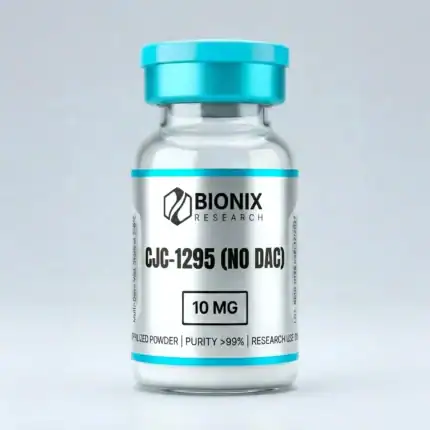
CJC-1295 No DAC
54,90 € Vialincl. VAT
plus Shipping Costs
Delivery time: 1–6 Working Days

Epithalon
24,90 € Vialincl. VAT
plus Shipping Costs
Delivery time: 1–6 Working Days
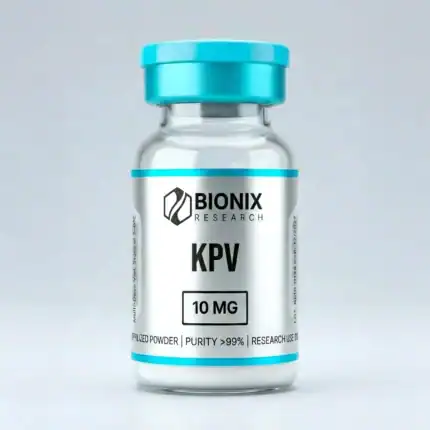
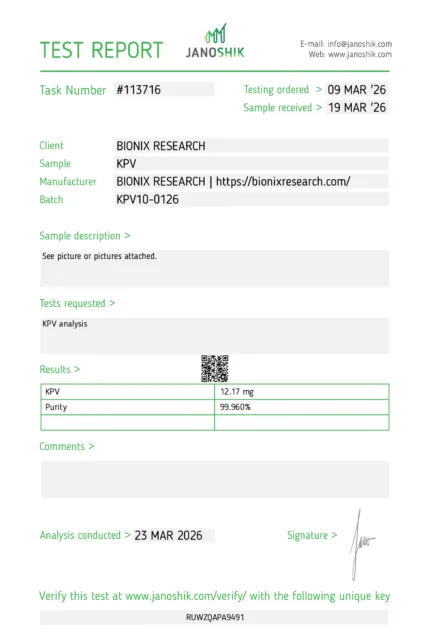
KPV
34,90 € Vialincl. VAT
plus Shipping Costs
Delivery time: 1–6 Working Days
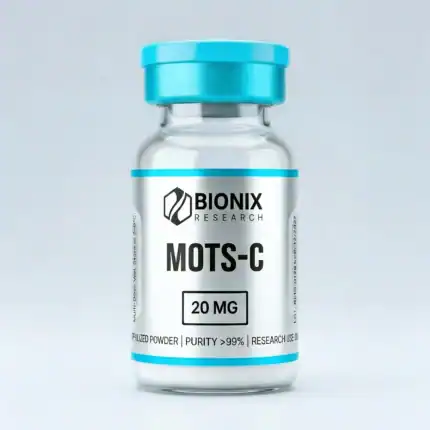
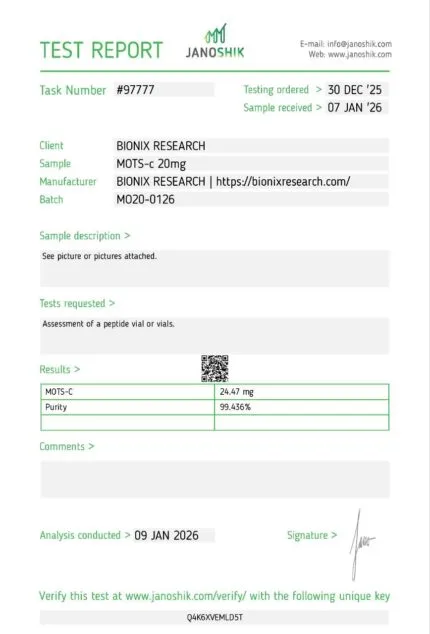
MOTS-c
49,90 € Vialincl. VAT
plus Shipping Costs
Delivery time: 1–6 Working Days
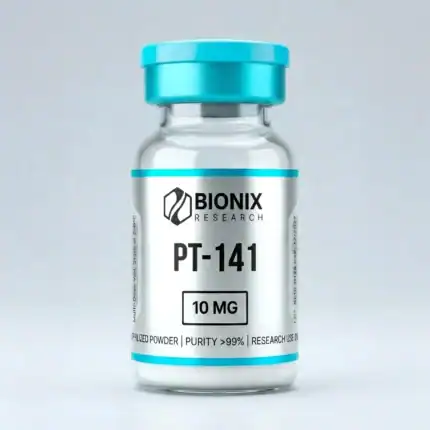
PT-141 (Bremelanotide)
29,90 € Vialincl. VAT
plus Shipping Costs
Delivery time: 1–6 Working Days
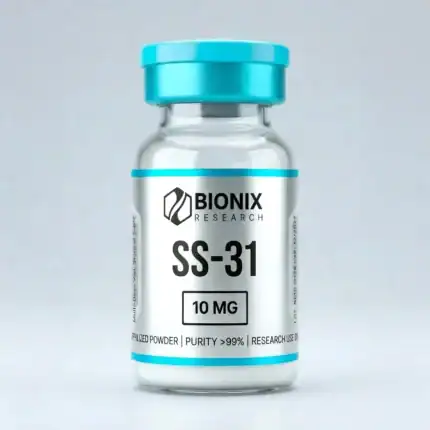
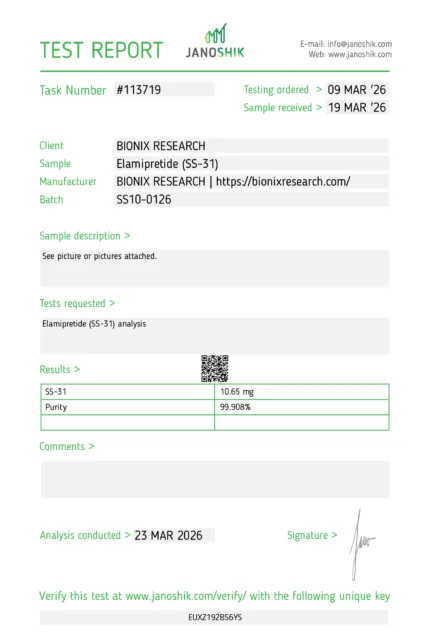
SS-31 (Elamipretide) Peptide
49,90 € Vialincl. VAT
plus Shipping Costs
Delivery time: 1–6 Working Days

