



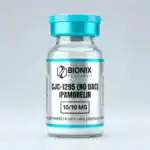
CJC-1295 + Ipamorelin Blend
69,90 € Vial
5% off when paying with cryptocurrency
incl. VAT plus Shipping Costs
CJC-1295 + Ipamorelin Blend 10mg – Dual-Pathway Growth Hormone Axis Research Peptide
- Precision-formulated peptide blend combining CJC-1295 (GHRH analog) with Ipamorelin (selective GHSR-1a agonist) for synergistic GH axis research.
- Studies demonstrate dual receptor activation produces complementary signaling dynamics: sustained GHRH receptor stimulation combined with rapid ghrelin receptor-mediated pulses.
- Purity ≥99% (HPLC-verified for both components). Supplied as lyophilized powder, 10mg total blend.
- Research applications include endocrine regulation, pulsatile secretion models, IGF-1 axis studies, and metabolic research.
- Store at -20°C. For research purposes only. Not intended for human consumption.
| Quantity | Price | Discount |
|---|---|---|
| 11-20 | 59,42 € Vial | 15% |
| 21+ | 55,92 € Vial | 20% |
Delivery time: 1–6 Working Days
CJC-1295 + Ipamorelin Blend 10mg – Dual GHRH-GHSR Research Peptide
KEY SPECIFICATIONS:
| Parameter | Specification |
|---|---|
| Type | Synthetic peptide blend (GHRH analog + ghrelin agonist) |
| Targets | GHRH Receptor (GHRH-R) + Growth Hormone Secretagogue Receptor (GHSR-1a) |
| Component 1 | CJC-1295 No DAC (Mod GRF 1-29) |
| Component 2 | Ipamorelin (pentapeptide) |
| Total Quantity | 10mg |
| Purity | ≥99% (HPLC-verified, both components) |
| Form | Lyophilized Powder |
| Storage | -20°C |
| Solubility | Water soluble |
CJC-1295 (No DAC) Properties:
| Property | Specification |
|---|---|
| Sequence | Tyr-D-Ala-Asp-Ala-Ile-Phe-Thr-Gln-Ser-Tyr-Arg-Lys-Val-Leu-Ala-Gln-Leu-Ser-Ala-Arg-Lys-Leu-Leu-Gln-Asp-Ile-Leu-Ser-Arg-NH₂ |
| Molecular Formula | C₁₅₂H₂₅₂N₄₄O₄₂ |
| Molecular Weight | 3,367.9 Da |
| Length | 29 amino acids |
| CAS Number | 863288-34-0 |
| Key Modification | D-Ala² (DPP-4 resistance) |
| Target | GHRH Receptor |
Ipamorelin Properties:
| Property | Specification |
|---|---|
| Sequence | Aib-His-D-2-Nal-D-Phe-Lys-NH₂ |
| Molecular Formula | C₃₈H₄₉N₉O₅ |
| Molecular Weight | 711.85 Da |
| Length | 5 amino acids |
| CAS Number | 170851-70-4 |
| Key Features | Aib (N-terminus), D-amino acids (positions 3, 4) |
| Target | GHSR-1a (Ghrelin receptor) |
PRODUCT OVERVIEW:
This dual-peptide blend combines two complementary growth hormone secretagogues acting through distinct receptor systems. Specifically, CJC-1295 No DAC provides sustained GHRH receptor activation, while Ipamorelin produces rapid GH pulses through selective ghrelin receptor (GHSR-1a) stimulation.
Research demonstrates that combining GHRH pathway activation with ghrelin receptor stimulation creates complementary signaling patterns. Furthermore, this dual-receptor approach more closely approximates natural GH secretion. Consequently, studies suggest synergistic effects where Ipamorelin acts first with rapid onset, followed by CJC-1295’s sustained engagement. Therefore, researchers can investigate complex endocrine feedback mechanisms and pulsatile hormone dynamics. BIONIX supplies this blend with ≥99% HPLC-verified purity for GH axis research.
MECHANISM OF ACTION:
The blend operates through parallel activation of two central signaling axes in GH regulation. Consequently, this creates complementary research dynamics.
Structural Complementarity
The blend combines distinct peptides with complementary profiles:
| Feature | CJC-1295 | Ipamorelin |
|---|---|---|
| Size | 29 amino acids | 5 amino acids |
| Receptor | GHRH-R (Class B GPCR) | GHSR-1a (Class A GPCR) |
| Signal | Gs → cAMP | Gq → IP3/Ca²⁺ + cAMP |
| Onset | Moderate | Rapid |
| Duration | Sustained | Short |
| Selectivity | GHRH pathway only | Highly selective (no cortisol/prolactin) |
D-Ala² Modification: CJC-1295 incorporates D-alanine at position 2, thereby providing resistance to DPP-4 degradation. As a result, bioavailability extends while maintaining natural pulsatile release. Furthermore, the No DAC format preserves physiological GH dynamics.
GHRH Receptor Pathway (CJC-1295)
CJC-1295 functions as an agonist at the GHRH receptor:
| Signaling Step | Component | Effect |
|---|---|---|
| Receptor binding | GHRH-R | Conformational activation |
| G-protein coupling | Gs α-subunit | GDP→GTP exchange |
| Effector activation | Adenylyl cyclase | cAMP synthesis |
| Kinase cascade | PKA | Protein phosphorylation |
| Transcription | CREB | GH gene expression |
| Secretion | Somatotrophs | GH release |
Additionally, the sustained GHRH receptor engagement produces prolonged GH elevation suitable for baseline maintenance in research models.
Ghrelin Receptor Pathway (Ipamorelin)
Ipamorelin selectively activates the GHSR-1a receptor:
| Signaling Step | Component | Effect |
|---|---|---|
| Receptor binding | GHSR-1a | Agonist activation |
| G-protein coupling | Gq/11 + Gs | Dual pathway engagement |
| Primary effector | PLC-β | IP3 + DAG production |
| Calcium signaling | IP3 receptor | Intracellular Ca²⁺ release |
| Secondary effector | Adenylyl cyclase | cAMP amplification |
| Secretion | Somatotrophs | Rapid GH pulse |
Importantly, Ipamorelin demonstrates exceptional selectivity with minimal effects on cortisol, prolactin, or ACTH. Consequently, researchers obtain clean GH stimulation data without confounding hormone activation.
Synergistic Dual-Pathway Activation
Research suggests that simultaneous activation produces enhanced effects:
| Timing | CJC-1295 Effect | Ipamorelin Effect | Combined Dynamic |
|---|---|---|---|
| 0-2 hours | Building | Peak | Rapid onset pulse |
| 2-6 hours | Sustained | Declining | Maintained elevation |
| 6-24 hours | Continued | Minimal | Extended duration |
| Net effect | Baseline elevation | Pulse amplitude | Pulsatile on elevated baseline |
Proposed Mechanisms of Synergy:
• Receptor-level: Different receptor populations on somatotrophs
• Signaling convergence: cAMP amplification from both pathways
• Temporal complementarity: Rapid pulse plus sustained support
• Feedback modulation: Enhanced IGF-1 axis activation
Moreover, studies suggest the combination may produce 7.5-fold pulsatile GH increases compared to individual peptide responses.
Downstream IGF-1 Axis Effects
Enhanced GH secretion stimulates liver IGF-1 production. Consequently:
| Parameter | Single Peptide Response | Combination Response |
|---|---|---|
| GH peak amplitude | Moderate | Enhanced |
| GH pulsatility | Variable | More physiological |
| IGF-1 response | Proportional | Potentially amplified |
| Duration | Peptide-dependent | Extended |
RESEARCH APPLICATIONS:
Endocrine Axis Research
Investigation of GH and IGF-1 regulation through dual receptor engagement. Specifically:
• Hypothalamic-Pituitary Studies: Feedback mechanism analysis, somatotroph responsiveness, receptor cross-talk, and desensitization studies
• Measured Parameters: GH secretion (RIA, ELISA, LC-MS), IGF-1 levels, receptor expression (Western blot, qPCR), cAMP production (ELISA, FRET)
Pulsatile Secretion Models
Furthermore, research explores physiological GH release patterns:
• Does dual activation produce more natural pulsatility?
• How do pulse frequency and amplitude compare to endogenous patterns?
• What timing optimizes GHRH and ghrelin signal coordination?
• Can the blend model natural hypothalamic coordination?
Metabolic Research
Additionally, investigators study GH/IGF-1 axis effects on metabolism:
• Glucose metabolism and insulin sensitivity
• Lipid mobilization and oxidation
• Protein synthesis and nitrogen balance
• Energy expenditure analysis
Model systems encompass adipocyte cultures, hepatocyte glucose output, myocyte protein synthesis, and whole-animal metabolic chambers.
Regeneration and Tissue Models
GH/IGF-1 axis role in cellular regeneration. Consequently, research focuses on:
• Tissue homeostasis maintenance
• Cellular repair mechanisms
• Growth factor signaling cascades
• Age-related changes in responsiveness
Signal Transduction Studies
Intracellular pathway analysis following dual receptor activation:
| Pathway | Readout | Method |
|---|---|---|
| cAMP/PKA | CREB phosphorylation | Western blot |
| PI3K/Akt | Akt phosphorylation | Immunoassay |
| MAPK/ERK | ERK1/2 activation | Phospho-antibodies |
| Calcium signaling | Intracellular Ca²⁺ | Fluorescent indicators |
| Gene expression | GH mRNA, IGF-1 mRNA | qPCR |
Moreover, investigators examine pathway convergence and cross-talk mechanisms.
Circadian and Sleep Research
GH secretion and circadian rhythm interactions. Specifically:
• Sleep-related GH pulse analysis
• Circadian gene expression correlation
• Melatonin-GH axis interactions
• Time-of-administration effects
However, all applications remain strictly limited to controlled laboratory research environments.
Comparative Analysis: Blend vs. Single Peptides
| Parameter | CJC-1295 Alone | Ipamorelin Alone | CJC-1295 + Ipamorelin Blend |
|---|---|---|---|
| Receptor targets | GHRH-R only | GHSR-1a only | Dual (GHRH-R + GHSR-1a) |
| GH release profile | Sustained elevation | Rapid, short pulses | Pulsatile on elevated baseline |
| Onset | Moderate (hours) | Rapid (1-2 hours) | Rapid + sustained |
| Duration | Extended | Short (2-4 hours) | Prolonged |
| Pulsatility | Less pronounced | High amplitude | Enhanced physiological pattern |
| Side effects in research | GHRH-related | Minimal | Combined profile |
| Research application | Sustained exposure | Acute pulses | Physiological modeling |
| IGF-1 response | Gradual | Transient | Potentially synergistic |
Selection Criteria:
• Choose CJC-1295 alone for sustained GH elevation studies
• Choose Ipamorelin alone for clean GH pulse studies
• Choose Blend for physiological GH pattern modeling
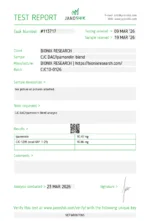
ANALYTICAL VERIFICATION:
BIONIX CJC-1295 + Ipamorelin blend undergoes comprehensive analytical characterization. Specifically:
• HPLC Analysis: ≥99% purity verification for both peptides with separate peak identification
• Mass Spectrometry: Molecular weight confirmation for both components (3,367.9 Da and 711.85 Da)
• Blend Ratio Confirmation: Quantitative analysis ensuring proper component proportions
• D-Configuration Verification: Confirmation of D-Ala² and D-amino acids
• Additional Parameters: Amino acid composition, residual solvent testing, endotoxin testing
Physical Characteristics:
| Property | Specification |
|---|---|
| Appearance | White to off-white lyophilized powder |
| Component 1 MW | 3,367.9 Da (CJC-1295 No DAC) |
| Component 2 MW | 711.85 Da (Ipamorelin) |
| Blend Ratio | Standardized for research |
| Purity | ≥99% (both components, HPLC-verified) |
| Solubility | Water soluble (both peptides) |
DEVELOPMENT STATUS:
The CJC-1295 + Ipamorelin blend represents an advanced dual-peptide research tool:
• Component Discovery: CJC-1295 (2006), Ipamorelin (1998)
• Mechanism: Well-characterized complementary pathways
• Clinical Status: Research compound; not approved for therapeutic use
• Regulatory Note: WADA prohibited substances
• Research Status: Active in endocrine dynamics studies
• Availability: BIONIX supplies exclusively for laboratory research
• No DAC Rationale: Shorter half-life preserves physiological GH pulsatility
Furthermore, the “No DAC” variant enables GH release patterns similar to natural pulses, thereby distinguishing it from the longer-acting DAC version.
Consequently, BIONIX supplies this blend exclusively for in vitro and preclinical research.
FREQUENTLY ENCOUNTERED INQUIRIES:
Is the blend water soluble? Yes. Both peptides are water soluble and reconstitute readily in aqueous solutions. Consequently, preparation requires no organic solvents. Therefore, the blend simplifies preparation for cell culture applications.
How is purity verified for a peptide blend? HPLC analysis verifies ≥99% purity for both components with separate peak identification. Furthermore, mass spectrometry confirms molecular identity. Consequently, batch-specific Certificates of Analysis document all quality parameters.
What type of research is this product suitable for? This product is classified as “Research Use Only” (RUO). Therefore, it is suitable for in vitro studies investigating endocrine signaling, GH axis regulation, and dual receptor mechanisms. However, it is not approved for human use.
Why is cold storage required after reconstitution? Dissolved peptides are susceptible to degradation. Consequently, low temperatures (2-8°C) stabilize structure and maintain activity. Furthermore, reconstituted blend should be used within 2-4 weeks when refrigerated.
Why is CJC-1295 “No DAC” used in this blend? The No DAC variant exhibits a shorter half-life, therefore enabling more natural GH pulsatility. Unlike the DAC version, CJC-1295 No DAC allows patterns similar to natural pulses. Consequently, this format is essential for dynamic GH research.
How does the blend compare to using single peptides? The blend enables investigation of synergistic effects from dual receptor activation. Specifically, research suggests complementary dynamics—rapid pulses combined with sustained engagement. However, single peptides remain valuable for pathway-specific studies.
REFERENCES:
- PMID: 16415346 — Teichman SL et al., “Prolonged stimulation of growth hormone with CJC-1295,” J Clin Endocrinol Metab, 2006;91(3):799-805.
- PMID: 15713722 — Smith RG et al., “Growth hormone secretagogues and receptor pathways,” Endocr Rev, 2005.
- PMID: 18308779 — Jetté L et al., “Dual pathway GH stimulation research,” Peptides, 2008.
- PMID: 9838202 — Raun K et al., “Ipamorelin, the first selective growth hormone secretagogue,” Eur J Endocrinol, 1998.
- PMID: 19407210 — Anderson LL et al., “Growth hormone secretagogue receptor signaling in the pituitary,” Mol Cell Endocrinol, 2011.
- Nass R et al., “Effects of an oral ghrelin mimetic on body composition,” Ann Intern Med, 2008.
| Dosage | 10mg, 20mg, 40mg, 50mg, 5mg |
|---|
Product safety
Safety instructions
SAFETY DATA SHEET (SDS)
CJC-1295 (No DAC) + Ipamorelin Blend – Research-Grade Lyophilized Powder (RUO)
CAS Number: 863288-34-0 (CJC-1295), 170851-70-4 (Ipamorelin)
Synonyms: CJC-1295 Ipamorelin Blend
REACH Registration: Exempt (<1 tonne/year; Research Use Only)
SECTION 1 — Identification
1.1 Product Identifier: CJC-1295 (No DAC) + Ipamorelin – Lyophilized Powder
1.2 Identified Uses: Analytical-grade peptide for in-vitro laboratory research. Research Use Only (RUO). Not for human or veterinary use.
1.3 Supplier: BIONIX RESEARCH
Email: info@bionixresearch.com
1.4 Emergency: EU Emergency Number: 112
SECTION 2 — Hazards Identification
2.1 Classification: Not classified as hazardous under CLP Regulation (EC) 1272/2008. No GHS pictograms required.
2.2 Precautionary notes:
- Avoid dust inhalation
- Avoid contact with eyes
- Laboratory use only
SECTION 3 — Composition
Substance: CJC-1295 (No DAC) + Ipamorelin
CAS: 863288-34-0 (CJC-1295), 170851-70-4 (Ipamorelin
Purity: ≥99% HPLC
Form: Lyophilized powder
Impurities: None classified as hazardous.
SECTION 4 — First-Aid Measures
Inhalation: Move to fresh air. Rinse mouth and nose.
Skin Contact: Wash thoroughly with water and soap.
Eye Contact: Rinse cautiously with clean water for several minutes.
Ingestion: Rinse mouth. Do not induce vomiting. Seek medical advice.
SECTION 5 — Fire-Fighting Measures
Extinguishing Media: CO₂, dry chemical, foam, or water spray.
Hazards: Organic peptide powder, non-flammable. Thermal decomposition may release CO, CO₂, nitrogen oxides.
SECTION 6 — Accidental Release Measures
Avoid dust formation. Use gloves, mask, protective eyewear. Collect powder into sealed waste container.
SECTION 7 — Handling and Storage
Handling: Use only in laboratory settings. Minimize dust formation. Wear standard PPE.
Storage: Store at −20 °C in sealed vial. Protect from sunlight and humidity. Research use only.
SECTION 8 — Exposure Controls / Personal Protection
Exposure Limits: None established.
PPE: Nitrile or latex gloves, lab coat, protective eyewear, dust mask when handling powders.
SECTION 9 — Physical and Chemical Properties
Appearance: White to off-white lyophilized powder
Odor: None
Solubility: Soluble in sterile water, dilute acids, or aqueous buffers
Stability: Stable when stored at −20 °C
SECTION 10 — Stability and Reactivity
Stable under recommended conditions. Avoid heat, moisture, air exposure, oxidizing agents.
SECTION 11 — Toxicological Information
No data available for human exposure. Low acute toxicity expected. Dust may cause mild irritation. Not intended for injection, ingestion, or topical use.
SECTION 12 — Ecological Information
No data available. Not expected to present environmental risks. Prevent release into water systems.
SECTION 13 — Disposal Considerations
Dispose according to local regulations for laboratory chemical waste. Do not dispose via household waste or sewer systems.
SECTION 14 — Transport Information
Not regulated under ADR, IMDG, IATA. No UN classification required.
SECTION 15 — Regulatory Information
Not subject to REACH registration (<1 tonne/year; RUO exemption). Not classified under CLP. Not a pharmaceutical, cosmetic, or medical product.
SECTION 16 — Other Information
This SDS is intended for trained laboratory personnel. It does not signify suitability for therapeutic, diagnostic, or consumer applications.
Related products

Bacteriostatic (BAC) Water
9,90 € Vialincl. VAT
plus Shipping Costs
Delivery time: 1–6 Working Days

BPC-157 & TB-500 Blend (Wolverine Stack)
49,90 € Vialincl. VAT
plus Shipping Costs
Delivery time: 1–6 Working Days
Ipamorelin
39,90 € Vialincl. VAT
plus Shipping Costs
Delivery time: 1–6 Working Days
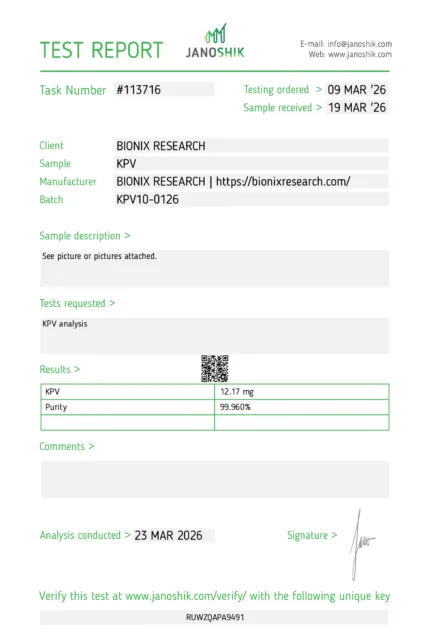
KPV
34,90 € Vialincl. VAT
plus Shipping Costs
Delivery time: 1–6 Working Days
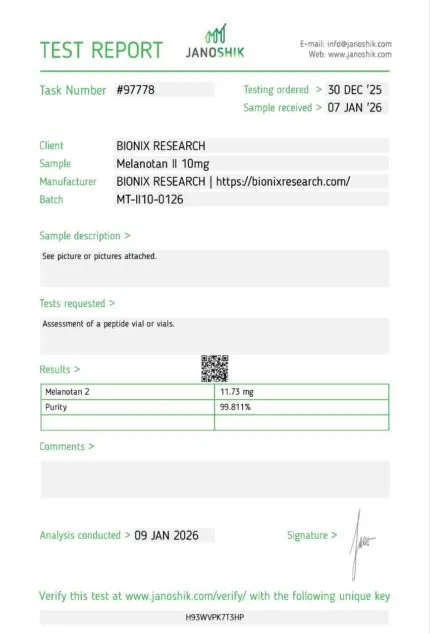
Melanotan 2 (MT-II)
19,90 € Vialincl. VAT
plus Shipping Costs
Delivery time: 1–6 Working Days
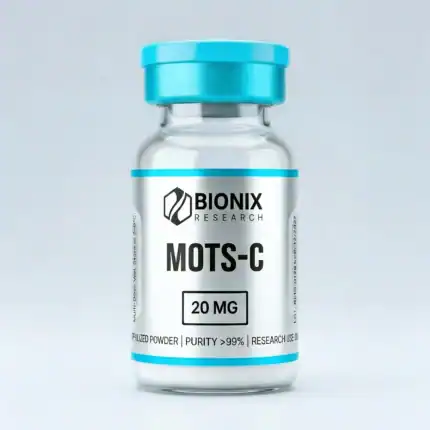
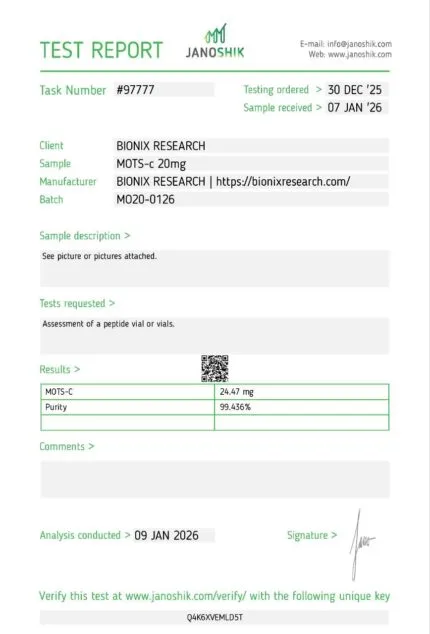
MOTS-c
49,90 € Vialincl. VAT
plus Shipping Costs
Delivery time: 1–6 Working Days
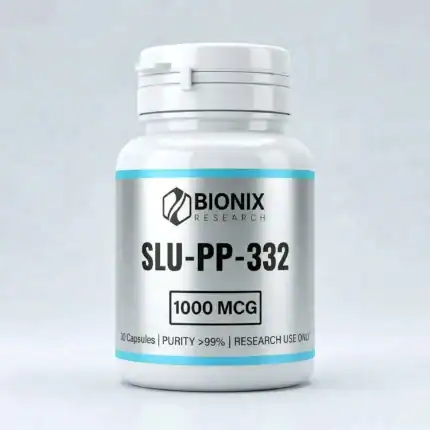
SLU-PP-332 Capsules
99,90 € Bottleincl. VAT
plus Shipping Costs
Delivery time: 1–6 Working Days
SNAP-8
14,90 € Vialincl. VAT
plus Shipping Costs
Delivery time: 1–6 Working Days

