



PT-141 (Bremelanotide)
29,90 € Vial
5% off when paying with cryptocurrency
incl. VAT plus Shipping Costs
PT-141 (Bremelanotide) 10mg – Cyclic Melanocortin Receptor Peptide
- Synthetic cyclic heptapeptide functioning as a selective MC3R/MC4R agonist for CNS melanocortin signaling research.
- Activates hypothalamic and limbic brain regions through central pathways distinct from peripheral vascular mechanisms.
- Derived from α-MSH with structural modifications for enhanced receptor selectivity. Purity ≥99% (HPLC-verified).
- Supplied as lyophilized powder, 10mg per vial. Research applications include melanocortin signaling, behavioral models, neuroendocrine studies, and CNS pathway investigations.
- Store at -20°C. For research purposes only. Not intended for human consumption.
| Quantity | Price | Discount |
|---|---|---|
| 11-20 | 25,42 € Vial | 15% |
| 21+ | 23,92 € Vial | 20% |
Delivery time: 1–6 Working Days
PT-141 (Bremelanotide) Peptide

Chemical diagram for PT-141 (Bremelanotide) by Vaccinationist – Own work using: PubChem, Public Domain, https://commons.wikimedia.org/w/index.php?curid=53052077
KEY SPECIFICATIONS
| Parameter | Specification |
|---|---|
| Type | Synthetic cyclic heptapeptide |
| Target Receptors | Melanocortin receptors MC3R, MC4R |
| Molecular Formula | C₅₀H₆₈N₁₄O₁₀ |
| Molecular Weight | 1025.2 Da |
| CAS Number | 189691-06-3 |
| Sequence | Ac-Nle-cyclo[Asp-His-D-Phe-Arg-Trp-Lys]-NH₂ |
| Structural Features | N-acetylated, C-amidated, cyclic lactam |
| Form | Lyophilized powder |
| Purity | ≥99% (HPLC) |
| Quantity | 10mg |
| Storage | -20°C |
PRODUCT OVERVIEW
PT-141 (Bremelanotide) is a synthetic cyclic heptapeptide and selective agonist of melanocortin receptors MC3R and MC4R. Originally derived from Melanotan II research, PT-141 was structurally optimized to minimize MC1R activation (tanning effects) while preserving central nervous system signaling through MC3R/MC4R.
This compound enables investigation of hypothalamic and limbic brain pathways distinct from peripheral vascular mechanisms. BIONIX supplies research-grade PT-141 with ≥99% purity and batch-specific analytical documentation for laboratory studies of melanocortin signaling.
MECHANISM OF ACTION
PT-141 binds selectively to melanocortin receptors MC3R and MC4R in the central nervous system, activating neuronal signaling pathways through G-protein coupling and cAMP elevation. This mechanism differs fundamentally from peripheral vascular approaches.
Melanocortin Receptor Selectivity:
| Receptor | Location | PT-141 Activity | Primary Function |
|---|---|---|---|
| MC1R | Skin melanocytes | Minimal | Pigmentation (tanning) |
| MC2R | Adrenal cortex | None | Cortisol production |
| MC3R | Hypothalamus, limbic | High affinity | Energy homeostasis, CNS signaling |
| MC4R | Hypothalamus, spinal cord | High affinity | Appetite, behavioral responses |
| MC5R | Exocrine glands | Minimal | Sebaceous secretion |
Key Distinction: PT-141 demonstrates high selectivity for MC3R/MC4R with minimal MC1R activity—unlike non-selective melanocortin agonists that induce tanning effects.
Signaling Pathway:
PT-141 Binding → MC3R/MC4R Activation → G-protein Coupling →
cAMP Elevation → Hypothalamic/Limbic Neuronal Activation
Central vs. Peripheral Mechanisms:
| Aspect | PT-141 | PDE5 Inhibitors |
|---|---|---|
| Target | CNS melanocortin receptors | Peripheral vascular smooth muscle |
| Mechanism | Central neuronal signaling | Nitric oxide/cGMP pathway |
| Primary Site | Brain (hypothalamus, limbic) | Peripheral blood vessels |
| Action Type | Receptor agonist | Enzyme inhibitor |
This distinction makes PT-141 valuable for investigating central nervous system signaling pathways independent of peripheral vascular mechanisms.
RESEARCH APPLICATIONS
Melanocortin Receptor Studies: Investigation of MC3R/MC4R activation, binding affinity, receptor signaling, and downstream cAMP pathways in neuronal cell cultures and tissue explants.
Behavioral Research: Analysis of central melanocortin pathways in motivation, reward processing, and social interaction models—providing insights into neurobiological foundations of complex behaviors.
Neuroendocrine Research: Examination of hypothalamic melanocortin pathways and interactions with the HPA axis, stress responses, and energy homeostasis mechanisms.
Appetite and Metabolism Studies: Investigation of MC4R-mediated satiety signaling, appetite regulation, and energy balance mechanisms relevant to metabolic disorder research.
Central Signaling Models: Research distinguishing central neuronal mechanisms from peripheral effects—enabling isolation of CNS pathways in physiological response studies.
Comparative Profile:
| Property | PT-141 (Bremelanotide) | Melanotan II |
|---|---|---|
| Structure | Cyclic heptapeptide | Cyclic heptapeptide |
| MC1R Activity | Minimal | Strong (tanning) |
| MC3R/MC4R Selectivity | High | Non-selective |
| Tanning Effect | Minimal | Pronounced |
| Primary Research Focus | CNS signaling | Multiple melanocortin pathways |
| Clinical Status | FDA-approved (Vyleesi) | Not approved |
ANALYTICAL VERIFICATION
BIONIX PT-141 undergoes comprehensive analytical characterization:
• HPLC Analysis: ≥99% purity confirmation via optimized chromatographic separation
• Mass Spectrometry: Molecular weight verification (1025.2 Da) and sequence confirmation
• Peptide Content: Amino acid analysis for accurate quantification
• Endotoxin Testing: Laboratory quality assurance
Physical Characteristics:
| Property | Specification |
|---|---|
| Appearance | White to off-white lyophilized powder |
| Molecular Weight | 1025.2 Da |
| Sequence | Ac-Nle-cyclo[Asp-His-D-Phe-Arg-Trp-Lys]-NH₂ |
| Structural Features | N-terminal acetylation, C-terminal amidation, cyclic lactam bridge |
| Purity | ≥99% (HPLC-verified) |
DEVELOPMENT STATUS
PT-141 has completed clinical development for specific indications:
• FDA Approval (June 2019): Bremelanotide (Vyleesi®) approved for acquired, generalized hypoactive sexual desire disorder (HSDD) in premenopausal women
• Administration: 1.75 mg subcutaneous injection
• Mechanism: First approved medication targeting central desire pathways
• Research Compound Status: BIONIX PT-141 is intended exclusively for laboratory research, not for therapeutic use, human administration, or clinical applications
• Regulatory Note: WADA prohibited substance
BIONIX PT-141 is supplied for laboratory research purposes only.
FREQUENTLY ENCOUNTERED INQUIRIES
What is PT-141 and how does it function?
PT-141 (Bremelanotide) is a synthetic cyclic heptapeptide and selective MC3R/MC4R agonist. It activates hypothalamic and limbic brain regions through central melanocortin signaling rather than peripheral mechanisms. The compound elevates cAMP levels in MC3R/MC4R-expressing neurons, influencing CNS pathways distinct from vascular approaches.
How does PT-141 differ from PDE5 inhibitors?
PT-141 targets CNS melanocortin receptors (MC3R/MC4R) in the hypothalamus and limbic system, operating through receptor-mediated neuronal signaling. PDE5 inhibitors work peripherally on vascular smooth muscle via nitric oxide/cGMP pathways. This fundamental distinction enables research into central versus peripheral physiological mechanisms.
What distinguishes PT-141 from Melanotan II?
PT-141 was structurally optimized for MC3R/MC4R selectivity with minimal MC1R activity, eliminating pronounced tanning effects associated with Melanotan II. While both are cyclic heptapeptides derived from α-MSH, PT-141’s modifications removed MC1R activation (tanning) while preserving central signaling properties, making it more selective for CNS pathway research.
What are the primary research applications?
Melanocortin receptor binding studies, behavioral research models, neuroendocrine pathway investigation, appetite and energy homeostasis studies, and central signaling mechanism research. All applications limited to controlled laboratory environments.
What storage conditions are required?
Lyophilized powder requires -20°C storage for long-term stability. Post-reconstitution, store at 2-8°C and use within 7 days. For extended storage, prepare aliquots and freeze at -20°C, avoiding repeated freeze-thaw cycles.
Is PT-141 approved for therapeutic use?
Bremelanotide (Vyleesi®) received FDA approval in 2019 for a specific indication. However, BIONIX PT-141 is supplied exclusively for laboratory research. It is not for human use, therapeutic applications, or clinical purposes. WADA prohibited substance.
References
- Wessells H et al., “Synthetic melanotropic peptide initiates erections in men with psychogenic erectile dysfunction,” Int J Impot Res, 2000;12(4):181-185. PMID: 11079360
- Diamond LE et al., “An effect on the subjective sexual response in premenopausal women,” J Sex Med, 2006;3(4):628-638. PMID: 16776877
- Pfaus JG et al., “Selective facilitation of sexual solicitation in the female rat by a melanocortin receptor agonist,” Proc Natl Acad Sci, 2004;101(29):10201-10204. PMID: 15199184
| Dosage | 10mg, 20mg, 40mg, 50mg, 5mg |
|---|
Product safety
Safety instructions
SAFETY DATA SHEET (SDS)
PT-141 (Bremelanotide) – Research-Grade Lyophilized Powder (RUO)
CAS Number: 189691-06-3
Synonyms: Bremelanotide
REACH Registration: Exempt (<1 tonne/year; Research Use Only)
SECTION 1 — Identification
1.1 Product Identifier: PT-141 (Bremelanotide) – Lyophilized Powder
1.2 Identified Uses: Analytical-grade peptide for in-vitro laboratory research. Research Use Only (RUO). Not for human or veterinary use.
1.3 Supplier: BIONIX RESEARCH
Email: info@bionixresearch.com
1.4 Emergency: EU Emergency Number: 112
SECTION 2 — Hazards Identification
2.1 Classification: Not classified as hazardous under CLP Regulation (EC) 1272/2008. No GHS pictograms required.
2.2 Precautionary notes:
- Avoid dust inhalation
- Avoid contact with eyes
- Laboratory use only
SECTION 3 — Composition
Substance: PT-141 (Bremelanotide)
CAS: 189691-06-3
Purity: ≥99% HPLC
Form: Lyophilized powder
Impurities: None classified as hazardous.
SECTION 4 — First-Aid Measures
Inhalation: Move to fresh air. Rinse mouth and nose.
Skin Contact: Wash thoroughly with water and soap.
Eye Contact: Rinse cautiously with clean water for several minutes.
Ingestion: Rinse mouth. Do not induce vomiting. Seek medical advice.
SECTION 5 — Fire-Fighting Measures
Extinguishing Media: CO₂, dry chemical, foam, or water spray.
Hazards: Organic peptide powder, non-flammable. Thermal decomposition may release CO, CO₂, nitrogen oxides.
SECTION 6 — Accidental Release Measures
Avoid dust formation. Use gloves, mask, protective eyewear. Collect powder into sealed waste container.
SECTION 7 — Handling and Storage
Handling: Use only in laboratory settings. Minimize dust formation. Wear standard PPE.
Storage: Store at −20 °C in sealed vial. Protect from sunlight and humidity. Research use only.
SECTION 8 — Exposure Controls / Personal Protection
Exposure Limits: None established.
PPE: Nitrile or latex gloves, lab coat, protective eyewear, dust mask when handling powders.
SECTION 9 — Physical and Chemical Properties
Appearance: White to off-white lyophilized powder
Odor: None
Solubility: Soluble in sterile water, dilute acids, or aqueous buffers
Stability: Stable when stored at −20 °C
SECTION 10 — Stability and Reactivity
Stable under recommended conditions. Avoid heat, moisture, air exposure, oxidizing agents.
SECTION 11 — Toxicological Information
No data available for human exposure. Low acute toxicity expected. Dust may cause mild irritation. Not intended for injection, ingestion, or topical use.
SECTION 12 — Ecological Information
No data available. Not expected to present environmental risks. Prevent release into water systems.
SECTION 13 — Disposal Considerations
Dispose according to local regulations for laboratory chemical waste. Do not dispose via household waste or sewer systems.
SECTION 14 — Transport Information
Not regulated under ADR, IMDG, IATA. No UN classification required.
SECTION 15 — Regulatory Information
Not subject to REACH registration (<1 tonne/year; RUO exemption). Not classified under CLP. Not a pharmaceutical, cosmetic, or medical product.
SECTION 16 — Other Information
This SDS is intended for trained laboratory personnel. It does not signify suitability for therapeutic, diagnostic, or consumer applications.
You may also like…
Melanotan 2 (MT-II)
19,90 € Vialincl. VAT
plus Shipping Costs
Delivery time: 1–6 Working Days
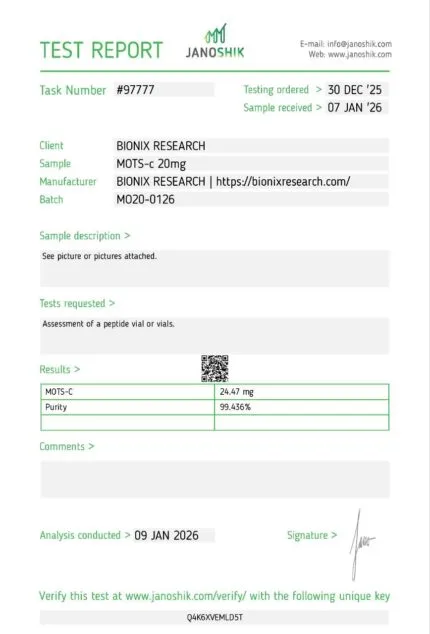
MOTS-c
49,90 € Vialincl. VAT
plus Shipping Costs
Delivery time: 1–6 Working Days

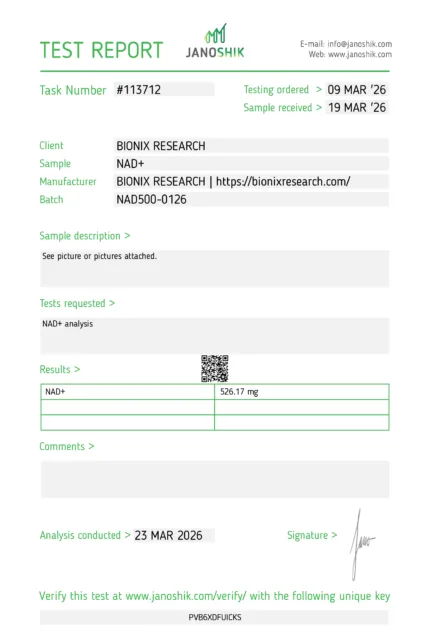
NAD+
59,90 € Vialincl. VAT
plus Shipping Costs
Delivery time: 1–6 Working Days
Related products

Bacteriostatic (BAC) Water
9,90 € Vialincl. VAT
plus Shipping Costs
Delivery time: 1–6 Working Days

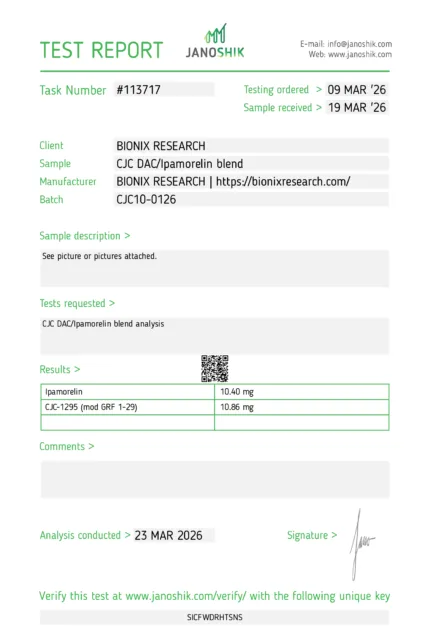
CJC-1295 + Ipamorelin Blend
69,90 € Vialincl. VAT
plus Shipping Costs
Delivery time: 1–6 Working Days

Epithalon
24,90 € Vialincl. VAT
plus Shipping Costs
Delivery time: 1–6 Working Days
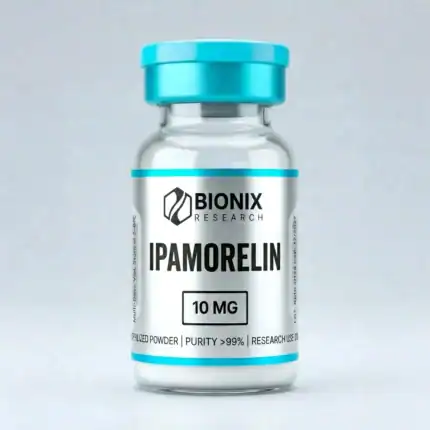
Ipamorelin
39,90 € Vialincl. VAT
plus Shipping Costs
Delivery time: 1–6 Working Days
Kisspeptin-10
39,90 € Vialincl. VAT
plus Shipping Costs
Delivery time: 1–6 Working Days
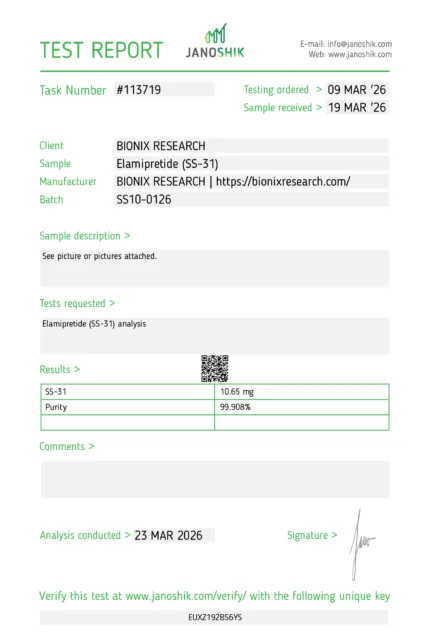
SS-31 (Elamipretide) Peptide
49,90 € Vialincl. VAT
plus Shipping Costs
Delivery time: 1–6 Working Days
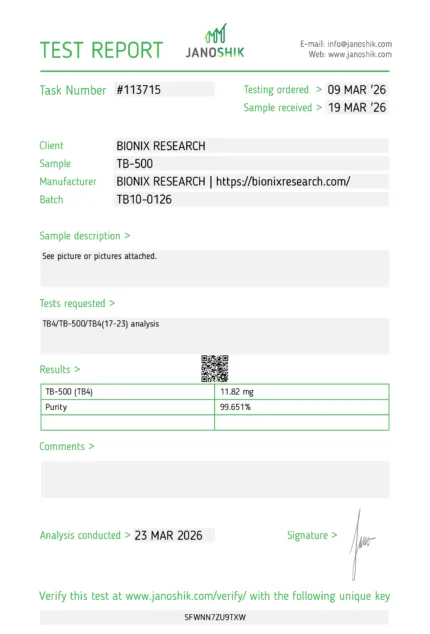
TB-500 (Thymosin Beta-4)
49,90 € Vialincl. VAT
plus Shipping Costs
Delivery time: 1–6 Working Days
VIP Peptide – Vasoactive Intestinal Peptide
69,90 € Vialincl. VAT
plus Shipping Costs
Delivery time: 1–6 Working Days

