



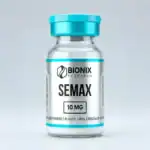
Semax
29,90 € Vial
5% off when paying with cryptocurrency
incl. VAT plus Shipping Costs
Semax 10mg – Neurotrophic ACTH(4-10) Analogue
- Synthetic heptapeptide derived from ACTH(4-10) with C-terminal Pro-Gly-Pro extension for enhanced metabolic stability.
- Research demonstrates upregulation of BDNF and NGF expression, modulation of Default Mode Network activity, and neuroprotective effects in ischemia models.
- Applications include cognitive function research, neurotrophin signaling, synaptic plasticity, and neuroprotection studies.
- Purity ≥99% (HPLC-verified). Supplied as lyophilized powder, 10mg per vial. Store at -20°C.
- For research purposes only. Not intended for human consumption.
| Quantity | Price | Discount |
|---|---|---|
| 11-20 | 25,42 € Vial | 15% |
| 21+ | 23,92 € Vial | 20% |
Delivery time: 1–6 Working Days
Semax 10mg Peptide

Chemical diagram for Semax by User:Innerstream – Own work, Public Domain, https://commons.wikimedia.org/w/index.php?curid=136526748
KEY SPECIFICATIONS
| Parameter | Specification |
|---|---|
| Type | Synthetic heptapeptide (ACTH fragment analog) |
| Target | Neurotrophic signaling pathways, gene expression |
| Molecular Formula | C₃₇H₅₁N₉O₁₀S |
| Molecular Weight | 813.93 g/mol |
| CAS Number | 80714-61-0 |
| Sequence | Met-Glu-His-Phe-Pro-Gly-Pro |
| Stability Modification | C-terminal Pro-Gly-Pro (PGP) extension |
| Form | Lyophilized powder |
| Purity | ≥99% (HPLC) |
| Quantity | 10mg |
| Storage | -20°C |
PRODUCT OVERVIEW
Semax is a synthetic analog of the ACTH(4-10) fragment engineered for enhanced metabolic stability through C-terminal Pro-Gly-Pro modification. This heptapeptide overcomes the short half-life of native ACTH fragments while preserving neurotrophic activity. Research demonstrates potent modulation of neurotrophin expression (BDNF, NGF) and gene transcription programs supporting neuroprotection, neurogenesis, and synaptic plasticity. The PGP extension protects against exopeptidase degradation, enabling efficient blood-brain barrier penetration in experimental models. BIONIX supplies Semax with ≥99% purity for neurobiological and neuroprotective research applications.
MECHANISM OF ACTION
Semax operates through complex mechanisms encompassing rapid signal transduction and long-term transcriptional changes. The peptide modulates neurotrophic factor expression and system-wide neuronal network activities through melanocortin receptor-mediated pathways.
Neurotrophin Modulation:
Semax upregulates critical neurotrophic factors in hippocampus and frontal cortex:
| Neurotrophin | Effect | Research Significance |
|---|---|---|
| BDNF | Gene expression upregulation | Neuronal survival, synaptic plasticity, memory consolidation |
| NGF | mRNA level elevation | Axonal growth, neuronal differentiation |
| Time Course | Rapid onset | Direct influence on transcriptional machinery |
Proposed Signaling Pathway:
Semax Binding → Melanocortin Receptor Activation → cAMP/PKA Cascade →
CREB Phosphorylation → BDNF/NGF Gene Transcription
Structural Architecture:
| Domain | Sequence | Function |
|---|---|---|
| N-Terminal | Met-Glu-His-Phe | ACTH(4-7) bioactive core; neurotrophic signaling |
| C-Terminal | Pro-Gly-Pro | Exopeptidase resistance; enhanced metabolic stability |
The Pro-Gly-Pro tripeptide confers exceptional stability against proteolytic degradation, extending half-life and improving bioavailability compared to unmodified ACTH fragments.
Network-Level Effects: Experimental imaging studies demonstrate modulation of resting-state network behavior, particularly the Default Mode Network (DMN)—brain regions active at rest associated with episodic memory and cognitive processing.
Immune and Vascular Modulation: In focal brain ischemia models, genome-wide analysis revealed Semax induces specific expression changes in immune- and vascular system-related gene sets. Neuroprotective effects appear partially mediated through inflammatory response modulation and vascular repair processes.
Comparative Profile:
| Property | Semax | Selank | N-Acetyl Semax Amidate (NASA) |
|---|---|---|---|
| Structure | Heptapeptide | Heptapeptide | Acetylated/amidated Semax |
| Parent Molecule | ACTH(4-10) | Tuftsin analog | ACTH(4-10) |
| Primary Target | BDNF/TrkB, neurogenesis | GABA-A, enkephalinase | Enhanced neurotrophin modulation |
| Stability Mechanism | Pro-Gly-Pro extension | Pro-Gly-Pro extension | Acetylation/amidation |
| Metabolic Stability | Enhanced | Enhanced | Further enhanced |
| Research Focus | Cognition, neuroprotection | Anxiety, immunity | Cognitive enhancement |
| Sedative Effects | None | None | None |
| BDNF Influence | Strong | Moderate | Strong |
| Clinical Status | Russia approved | Russia approved | Research compound |
| Research Applications | Neuroprotection, plasticity | Anxiolytic, immunomodulation | Nootropic studies |
RESEARCH APPLICATIONS
Neurotrophin Gene Regulation: Investigation of time-dependent BDNF and NGF expression in hippocampal and cortical tissues. Semax exposure demonstrates rapid, sustained upregulation of neurotrophin mRNA levels essential for neuronal survival, axonal growth, and synaptic plasticity—providing insights into learning and memory molecular mechanisms.
Neuronal Network Dynamics: fMRI studies analyzing resting-state network activities, particularly Default Mode Network modulation. Research examines functional connectivity changes and relationships between peptide exposure and global brain network organization.
Ischemia and Neuroprotection: Focal brain ischemia models investigating infarct volume reduction, neuronal integrity preservation under hypoxic conditions, and regulation of immune response and vascularization gene sets. Genome-wide transcriptional analyses demonstrate specific gene regulation associated with tissue protection and vascular integrity.
Oxidative Stress Research: Studies on lipid peroxidation markers, antioxidant defense mechanism activation, and mitigation of cellular damage from free radicals in stress models.
Cognitive Function Models: Analysis of attention, learning, and memory consolidation mechanisms through BDNF-mediated synaptic plasticity enhancement.
Vascular Repair Studies: Investigation of endothelial function, vascular integrity maintenance, and angiogenic signaling following ischemic events.
ANALYTICAL VERIFICATION
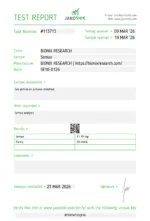
BIONIX Semax undergoes comprehensive analytical characterization:
• HPLC Analysis: ≥99% purity confirmation via optimized chromatographic separation
• Mass Spectrometry: Molecular weight verification (813.93 g/mol) and sequence confirmation
• Amino Acid Analysis: Met-Glu-His-Phe-Pro-Gly-Pro quantification
• Endotoxin Testing: Laboratory quality assurance
• Stability Assessment: Pro-Gly-Pro extension verification
Physical Characteristics:
| Property | Specification |
|---|---|
| Appearance | White to off-white lyophilized powder |
| Molecular Weight | 813.93 g/mol |
| Sequence | Met-Glu-His-Phe-Pro-Gly-Pro |
| Stability Feature | C-terminal Pro-Gly-Pro extension |
| ACTH Origin | Residues 4-10 of adrenocorticotropic hormone |
| Purity | ≥99% (HPLC-verified) |
DEVELOPMENT STATUS
Semax has distinct regulatory history and current status:
• Origin: Developed at Institute of Molecular Genetics, Russian Academy of Sciences (1990s)
• Russia Status: Approved medication for specific neurological conditions; clinical use since 1990s
• FDA Status: Not approved; research compound only
• EMA Status: Not approved; research compound only
• Global Status: Research use only in most jurisdictions
• WADA Classification: Research compound (verify current prohibited list)
BIONIX Semax is supplied exclusively for laboratory research purposes—not for therapeutic use, human administration, veterinary, or clinical applications.
FREQUENTLY ENCOUNTERED INQUIRIES
What is Semax’s mechanism of action?
Semax operates primarily through neurotrophin modulation—upregulating BDNF and NGF gene expression in hippocampus and frontal cortex. The proposed pathway involves melanocortin receptor activation, cAMP/PKA cascade signaling, CREB phosphorylation, and subsequent neurotrophic gene transcription. Additionally, Semax influences resting-state network dynamics (particularly Default Mode Network) and modulates immune/vascular gene expression in ischemia models.
How does Semax differ from Selank?
Both are Russian-developed heptapeptides with Pro-Gly-Pro stability extensions, but derive from different parent molecules with distinct mechanisms. Semax is an ACTH(4-10) analog targeting BDNF/NGF neurotrophin pathways (neuroprotective/cognitive focus). Selank is a Tuftsin analog targeting GABA-A receptors and enkephalinase (anxiolytic/immunomodulatory focus). They represent complementary research tools for different CNS investigation domains.
What is the significance of the Pro-Gly-Pro extension?
The C-terminal Pro-Gly-Pro sequence protects against rapid exopeptidase degradation that destroys native ACTH fragments within minutes. This structural modification dramatically extends half-life, improves bioavailability, and enables efficient blood-brain barrier penetration in experimental models—critical for sustained physiological interactions in research settings.
What are the primary research applications?
Neurotrophin gene regulation studies (BDNF/NGF expression), neuronal network dynamics and fMRI investigations, focal brain ischemia and neuroprotection models, oxidative stress and antioxidant defense research, cognitive function and synaptic plasticity studies, and vascular repair mechanism analyses. All applications limited to controlled laboratory environments.
What storage conditions are required?
Lyophilized powder requires -20°C storage for long-term stability (up to 24 months). Protect from moisture, light, and UV exposure. Post-reconstitution, store at 2-8°C and use within 7-10 days. For extended storage, prepare single-use aliquots and freeze at -20°C, thawing only once per aliquot. Avoid repeated freeze-thaw cycles.
Is Semax approved for clinical use?
Semax is approved in Russia as a medication for specific neurological conditions and has been in clinical use since the 1990s. It is not FDA or EMA approved and is available exclusively for laboratory research in Western markets. BIONIX supplies research-grade material for laboratory use only—not for human therapeutic application.
REFERENCES
- PMID: 25242422 — BDNF/NGF expression changes in rat hippocampus (Dokl Biol Sci, 2014)
- PMID: 28214594 — Resting-state fMRI and Default Mode Network modulation (Front Neurosci, 2017)
- PMID: 23452621 — Immune system and vascularization gene regulation in ischemia (BMC Genomics, 2013)
- PMID: 15742583 — Hepatic biomarkers and lipid peroxidation effects (Bull Exp Biol Med, 2005)
- PMID: 22295571 — Time-dependent BDNF upregulation in cortical tissue (Dokl Biol Sci, 2012)
- Preclinical Studies — Neuroprotective effects and cognitive enhancement models
| Dosage | 10mg, 20mg, 40mg, 50mg, 5mg |
|---|
Product safety
Safety instructions
SAFETY DATA SHEET (SDS)
Semax – Research-Grade Lyophilized Powder (RUO)
CAS Number: 80714-61-0
Synonyms: ACTH(4-10) analogue, Met-Glu-His-Phe-Pro-Gly-Pro
REACH Registration: Exempt (<1 tonne/year; Research Use Only)
SECTION 1 — Identification
1.1 Product Identifier: Semax – Lyophilized Powder
1.2 Identified Uses: Analytical-grade peptide for in-vitro laboratory research. Research Use Only (RUO). Not for human or veterinary use.
1.3 Supplier: BIONIX RESEARCH
Email: info@bionixresearch.com
1.4 Emergency: EU Emergency Number: 112
SECTION 2 — Hazards Identification
2.1 Classification: Not classified as hazardous under CLP Regulation (EC) 1272/2008. No GHS pictograms required.
2.2 Precautionary notes:
- Avoid dust inhalation
- Avoid contact with eyes
- Laboratory use only
SECTION 3 — Composition
Substance: Semax
CAS: 80714-61-0
Purity: ≥99% HPLC
Form: Lyophilized powder
Impurities: None classified as hazardous.
SECTION 4 — First-Aid Measures
Inhalation: Move to fresh air. Rinse mouth and nose.
Skin Contact: Wash thoroughly with water and soap.
Eye Contact: Rinse cautiously with clean water for several minutes.
Ingestion: Rinse mouth. Do not induce vomiting. Seek medical advice.
SECTION 5 — Fire-Fighting Measures
Extinguishing Media: CO₂, dry chemical, foam, or water spray.
Hazards: Organic peptide powder, non-flammable. Thermal decomposition may release CO, CO₂, nitrogen oxides.
SECTION 6 — Accidental Release Measures
Avoid dust formation. Use gloves, mask, protective eyewear. Collect powder into sealed waste container.
SECTION 7 — Handling and Storage
Handling: Use only in laboratory settings. Minimize dust formation. Wear standard PPE.
Storage: Store at −20 °C in sealed vial. Protect from sunlight and humidity. Research use only.
SECTION 8 — Exposure Controls / Personal Protection
Exposure Limits: None established.
PPE: Nitrile or latex gloves, lab coat, protective eyewear, dust mask when handling powders.
SECTION 9 — Physical and Chemical Properties
Appearance: White to off-white lyophilized powder
Odor: None
Solubility: Soluble in sterile water, dilute acids, or aqueous buffers
Stability: Stable when stored at −20 °C
SECTION 10 — Stability and Reactivity
Stable under recommended conditions. Avoid heat, moisture, air exposure, oxidizing agents.
SECTION 11 — Toxicological Information
No data available for human exposure. Low acute toxicity expected. Dust may cause mild irritation. Not intended for injection, ingestion, or topical use.
SECTION 12 — Ecological Information
No data available. Not expected to present environmental risks. Prevent release into water systems.
SECTION 13 — Disposal Considerations
Dispose according to local regulations for laboratory chemical waste. Do not dispose via household waste or sewer systems.
SECTION 14 — Transport Information
Not regulated under ADR, IMDG, IATA. No UN classification required.
SECTION 15 — Regulatory Information
Not subject to REACH registration (<1 tonne/year; RUO exemption). Not classified under CLP. Not a pharmaceutical, cosmetic, or medical product.
SECTION 16 — Other Information
This SDS is intended for trained laboratory personnel. It does not signify suitability for therapeutic, diagnostic, or consumer applications.
Related products

Bacteriostatic (BAC) Water
9,90 € Vialincl. VAT
plus Shipping Costs
Delivery time: 1–6 Working Days

BPC-157 & TB-500 Blend (Wolverine Stack)
49,90 € Vialincl. VAT
plus Shipping Costs
Delivery time: 1–6 Working Days

Epithalon
24,90 € Vialincl. VAT
plus Shipping Costs
Delivery time: 1–6 Working Days
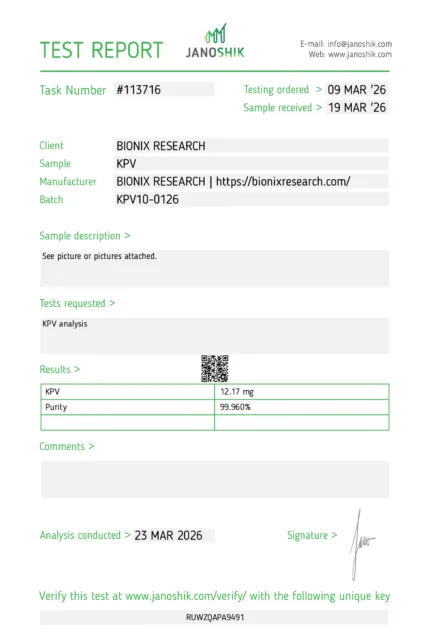
KPV
34,90 € Vialincl. VAT
plus Shipping Costs
Delivery time: 1–6 Working Days
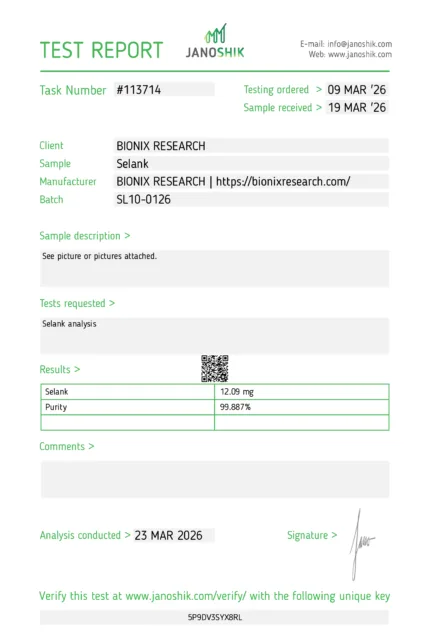
Selank
29,90 € Vialincl. VAT
plus Shipping Costs
Delivery time: 1–6 Working Days
Thymalin / Thymulin
39,90 €incl. VAT
plus Shipping Costs
Delivery time: 1–6 Working Days
Thymosin Alpha-1
59,90 € Vialincl. VAT
plus Shipping Costs
Delivery time: 1–6 Working Days
VIP Peptide – Vasoactive Intestinal Peptide
69,90 € Vialincl. VAT
plus Shipping Costs
Delivery time: 1–6 Working Days

