



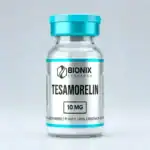
Tesamorelin
79,90 € Vial
5% off when paying with cryptocurrency
incl. VAT plus Shipping Costs
Tesamorelin Peptide 10mg – Stabilized GHRH Analog for Endocrine and Metabolic Research
- Synthetic 44-amino acid analog of Growth Hormone-Releasing Hormone (GHRH) with enhanced stability against enzymatic degradation.
- Trans-3-hexenoyl modification at N-terminus provides DPP-IV resistance, extending biological half-life while preserving GHRH receptor affinity and pulsatile GH release patterns.
- Purity ≥99% (HPLC-verified). Supplied as lyophilized powder, 10mg per vial.
- Research applications include GH secretion studies, metabolic syndrome models, visceral adiposity research, and IGF-1 axis investigations. Store at -20°C.
- For research purposes only. Not intended for human consumption.
| Quantity | Price | Discount |
|---|---|---|
| 11-20 | 67,91 € Vial | 15% |
| 21+ | 63,92 € Vial | 20% |
Delivery time: 1–6 Working Days
Tesamorelin Peptide 10mg – Stabilized GHRH Analog

Chemical diagram for Tesamorelin source: https://en.wikipedia.org/wiki/Tesamorelin#/media/File:Tesamorelin.svg
KEY SPECIFICATIONS:
| Parameter | Specification |
|---|---|
| Type | Synthetic GHRH analog |
| Target | Growth Hormone-Releasing Hormone Receptor (GHRHR) |
| Molecular Formula | C₂₂₁H₃₆₆N₇₂O₆₇S |
| Molecular Weight | 5,135.86 Da |
| CAS Number | 218949-48-5 |
| Sequence | trans-3-hexenoyl-Tyr-Ala-Asp-Ala-Ile-Phe-Thr-Asn-Ser-Tyr-Arg-Lys-Val-Leu-Gly-Gln-Leu-Ser-Ala-Arg-Lys-Leu-Leu-Gln-Asp-Ile-Met-Ser-Arg-Gln-Gln-Gly-Glu-Ser-Asn-Gln-Glu-Arg-Gly-Ala-Arg-Ala-Arg-Leu-NH₂ |
| Length | 44 amino acids |
| N-terminal Modification | trans-3-hexenoyl group |
| C-terminus | Amidated (-NH₂) |
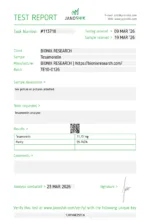
| Purity | ≥99% (HPLC) |
| Form | Lyophilized powder |
| Quantity | 10mg |
| Storage | -20°C |
PRODUCT OVERVIEW:
Tesamorelin is a synthetic 44-amino-acid analog of human GHRH with an N-terminal trans-3-hexenoyl modification providing enhanced metabolic stability against dipeptidyl peptidase-4 (DPP-IV) degradation. This structural optimization extends biological half-life while preserving receptor affinity and physiological pulsatile GH release patterns. Tesamorelin selectively activates GHRHR in the pituitary, stimulating endogenous growth hormone synthesis through cAMP-mediated signaling with intact negative feedback regulation. Unlike direct GH administration, Tesamorelin maintains somatostatin and IGF-1 feedback loops, enabling studies of natural GH dynamics. BIONIX supplies Tesamorelin with ≥99% HPLC-verified purity for endocrinological and metabolic research.
MECHANISM OF ACTION:
Tesamorelin operates through the GHRH receptor pathway with enhanced pharmacokinetic properties conferred by its unique N-terminal modification.
Trans-3-Hexenoyl Protection Mechanism:
| Aspect | Native GHRH (1-44) | Tesamorelin | Research Advantage |
|---|---|---|---|
| N-terminus | Free Tyr₁ | trans-3-hexenoyl-Tyr₁ | Steric hindrance against proteolysis |
| DPP-IV susceptibility | High (rapid cleavage) | Low (protected) | Extended half-life in plasma |
| Plasma half-life | ~7-10 minutes | Significantly extended | Longer observation windows |
| GHRHR affinity | Reference | Preserved | Unaltered receptor activation |
| Pulsatile GH release | Yes | Yes (maintained) | Natural secretion patterns maintained |
Mechanism of Protection: DPP-IV normally cleaves the Tyr-Ala bond at the N-terminus of native GHRH within minutes. The trans-3-hexenoyl group creates steric hindrance preventing enzyme access to the cleavage site, dramatically extending biological half-life while maintaining full receptor binding and activation capacity.
GHRHR Signaling Pathway:
| Signaling Step | Component | Effect |
|---|---|---|
| Ligand binding | GHRHR extracellular domain | Conformational activation |
| G-protein coupling | Gs α-subunit | GDP→GTP exchange |
| Effector activation | Adenylyl cyclase | cAMP synthesis |
| Kinase cascade | PKA | Protein phosphorylation |
| Ion channels | Voltage-gated Ca²⁺ channels | Calcium influx |
| Transcription | CREB, Pit-1 | GH gene expression |
| Secretion | Vesicle exocytosis | GH release |
Physiological Feedback Preservation:
A critical aspect of Tesamorelin’s mechanism is maintenance of endogenous regulatory circuits:
| Regulatory Element | Function | Tesamorelin Effect |
|---|---|---|
| Somatostatin | Inhibits GH release | Negative feedback maintained |
| IGF-1 | Negative feedback | Physiological regulation preserved |
| GHRH receptor | Stimulates GH | Natural activation pattern |
| Endogenous GH | Pulsatile secretion | Pattern preserved |
| Somatotroph cells | GH-producing | Pituitary cell proliferation supported |
Physiological vs. Pharmacological GH Stimulation: Unlike exogenous GH administration which suppresses endogenous production through negative feedback, Tesamorelin stimulates natural, pulsatile release regulated by somatostatin and IGF-1. This avoids pituitary overstimulation while supporting somatotroph cell proliferation relevant to long-term pituitary function studies.
Comparative Profile:
| Property | Native GHRH (1-44) | Tesamorelin | CJC-1295 No DAC |
|---|---|---|---|
| Length | 44 amino acids | 44 amino acids | 29 amino acids |
| Key modification | None | trans-3-hexenoyl | D-Ala², tetrasubstituted |
| DPP-IV resistance | Low | High | High |
| Half-life | ~7-10 min | Extended | ~30 min |
| Receptor | GHRHR | GHRHR | GHRHR |
| Regulatory status | Endogenous | FDA-approved (HIV lipodystrophy) | Research compound |
| GH release pattern | Pulsatile | Pulsatile (preserved) | Pulsatile (may alter) |
| Feedback loops | Intact | Intact | Partially blunted |
RESEARCH APPLICATIONS:
GH Secretion and Pituitary Function: Investigation of GHRH-mediated GH release dynamics including dose-response relationships, pulsatile release pattern characterization, somatotroph responsiveness studies, and feedback mechanism analysis (somatostatin, IGF-1). Enables precise quantification of GH amplitude, frequency, and pulsatility through immunoassay and LC-MS methods.
Visceral Adiposity and Body Composition: Research on GH axis effects on fat distribution, including visceral adipose tissue (VAT) reduction mechanisms, subcutaneous vs. visceral fat redistribution, lipolysis pathway activation, and hormone-sensitive lipase regulation. Studies demonstrate 15-20% VAT reduction over 26 weeks through preferential visceral fat mobilization.
Metabolic Syndrome and Liver Fat Studies: Analysis of lipid and glucose homeostasis including hepatic fat content in NAFLD models, triglyceride metabolism, de novo lipogenesis regulation, insulin sensitivity interactions, and inflammatory marker modulation. Research indicates ~37% hepatic fat reduction in certain metabolic models.
Cognitive Function and Neuroprotective Research: Emerging investigation of GHRH receptor expression in brain tissue and potential influences on synaptic plasticity, cognitive parameters in neurodegeneration models, mild cognitive impairment studies, and IGF-1-mediated neuroprotective mechanisms. GHRH receptors expressed in CNS regions support neurobiological research applications.
Growth Hormone Deficiency Modeling: Preclinical applications modeling physiological GH dynamics through pulsatility pattern reproduction, intact feedback loop maintenance, comparison to direct GH administration, somatotroph cell proliferation studies, and long-term pituitary function assessment. All applications strictly limited to controlled laboratory environments.
Cardiovascular and IGF-1 Axis Research: Investigation of GH-mediated effects on cardiovascular parameters, carotid intima-media thickness correlations, IGF-1 elevation kinetics, and metabolic risk factor modulation in research cohorts.
ANALYTICAL VERIFICATION:
BIONIX Tesamorelin undergoes comprehensive analytical characterization:
• HPLC Analysis: ≥99% purity confirmation via optimized gradient chromatographic separation for large peptide (5,135.86 Da) • Mass Spectrometry: Electrospray ionization (ESI) for molecular weight confirmation and trans-3-hexenoyl modification verification • Sequence Verification: Full 44-amino-acid sequence confirmation including N-terminal lipidation • Amino Acid Composition: Quantitative analysis for peptide identity • Endotoxin Testing: LAL assay for laboratory quality assurance
Physical Characteristics:
| Property | Specification |
|---|---|
| Appearance | White to off-white lyophilized powder |
| Molecular Weight | 5,135.86 Da |
| Sequence | trans-3-hexenoyl-Tyr-Ala-Asp-Ala…Arg-Leu-NH₂ |
| Modification | N-terminal trans-3-hexenoyl group |
| Purity | ≥99% (HPLC-verified) |
| Solubility | Water soluble |
DEVELOPMENT STATUS:
Tesamorelin has completed clinical development for specific indications while remaining a research compound for broader applications:
• FDA Approval (2010): Egrifta® approved for HIV-associated lipodystrophy treatment (reduction of excess abdominal fat) • Clinical Use: 2mg daily subcutaneous dosing demonstrated in approved indication • Research Status: BIONIX Tesamorelin is supplied exclusively for laboratory research purposes—distinct from clinical therapeutic applications • Regulatory Note: WADA prohibited substance (growth hormone secretagogue category) • Research Applications: GH axis studies, metabolic research, visceral adiposity mechanisms
BIONIX Tesamorelin is intended exclusively for controlled laboratory research environments.
FREQUENTLY ENCOUNTERED INQUIRIES:
What is Tesamorelin and how does it differ from native GHRH? Tesamorelin is a synthetic 44-amino-acid GHRH analog with a trans-3-hexenoyl modification at the N-terminus. This modification creates steric protection against DPP-IV enzymatic degradation, extending biological half-life significantly compared to native GHRH (~7-10 minutes) while preserving full GHRHR affinity and physiological pulsatile GH release patterns. The enhanced stability enables more consistent plasma concentrations in experimental arrangements without altering natural feedback regulation.
How does Tesamorelin compare to direct GH administration in research models? Unlike direct GH administration which suppresses endogenous production through negative feedback mechanisms, Tesamorelin stimulates natural pulsatile GH release through GHRHR activation. This preserves intact regulatory circuits including somatostatin inhibition and IGF-1 negative feedback, avoiding pituitary overstimulation while supporting somatotroph cell proliferation. Tesamorelin enables studies requiring physiological GH dynamics rather than pharmacological replacement.
What research models utilize Tesamorelin? Research applications include in vitro pituitary cell cultures for GH secretion studies, preclinical animal models for metabolic and body composition investigations, cell culture models for neuroprotective research, and endocrine system studies. Key measured parameters include GH secretion (RIA, ELISA, LC-MS), IGF-1 levels, GHRHR expression, cAMP production, and Pit-1 activation assays. All applications remain strictly limited to laboratory environments.
What are the key findings from visceral adiposity research? Studies demonstrate that Tesamorelin-mediated GH stimulation produces preferential visceral adipose tissue reduction (15-20% over 26 weeks in clinical models) through enhanced lipolysis and hormone-sensitive lipase activation. Sustained effects require ongoing stimulation. Research investigates mechanisms underlying preferential visceral fat mobilization distinct from subcutaneous adipose tissue.
What storage conditions ensure molecular stability? Lyophilized powder requires -20°C storage for long-term stability (up to 24 months). Protect from light, moisture, and heat. Avoid repeated freeze-thaw cycles. After reconstitution, store at 2-8°C and use within 1-2 weeks, or prepare aliquots and freeze at -20°C for extended storage. Proper storage maintains the trans-3-hexenoyl modification integrity critical for DPP-IV resistance.
Is Tesamorelin approved for therapeutic use? Tesamorelin (Egrifta®) received FDA approval in 2010 for HIV-associated lipodystrophy (reduction of excess abdominal fat in HIV-infected patients with lipodystrophy). However, BIONIX Tesamorelin is supplied exclusively for laboratory research purposes—not for human therapeutic use, clinical applications, or administration. WADA classifies Tesamorelin as a prohibited substance in the growth hormone secretagogue category.
REFERENCES:
- PMID: 21283099 — Tesamorelin stimulation of endogenous GH release in vitro pituitary cells Falutz J et al., “Effects of tesamorelin on hepatic fat in HIV-associated NAFLD,” Growth Horm IGF Res, 2017;37:16-23.
- PMID: 29031905 Stanley TL et al., “Effects of tesamorelin on hepatic transcriptomic signatures in HIV-associated NAFLD,” JCI Insight, 2020.
- Makimura H et al., “Reduced growth hormone secretion is associated with increased carotid intima-media thickness in obesity,” J Clin Endocrinol Metab, 2009.
- Koutkia P et al., “Growth hormone-releasing hormone in HIV-infected men with lipodystrophy,” JAMA, 2004.
- FDA Approval Documentation — Egrifta® (Tesamorelin) November 2010
| Dosage | 10mg, 20mg, 40mg, 50mg, 5mg |
|---|
Product safety
Safety instructions
SAFETY DATA SHEET (SDS)
Tesamorelin – Research-Grade Lyophilized Powder (RUO)
CAS Number: 218949-48-5
Synonyms: GHRH Analog, Growth Hormone-Releasing Hormone Analog
REACH Registration: Exempt (<1 tonne/year; Research Use Only)
SECTION 1 — Identification
1.1 Product Identifier: Tesamorelin – Lyophilized Powder
1.2 Identified Uses: Analytical-grade peptide for in-vitro laboratory research. Research Use Only (RUO). Not for human or veterinary use.
1.3 Supplier: BIONIX RESEARCH
Email: info@bionixresearch.com
1.4 Emergency: EU Emergency Number: 112
SECTION 2 — Hazards Identification
2.1 Classification: Not classified as hazardous under CLP Regulation (EC) 1272/2008. No GHS pictograms required.
2.2 Precautionary notes:
- Avoid dust inhalation
- Avoid contact with eyes
- Laboratory use only
SECTION 3 — Composition
Substance: Tesamorelin
CAS: 218949-48-5
Purity: ≥99% HPLC
Form: Lyophilized powder
Impurities: None classified as hazardous.
SECTION 4 — First-Aid Measures
Inhalation: Move to fresh air. Rinse mouth and nose.
Skin Contact: Wash thoroughly with water and soap.
Eye Contact: Rinse cautiously with clean water for several minutes.
Ingestion: Rinse mouth. Do not induce vomiting. Seek medical advice.
SECTION 5 — Fire-Fighting Measures
Extinguishing Media: CO₂, dry chemical, foam, or water spray.
Hazards: Organic peptide powder, non-flammable. Thermal decomposition may release CO, CO₂, nitrogen oxides.
SECTION 6 — Accidental Release Measures
Avoid dust formation. Use gloves, mask, protective eyewear. Collect powder into sealed waste container.
SECTION 7 — Handling and Storage
Handling: Use only in laboratory settings. Minimize dust formation. Wear standard PPE.
Storage: Store at −20 °C in sealed vial. Protect from sunlight and humidity. Research use only.
SECTION 8 — Exposure Controls / Personal Protection
Exposure Limits: None established.
PPE: Nitrile or latex gloves, lab coat, protective eyewear, dust mask when handling powders.
SECTION 9 — Physical and Chemical Properties
Appearance: White to off-white lyophilized powder
Odor: None
Solubility: Soluble in sterile water, dilute acids, or aqueous buffers
Stability: Stable when stored at −20 °C
SECTION 10 — Stability and Reactivity
Stable under recommended conditions. Avoid heat, moisture, air exposure, oxidizing agents.
SECTION 11 — Toxicological Information
No data available for human exposure. Low acute toxicity expected. Dust may cause mild irritation. Not intended for injection, ingestion, or topical use.
SECTION 12 — Ecological Information
No data available. Not expected to present environmental risks. Prevent release into water systems.
SECTION 13 — Disposal Considerations
Dispose according to local regulations for laboratory chemical waste. Do not dispose via household waste or sewer systems.
SECTION 14 — Transport Information
Not regulated under ADR, IMDG, IATA. No UN classification required.
SECTION 15 — Regulatory Information
Not subject to REACH registration (<1 tonne/year; RUO exemption). Not classified under CLP. Not a pharmaceutical, cosmetic, or medical product.
SECTION 16 — Other Information
This SDS is intended for trained laboratory personnel. It does not signify suitability for therapeutic, diagnostic, or consumer applications.
Related products

BPC-157 & TB-500 Blend (Wolverine Stack)
49,90 € Vialincl. VAT
plus Shipping Costs
Delivery time: 1–6 Working Days

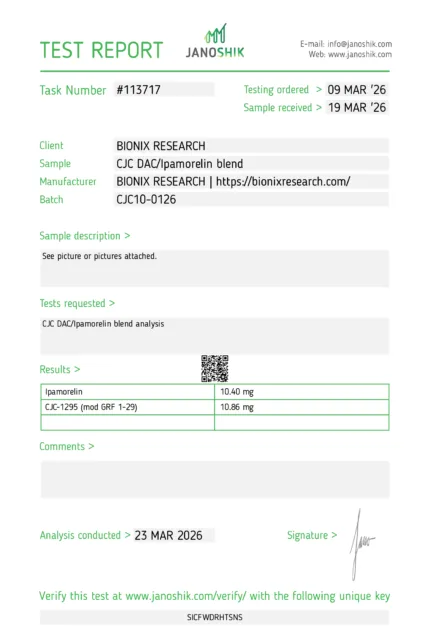
CJC-1295 + Ipamorelin Blend
69,90 € Vialincl. VAT
plus Shipping Costs
Delivery time: 1–6 Working Days
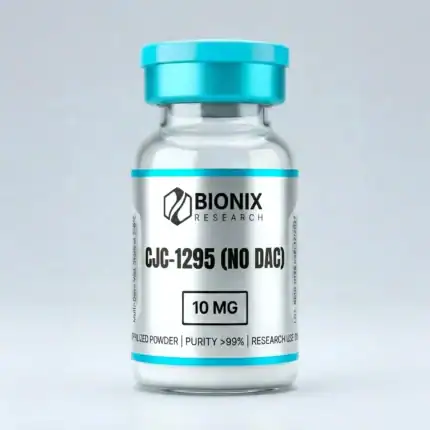
CJC-1295 No DAC
54,90 € Vialincl. VAT
plus Shipping Costs
Delivery time: 1–6 Working Days

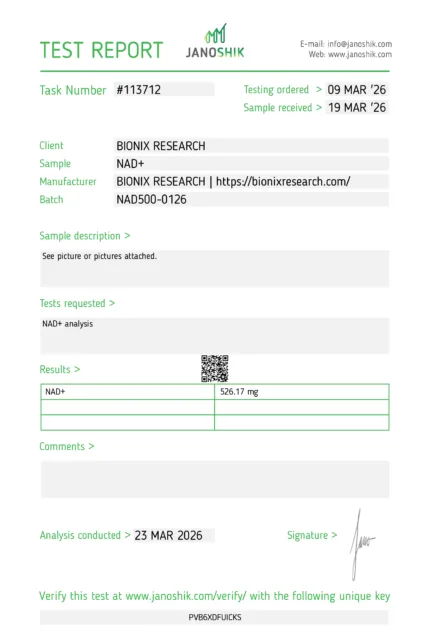
NAD+
59,90 € Vialincl. VAT
plus Shipping Costs
Delivery time: 1–6 Working Days
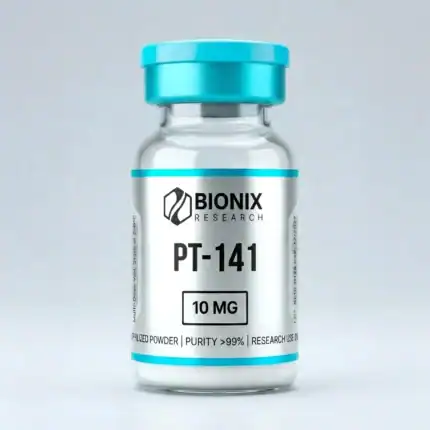
PT-141 (Bremelanotide)
29,90 € Vialincl. VAT
plus Shipping Costs
Delivery time: 1–6 Working Days
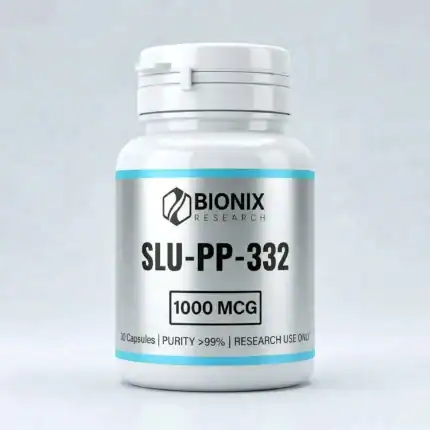
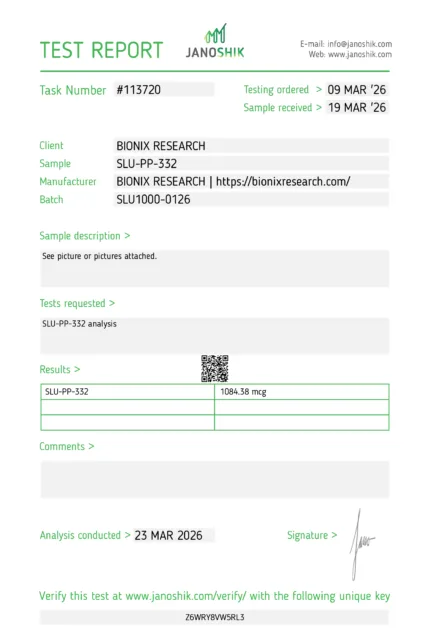
SLU-PP-332 Capsules
99,90 € Bottleincl. VAT
plus Shipping Costs
Delivery time: 1–6 Working Days
SNAP-8
14,90 € Vialincl. VAT
plus Shipping Costs
Delivery time: 1–6 Working Days
SS-31 (Elamipretide) Peptide
49,90 € Vialincl. VAT
plus Shipping Costs
Delivery time: 1–6 Working Days

