


Knowledge Base
Cellular Energy & Metabolic Regulation

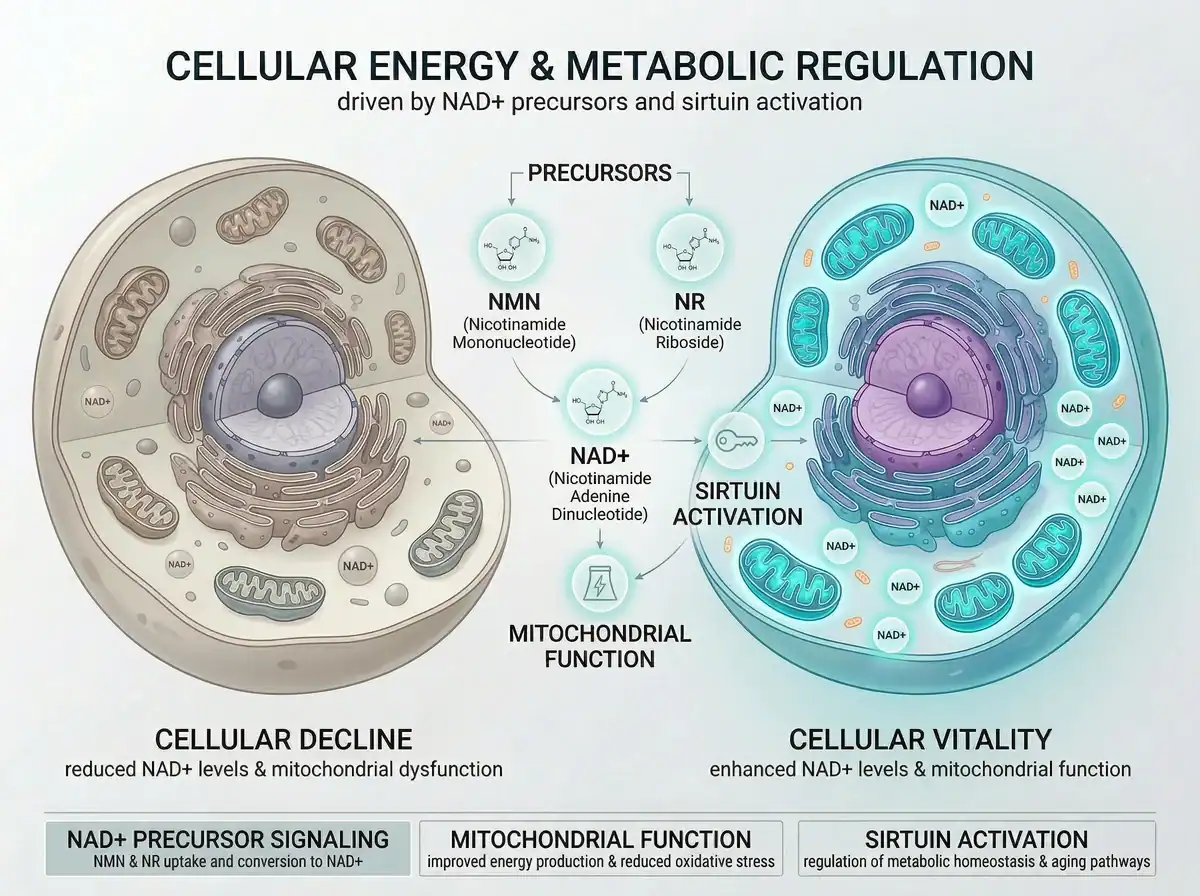
Cellular Energy & Metabolic Regulation: The Science Behind NAD+ Precursors and Exercise Mimetics
How NAD+ metabolism influences aging, mitochondrial function, and metabolic health—and the compounds being studied to support these foundational pathways
The Energy Currency of Life
Every process in every cell of the human body requires energy. From the beating of the heart to the firing of neurons, from immune cell activation to DNA repair—all depend on the continuous production and utilization of cellular energy.
At the center of this energy economy sits a molecule so fundamental that life as we know it would be impossible without it: NAD+ (nicotinamide adenine dinucleotide).
NAD+ is not merely important—it is essential. This coenzyme participates in over 500 enzymatic reactions, serving as the primary electron carrier in energy metabolism, an essential cofactor for sirtuins (longevity-associated enzymes), a substrate for DNA repair enzymes, a regulator of circadian rhythms, and a modulator of immune function.
The challenge: NAD+ levels decline dramatically with age—by approximately 50% between ages 40 and 60. This decline is not merely a marker of aging; research increasingly suggests it actively drives age-related dysfunction.
The research question: Can NAD+ levels be therapeutically restored through precursor supplementation or other interventions? And what are the downstream consequences for health, metabolism, and longevity?
This question has driven intense research into NAD+ precursors—particularly NMN (nicotinamide mononucleotide) and NR (nicotinamide riboside)—as well as complementary approaches like the exercise mimetic SLU-PP-332 that activate overlapping metabolic pathways.
Understanding NAD+: More Than Just Energy
What Is NAD+?
NAD+ (nicotinamide adenine dinucleotide) is a coenzyme found in every living cell. It exists in two forms:
- NAD+ (oxidized form): Accepts electrons during metabolic reactions
- NADH (reduced form): Donates electrons, particularly in mitochondria
The ratio of NAD+ to NADH is critical for cellular function, influencing everything from energy production to gene expression.
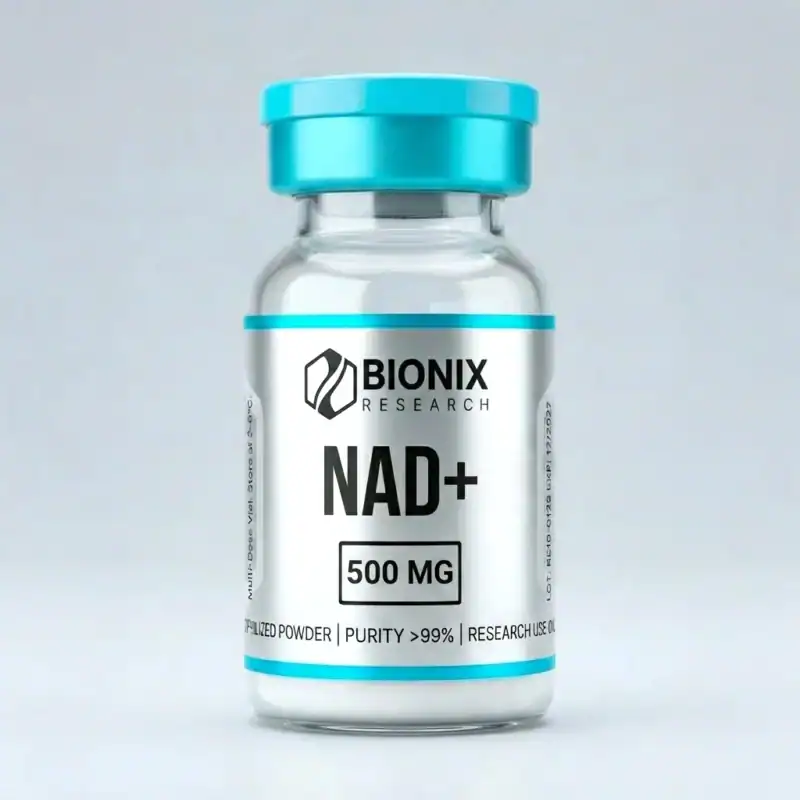
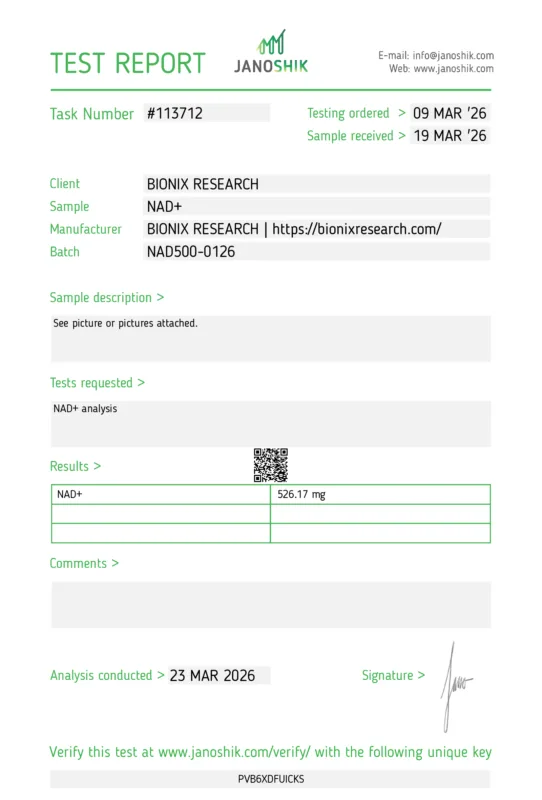
NAD+
59,90 € Vialincl. VAT
plus Shipping Costs
Delivery time: 1–6 Working Days
The Three Pillars of NAD+ Function
1. Energy Metabolism (Mitochondrial Function)
NAD+ is essential for converting nutrients into ATP. In glycolysis, NAD+ accepts electrons from glucose breakdown in the cytoplasm. In the TCA cycle, multiple dehydrogenase reactions occur in the mitochondrial matrix. In the electron transport chain, NADH donates electrons for ATP synthesis at the inner mitochondrial membrane.
Without adequate NAD+, mitochondrial ATP production falters—explaining the fatigue, weakness, and metabolic dysfunction associated with NAD+ depletion.
Connection to Mitochondrial Function: This pathway directly links NAD+ metabolism to mitochondrial health. While compounds like SS-31 target mitochondrial membrane structure and MOTS-c influences mitochondrial signaling, NAD+ precursors support the fundamental cofactor required for mitochondrial energy production.
2. Sirtuin Activation (Longevity Pathways)
Sirtuins are a family of seven NAD+-dependent enzymes (SIRT1-7) that regulate critical cellular processes:
| Sirtuin | Location | Primary Functions |
|---|---|---|
| SIRT1 | Nucleus/Cytoplasm | Metabolism, stress resistance, inflammation |
| SIRT2 | Cytoplasm | Cell cycle, metabolism |
| SIRT3 | Mitochondria | Mitochondrial function, oxidative stress |
| SIRT4 | Mitochondria | Amino acid metabolism |
| SIRT5 | Mitochondria | Urea cycle, metabolism |
| SIRT6 | Nucleus | DNA repair, telomere maintenance, glucose homeostasis |
| SIRT7 | Nucleolus | Ribosome biogenesis, stress response |
Critical point: Sirtuins absolutely require NAD+ to function. Without NAD+, sirtuin activity ceases—regardless of sirtuin protein levels.
Connection to Telomere Biology: SIRT1 and SIRT6 play essential roles in telomere maintenance and DNA repair. NAD+ depletion reduces sirtuin activity, potentially compromising telomere integrity even when telomerase-targeting compounds are present.
3. DNA Repair (Genome Stability)
NAD+ serves as a substrate for PARPs (poly-ADP-ribose polymerases)—enzymes critical for DNA damage detection and repair. PARP1 and PARP2 consume NAD+ to signal DNA damage, triggering repair machinery recruitment. Excessive DNA damage leads to excessive NAD+ consumption, creating NAD+ depletion.
This creates a potentially dangerous feedback loop: age-related DNA damage increases NAD+ consumption, which reduces NAD+ available for sirtuins and energy production, accelerating further damage.
Why NAD+ Declines With Age
The Dual Problem: Less Production, More Consumption
Research has identified two primary mechanisms driving age-related NAD+ decline:
Impaired NAD+ Production
The salvage pathway—which recycles nicotinamide back into NAD+—becomes less efficient with age. NAMPT, the rate-limiting enzyme (nicotinamide phosphoribosyltransferase), decreases in activity. Precursor availability diminishes through reduced dietary intake or absorption. Overall salvage pathway function declines.
Increased NAD+ Consumption
Simultaneously, NAD+ consumption accelerates through multiple pathways:
| Consumer | Why It Increases | Consequence |
|---|---|---|
| CD38 | Increases with age and inflammation | Major NAD+ consumer; senescent cells express high CD38 |
| PARPs | Increased DNA damage requires more repair | Each repair event consumes NAD+ |
| Sirtuins | Attempting to maintain function | Compete for limited NAD+ pool |
The CD38 Connection: CD38 is a glycoprotein that dramatically increases with chronic inflammation. Senescent cells—the "zombie cells" that accumulate with age—express high levels of CD38. This creates a vicious cycle: Inflammation leads to senescent cells, which increase CD38, which depletes NAD+, which reduces sirtuin function, which causes more inflammation.
Tissue-Specific Decline
NAD+ decline is not uniform across all tissues. Most affected are skeletal muscle, liver, adipose tissue, and brain. Less affected are kidney and heart. This tissue variability may explain why certain organs show more pronounced age-related dysfunction.
NAD+ Precursors: NMN vs. NR
The Biosynthesis Pathways
The human body can synthesize NAD+ through multiple pathways:
De Novo Pathway: Starts from tryptophan (amino acid). Inefficient and not a major contributor to NAD+ pools.
Preiss-Handler Pathway: Uses nicotinic acid (niacin/vitamin B3). Can cause flushing at high doses.
Salvage Pathway (Primary): Recycles nicotinamide → NMN → NAD+. Most important for maintaining NAD+ levels. Target of NMN and NR supplementation.
NMN (Nicotinamide Mononucleotide)
Structure: Nucleotide consisting of nicotinamide, ribose, and phosphate group
Mechanism: NMN converts directly to NAD+ via NMNAT enzymes. NMN is one step away from NAD+ in the biosynthetic pathway.
Key Research Findings:
- 250 mg/day for 12 weeks significantly increased blood NAD+ concentration starting at week 4
- 300 mg/day elevated serum NAD+ by 11.3% at day 30 and 14.3% at day 60
- 1,000 mg once or twice daily dose-dependently increased both NMN and NAD+ concentrations
- Improvements in sleep quality, fatigue, and physical performance observed
- Well-tolerated at doses up to 1,000-2,000 mg daily
Absorption Mechanisms: The question of how NMN enters cells has been debated. Recent research identified a direct NMN transporter (Slc12a8) in some tissues. Additionally, NMN can convert to NR first via CD73, and gut microbiota may process oral NMN before absorption.
NR (Nicotinamide Riboside)
Structure: Nucleoside consisting of nicotinamide and ribose (no phosphate)
Mechanism: NR converts to NMN via NRK enzymes, then NMN converts to NAD+ via NMNAT enzymes. NR is two steps away from NAD+ but enters cells more easily.
Key Research Findings:
- Effectively raises blood NAD+ levels (up to 2-fold or more)
- Extensive clinical trial data (more than NMN historically)
- Safe at doses up to 3,000 mg daily in clinical trials
- May inhibit CD38 (the NAD+ consumer)
- Does not cause flushing (unlike niacin)
Absorption Advantage: NR can enter cells directly via equilibrative nucleoside transporters (ENTs)—a simpler process than NMN's entry mechanisms.
Head-to-Head Comparison
| Characteristic | NMN | NR |
|---|---|---|
| Steps to NAD+ | 1 | 2 |
| Molecular Weight | 334 Da | 255 Da |
| Cell Entry | Transporters (Slc12a8) or conversion to NR | Direct via ENTs |
| Clinical Data | Growing | Extensive |
| NAD+ Elevation | Effective | Effective (may be 23-25% higher in some studies) |
| CD38 Inhibition | Not demonstrated | May inhibit |
| Regulatory Status | Dietary supplement (US, as of 2025) | Dietary supplement |
| Cost | Generally higher | Generally lower |
Which Is Better?
Research suggests both effectively raise NAD+ levels, with some studies showing NR produces 23-25% greater NAD+ elevation in direct comparisons. However, individual responses vary, tissue-specific effects may differ, and long-term comparative data remains limited. Both are well-tolerated.
The "better" choice may depend on individual factors, cost considerations, and response monitoring.
SLU-PP-332: The Exercise Mimetic
A Complementary Approach
While NAD+ precursors support cellular energy metabolism through cofactor replenishment, SLU-PP-332 represents a different approach: activating the genetic programs that respond to exercise.
What Is SLU-PP-332?
SLU-PP-332 is a synthetic small molecule that acts as a pan-agonist of estrogen-related receptors (ERRα, ERRβ, ERRγ), with selectivity for ERRα.
Key distinction: Despite the name, ERRs are "orphan" nuclear receptors—they don't bind estrogen. Instead, they regulate metabolic gene expression, particularly genes involved in mitochondrial biogenesis, oxidative phosphorylation, fatty acid oxidation, and exercise adaptation.
Mechanism of Action
SLU-PP-332 activates ERRα, which then upregulates PGC-1α (the master regulator of mitochondrial biogenesis), increases mitochondrial content (more mitochondria per cell), enhances oxidative capacity (greater ability to burn fat for fuel), shifts muscle fiber type (promotes oxidative type IIa fibers), and improves exercise endurance—without requiring actual exercise.
Research Findings
Animal studies from 2023-2024 demonstrated striking results:
| Finding | Detail |
|---|---|
| Endurance improvement | Mice ran 70% longer and 45% farther |
| Weight loss | 12% body weight reduction in obese mice |
| Mechanism | Increased type IIa oxidative muscle fibers |
| No exercise increase | Effects occurred without increased physical activity |
| Metabolic effects | Enhanced fatty acid oxidation, elevated energy expenditure |
SLU-PP-332 essentially "tricks" muscle cells into thinking they've been exercising, activating the same genetic programs that would normally require physical training.
Connection to NAD+ Metabolism
SLU-PP-332 and NAD+ precursors target overlapping but distinct aspects of cellular energy:
| Aspect | NAD+ Precursors | SLU-PP-332 |
|---|---|---|
| Primary Target | NAD+ cofactor levels | ERRα transcription factor |
| Mitochondrial Effect | Supports existing function | Promotes new mitochondria (biogenesis) |
| Mechanism | Cofactor replenishment | Gene expression activation |
| Sirtuin Connection | Direct (NAD+ required) | Indirect (PGC-1α activation) |
| Exercise Mimicry | Partial | Primary effect |
Theoretical Complementarity: NAD+ precursors ensure adequate cofactor for energy production; SLU-PP-332 increases the mitochondrial machinery that uses that cofactor. This suggests potential synergy, though combination studies have not been conducted.
Current Status
Regulatory Status:
- Not FDA approved for any indication
- Not EMA approved
- Remains a research compound
- No human clinical trials completed (as of early 2026)
- Preclinical stage only
Development Considerations: Potential applications in obesity, metabolic disease, and muscle wasting are being explored. Questions remain about long-term safety of chronic ERR activation, and translation from mouse to human is uncertain.
The Broader Metabolic Network
Connections to Other Pathways
NAD+ metabolism doesn't exist in isolation—it intersects with multiple pathways:
Mitochondrial Function (SS-31, MOTS-c, Humanin): NAD+ is essential for mitochondrial ATP production. MOTS-c activates AMPK, which influences NAD+ metabolism. SS-31 stabilizes membranes while NAD+ provides the energy substrate. These represent complementary approaches to mitochondrial health.
Telomere Biology (Epitalon, Pinealon): SIRT1 and SIRT6 (NAD+-dependent) regulate telomere maintenance. NAD+ depletion leads to reduced sirtuin activity, which compromises telomere integrity. Supporting NAD+ may enhance telomere-targeting interventions.
Immune Function: SIRT1 inhibits NF-κB (inflammatory transcription factor). NAD+ decline leads to reduced SIRT1 activity, which increases inflammation. CD38 (NAD+ consumer) increases with inflammation, creating a bidirectional relationship between NAD+ and immune status.
Metabolic Health: NAD+ influences insulin sensitivity. Sirtuin activation mimics some caloric restriction effects. This complements but differs from GLP-1 agonist approaches.
Safety Profile and Clinical Evidence
NMN Safety Data
Human Clinical Trials:
- Doses up to 1,000-2,000 mg daily studied
- No serious adverse events reported
- Well-tolerated in healthy adults and older populations
Reported Side Effects (Rare, Mild):
- Mild gastrointestinal discomfort
- Headache (occasional)
- Flushing (rare, unlike niacin)
NR Safety Data
Extensive Clinical Evidence:
- Doses up to 3,000 mg daily studied (4 weeks in Parkinson's patients)
- 1,000 mg daily for 52 weeks in Werner syndrome patients
- 500 mg daily for 2 years in ataxia telangiectasia patients
- No moderate or severe adverse events attributed to NR
Reported Side Effects:
- Generally fewer adverse events than placebo in some trials
- Mild, transient effects when they occur
- No flushing (unlike niacin)
Contraindications and Cautions
Not Established but Consider:
- Pregnancy/breastfeeding (insufficient data)
- Active cancer (theoretical concern about NAD+ supporting cell proliferation)
- Severe liver disease (NAD+ metabolism primarily hepatic)
- Children (not studied)
Drug Interactions:
- No significant interactions documented
- Theoretical caution with medications affecting NAD+ metabolism
- Consult healthcare provider if on multiple medications
SLU-PP-332 Safety
Limited Data:
- Only preclinical (animal) studies available
- No human safety data
- Unknown long-term effects of chronic ERR activation
- Theoretical concerns about tissue-specific effects
Regulatory Status
Current Classification
| Compound | US Status | EU Status | Notes |
|---|---|---|---|
| NMN | Dietary supplement (as of Sept 2025) | Available as supplement | FDA reversed earlier exclusion |
| NR | Dietary supplement | Available as supplement | Established status |
| Niacin | Dietary supplement / OTC drug | Available as supplement | Long-established |
| SLU-PP-332 | Research compound | Research compound | Not approved anywhere |
NMN Regulatory History
NMN's regulatory journey illustrates supplement industry complexities. Prior to 2022, it was sold as a dietary supplement. In November 2022, the FDA excluded NMN from the supplement definition under the drug preclusion clause. In August 2024, the Natural Products Association sued the FDA. In September 2025, the FDA reversed its decision, confirming NMN as lawful for supplement use. In December 2025, the FDA sent clarifying letters to manufacturers.
The reversal was based on evidence that NMN was marketed as a supplement before drug investigation authorization.
Quality Considerations
Since dietary supplements have less regulatory oversight than drugs:
- Seek products with third-party testing (NSF, USP, ConsumerLab)
- Look for cGMP certification
- Verify purity and potency claims
- Choose established manufacturers
- Be cautious of extremely low-priced products
Practical Considerations
Dosing Ranges (Based on Clinical Studies)
| Compound | Typical Research Doses | Notes |
|---|---|---|
| NMN | 250-1,000 mg daily | Higher doses studied but not necessarily more effective |
| NR | 250-1,000 mg daily | Up to 3,000 mg studied for safety |
| Niacin | 500-2,000 mg daily | Flushing limits higher doses |
Timing Considerations
Morning dosing may support circadian NAD+ rhythms. With food may improve absorption and reduce GI effects. Consistency through regular dosing is likely more important than precise timing.
Measuring Response
NAD+ levels can be measured through blood tests (whole blood NAD+), intracellular NAD+ assays (research settings), and indirect markers (which may not correlate perfectly). However, routine NAD+ testing is not widely available or standardized.
Lifestyle Synergies
NAD+ precursor supplementation may complement exercise (physical activity naturally boosts NAD+ and activates similar pathways), caloric restriction/fasting (activates AMPK and sirtuins), sleep optimization (circadian rhythms influence NAD+ metabolism), and reducing inflammation (limits CD38-mediated NAD+ consumption).
Summary: The Foundation of Cellular Health
NAD+ represents a foundational molecule in cellular metabolism—essential for energy production, DNA repair, and the longevity-associated sirtuin pathways. Its decline with age contributes to multiple aspects of aging and age-related dysfunction.
Key Insights:
NAD+ decline is both a marker and driver of aging, creating feedback loops that accelerate dysfunction.
Two effective precursors exist: NMN (one step from NAD+, regulatory status now clarified) and NR (well-studied, may have absorption advantages).
Exercise mimetics like SLU-PP-332 represent complementary approaches, activating metabolic programs that increase mitochondrial capacity.
Multiple pathway connections link NAD+ metabolism to mitochondrial function, telomere biology, immune regulation, and metabolic health.
Safety profiles are favorable for NMN and NR based on available clinical data, though long-term studies continue.
Regulatory status varies but NMN and NR are currently available as dietary supplements in the US and EU.
For researchers and those following developments in longevity science, NAD+ metabolism represents a foundational pathway that intersects with virtually every aspect of cellular health and aging.
Supporting NAD+ levels through precursor supplementation offers one of the more accessible and well-characterized interventions in the longevity toolkit—though it represents one component of a comprehensive approach to healthy aging.
Frequently Asked Questions: NAD+ Precursors & Cellular Energy
General Questions About NAD+
Q: What is NAD+ and why is it important?
NAD+ (nicotinamide adenine dinucleotide) is a coenzyme found in every cell of the human body. It is essential for energy production (required for converting food into ATP), sirtuin activation (enables longevity-associated enzymes to function), DNA repair (substrate for PARP enzymes that repair DNA damage), cellular signaling (influences hundreds of enzymatic reactions), and circadian rhythm regulation (affects metabolic timing).
Without NAD+, cells cannot produce energy, repair DNA, or maintain the regulatory functions that keep organisms healthy. It's not just important—it's essential for life.
Q: Why does NAD+ decline with age?
NAD+ declines through two simultaneous processes:
Reduced Production: NAMPT enzyme (rate-limiting for NAD+ synthesis) decreases with age, salvage pathway efficiency declines, and precursor availability may decrease.
Increased Consumption: CD38 (NAD+-consuming enzyme) increases with age and inflammation, DNA damage accumulates requiring more PARP-mediated repair, and chronic inflammation accelerates NAD+ depletion.
This creates approximately 50% NAD+ decline between ages 40 and 60, contributing to mitochondrial dysfunction, reduced DNA repair capacity, decreased sirtuin activity, and metabolic dysregulation.
Q: What are sirtuins and how do they relate to NAD+?
Sirtuins are a family of seven enzymes (SIRT1-7) that regulate metabolism, stress responses, DNA repair, and longevity pathways. They are often called "longevity genes" because their activation extends lifespan in various organisms.
The NAD+ connection is absolute: Sirtuins are NAD+-dependent deacetylases—they cannot function without NAD+ as a cofactor. When NAD+ levels decline, sirtuin activity decreases regardless of how much sirtuin protein is present.
Key sirtuins include SIRT1 (metabolism, inflammation via NF-κB inhibition, stress resistance), SIRT3 (mitochondrial function, oxidative stress protection), and SIRT6 (DNA repair, telomere maintenance, glucose homeostasis).
Supporting NAD+ levels is therefore essential for sirtuin function.
NMN and NR Questions
Q: What is the difference between NMN and NR?
Both are NAD+ precursors but differ in structure and metabolism:
| Feature | NMN | NR |
|---|---|---|
| Full Name | Nicotinamide Mononucleotide | Nicotinamide Riboside |
| Structure | Nucleotide (with phosphate) | Nucleoside (no phosphate) |
| Steps to NAD+ | 1 step | 2 steps |
| Cell Entry | Via transporters or conversion | Direct via ENTs |
| Molecular Size | Larger (334 Da) | Smaller (255 Da) |
| Clinical Data | Growing | Extensive |
| Cost | Generally higher | Generally lower |
Both effectively raise NAD+ levels. Some studies suggest NR may produce 23-25% greater NAD+ elevation, but individual responses vary.
Q: Which is better, NMN or NR?
The evidence doesn't clearly favor one over the other.
Arguments for NMN: Closer to NAD+ in the biosynthesis pathway (one step), direct transporter (Slc12a8) identified in some tissues, growing research base.
Arguments for NR: More extensive clinical trial data, may produce greater NAD+ elevation in some studies, simpler cell entry mechanism, may inhibit CD38 (NAD+ consumer), generally less expensive.
Practical recommendation: Both work. Consider starting with either based on availability/cost, monitoring personal response, and recognizing that individual factors may favor one over the other.
Q: What are the side effects of NMN and NR?
Both compounds have excellent safety profiles based on available clinical data.
Common (Rare, Mild): Mild gastrointestinal discomfort, occasional headache, minor flushing (rare, unlike niacin).
Not Reported: No serious adverse events in clinical trials, no significant safety signals up to 3,000 mg daily (NR), generally fewer adverse events than placebo in some studies.
Important distinction from niacin: Unlike niacin (nicotinic acid), neither NMN nor NR causes the uncomfortable flushing reaction at normal doses.
Q: Are NMN and NR FDA approved?
NMN and NR are classified as dietary supplements, not FDA-approved drugs.
NMN: Classified as lawful dietary supplement (FDA confirmed September 2025). Previously had uncertain status (2022-2025). Not approved as a drug for any specific condition.
NR: Established dietary supplement status. Not approved as a drug for any specific condition.
What this means: Available without prescription, less regulatory oversight than drugs, quality varies by manufacturer, no disease treatment claims permitted. Choose reputable manufacturers with third-party testing.
SLU-PP-332 Questions
Q: What is SLU-PP-332 and how does it work?
SLU-PP-332 is a synthetic small molecule that acts as an "exercise mimetic"—it activates the same metabolic programs that physical exercise normally triggers.
Mechanism: Activates estrogen-related receptors (ERRα, ERRβ, ERRγ). Despite the name, ERRs don't bind estrogen. ERR activation upregulates PGC-1α (master mitochondrial regulator), resulting in increased mitochondrial biogenesis, shifts muscle toward oxidative (endurance) fiber types.
Research findings (mice): 70% longer running time, 45% greater distance, 12% weight loss in obese mice, effects occurred without increased physical activity, increased type IIa oxidative muscle fibers.
Q: Is SLU-PP-332 available?
No. SLU-PP-332 remains a research compound. It is not FDA or EMA approved, no human clinical trials have been completed, it is not available as a supplement, only available for laboratory research, and safety in humans is unknown.
It represents a promising research direction but is not ready for human use outside of clinical trials.
Comparison and Mechanism Questions
Q: How do NAD+ precursors compare to mitochondrial peptides like SS-31 and MOTS-c?
They target different aspects of cellular energy:
| Aspect | NAD+ Precursors | SS-31 | MOTS-c |
|---|---|---|---|
| Target | NAD+ cofactor levels | Cardiolipin/membrane | AMPK/metabolism |
| Mechanism | Cofactor replenishment | Structural stabilization | Metabolic signaling |
| Mitochondrial Effect | Supports existing function | Preserves structure | Promotes biogenesis |
| Availability | Supplements | Research/Rx (Barth) | Research only |
Complementary relationship: These approaches address different aspects of mitochondrial health and may work synergistically, though combination studies haven't been conducted.
Q: How does NAD+ relate to telomere health?
NAD+ supports telomere maintenance through sirtuin activation.
SIRT1: Regulates telomerase activity, modulates TERT expression, influences DNA repair.
SIRT6: Directly associates with telomeric chromatin, essential for telomere structure, prevents telomere dysfunction.
The connection: NAD+ decline leads to reduced sirtuin activity, which compromises telomere maintenance.
Supporting NAD+ may therefore complement telomere-targeting approaches by ensuring the sirtuin-mediated maintenance pathways remain functional.
Q: Does NAD+ affect immune function?
Yes, through multiple mechanisms.
Anti-inflammatory effects: SIRT1 (NAD+-dependent) inhibits NF-κB, reduces pro-inflammatory cytokine production, may help resolve chronic inflammation.
The CD38 connection: CD38 is a major NAD+ consumer, inflammatory/senescent cells express high CD38, NAD+ depletion and inflammation create a vicious cycle.
Research findings: NR supplementation reduced inflammatory cytokines (IL-6, TNF-α) in some studies. NAD+ support may help break the inflammation-depletion cycle.
Practical Questions
Q: What is the typical dosage for NMN and NR?
Based on clinical research:
| Compound | Typical Range | Maximum Studied |
|---|---|---|
| NMN | 250-500 mg daily | 1,000-2,000 mg daily |
| NR | 250-500 mg daily | 3,000 mg daily (short-term) |
Considerations: Higher doses are not necessarily more effective, individual responses vary, starting lower and assessing response is advisable, and consistency is likely more important than high doses.
Q: When should NAD+ precursors be taken?
Morning dosing may be preferable: NAD+ has circadian rhythms, morning peaks naturally, may support natural metabolic timing.
With food: May improve absorption, reduces potential GI effects.
Consistency matters: Regular daily dosing is likely more important than precise timing. Building sustained NAD+ levels requires consistent supplementation.
Q: Can NAD+ levels be tested?
Yes, though testing is not widely available.
Available tests: Whole blood NAD+ assays, intracellular NAD+ measurement (specialized labs).
Limitations: Not standardized across labs, blood levels may not reflect tissue levels, cost can be significant, not routinely available through standard healthcare.
Alternative approach: Many people assess response through subjective measures (energy, recovery, sleep quality) rather than direct testing.
Q: What lifestyle factors support NAD+ levels naturally?
Several interventions can support NAD+ without supplementation:
Exercise: Increases NAMPT (NAD+ synthesis enzyme), activates AMPK and sirtuins, promotes mitochondrial health.
Caloric restriction/Fasting: Activates NAD+-dependent pathways, reduces NAD+ consumption, mimics some supplement effects.
Sleep optimization: NAD+ has circadian rhythms, sleep deprivation disrupts NAD+ metabolism, quality sleep supports NAD+ homeostasis.
Reduce inflammation: Chronic inflammation increases CD38, anti-inflammatory lifestyle reduces NAD+ consumption.
Dietary considerations: Foods containing NAD+ precursors include milk, fish, mushrooms, and yeast. B-vitamin adequacy and overall nutritional quality also support NAD+ metabolism.
Q: Are there any contraindications for NAD+ precursors?
No absolute contraindications are established, but caution is advised for certain situations.
Consider consulting healthcare provider: Pregnancy/breastfeeding (insufficient data), active cancer (theoretical concern about cellular proliferation), severe liver disease (NAD+ metabolism is hepatic), multiple medications (potential interactions unknown).
Not specifically contraindicated but unstudied: Children, severe kidney disease, specific genetic conditions affecting NAD+ metabolism.
The favorable safety profile in clinical trials provides reassurance, but individual circumstances vary.
Summary: Key Takeaways About NAD+ and Cellular Energy
| Question | Short Answer |
|---|---|
| What is NAD+? | Essential coenzyme for energy, DNA repair, and sirtuin function |
| Why does it decline? | Reduced production + increased consumption with age |
| NMN vs. NR? | Both effective; NR may have slight edge in some studies; individual response varies |
| Are they safe? | Excellent safety profiles in clinical trials |
| Are they approved? | Dietary supplements (not drugs); available without prescription |
| What about SLU-PP-332? | Promising exercise mimetic; research stage only; not available |
| How do they connect to other pathways? | Support mitochondria, telomeres, immune function via sirtuins |
| Natural alternatives? | Exercise, fasting, sleep, reducing inflammation |
This article and FAQ are provided for educational purposes only. NAD+ precursors are dietary supplements, not approved treatments for any disease. SLU-PP-332 is a research compound not available for human use. Always consult qualified healthcare professionals before beginning any supplementation regimen.

