


Knowledge Base
Metabolic Health & Body Composition

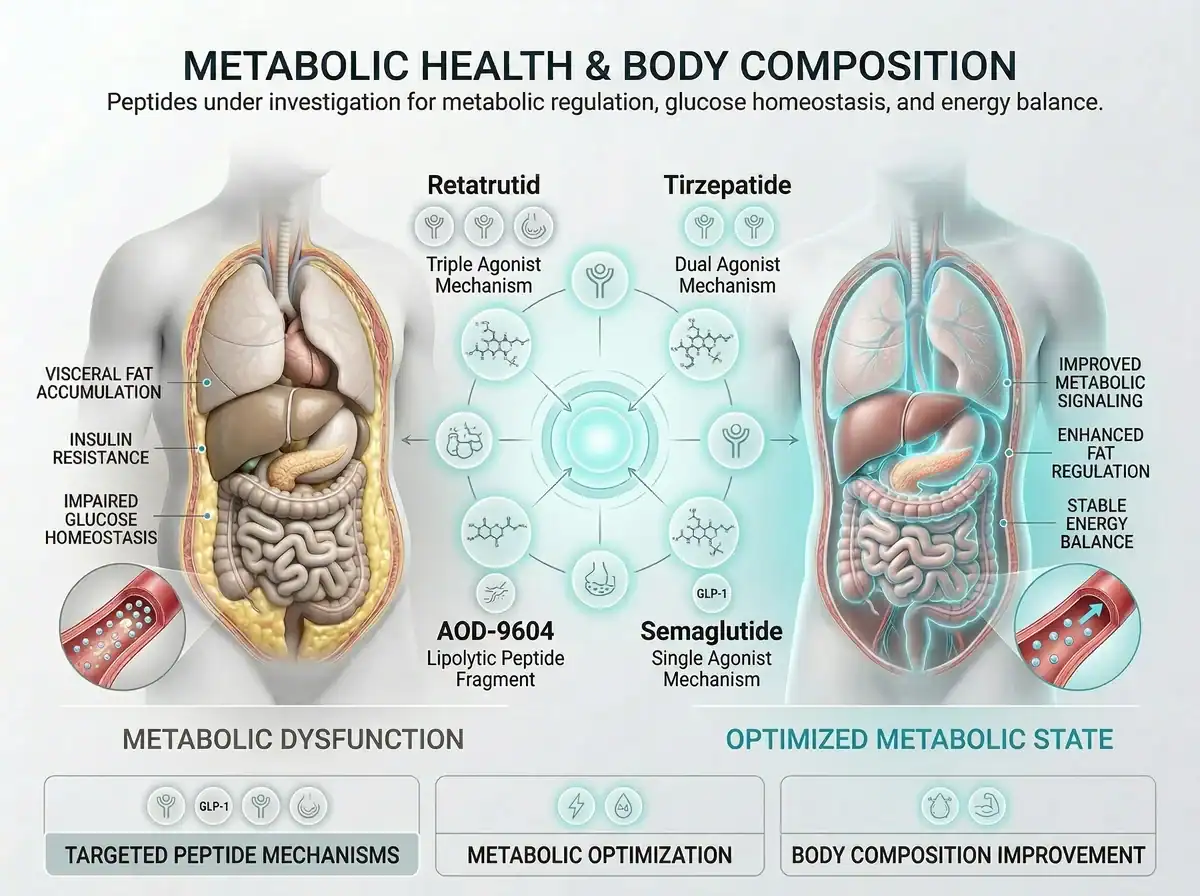
Metabolic Health & Body Composition: The Science Behind Peptides That Influence Weight Management and Glucose Regulation
How incretin-based therapies and metabolic peptides are transforming the understanding of appetite control, energy balance, and body composition optimization
The Metabolic Health Crisis
Metabolic dysfunction has become one of the defining health challenges of the modern era. The numbers are staggering: over 1 billion people worldwide now live with obesity, type 2 diabetes affects approximately 537 million adults globally, and metabolic syndrome—the cluster of conditions including central obesity, insulin resistance, dyslipidemia, and hypertension—affects an estimated 25-30% of the adult population in developed nations.
Traditional approaches to weight management—diet and exercise—remain foundational but prove insufficient for many individuals. The human body possesses powerful homeostatic mechanisms that resist sustained weight loss, adjusting hunger hormones, metabolic rate, and energy expenditure to defend against caloric deficit.
The central question for metabolic research: Can these regulatory systems be therapeutically modulated to support sustainable metabolic health?
The answer, emerging from decades of incretin biology research, appears increasingly affirmative. A new generation of peptide-based therapies—including Retatrutide, Semaglutide, Tirzepatide, and AOD-9604—represents fundamentally different approaches to metabolic regulation, each targeting distinct pathways in the complex network governing appetite, glucose homeostasis, and energy balance.
Understanding the Incretin System: The Gut-Brain Axis
What Are Incretins?
Incretins are hormones released from the gastrointestinal tract in response to nutrient ingestion. They amplify insulin secretion in a glucose-dependent manner—meaning they enhance insulin release when blood glucose is elevated but have minimal effect when glucose is normal.
This "incretin effect" accounts for approximately 50-70% of the insulin response to oral glucose, explaining why eating food produces a greater insulin response than intravenous glucose delivery at equivalent blood sugar levels.
The two primary incretin hormones:
| Hormone | Secretion Site | Primary Actions |
|---|---|---|
| GLP-1 (Glucagon-like peptide-1) | L-cells in distal intestine | Insulin ↑, Glucagon ↓, Gastric emptying ↓, Appetite ↓ |
| GIP (Glucose-dependent insulinotropic polypeptide) | K-cells in proximal intestine | Insulin ↑, Glucagon ↑ (context-dependent), Fat storage modulation |
GLP-1: The Master Metabolic Regulator
GLP-1 has emerged as the most therapeutically significant incretin hormone, with effects extending far beyond simple insulin stimulation.
Pancreatic Effects: Enhances glucose-dependent insulin secretion, suppresses glucagon release (reducing hepatic glucose output), promotes β-cell proliferation and survival, and inhibits β-cell apoptosis.
Gastrointestinal Effects: Delays gastric emptying (prolongs satiety), reduces gut motility, and decreases intestinal nutrient absorption rate.
Central Nervous System Effects: Activates GLP-1 receptors in hypothalamus and brainstem, reduces appetite and food intake, amplifies satiety signals, and may influence reward-based eating behavior.
Cardiovascular Effects: Improves endothelial function, reduces inflammation, and may provide cardioprotection independent of weight loss.
GIP: The Complementary Partner
GIP (glucose-dependent insulinotropic polypeptide) was historically considered less important than GLP-1, but recent research has revealed its significant metabolic roles.
Unique GIP Functions: Enhances β-cell function and survival (like GLP-1), modulates glucagon secretion (increases during hypoglycemia, appropriate physiological response), influences adipose tissue metabolism, acts on brain GIP receptors affecting appetite, and may improve tolerability of GLP-1 therapy by reducing nausea.
The discovery that combining GLP-1 and GIP agonism produces enhanced metabolic effects has driven development of dual and triple receptor agonists.
GLP-2: The Gut Health Specialist
GLP-2, also derived from proglucagon in intestinal L-cells, serves different functions focused on intestinal epithelial growth, nutrient absorption enhancement, and barrier function support. Unlike GLP-1, GLP-2 does not influence insulin, glucagon, appetite, or body weight. GLP-2 is relevant to gut health and conditions like short bowel syndrome but is not the target of current weight management therapies.
The Receptor Agonist Revolution: From Single to Triple Targeting
Evolution of Incretin-Based Therapies
The development of incretin-based therapies has followed a clear progression.
First Generation: GLP-1 Receptor Agonists Single receptor targeting with examples including Exenatide, Liraglutide, and Semaglutide. These provide significant efficacy for glucose control and weight loss, though gastrointestinal side effects are common.
Second Generation: Dual GLP-1/GIP Agonists Two receptor targeting, exemplified by Tirzepatide. These demonstrate enhanced efficacy compared to GLP-1 alone with potentially improved tolerability.
Third Generation: Triple GLP-1/GIP/Glucagon Agonists Three receptor targeting, exemplified by Retatrutide. These show the greatest weight loss observed to date, adding glucagon receptor activation for enhanced energy expenditure.
Why Multiple Receptors?
Each receptor contributes distinct benefits:
| Receptor | Contribution to Metabolic Effects |
|---|---|
| GLP-1R | Appetite suppression, insulin secretion, gastric slowing |
| GIPR | Insulin enhancement, potential nausea reduction, CNS effects |
| GCGR (Glucagon) | Energy expenditure ↑, hepatic glucose mobilization, lipid oxidation |
Preclinical research demonstrates that triple agonists with balanced activity at all three receptors produce greater maximal weight loss compared to dual agonists or single agonists alone.
Semaglutide: The GLP-1 Standard
Structure and Development
Semaglutide is a synthetic GLP-1 analog with 94% structural homology to native human GLP-1. Key modifications enable an extended half-life of approximately 7 days (versus minutes for native GLP-1), once-weekly dosing convenience, and albumin binding through a fatty acid chain that facilitates binding and slows degradation.
Mechanism of Action
Semaglutide activates GLP-1 receptors throughout the human body.
Central Effects (Brain): Hypothalamic GLP-1R activation reduces hunger. Brainstem signaling enhances satiety. The compound may modulate reward pathways affecting food preferences. Research suggests effects on cravings for highly palatable foods.
Peripheral Effects: In pancreatic β-cells, enhanced glucose-dependent insulin secretion occurs. In pancreatic α-cells, glucagon release is suppressed. In the stomach, gastric emptying is delayed. In the liver, hepatic glucose production is reduced.
Approved Indications and Brand Names
United States (FDA):
- Ozempic®: Type 2 diabetes (0.25-2 mg weekly injection)
- Wegovy®: Chronic weight management (2.4 mg weekly injection)
- Rybelsus®: Type 2 diabetes (oral formulation)
- Additional approvals: MASH (metabolic dysfunction-associated steatohepatitis), chronic kidney disease
Pending 2025 FDA Decisions:
- Ozempic for type 2 diabetes and peripheral artery disease (PAD)
- Wegovy subcutaneous for heart failure with preserved ejection fraction (HFpEF) and obesity
- Oral Wegovy 25 mg for chronic weight management—potentially the first oral GLP-1 for weight management with cardiovascular risk reduction indication
European Union (EMA): Approved for type 2 diabetes, chronic weight management, and chronic kidney disease.
Clinical Efficacy
Weight Loss: STEP trials demonstrated average weight loss of 14.9% at 68 weeks (2.4 mg dose). Results are superior to lifestyle intervention alone. Sustained weight maintenance occurs with continued treatment.
Glycemic Control: HbA1c reductions of 1.5-2.0% are typical in type 2 diabetes. Reduced hypoglycemia risk compared to sulfonylureas.
Cardiovascular Outcomes: The SELECT trial demonstrated a 20% reduction in major adverse cardiovascular events (MACE) in patients with obesity and established cardiovascular disease (without diabetes). This represents the first obesity medication to demonstrate cardiovascular mortality benefit. Benefits appear most pronounced in the first 24-36 months, especially for patients with established cardiovascular disease.
Safety Profile
Common Side Effects (Gastrointestinal): Nausea (affecting 40-50% initially, typically transient), vomiting, diarrhea, constipation, and abdominal pain. Most gastrointestinal effects occur during dose escalation and diminish with continued use.
Serious Concerns: Pancreatitis (rare but reported), gallbladder disease (cholelithiasis, cholecystitis), thyroid C-cell tumors (boxed warning based on rodent studies; human relevance uncertain), and hypoglycemia (primarily when combined with insulin or sulfonylureas).
Contraindications: Personal or family history of medullary thyroid carcinoma, Multiple Endocrine Neoplasia syndrome type 2 (MEN2), history of pancreatitis, and pregnancy.
Tirzepatide: The Dual Agonist Breakthrough
Structure and Innovation
Tirzepatide represents a significant advancement as the first approved dual GLP-1/GIP receptor agonist. This 39-amino-acid synthetic peptide activates both incretin receptors simultaneously.
Key structural features include a base on the GIP sequence with GLP-1 activity engineered in, a C20 fatty diacid chain enabling albumin binding, and once-weekly pharmacokinetics.
Mechanism of Action
Tirzepatide's dual mechanism provides complementary effects.
GLP-1 Receptor Activation: All effects described for semaglutide including appetite suppression, insulin enhancement, and gastric slowing.
GIP Receptor Activation: Enhanced insulin secretion beyond GLP-1 alone, CNS GIP receptor activation contributing to appetite regulation, adipose tissue metabolic effects, and potential reduction in GLP-1-associated nausea.
The Synergy Hypothesis: Research suggests GIP receptor activation may reduce the nausea commonly associated with GLP-1 agonists while maintaining or enhancing metabolic benefits
Approved Indications and Brand Names
United States (FDA):
- Mounjaro®: Type 2 diabetes (2.5-15 mg weekly injection)
- Zepbound®: Chronic weight management, obstructive sleep apnea in adults with obesity (approved December 2024)
European Union (EMA): Approved for type 2 diabetes and chronic weight management.
Clinical Efficacy
Weight Loss: SURMOUNT trials demonstrated average weight loss of 20.9% at 72 weeks (15 mg dose). Results are superior to semaglutide in head-to-head comparison (SURPASS trials). Approximately 36.6% of participants achieved ≥25% weight loss.
Glycemic Control: HbA1c reductions up to 2.3% reported. Superior to semaglutide for glucose lowering in comparative trials.
Additional Benefits: Improvements in liver fat (relevant to MASH), blood pressure reductions, and lipid profile improvements (triglycerides, cholesterol).
Real-World Data (2024-2025): Early 2024 cohort data shows 63% persistence at 1 year for Wegovy/Zepbound initiators. Tirzepatide outperforms semaglutide in some real-world weight loss comparisons, prompting treatment algorithm updates.
Safety Profile
Similar to semaglutide with some distinctions.
Common Side Effects: Nausea, vomiting, diarrhea, constipation, and appetite reduction. Potentially better tolerated than GLP-1 monotherapy (GIP may reduce nausea).
Serious Concerns: Pancreatitis (rare), gallbladder disease, thyroid C-cell tumor warning (same as semaglutide), and hypoglycemia with concurrent diabetes medications.
Contraindications: Same as semaglutide (MTC, MEN2, pancreatitis history, pregnancy).
Retatrutide: The Triple Agonist Frontier
The Next Generation
Retatrutide represents the cutting edge of incretin-based therapy as a triple GLP-1/GIP/glucagon receptor agonist. By adding glucagon receptor activation to the dual agonist approach, Retatrutide achieves metabolic effects beyond what GLP-1/GIP alone can produce.
Mechanism of Action
GLP-1 and GIP Components: All benefits described for tirzepatide including appetite suppression, insulin enhancement, and glucose regulation.
Glucagon Receptor Activation (The New Element): Glucagon has traditionally been viewed as a glucose-raising hormone to be suppressed in diabetes. However, glucagon receptor agonism provides unique metabolic benefits:
| Glucagon Effect | Metabolic Consequence |
|---|---|
| Hepatic glucose mobilization | Fuels peripheral tissues, especially during exercise |
| Increased energy expenditure | Enhanced thermogenesis and caloric burn |
| Lipid oxidation | Promotes fat utilization for energy |
| Reduced food intake (CNS) | Central appetite effects |
| Amino acid catabolism | Protein turnover effects |
The key insight: When combined with GLP-1's glucose-lowering effects, glucagon's hyperglycemic potential is offset while its energy expenditure benefits are retained.
Clinical Trial Results (Phase 2)
Retatrutide has demonstrated unprecedented weight loss in Phase 2 trials.
Weight Loss: Average reduction of 24.2% at 48 weeks (highest dose). Some participants achieved >30% weight loss. Results exceed those from any previously tested anti-obesity medication.
Glycemic Control: HbA1c reductions comparable to or exceeding tirzepatide. Effective in participants with type 2 diabetes.
Metabolic Improvements: Significant liver fat reduction, improvements in cardiovascular risk markers, and blood pressure and lipid benefits.
Current Development Status (2024-2025)
Regulatory Status: Not FDA approved (as of early 2026). Not EMA approved. Currently in Phase 3 clinical trials.
Ongoing Phase 3 Trials:
- TRIUMPH-2: Evaluating efficacy and safety in type 2 diabetes with obesity
- SYNERGY-OUTCOMES: Investigating liver outcomes in MASH (~4,500 adults, 224 weeks)
- TRANSCEND-T2D-2: Additional diabetes studies
Expected Timeline: Phase 3 results and potential FDA submission anticipated in 2026, with approval possible in late 2026 or 2027 if trials succeed. Eli Lilly led GLP-1 trial activity in 2025 with 16.4% of all GLP-1 trials globally, focusing on multi-targeted therapies like retatrutide.
Safety Considerations
Phase 2 data suggest a similar safety profile to existing incretin therapies.
Common Effects: Gastrointestinal symptoms (nausea, vomiting, diarrhea), dose-dependent frequency, and generally transient symptoms during escalation.
Monitoring Ongoing: Long-term cardiovascular outcomes, hepatic effects, pancreatic and thyroid safety, and effects of chronic glucagon receptor activation.
Emerging Therapies in Development (2024-2025)
The Next Wave of Metabolic Peptides
Beyond retatrutide, multiple novel therapies are advancing through clinical development.
Survodutide (GLP-1/Glucagon Dual Agonist): Phase 3 trials ongoing for obesity and MASH. FDA decision possible by 2027. Combines GLP-1 appetite effects with glucagon's energy expenditure benefits (similar concept to retatrutide but without GIP).
Maridebart Cafraglutide (Maritide, Amgen): GLP-1/GIP dual agonist. Phase 3 for obesity enrolling. Approval anticipated 2028 or beyond.
VK2735 (Viking Therapeutics): Dual GLP-1/GIP agonist available in both oral and subcutaneous formulations. Phase 3 for obesity started 2025. Approval anticipated 2028 or beyond.
PF-07976016 (Pfizer): Oral GIP analogue. Phase IIa dose-ranging trial began December 2024, due to end December 2025.
Oral GLP-1 Developments: Oral semaglutide (Rybelsus) is currently the primary approved oral for type 2 diabetes. Oral Wegovy 25 mg seeks approval for weight management and cardiovascular risk reduction. Multiple companies developing oral formulations to improve convenience and access.
Geographic and Market Developments
2025 saw high GLP-1 trial volume with Eli Lilly leading, followed by Novo Nordisk. The United States accounts for 34.1% of trials, with China at 27.2%. Medicare Part D coverage for anti-obesity GLP-1s begins 2026 for certain populations, which may significantly expand access.
AOD-9604: The Growth Hormone Fragment
A Different Approach
AOD-9604 represents a fundamentally different mechanism than incretin-based therapies. This synthetic peptide corresponds to amino acids 176-191 of human growth hormone (the C-terminal fragment), modified with an N-terminal tyrosine.
Key distinction: AOD-9604 does not activate the growth hormone receptor and does not influence GLP-1, GIP, or glucagon pathways.
Mechanism of Action
AOD-9604's effects are focused on adipose tissue metabolism.
Primary Actions: Lipolysis stimulation through activation of beta-3 adrenergic receptors (β3-AR) in adipocytes, lipogenesis inhibition (reduces new fat formation), preferential fat targeting (mobilizes stored lipids from obese adipocytes), and muscle sparing (does not affect lean tissue).
What AOD-9604 Does NOT Do: Does not activate GH receptors, does not increase IGF-1 levels, does not affect blood glucose or insulin sensitivity significantly, and does not suppress appetite through central mechanisms.
Research Evidence
Preclinical Data: Weight loss and increased lipolytic sensitivity in animal models, enhanced fat oxidation without GH-related side effects, and potential effects on bone metabolism.
Clinical Trials: Early-phase human trials showed modest fat reduction. Targeted abdominal/visceral fat loss was observed. Preservation of lean mass occurred. However, results were mixed for overall efficacy, and Phase 2/3 trials did not meet primary endpoints for consistent weight loss.
Current Status
Regulatory Status: Not FDA approved for any indication. Not EMA approved. Development as an obesity drug was discontinued after disappointing Phase 2/3 results. Available as a research compound and through some compounding pharmacies. WADA prohibited as a growth hormone fragment.
Comparison to Incretin Therapies: AOD-9604 produces substantially more modest effects than semaglutide, tirzepatide, or retatrutide. Its mechanism—direct fat metabolism modulation without appetite suppression or glucose regulation—limits its effectiveness for comprehensive metabolic health improvement.
Comparative Analysis: Four Approaches to Metabolic Health
| Characteristic | Semaglutide | Tirzepatide | Retatrutide | AOD-9604 |
|---|---|---|---|---|
| Receptor Targets | GLP-1 | GLP-1 + GIP | GLP-1 + GIP + Glucagon | β3-AR (adipose) |
| Mechanism Type | Incretin agonist | Dual incretin | Triple agonist | GH fragment |
| Appetite Effects | Strong suppression | Strong suppression | Strong suppression | Minimal |
| Glucose Effects | Strong improvement | Very strong improvement | Very strong improvement | Minimal |
| Weight Loss (Max) | ~15% | ~21% | ~24%+ | Modest (<5%) |
| Administration | Weekly injection | Weekly injection | Weekly injection | Daily injection |
| FDA Status | Approved | Approved | Phase 3 trials | Not approved |
| GI Side Effects | Common | Common (may be less) | Common | Minimal |
The NAD+-Metabolism Connection
Beyond Incretins: Cellular Energy and Metabolic Health
While incretin-based therapies dominate current metabolic research, the connection between cellular energy production and metabolic health deserves attention.
NAD+ (Nicotinamide Adenine Dinucleotide) plays crucial roles in metabolism through energy production (essential cofactor for mitochondrial ATP synthesis), sirtuin activation (enables SIRT1-mediated metabolic regulation), insulin sensitivity (SIRT1 influences insulin signaling pathways), and adipose tissue function (sirtuins regulate fat metabolism genes).
Research connections: NAD+ decline with age correlates with metabolic dysfunction. NAD+ precursor supplementation (NMN, NR) shows metabolic benefits in some studies. Sirtuin activation mimics some effects of caloric restriction.
While NAD+ supplementation doesn't produce the dramatic weight loss of GLP-1 agonists, it may support foundational metabolic health and complement other interventions.
Safety Considerations and Monitoring
Class-Wide Concerns for Incretin Therapies
Gastrointestinal Effects: Most common side effects. Dose-dependent frequency. Usually improve with time. May limit dose escalation in some individuals.
Pancreatitis: Rare but serious. Mechanism debated. Monitoring recommended. Discontinue if pancreatitis develops.
Gallbladder Disease: Increased risk of cholelithiasis and cholecystitis. Likely related to rapid weight loss and bile composition changes. Monitor for symptoms.
Thyroid Concerns: Boxed warning for C-cell tumors based on rodent studies. Human relevance uncertain (rodent C-cells differ from human). Contraindicated in MTC or MEN2 history. Monitoring protocols vary.
Muscle Mass: Rapid weight loss may include lean mass loss. Protein intake and resistance exercise recommended. Some formulations being studied with muscle-preserving agents.
Long-Term Safety Data
Semaglutide: Most extensive long-term data; cardiovascular benefit demonstrated Tirzepatide: Growing long-term evidence; ongoing outcome trials Retatrutide: Limited to Phase 2 duration; long-term data pending AOD-9604: Development discontinued; limited long-term human data
The Regulatory Landscape
Approved Medications
| Medication | FDA Status | EMA Status | Indications |
|---|---|---|---|
| Semaglutide | Approved | Approved | T2D, Obesity, MASH, CKD |
| Tirzepatide | Approved | Approved | T2D, Obesity, OSA |
| Retatrutide | Phase 3 trials | Not approved | Investigational |
| AOD-9604 | Not approved | Not approved | Research only |
Compounding Considerations
The FDA has issued guidance regarding compounded versions of GLP-1 medications. Branded products (Ozempic, Wegovy, Mounjaro, Zepbound) are approved and regulated. Compounded semaglutide and tirzepatide were permitted during shortages. FDA has issued warnings against unapproved/compounded versions. Quality and purity concerns exist with non-regulated sources.
Summary: The Future of Metabolic Medicine
The emergence of incretin-based therapies represents a paradigm shift in metabolic health treatment. For the first time, medications can produce weight loss approaching that of bariatric surgery while simultaneously improving glucose control, cardiovascular risk, and multiple metabolic parameters.
Key Insights:
GLP-1 agonists (Semaglutide) established the foundation—demonstrating that appetite regulation through incretin pathways produces meaningful, sustained weight loss with cardiovascular mortality benefits.
Dual agonists (Tirzepatide) showed that adding GIP receptor activation enhances efficacy beyond GLP-1 alone, with potentially improved tolerability.
Triple agonists (Retatrutide) represent the frontier—adding glucagon's energy expenditure effects to dual agonism for potentially maximal metabolic impact. Phase 3 trials are ongoing with results expected in 2026.
Alternative approaches (AOD-9604) targeting fat metabolism directly without incretin involvement have proven less effective for comprehensive metabolic health.
The pipeline is robust—survodutide, maritide, VK2735, and oral formulations represent the next wave of innovation with multiple compounds in Phase 3 trials.
Foundational support (NAD+, lifestyle) remains important for underlying cellular metabolism and should complement any therapeutic approach.
For researchers, clinicians, and individuals interested in metabolic health, this rapidly evolving field offers unprecedented tools for understanding and potentially modifying the complex systems governing body composition and energy balance.
The metabolic health landscape continues to transform—with even more advanced therapies in development and expanding indications for existing medications.
Frequently Asked Questions: Metabolic Health Peptides & Body Composition
General Questions About Metabolic Health
Q: What are incretin hormones and why are they important?
Incretins are gut hormones released after eating that enhance insulin secretion in a glucose-dependent manner. The two primary incretins are GLP-1 (glucagon-like peptide-1), which reduces appetite, slows gastric emptying, suppresses glucagon, and enhances insulin, and GIP (glucose-dependent insulinotropic polypeptide), which enhances insulin secretion and modulates fat metabolism.
The "incretin effect" accounts for approximately 50-70% of the insulin response to oral food intake. This explains why medications targeting these pathways can profoundly influence metabolism, appetite, and body weight.
Incretin-based therapies have revolutionized treatment of type 2 diabetes and obesity by leveraging these natural hormonal pathways.
Q: What is the difference between GLP-1 and GLP-2?
Despite similar names, GLP-1 and GLP-2 have distinct functions:
| Feature | GLP-1 | GLP-2 |
|---|---|---|
| Source | Intestinal L-cells | Intestinal L-cells |
| Primary Function | Metabolic regulation | Gut health |
| Insulin Effect | Strongly enhances | None |
| Appetite Effect | Suppresses hunger | None |
| Weight Effect | Promotes weight loss | None |
| Gut Effect | Slows motility | Promotes mucosal growth |
GLP-2 is therapeutically relevant for conditions like short bowel syndrome but is not involved in weight management or glucose regulation. Current metabolic medications target GLP-1 (and GIP/glucagon), not GLP-2.
Q: How do GLP-1 medications cause weight loss?
GLP-1 receptor agonists produce weight loss through multiple mechanisms.
Central (Brain) Effects: Activate GLP-1 receptors in hypothalamus and brainstem, reduce hunger and appetite, enhance satiety after eating, may reduce cravings for highly palatable foods, and influence reward-based eating behavior.
Peripheral Effects: Slow gastric emptying (feeling full longer), reduce intestinal motility, and decrease rate of nutrient absorption.
Metabolic Effects: Improve insulin sensitivity, reduce hepatic glucose production, and may enhance fat oxidation.
The combination of reduced food intake (feeling less hungry, satisfied with smaller portions) and metabolic improvements produces sustained weight loss in most individuals.
Semaglutide Questions
Q: What is semaglutide and what is it approved for?
Semaglutide is a GLP-1 receptor agonist—a synthetic version of the GLP-1 hormone modified for once-weekly dosing. It's approximately 94% structurally similar to natural human GLP-1.
Approved Brand Names and Indications:
| Brand | Indication | Form |
|---|---|---|
| Ozempic® | Type 2 diabetes | Weekly injection |
| Wegovy® | Chronic weight management | Weekly injection |
| Rybelsus® | Type 2 diabetes | Oral tablet |
Additional approved uses include MASH (liver disease) and chronic kidney disease.
Semaglutide was the first GLP-1 medication to demonstrate cardiovascular mortality benefit in patients with obesity—a landmark finding from the SELECT trial.
Q: What are semaglutide's side effects?
Common (Usually Temporary): Nausea (40-50% initially, improves over time), vomiting, diarrhea, constipation, and abdominal pain/discomfort.
Less Common but Important: Gallbladder disease (gallstones, cholecystitis), pancreatitis (rare but serious), injection site reactions, fatigue, and headache.
Serious/Rare: Thyroid C-cell tumors (warning based on rodent data; human relevance uncertain), severe hypoglycemia (mainly with concurrent insulin/sulfonylureas).
Most gastrointestinal effects are dose-dependent and improve with continued use. Gradual dose escalation helps minimize these effects.
Q: How much weight can someone lose with semaglutide?
STEP Trials (Wegovy 2.4 mg): Average weight loss of 14.9% of body weight at 68 weeks. Approximately one-third of participants lost ≥20% body weight. Weight loss continues through approximately 60 weeks, then plateaus. Weight regain occurs if medication is discontinued.
Real-World Context: Individual results vary significantly. Lifestyle factors (diet, exercise) influence outcomes. Some individuals respond more robustly than others. Continued treatment is typically required to maintain weight loss.
Tirzepatide Questions
Q: How is tirzepatide different from semaglutide?
Tirzepatide differs in several key ways.
Receptor Targeting: Semaglutide targets the GLP-1 receptor only. Tirzepatide targets both GLP-1 AND GIP receptors (dual agonist).
Efficacy: Tirzepatide produces greater weight loss (~21% vs ~15%). Tirzepatide may have better glucose-lowering effects. Head-to-head trials show tirzepatide superiority.
Tolerability: GIP activation may reduce GLP-1-associated nausea. Some individuals tolerate tirzepatide better than semaglutide.
Brand Names: Semaglutide: Ozempic, Wegovy, Rybelsus Tirzepatide: Mounjaro, Zepbound
Both are effective medications; tirzepatide represents the next generation with enhanced efficacy through dual receptor targeting.
Q: What is tirzepatide approved for?
Current FDA-approved indications:
- Mounjaro®: Type 2 diabetes (2.5-15 mg weekly)
- Zepbound®: Chronic weight management in adults with obesity or overweight with weight-related conditions; moderate-to-severe obstructive sleep apnea in adults with obesity
The sleep apnea indication (approved December 2024) represents the first approval of a weight loss medication specifically for this condition.
Retatrutide Questions
Q: What is retatrutide and how does it work?
Retatrutide is an investigational triple receptor agonist targeting GLP-1 receptors (appetite suppression, insulin enhancement), GIP receptors (enhanced insulin effects, potential tolerability benefits), and glucagon receptors (increased energy expenditure, fat oxidation).
The glucagon difference: While glucagon raises blood sugar when given alone, combining it with GLP-1/GIP agonism offsets hyperglycemia while retaining glucagon's thermogenic benefits. This produces greater weight loss than dual agonists.
Phase 2 results: Up to 24.2% average weight loss at highest dose. Some participants exceeded 30% weight loss. Greatest weight loss observed with any anti-obesity medication to date.
Q: When will retatrutide be available?
Retatrutide is currently in Phase 3 clinical trials including TRIUMPH-2 (type 2 diabetes with obesity), SYNERGY-OUTCOMES (liver outcomes in MASH), and TRANSCEND-T2D-2 (additional diabetes studies).
Expected timeline: Phase 3 results: 2026 FDA submission: Late 2026 (if trials successful) Potential approval: Late 2026 or 2027
Current availability: Not legally available for prescription. Not available from legitimate pharmacies. FDA has issued warnings about unapproved retatrutide products. Only available through clinical trial enrollment.
AOD-9604 Questions
Q: What is AOD-9604 and how does it work?
AOD-9604 is a synthetic peptide corresponding to amino acids 176-191 of human growth hormone—the C-terminal "lipolytic fragment."
Mechanism: Activates beta-3 adrenergic receptors in fat cells, stimulates lipolysis (fat breakdown), inhibits lipogenesis (new fat formation), does NOT activate growth hormone receptors, and does NOT affect IGF-1, insulin, or blood glucose significantly.
Key distinction from GLP-1 drugs: AOD-9604 works directly on fat cells without affecting appetite, gut hormones, or glucose metabolism.
Q: Does AOD-9604 work for weight loss?
The evidence is limited and disappointing.
What studies showed: Modest fat reduction in some trials, preferential effect on abdominal/visceral fat, preservation of lean mass, and minimal side effects.
The problem: Phase 2/3 clinical trials failed to meet primary endpoints. Weight loss substantially less than incretin therapies. Development as an obesity drug was discontinued. Effects too modest for regulatory approval.
Current status: Not FDA or EMA approved. Available only as a research compound. WADA prohibited substance. Not recommended over proven alternatives.
AOD-9604 represents an interesting mechanism but has not demonstrated clinically meaningful efficacy compared to incretin-based therapies.
Safety and Practical Questions
Q: What are the risks of GLP-1 medications?
Common/Manageable: Gastrointestinal symptoms (nausea, vomiting, diarrhea, constipation), injection site reactions, fatigue, headache.
Serious but Rare: Pancreatitis, gallbladder disease, intestinal obstruction (with severe constipation), hypoglycemia (mainly with concurrent diabetes medications).
Theoretical/Monitored: Thyroid C-cell tumors (rodent finding; human relevance unclear), muscle mass loss with rapid weight loss, long-term effects still being studied.
Risk mitigation: Gradual dose escalation reduces GI effects. Adequate protein intake and exercise preserve muscle. Regular monitoring by healthcare provider. Awareness of warning signs (severe abdominal pain, etc.).
Q: Can GLP-1 medications be used long-term?
Current evidence supports long-term use.
What data shows: Semaglutide has been studied for up to 4+ years. Weight loss maintained with continued treatment. Cardiovascular benefits demonstrated over 3+ years. No new safety signals with extended use.
Important considerations: Weight typically regains if medication stopped. Long-term therapy may be necessary for sustained benefit. Cost and access may limit long-term use for some. Ongoing monitoring recommended.
These medications appear to be chronic therapies rather than short-term interventions—similar to blood pressure or cholesterol medications.
Q: Do these medications require a prescription?
Yes, all FDA-approved incretin therapies require prescription.
Prescription Required: Semaglutide (Ozempic, Wegovy, Rybelsus), Tirzepatide (Mounjaro, Zepbound)
Not Available by Prescription (Not Approved): Retatrutide (investigational only), AOD-9604 (not approved; research compound)
Important warnings: FDA has issued warnings against compounded/unapproved versions. Online sources selling without prescription are unregulated. Quality and purity cannot be verified from non-pharmaceutical sources. Counterfeit products pose health risks.
Q: What lifestyle factors support metabolic health alongside medications?
Foundational lifestyle factors enhance outcomes with any intervention.
Nutrition: Adequate protein intake (critical for preserving muscle during weight loss), balanced macronutrients, emphasis on whole foods, appropriate caloric intake.
Physical Activity: Resistance training (preserves and builds lean mass), aerobic exercise (cardiovascular health, additional caloric expenditure), daily movement (reduces sedentary time).
Sleep: 7-9 hours quality sleep. Sleep deprivation impairs metabolism and increases hunger hormones. Sleep apnea treatment important (tirzepatide now approved for this).
Stress Management: Chronic stress elevates cortisol (promotes fat storage). Stress eating patterns may undermine medication benefits.
Supplements with Supporting Evidence: NAD+ precursors (NMN, NR) for cellular metabolism, omega-3 fatty acids, vitamin D (if deficient), fiber supplementation.
These factors work synergistically with medications—neither replaces the other.
Summary: Key Takeaways About Metabolic Health Peptides
| Question | Short Answer |
|---|---|
| What are the main medications? | Semaglutide (Wegovy/Ozempic), Tirzepatide (Mounjaro/Zepbound) |
| How do they work? | Activate incretin receptors to reduce appetite, improve glucose |
| Which produces most weight loss? | Retatrutide (~24%) > Tirzepatide (~21%) > Semaglutide (~15%) |
| Are they approved? | Semaglutide and tirzepatide yes; retatrutide in trials; AOD-9604 no |
| What about AOD-9604? | Different mechanism; modest efficacy; not approved |
| Are they safe? | Generally well-tolerated; GI effects common; monitoring needed |
| Do they require prescription? | Yes for approved medications |
| Is weight loss permanent? | Typically requires continued treatment to maintain |
This article and FAQ are provided for educational purposes only. Medications discussed require prescription and medical supervision. Investigational compounds (retatrutide) are not available for general use. Always consult qualified healthcare professionals before considering any intervention for metabolic health.

