


Epithalon
24,90 € Vial
5% off when paying with cryptocurrency
incl. VAT plus Shipping Costs
Epitalon Peptide 10mg – AEDG Tetrapeptide for Aging and Telomerase Research
- Synthetic tetrapeptide (Ala-Glu-Asp-Gly) structurally derived from epithalamin, a pineal gland peptide complex, investigated for telomerase-related signaling and epigenetic regulation.
- Studies demonstrate telomere length extension via TERT (telomerase reverse transcriptase) expression, melatonin pathway modulation, and antioxidant effects in cellular models.
- Purity ≥99% (HPLC-verified). Supplied as lyophilized powder, 10mg per vial.
- Research applications include cellular aging models, circadian rhythm studies, oxidative stress analysis, and epigenetic regulation research.
- Store at -20°C. For research purposes only. Not intended for human consumption.
| Quantity | Price | Discount |
|---|---|---|
| 11-20 | 21,17 € Vial | 15% |
| 21+ | 19,92 € Vial | 20% |
Delivery time: 1–6 Working Days
Epitalon Peptide 10mg – AEDG Tetrapeptide

Chemical diagram for Epithalon source: https://en.wikipedia.org/wiki/Epitalon#/media/File:Epitalon.png
KEY SPECIFICATIONS
| Parameter | Specification |
|---|---|
| Type | Synthetic tetrapeptide (pineal-derived) |
| Target | Telomerase (TERT), pineal pathway, epigenetic regulators |
| Sequence | Ala-Glu-Asp-Gly (AEDG) |
| Molecular Formula | C₁₄H₂₂N₄O₉ |
| Molecular Weight | 390.35 g/mol |
| CAS Number | 8XXXX-XX-X |
| Parent Origin | Epithalamin (pineal gland peptide complex) |
| Structure | Short-chain, water-soluble polar peptide |
| Isoelectric Point | ~3.5 (acidic) |
| Form | Lyophilized powder |
| Purity | ≥99% (HPLC) |
| Quantity | 10mg |
| Storage | -20°C |
PRODUCT OVERVIEW
Epitalon (Epithalon/Ala-Glu-Asp-Gly) is a synthetic tetrapeptide structurally derived from epithalamin—a peptide complex originally isolated from the pineal gland. This short-chain peptide has been extensively investigated in biogerontology research for over 25 years for effects on telomerase activity, telomere maintenance, and circadian regulation. Research demonstrates Epitalon functions as a multi-pathway geroprotector targeting multiple hallmarks of aging: telomere attrition, mitochondrial dysfunction, epigenetic alterations, cellular senescence, and altered intercellular communication. Studies show dose-dependent telomere extension in human cell lines via TERT activation (2.4 kb → 4 kb at 0.5-1 μg/ml, 4 days). Additionally, Epitalon enhances melatonin synthesis through AANAT enzyme and pCREB transcription factor upregulation. BIONIX supplies Epitalon with ≥99% purity for telomere biology and biogerontology research.
MECHANISM OF ACTION
Epitalon’s mechanism involves multiple interconnected pathways relevant to cellular aging and homeostasis, making it a unique multi-target research tool in biogerontology.
Telomerase Activation and TERT Expression:
| Component | Epitalon Effect | Research Finding | Cell Model |
|---|---|---|---|
| hTERT expression | Upregulation | Dose-dependent increase in catalytic subunit | Human epithelial cells |
| Telomerase activity | Activation | Enhanced telomere synthesis capacity | Fibroblasts |
| Telomere length | Extension | 2.4 kb → 4 kb | Human cell lines |
| Replicative lifespan | Extension | Beyond Hayflick limit maintained | Multiple lines |
| ALT pathway | Not activated | Telomerase-dependent mechanism only | Confirmed systems |
Khavinson et al. demonstrated Epitalon induces telomerase activity via hTERT expression in human normal epithelial and fibroblast lines. Extension occurs dose-dependently (0.5-1 μg/ml, 4 days) through telomerase activation rather than ALT pathways.
Pineal Melatonin Pathway Modulation:
| Target | Effect | Functional Outcome | Research Model |
|---|---|---|---|
| AANAT enzyme | Upregulation | Rate-limiting melatonin synthesis step | Pinealocyte cultures |
| pCREB transcription factor | Activation | Enhanced melatonin gene transcription | Rat pineal glands |
| Melatonin release | Increased | Documented potent, prolonged effects | Perifused rat glands |
| Circadian genes | Re-entrainment | Clock gene expression restoration | Aging models |
| Pineal structure | Protection | Age-related decline counteraction | Chronobiology studies |
Studies demonstrate Epitalon increases melatonin release in perifused rat pineal glands (young and aged) with effects more potent and prolonged than other pineal peptides (e.g., Vilon), significant after 3 hours.
Epigenetic Regulation:
| Mechanism | Effect | Research Application |
|---|---|---|
| Chromatin structure | Loosening via promoter binding | Gene accessibility enhancement |
| Gene expression | Youthful pattern restoration | Age-related expression reversal |
| IL-2 mRNA | Faster induction | Immune function research |
| Epigenetic age | Reduction | Biological age marker modulation |
By binding promoter regions, Epitalon loosens chromatin structure and restores youthful expression patterns—acting as a precision epigenome modulator without DNA sequence alteration.
Antioxidant and Cytoprotective Effects:
| Pathway | Effect | Research Model |
|---|---|---|
| Neprilysin (NEP) mRNA | 10-15% increase | Normoxia conditions |
| Insulin-degrading enzyme (IDE) | mRNA increase | Cell culture |
| Mutation load | Reduction | Antimutagenic effects demonstrated |
| DNA repair | Enhancement | Genoprotective mechanisms |
| SOD activity | Modulation | Oxidative stress models |
Proposed Mechanism Cascade:
Epitalon → hTERT Upregulation → Telomerase Activation → Telomere Extension /
AANAT/pCREB Activation → Melatonin Synthesis → Circadian Re-entrainment /
Chromatin Loosening → Youthful Gene Expression → Epigenetic Reprogramming /
Antioxidant Enzyme Modulation → Oxidative Stress Reduction → Genoprotection
Comparative Profile:
| Property | Epitalon | TA-65 (Cycloastragenol) | Spermidine | Resveratrol |
|---|---|---|---|---|
| Structure | Tetrapeptide (AEDG) | Triterpene glycoside | Polyamine | Polyphenol |
| Molecular Weight | 390.35 g/mol | ~785 g/mol | 145.25 g/mol | 228.25 g/mol |
| TERT Activation | Yes (documented) | Yes | Indirect/limited | Indirect |
| Telomere Extension | Yes (2.4→4 kb) | Moderate | Limited | Limited |
| Melatonin Pathway | Yes (AANAT/pCREB) | No | No | No |
| Epigenetic Effects | Yes (chromatin) | No | Autophagy only | SIRT1 activation |
| Aging Hallmarks | 5 targeted | 1-2 | 2-3 | 2-3 |
| Research History | 25+ years | ~15 years | Extensive | Extensive |
| Mechanism | Multi-pathway | Single-target | Multi-pathway | Multi-pathway |
RESEARCH APPLICATIONS
• Telomere Biology and Cellular Aging: Primary application for investigating telomerase activity (TRAP assays), TERT expression analysis (Western blot, qPCR), telomere length quantification (qPCR, Southern blot, FISH), replicative lifespan studies beyond Hayflick limit, and senescence markers (β-galactosidase, p16/p21, SASP). Research demonstrates effects in human normal epithelial cells, fibroblasts, and selected cancer cell lines (21NT, BT474) enabling comparative studies. In bovine cumulus-oocyte complexes, Epitalon enhances TERT protein localization for telomere repair—suggesting reproductive biology research applications.
• Circadian Rhythm and Chronobiology: Pineal origin makes Epitalon valuable for melatonin pathway analysis including AANAT enzyme expression/activity, pCREB phosphorylation status, and melatonin synthesis rate measurements. Clock gene studies investigate Per1/Per2 expression, Bmal1/Clock regulation, circadian gene re-entrainment, and phase shift analysis. Neuroendocrine models examine cortisol/melatonin balance, sleep-wake cycle markers, and age-related circadian decline.
• Epigenetic Research: Chromatin studies assess chromatin accessibility (DNase I hypersensitivity, ATAC-seq), histone modification analysis, and promoter binding investigations. Gene expression research includes transcriptomic profiling of age-related changes, cytokine expression (IL-2 induction focus), and immune function markers. Epitalon enables investigation of epigenetic age reduction through biological age marker modulation.
• Oxidative Stress and Cytoprotection: Antioxidant research applications include reactive oxygen species (ROS) quantification, antioxidant enzyme activity assessment (SOD, catalase), lipid peroxidation marker analysis, DNA damage assessment (8-OHdG), and mitochondrial function evaluation. Neprilysin and IDE enzyme modulation provides neurodegeneration model relevance.
• Longevity and Geroprotection: Model organism studies investigate lifespan extension in invertebrate systems, tumor incidence in aged animal models, biomarker changes with chronic treatment, and tissue-specific aging effects. Epitalon’s classification as a multi-pathway geroprotector targeting five aging hallmarks simultaneously makes it unique for comprehensive aging intervention research.
ANALYTICAL VERIFICATION
BIONIX Epitalon undergoes comprehensive analytical characterization:
• HPLC Analysis: High-Performance Liquid Chromatography with gradient separation confirms ≥99% purity; separates tetrapeptide from synthesis byproducts and degradation products • Mass Spectrometry: Exact molecular weight confirmation (390.35 g/mol) and AEDG sequence verification • Amino Acid Analysis: Ala-Glu-Asp-Gly composition quantification • Endotoxin Testing: LAL assay for cell culture applications • Structural Confirmation: Short-chain polar peptide integrity
Physical Characteristics:
| Property | Specification |
|---|---|
| Appearance | White to off-white lyophilized powder |
| Molecular Weight | 390.35 g/mol |
| Sequence | Ala-Glu-Asp-Gly (AEDG) |
| Amino Acids | 4 residues |
| Structure | Linear polar peptide |
| Solubility | Highly water soluble |
| Charge | Acidic (pI ~3.5) |
| Purity | ≥99% (HPLC-verified) |
DEVELOPMENT STATUS
• Origin: Synthetic analog of epithalamin, peptide complex isolated from pineal gland (Khavinson research) • Research History: 25+ years of biogerontology investigation; one of most studied aging-research peptides • Clinical Status: Not FDA or EMA approved for therapeutic use; research compound only • Mechanism Classification: Multi-pathway geroprotector (5 aging hallmarks: telomeres, mitochondria, epigenetics, senescence, intercellular communication) • Primary Research: TERT activation, telomere extension, pineal function, epigenetic regulation • Recent Evidence: 2025 comprehensive review confirming five-hallmark targeting; 2025 PMC telomere extension data • WADA Status: Research compound (verify current prohibited list)
BIONIX Epitalon is supplied exclusively for laboratory research purposes—not for therapeutic use, human administration, veterinary, or clinical applications.
FREQUENTLY ENCOUNTERED INQUIRIES
What is Epitalon and what makes it unique?
Epitalon is a synthetic tetrapeptide (Ala-Glu-Asp-Gly/AEDG, 390.35 g/mol) derived from epithalamin—a peptide complex originally isolated from the pineal gland. Its uniqueness lies in being a multi-pathway geroprotector that simultaneously targets five hallmarks of aging: telomere attrition (via TERT activation), mitochondrial dysfunction, epigenetic alterations (chromatin loosening), cellular senescence, and altered intercellular communication. Unlike single-target interventions, Epitalon spans telomerase, melatonin synthesis (AANAT/pCREB), and epigenetic mechanisms—making it a comprehensive research tool for biogerontology studies.
How does Epitalon affect telomerase and telomeres?
Research demonstrates Epitalon induces telomerase activity via hTERT (telomerase reverse transcriptase) upregulation in human cell lines. Dose-dependent telomere extension occurs from 2.4 kb to 4 kb at concentrations of 0.5-1 μg/ml over 4-day treatment periods. This extension occurs through telomerase activation rather than alternative lengthening of telomeres (ALT) pathways. Effects documented in human normal epithelial cells, fibroblasts, and selected cancer cell lines with maintenance of normal cell morphology beyond Hayflick limit.
What is Epitalon’s effect on melatonin synthesis?
Epitalon significantly influences pineal gland function through AANAT (arylalkylamine N-acetyltransferase) enzyme upregulation and pCREB transcription factor activation—enhancing melatonin gene transcription and synthesis. Studies in perifused rat pineal glands demonstrate increased melatonin release with effects more potent and prolonged than other pineal peptides (e.g., Vilon), significant after 3 hours of treatment. This mechanism supports circadian regulation and chronobiology research applications.
Is Epitalon water soluble?
Affirmative. As a short-chain tetrapeptide with acidic residues (glutamic acid, aspartic acid), Epitalon is highly water soluble with isoelectric point ~3.5. It reconstitutes easily in sterile aqueous solutions without requiring organic solvents (DMSO, ethanol)—simplifying cell culture and in vitro applications. No special solubilization procedures needed.
REFERENCES
- PMID: 15349550 — Epitalon and telomerase activity in human somatic cells (Bull Exp Biol Med, 2003)
- PMID: 12109271 — Effect of Epitalon on lifespan and tumor incidence (Exp Gerontol, 2001)
- PMID: 17369818 — Peptide regulation of gene expression and aging (Neuroendocrinol Lett, 2003)
- PMC, 2025 — Overview of Epitalon: Highly bioactive pineal tetrapeptide with multifaceted effects
- PMC, 2025 — Epitalon increases telomere length in human cell lines through telomerase activation
- Khavinson VK et al., 2014 — Peptide regulation of aging (Adv Gerontol)
| Dosage | 10mg, 20mg, 40mg, 50mg, 5mg |
|---|
Product safety
Safety instructions
SAFETY DATA SHEET (SDS)
Epithalon – Research-Grade Lyophilized Powder (RUO)
CAS Number: Not assigned
Synonyms: Ala-Glu-Asp-Gly, Synthetic Tetrapeptide
REACH Registration: Exempt (<1 tonne/year; Research Use Only)
SECTION 1 — Identification
1.1 Product Identifier: Epithalon – Lyophilized Powder
1.2 Identified Uses: Analytical-grade peptide for in-vitro laboratory research. Research Use Only (RUO). Not for human or veterinary use.
1.3 Supplier: BIONIX RESEARCH
Email: info@bionixresearch.com
1.4 Emergency: EU Emergency Number: 112
SECTION 2 — Hazards Identification
2.1 Classification: Not classified as hazardous under CLP Regulation (EC) 1272/2008. No GHS pictograms required.
2.2 Precautionary notes:
- Avoid dust inhalation
- Avoid contact with eyes
- Laboratory use only
SECTION 3 — Composition
Substance: Epithalon
CAS: Not assigned
Purity: ≥99% HPLC
Form: Lyophilized powder
Impurities: None classified as hazardous.
SECTION 4 — First-Aid Measures
Inhalation: Move to fresh air. Rinse mouth and nose.
Skin Contact: Wash thoroughly with water and soap.
Eye Contact: Rinse cautiously with clean water for several minutes.
Ingestion: Rinse mouth. Do not induce vomiting. Seek medical advice.
SECTION 5 — Fire-Fighting Measures
Extinguishing Media: CO₂, dry chemical, foam, or water spray.
Hazards: Organic peptide powder, non-flammable. Thermal decomposition may release CO, CO₂, nitrogen oxides.
SECTION 6 — Accidental Release Measures
Avoid dust formation. Use gloves, mask, protective eyewear. Collect powder into sealed waste container.
SECTION 7 — Handling and Storage
Handling: Use only in laboratory settings. Minimize dust formation. Wear standard PPE.
Storage: Store at −20 °C in sealed vial. Protect from sunlight and humidity. Research use only.
SECTION 8 — Exposure Controls / Personal Protection
Exposure Limits: None established.
PPE: Nitrile or latex gloves, lab coat, protective eyewear, dust mask when handling powders.
SECTION 9 — Physical and Chemical Properties
Appearance: White to off-white lyophilized powder
Odor: None
Solubility: Soluble in sterile water, dilute acids, or aqueous buffers
Stability: Stable when stored at −20 °C
SECTION 10 — Stability and Reactivity
Stable under recommended conditions. Avoid heat, moisture, air exposure, oxidizing agents.
SECTION 11 — Toxicological Information
No data available for human exposure. Low acute toxicity expected. Dust may cause mild irritation. Not intended for injection, ingestion, or topical use.
SECTION 12 — Ecological Information
No data available. Not expected to present environmental risks. Prevent release into water systems.
SECTION 13 — Disposal Considerations
Dispose according to local regulations for laboratory chemical waste. Do not dispose via household waste or sewer systems.
SECTION 14 — Transport Information
Not regulated under ADR, IMDG, IATA. No UN classification required.
SECTION 15 — Regulatory Information
Not subject to REACH registration (<1 tonne/year; RUO exemption). Not classified under CLP. Not a pharmaceutical, cosmetic, or medical product.
SECTION 16 — Other Information
This SDS is intended for trained laboratory personnel. It does not signify suitability for therapeutic, diagnostic, or consumer applications.
Related products

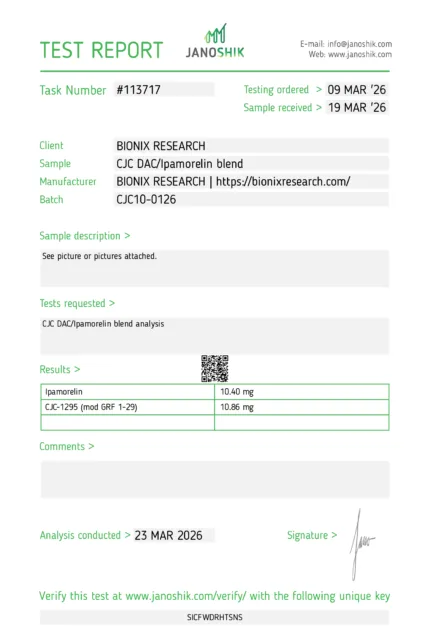
CJC-1295 + Ipamorelin Blend
69,90 € Vialincl. VAT
plus Shipping Costs
Delivery time: 1–6 Working Days
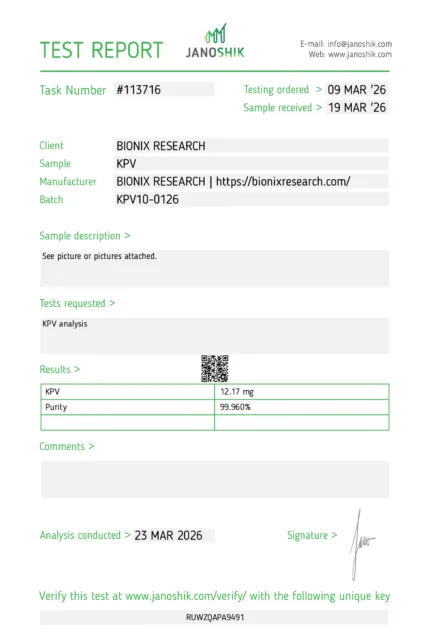
KPV
34,90 € Vialincl. VAT
plus Shipping Costs
Delivery time: 1–6 Working Days
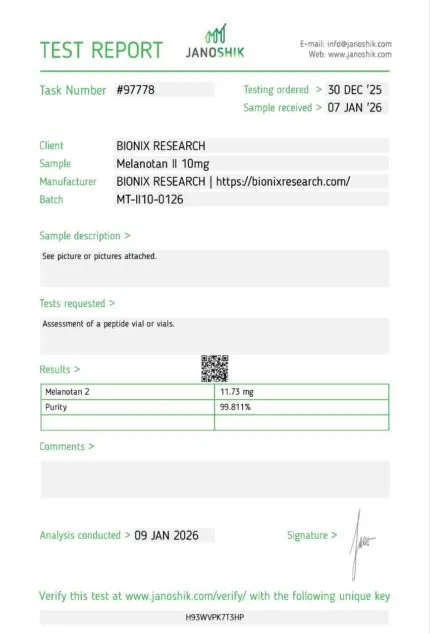
Melanotan 2 (MT-II)
19,90 € Vialincl. VAT
plus Shipping Costs
Delivery time: 1–6 Working Days

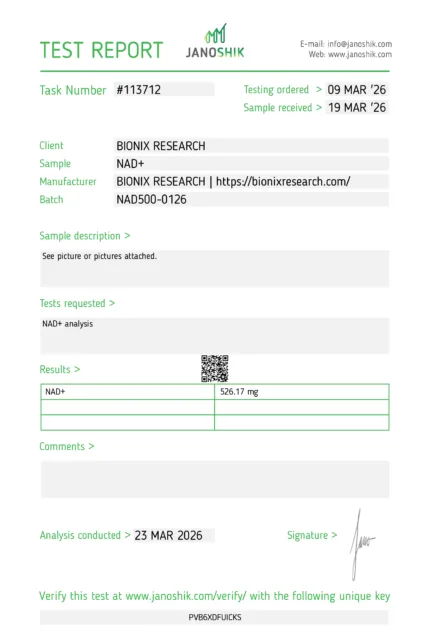
NAD+
59,90 € Vialincl. VAT
plus Shipping Costs
Delivery time: 1–6 Working Days

SNAP-8
14,90 € Vialincl. VAT
plus Shipping Costs
Delivery time: 1–6 Working Days
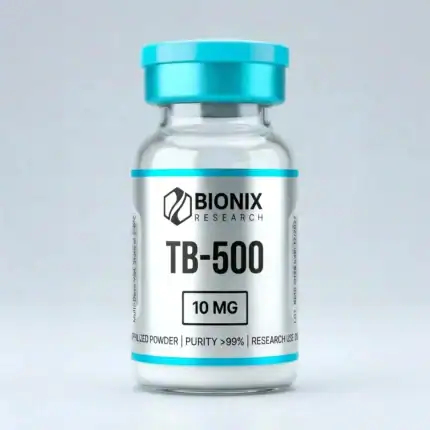
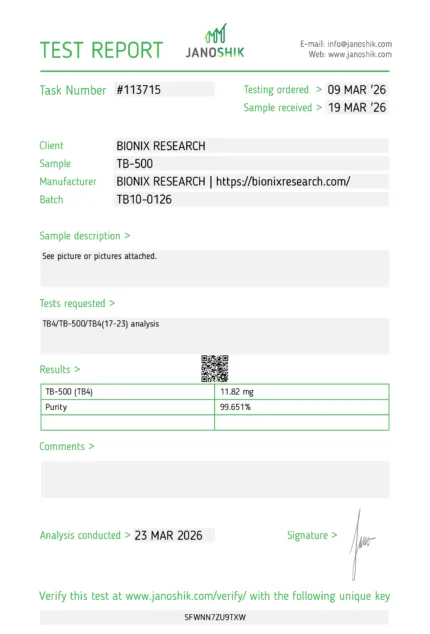
TB-500 (Thymosin Beta-4)
49,90 € Vialincl. VAT
plus Shipping Costs
Delivery time: 1–6 Working Days
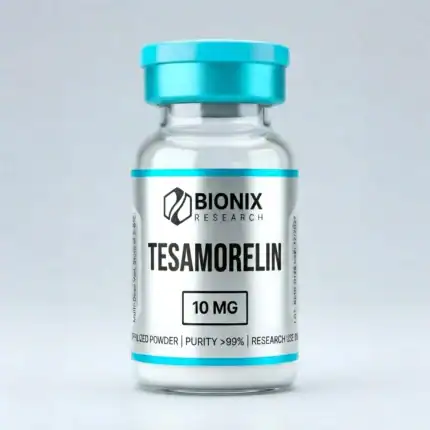
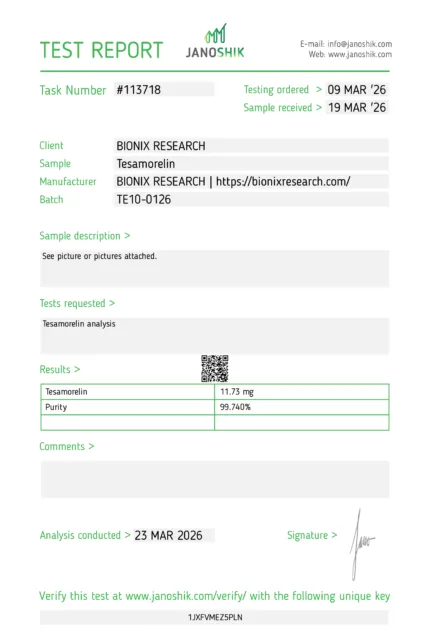
Tesamorelin
79,90 € Vialincl. VAT
plus Shipping Costs
Delivery time: 1–6 Working Days
Thymosin Alpha-1
59,90 € Vialincl. VAT
plus Shipping Costs
Delivery time: 1–6 Working Days

