



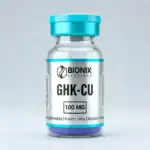
GHK-Cu
29,90 € Vial
5% off when paying with cryptocurrency
incl. VAT plus Shipping Costs
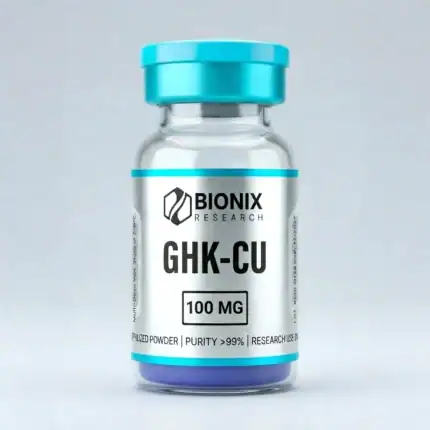
GHK-Cu 100mg – Copper-Tripeptide Complex for Regenerative Research
- Natural copper-peptide complex modulating over 4,000 human genes involved in tissue repair, collagen synthesis, and cellular homeostasis.
- Studies document up to 70% increases in collagen production and 94-96% wound closure rates in preclinical models.
- Purity ≥99% (HPLC-verified). Supplied as lyophilized powder, 100mg per vial.
- Research applications include wound healing, angiogenesis, neuroregeneration, ECM remodeling, and oxidative stress models.
- Store at -20°C. For research purposes only. Not intended for human consumption.
| Quantity | Price | Discount |
|---|---|---|
| 11-20 | 25,42 € Vial | 15% |
| 21+ | 23,92 € Vial | 20% |
Delivery time: 1–6 Working Days
GHK-Cu 100mg Copper Peptide

Chemical diagram for GHK-CU by Ed (Edgar181) – Own work, Public Domain, https://commons.wikimedia.org/w/index.php?curid=18455067
KEY SPECIFICATIONS
| Parameter | Specification |
|---|---|
| Type | Natural copper-tripeptide complex |
| Target | Extracellular matrix, fibroblasts, copper homeostasis |
| Molecular Formula | C₁₄H₂₃CuN₆O₄ |
| Molecular Weight | 401.91 g/mol |
| CAS Number | 89030-95-5 |
| Sequence | Gly-His-Lys (Cu²⁺) |
| Copper Coordination | Histidine imidazole ring, terminal amino groups |
| Form | Lyophilized powder |
| Purity | ≥99% (HPLC) |
| Quantity | 100mg |
| Storage | -20°C |
PRODUCT OVERVIEW
GHK-Cu (Glycyl-L-Histidyl-L-Lysine Copper Complex) is a naturally occurring tripeptide-metal complex originally isolated from human plasma. The peptide exhibits extremely high affinity for divalent copper ions (Cu²⁺), functioning as a central regulator of copper metabolism and cellular homeostasis.
Laboratory research demonstrates GHK-Cu modulates over 4,000 human genes—approximately 30% of the genome—with effects spanning collagen synthesis, extracellular matrix remodeling, antioxidant defense, and DNA repair pathways. Studies document up to 70% increases in collagen production in fibroblast cultures. BIONIX supplies GHK-Cu with ≥99% purity for cell culture and molecular biology applications.
MECHANISM OF ACTION
GHK-Cu functions through multiple interconnected pathways: copper transport chemistry, gene expression modulation, and extracellular matrix regulation. The histidine imidazole ring and terminal amino groups coordinate Cu²⁺ in a redox-controlled form, enabling dynamic copper bioavailability while preventing pro-oxidative free copper damage.
Copper Coordination Chemistry:
| Property | GHK-Cu Function | Research Significance |
|---|---|---|
| Cu²⁺ Binding | Stable metal ion transport | Controlled copper delivery to requiring enzymes (cytochrome c oxidase, SOD) |
| Redox Control | Prevents pro-oxidative copper damage | Reduced Fenton reaction and ROS generation |
| Dynamic Equilibrium | Reversible copper binding | Releases copper only to cellular receptors requiring it |
Gene Expression Modulation:
| Gene Category | Effect | Research Application |
|---|---|---|
| DNA Repair Genes | Upregulation | Genomic stability studies |
| Antioxidant Systems | SOD1, Glutathione Peroxidase activation | Oxidative stress resistance research |
| Ubiquitin-Proteasome | System stimulation | Protein aggregate studies |
| ECM Components | Increased synthesis | Collagen I, III, VII, elastin, decorin production assays |
Key Finding: Genome-wide expression analyses demonstrate GHK-Cu resets gene expression profiles of aging or damaged cells to states resembling healthy, younger cells in vitro models.
Extracellular Matrix Regulation: GHK-Cu modulates MMP/TIMP balance for ECM turnover:
• Early Repair Phase: Promotes MMP activity to degrade damaged matrix
• Late Repair Phase: Shifts toward synthesis of new structural proteins
• Collagen Synthesis: Up to 70% increase in types I, III, VII
• Elastin Production: Enhanced elasticity markers
• Decorin Synthesis: Regulates correct collagen fibril arrangement
TGF-β Pathway Modulation: In human dermal fibroblasts, GHK-Cu modulates TGF-β secretion—the master regulator of tissue repair, fibrosis, and collagen deposition. This bidirectional regulation prevents excessive scarring while maintaining regenerative capacity.
Stem Cell Interaction: Research on epidermal stem cells demonstrates significant increases in: • p63 expression: Transcription factor for stem cell maintenance
• Integrin β-1: Transmembrane receptor anchoring cells to ECM
Comparative Profile:
| Property | GHK-Cu | GHK (Uncomplexed) | Palmitoyl-GHK |
|---|---|---|---|
| Copper Content | Coordinated Cu²⁺ | None | None |
| Molecular Weight | 401.91 g/mol | 340.38 g/mol | 578.76 g/mol |
| Skin Permeation | 3.86% | 2.53% | 4.61% |
| Primary Mechanism | Copper delivery + gene modulation | Signaling only | Enhanced penetration |
| Collagen Induction | Up to 70% increase | Moderate | Moderate |
| ECM Remodeling | MMP/TIMP balance | Limited | Limited |
| Research Spectrum | Broadest | Narrow | Cosmetic formulations |
| Clinical Evidence | Most extensively studied | Limited | Cosmetic focus |
RESEARCH APPLICATIONS
Wound Healing Models: Investigation of fibroblast migration and proliferation. At picomolar to nanomolar concentrations, research demonstrates chemoattractant activity, pro-inflammatory cytokine suppression (TNF-α, IL-6), and accelerated transition from inflammatory to proliferative phase. Diabetic rat studies achieved 94-96% wound closure by day 11.
Angiogenesis & Vascularization: Analysis of endothelial cell cultures investigating vascularization mechanisms—VEGF and bFGF expression stimulation, capillary-like structure formation (tube assays), and enhanced endothelial proliferation.
Neuroregeneration Research: Cell culture studies examining neurotrophic properties including neurite outgrowth promotion, neurotrophin production (NGF, BDNF, NT-3), and neuroprotection against oxidative stress-induced apoptosis.
Oxidative Stress & Aging Models: Research on metal ion control, Fenton reaction prevention, antioxidant response element (ARE) activation, and ROS reduction in senescent cell cultures.
Collagen Synergy Studies: Recent investigations demonstrate synergistic effects when combined with hyaluronic acid, particularly for Collagen IV upregulation alongside Types I and VII in fibroblast and ex-vivo skin models.
Gene Expression & Epigenetics: Genome-wide analyses examining DNA repair pathway activation, antioxidant gene transcription, and epigenetic modifications affecting ~30% of the human genome.
ANALYTICAL VERIFICATION
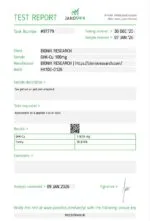
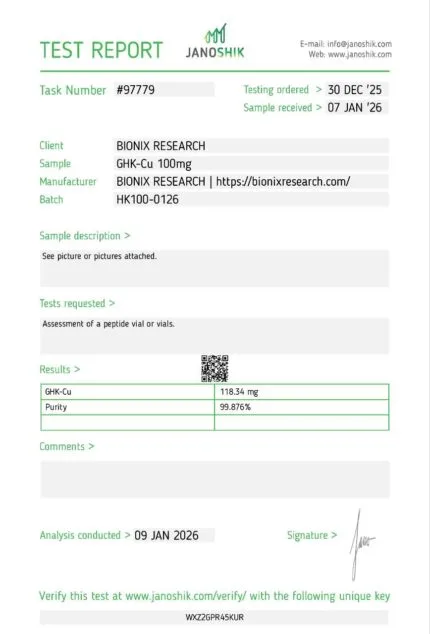
BIONIX GHK-Cu undergoes comprehensive analytical characterization:
• HPLC Analysis: ≥99% purity confirmation via optimized chromatographic separation
• Mass Spectrometry: Molecular weight verification (401.91 g/mol) and copper complexation identity
• Copper Content Verification: Quantitative copper analysis for complex stoichiometry
• Residual Solvent Analysis: Manufacturing process validation
• Endotoxin Testing: Laboratory quality assurance for cell culture applications
Physical Characteristics:
| Property | Specification |
|---|---|
| Appearance | White to off-white lyophilized powder |
| Molecular Weight | 401.91 g/mol |
| Sequence | Gly-His-Lys (Cu²⁺) |
| Coordination | Histidine imidazole, terminal amino groups |
| Copper Content | Confirmed stoichiometric complex |
| Purity | ≥99% (HPLC-verified) |
DEVELOPMENT STATUS
GHK-Cu is a research compound with extensive laboratory characterization but no therapeutic regulatory approvals:
• Regulatory Status: Not FDA or EMA approved for therapeutic use
• Research Stage: Extensive preclinical and in vitro studies completed
• Cosmetic Applications: Incorporated in topical formulations (separate from research grade)
• Clinical Trials: Limited human studies; primarily laboratory research applications
• Research Compound Status: BIONIX supplies exclusively for laboratory research
Key Distinction: While GHK-Cu is present in various commercially available cosmetic products, BIONIX supplies research-grade material with verified ≥99% purity and analytical documentation for controlled laboratory studies—not for cosmetic or therapeutic use.
FREQUENTLY ENCOUNTERED INQUIRIES
What is GHK-Cu and how does it function?
GHK-Cu is a naturally occurring copper-tripeptide complex (Gly-His-Lys) coordinating Cu²⁺ via histidine imidazole and terminal amino groups. It functions as a copper transporter while directly modulating gene expression—upregulating DNA repair, antioxidant systems, and ECM components. The complex regulates copper bioavailability, preventing pro-oxidative free copper damage while delivering copper to enzymes requiring it (SOD, cytochrome c oxidase).
What distinguishes GHK-Cu from free GHK peptide?
GHK-Cu contains coordinated Cu²⁺ (molecular weight 401.91 g/mol) while free GHK lacks copper (340.38 g/mol). The copper complex demonstrates superior activity: enhanced skin permeation (3.86% vs. 2.53%), up to 70% collagen induction versus moderate effects, and broader gene modulation capability. Copper coordination is essential for the gene expression resetting effects observed in aging cell models.
What are the primary research applications?
Wound healing investigation (fibroblast migration, collagen synthesis), angiogenesis studies (endothelial tube formation, VEGF induction), neuroregeneration research (neurite outgrowth, neurotrophin production), oxidative stress models (ROS reduction, ARE activation), and gene expression analyses (4,000+ gene modulation studies). All applications limited to controlled laboratory environments.
What is the gene modulation significance?
Genome-wide expression analyses demonstrate GHK-Cu modulates approximately 30% of the human genome (4,000+ genes). It resets gene expression profiles of aging or damaged cells toward healthy, younger-cell patterns—upregulating DNA repair, antioxidant systems, and ECM components while downregulating inflammatory and tissue destruction pathways.
How should GHK-Cu be stored?
Lyophilized powder requires -20°C storage for long-term stability (up to 24 months). The complex is hygroscopic—protect from moisture and light. Post-reconstitution, store at 2-8°C and use within 7-14 days. For extended storage of reconstituted solution, prepare aliquots and freeze at -20°C, avoiding repeated freeze-thaw cycles that compromise copper-peptide complex integrity.
Is GHK-Cu approved for therapeutic use?
Negative. GHK-Cu is not FDA or EMA approved for therapeutic indications. While present in various cosmetic formulations, BIONIX supplies research-grade GHK-Cu exclusively for laboratory research with batch-specific analytical documentation—not for cosmetic, therapeutic, or clinical applications.
REFERENCES
- PMID: 28198092 — GHK-Cu liposomes accelerate wound healing via cell proliferation/angiogenesis
- PMID: 29986450 — Regenerative actions and gene expression modulation (4,192 genes)
- PMID: 25745763 — TGF-β secretion modulation in fibroblasts
- PMID: Various — Neurotrophin production (NGF, BDNF, NT-3) in neuronal models
- J Cosmet Dermatol, 2023 — Synergistic Collagen IV upregulation with hyaluronic acid
- Cross M et al. — Integrin signaling and stem cell maintenance research
| Dosage | 100mg, 50mg |
|---|
Product safety
Safety instructions
SAFETY DATA SHEET (SDS)
GHK-Cu (Glycyl-L-Histidyl-L-Lysin-Kupfer-Komplex) – Research-Grade Lyophilized Powder (RUO)
CAS Number: 89030-95-5
Synonyms: Copper Tripeptide-1, GHK-Copper Complex, Glycyl-L-Histidyl-L-Lysin-Kupfer-Komplex
REACH Registration: Exempt (<1 tonne/year; Research Use Only)
SECTION 1 — Identification
1.1 Product Identifier: GHK-Cu (Glycyl-L-Histidyl-L-Lysin-Kupfer-Komplex) – Lyophilized Powder
1.2 Identified Uses: Analytical-grade peptide for in-vitro laboratory research. Research Use Only (RUO). Not for human or veterinary use.
1.3 Supplier: BIONIX RESEARCH
Email: info@bionixresearch.com
1.4 Emergency: EU Emergency Number: 112
SECTION 2 — Hazards Identification
2.1 Classification: Not classified as hazardous under CLP Regulation (EC) 1272/2008. No GHS pictograms required.
2.2 Precautionary notes:
- Avoid dust inhalation
- Avoid contact with eyes
- Laboratory use only
SECTION 3 — Composition
Substance: GHK-Cu (Glycyl-L-Histidyl-L-Lysin-Kupfer-Komplex)
CAS: 89030-95-5
Purity: ≥99% HPLC
Form: Lyophilized powder
Impurities: None classified as hazardous.
SECTION 4 — First-Aid Measures
Inhalation: Move to fresh air. Rinse mouth and nose.
Skin Contact: Wash thoroughly with water and soap.
Eye Contact: Rinse cautiously with clean water for several minutes.
Ingestion: Rinse mouth. Do not induce vomiting. Seek medical advice.
SECTION 5 — Fire-Fighting Measures
Extinguishing Media: CO₂, dry chemical, foam, or water spray.
Hazards: Organic peptide powder, non-flammable. Thermal decomposition may release CO, CO₂, nitrogen oxides.
SECTION 6 — Accidental Release Measures
Avoid dust formation. Use gloves, mask, protective eyewear. Collect powder into sealed waste container.
SECTION 7 — Handling and Storage
Handling: Use only in laboratory settings. Minimize dust formation. Wear standard PPE.
Storage: Store at −20 °C in sealed vial. Protect from sunlight and humidity. Research use only.
SECTION 8 — Exposure Controls / Personal Protection
Exposure Limits: None established.
PPE: Nitrile or latex gloves, lab coat, protective eyewear, dust mask when handling powders.
SECTION 9 — Physical and Chemical Properties
Appearance: White to off-white lyophilized powder
Odor: None
Solubility: Soluble in sterile water, dilute acids, or aqueous buffers
Stability: Stable when stored at −20 °C
SECTION 10 — Stability and Reactivity
Stable under recommended conditions. Avoid heat, moisture, air exposure, oxidizing agents.
SECTION 11 — Toxicological Information
No data available for human exposure. Low acute toxicity expected. Dust may cause mild irritation. Not intended for injection, ingestion, or topical use.
SECTION 12 — Ecological Information
No data available. Not expected to present environmental risks. Prevent release into water systems.
SECTION 13 — Disposal Considerations
Dispose according to local regulations for laboratory chemical waste. Do not dispose via household waste or sewer systems.
SECTION 14 — Transport Information
Not regulated under ADR, IMDG, IATA. No UN classification required.
SECTION 15 — Regulatory Information
Not subject to REACH registration (<1 tonne/year; RUO exemption). Not classified under CLP. Not a pharmaceutical, cosmetic, or medical product.
SECTION 16 — Other Information
This SDS is intended for trained laboratory personnel. It does not signify suitability for therapeutic, diagnostic, or consumer applications.
Frequently bought together

You may also like…

Epithalon
24,90 € Vialincl. VAT
plus Shipping Costs
Delivery time: 1–6 Working Days
Related products
BPC-157
24,90 € Vialincl. VAT
plus Shipping Costs
Delivery time: 1–6 Working Days

BPC-157 & TB-500 Blend (Wolverine Stack)
49,90 € Vialincl. VAT
plus Shipping Costs
Delivery time: 1–6 Working Days
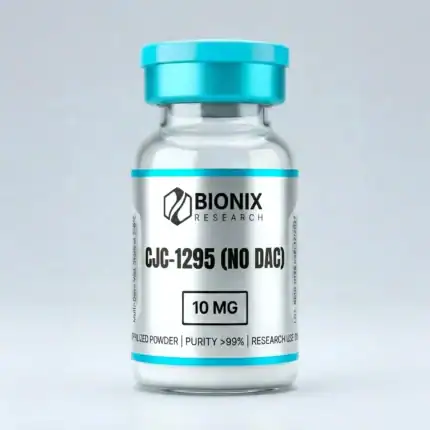
CJC-1295 No DAC
54,90 € Vialincl. VAT
plus Shipping Costs
Delivery time: 1–6 Working Days
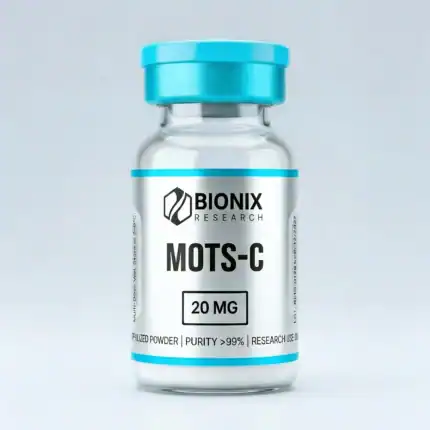
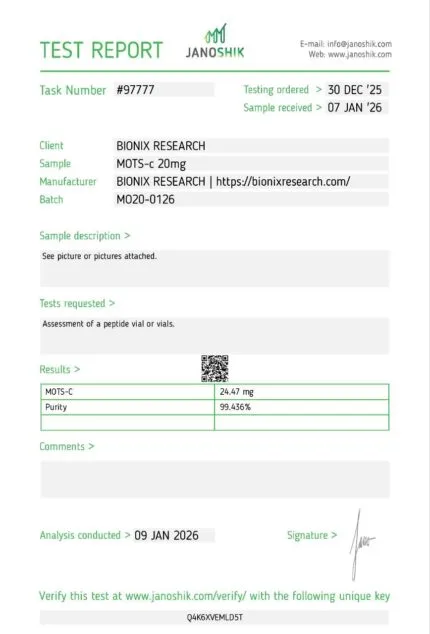
MOTS-c
49,90 € Vialincl. VAT
plus Shipping Costs
Delivery time: 1–6 Working Days

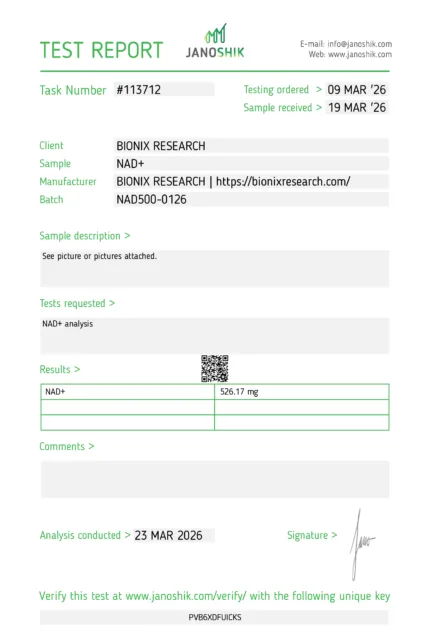
NAD+
59,90 € Vialincl. VAT
plus Shipping Costs
Delivery time: 1–6 Working Days
PT-141 (Bremelanotide)
29,90 € Vialincl. VAT
plus Shipping Costs
Delivery time: 1–6 Working Days
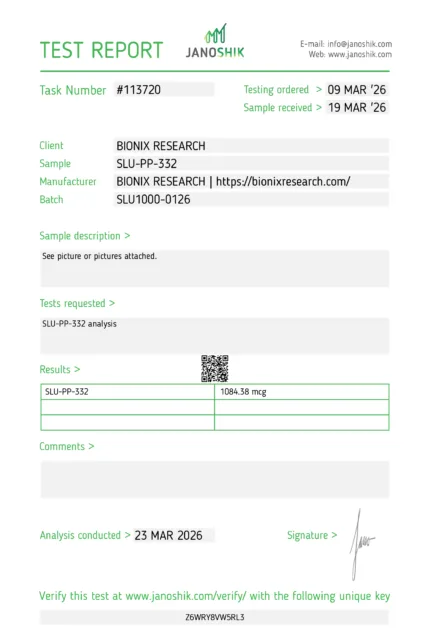
SLU-PP-332 Capsules
99,90 € Bottleincl. VAT
plus Shipping Costs
Delivery time: 1–6 Working Days
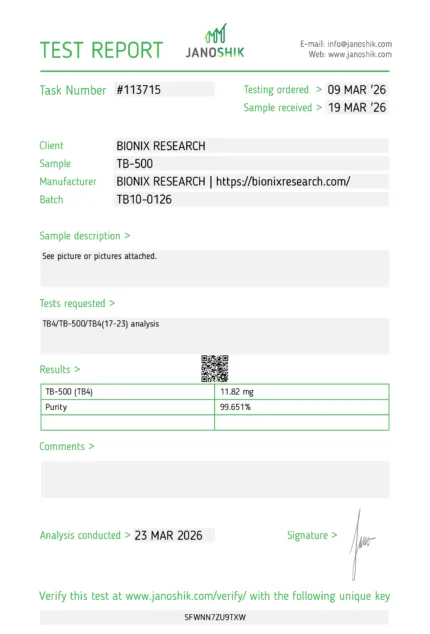
TB-500 (Thymosin Beta-4)
49,90 € Vialincl. VAT
plus Shipping Costs
Delivery time: 1–6 Working Days

