


Knowledge Base
What is KPV? The 342-Dalton Peptide That Blocks Inflammation at the Source

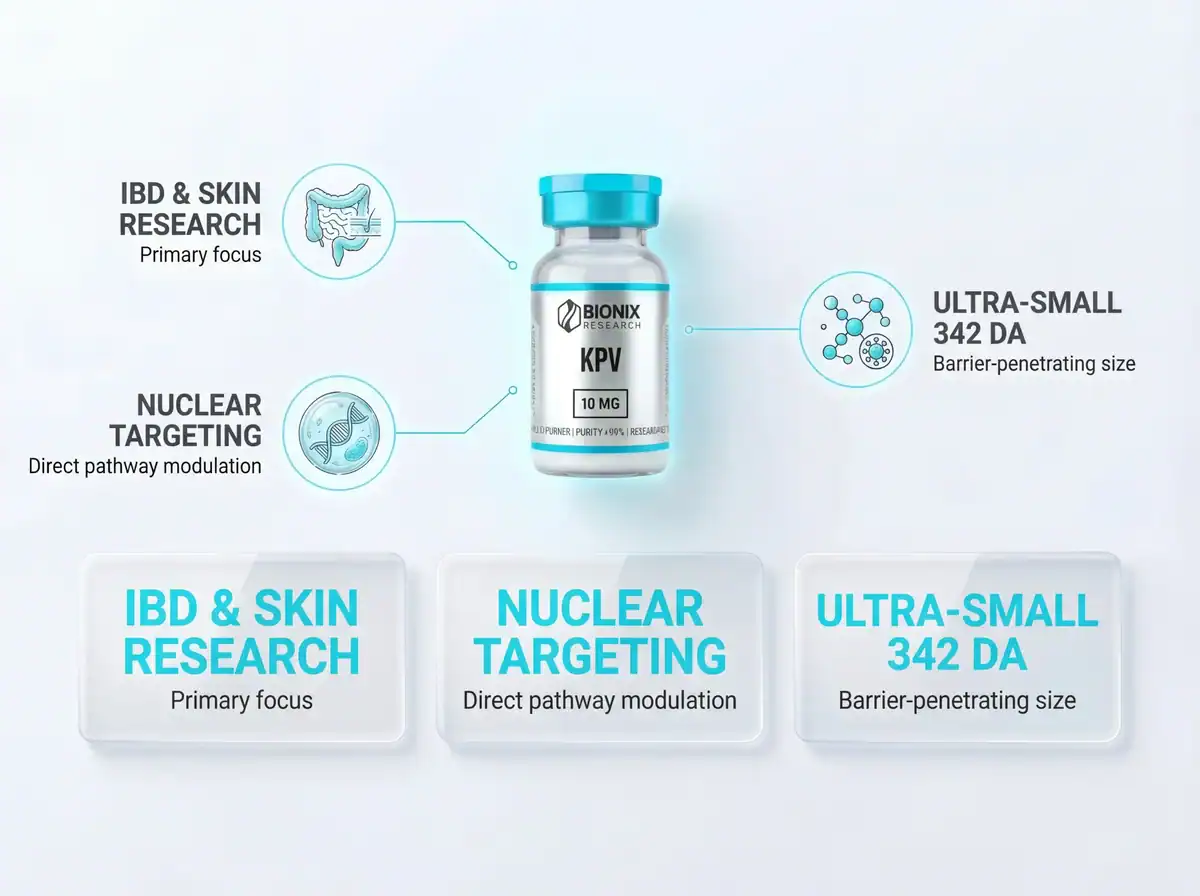
KPV Peptide: The α-MSH Tripeptide for Targeted Inflammation Control [2026]
Key Takeaways: KPV at a Glance
| Property | Details |
|---|---|
| Full Name | Lysine-Proline-Valine (α-MSH 11-13 fragment) |
| Classification | Naturally-derived anti-inflammatory tripeptide |
| Molecular Weight | 342 Dalton (extremely small) |
| Parent Molecule | Alpha-Melanocyte Stimulating Hormone (α-MSH) |
| Primary Mechanism | NF-κB pathway inhibition |
| Research Focus | IBD, colitis, skin inflammation, wound healing |
Research Use Only:
KPV is intended exclusively for scientific research purposes and is not approved for human consumption, medical applications, or for diagnosis, treatment, or prevention of disease. All information serves educational purposes only.
The peptide revolution is happening now
Unlock the Advantage: Biological Optimization & Longevity Research Peptides
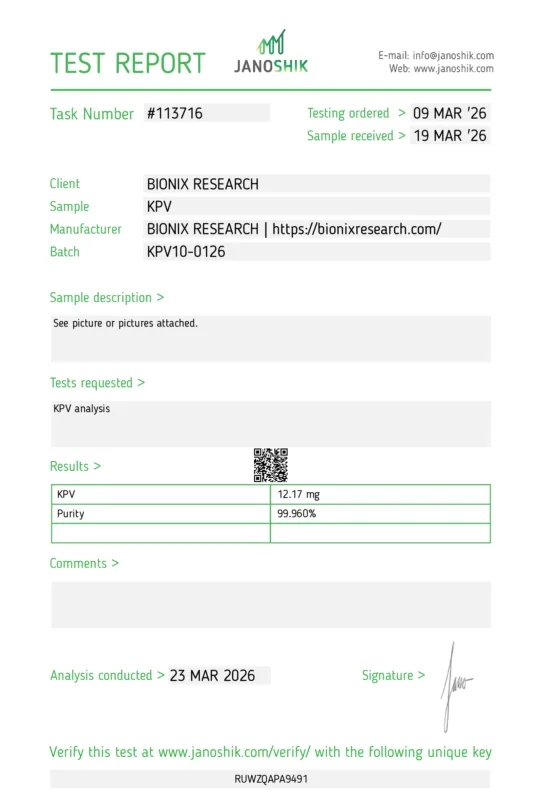
KPV
34,90 € Vialincl. VAT
plus Shipping Costs
Delivery time: 1–6 Working Days
The Precision Strike Against Inflammation
Most anti-inflammatory compounds work like carpet bombs—they suppress the entire immune system to reduce inflammation, creating collateral damage. KPV operates more like a surgical strike.
This tiny tripeptide—just three amino acids weighing 342 Dalton—doesn't just float around cell membranes hoping to interact with surface receptors. It penetrates directly into the cell nucleus, where it blocks NF-κB, the master switch that controls inflammatory gene expression.
The result? Studies show KPV can suppress pro-inflammatory cytokine release by up to 60% in macrophages, without the broad immunosuppression associated with conventional anti-inflammatory drugs.
In this comprehensive guide, you'll discover:
- Why KPV retains α-MSH's anti-inflammatory power without triggering melanin production
- The three distinct mechanisms enabling targeted inflammation control
- 2024-2025 research breakthroughs in nanoparticle delivery and IBD treatment
- How KPV's microscopic size becomes its greatest therapeutic advantage
- Emerging applications in gut health, skin repair, and wound healing
What Is KPV? Molecular Identity Explained
The Tripeptide Structure
KPV consists of exactly three amino acids in a specific sequence:
| Position | Amino Acid | Single Letter Code | Properties |
|---|---|---|---|
| 1 | Lysine | K | Positively charged, enhances cellular uptake |
| 2 | Proline | P | Creates structural rigidity |
| 3 | Valine | V | Hydrophobic, aids membrane interaction |
Molecular weight: 342 Dalton—making it one of the smallest biologically active peptides in research.
Origin: The α-MSH Connection
KPV is not a synthetic invention created in a laboratory. It's a fragment of a hormone your body already produces.
Alpha-Melanocyte Stimulating Hormone (α-MSH):
- 13-amino acid peptide
- Produced by the pituitary gland and skin cells
- Known for two primary effects:
- Stimulating melanin production (skin tanning)
- Powerful anti-inflammatory activity
KPV extraction: Scientists discovered that the C-terminal sequence (positions 11-13) of α-MSH—just three amino acids—retains the full anti-inflammatory potency while eliminating the melanin-stimulating effect.
α-MSH vs. KPV: The Key Difference
| Property | α-MSH (Full Molecule) | KPV (Fragment) |
|---|---|---|
| Amino acids | 13 | 3 |
| Molecular weight | ~1,665 Da | 342 Da |
| Melanin stimulation | Yes | No |
| Anti-inflammatory activity | Yes | Yes (equivalent) |
| Cell penetration | Limited | Enhanced |
| MC1R receptor binding | Yes | Partial/alternative pathways |
Why this matters: KPV provides the therapeutic benefit without the cosmetic side effect, and its smaller size enables access to cellular compartments that larger molecules cannot reach.
The Power of Miniaturization
Analogy: Imagine trying to deliver a package inside a building. α-MSH is like a delivery truck—it can get to the building but has to hand off the package at the door. KPV is like a specialized courier on a bicycle—it can navigate through hallways, elevators, and directly into the specific office where the package is needed.
At 342 Dalton, KPV:
- Crosses cell membranes efficiently
- Penetrates the nuclear envelope
- Navigates tight junctions in epithelial barriers
- Accesses inflamed tissue compartments larger molecules cannot reach
How Does KPV Work? Three Mechanisms of Action
1. NF-κB Pathway Inhibition: The Master Switch
NF-κB (Nuclear Factor kappa-light-chain-enhancer of activated B cells) is the central regulator of inflammatory gene expression. When activated, it triggers the production of:
- Pro-inflammatory cytokines (TNF-α, IL-1β, IL-6)
- Chemokines that recruit immune cells
- Enzymes that amplify inflammation (COX-2, iNOS)
KPV's action: Once inside the nucleus, KPV interferes with NF-κB's ability to bind DNA and activate inflammatory gene transcription.
Measured effects:
- Up to 60% reduction in LPS-induced cytokine release in macrophages
- Decreased TNF-α mRNA expression
- Reduced nitric oxide production
Simple explanation: If NF-κB is the main power switch for inflammation, KPV reaches into the breaker box and flips it off.
2. Macrophage Polarization: Shifting the Immune Balance
Macrophages exist in two primary states:
| Phenotype | Function | Inflammatory Role |
|---|---|---|
| M1 | Pro-inflammatory | Drives tissue damage, cytokine storm |
| M2 | Anti-inflammatory | Promotes healing, tissue repair |
KPV's effect: Research shows KPV shifts macrophage polarization from M1 toward M2 phenotypes, fundamentally changing the immune response from destruction to repair.
Additionally, KPV enhances regulatory T-cell (Treg) differentiation by increasing FOXP3 expression—a transcription factor essential for immune tolerance.
3. PepT1-Mediated Transport: Gut-Specific Delivery
In the intestinal epithelium, KPV utilizes the PepT1 (Peptide Transporter 1) system for targeted uptake.
Why this matters:
- PepT1 is highly expressed in intestinal epithelial cells
- KPV's tripeptide structure is ideal for PepT1 recognition
- This enables efficient delivery precisely where gut inflammation occurs
Clinical relevance: This mechanism explains why KPV shows particular promise in inflammatory bowel disease research—it has a natural delivery route directly into the cells lining the intestinal tract.
4. Mast Cell Stabilization
KPV stabilizes mast cells, preventing the release of:
- Histamine
- Leukotrienes
- Prostaglandins
This adds an anti-allergic dimension to KPV's anti-inflammatory profile.
Mechanism Summary Table
| Mechanism | Target | Effect | Relevance |
|---|---|---|---|
| NF-κB inhibition | Nuclear transcription | 60% cytokine reduction | Systemic inflammation |
| Macrophage polarization | M1→M2 shift | Healing promotion | Tissue repair |
| PepT1 transport | Intestinal epithelium | Targeted gut delivery | IBD applications |
| Mast cell stabilization | Histamine release | Allergic response suppression | Skin, respiratory |
| Treg enhancement | FOXP3 expression | Immune tolerance | Autoimmune conditions |
Latest Research: 2024-2025 Updates
Self-Immolative Conjugates for Oral Delivery (January 2026)
A groundbreaking study published in Science Advances introduced proKPV—a self-immolative conjugate system for oral IBD therapy:
Innovation:
- KPV modified with protective groups that survive stomach acid
- Inflammation-triggered release: The conjugate only releases active KPV in inflamed tissue
- Enhanced gastrointestinal stability
Results:
- Superior performance to free KPV in LPS macrophage assays
- Restored intestinal barrier proteins (CK18, occludin, ZO-1)
- Improved in vivo barrier repair in colitis models
Significance: This solves one of KPV's primary challenges—delivering the peptide orally while maintaining efficacy.
Hybrid Nanoparticle Delivery Systems (2025)
Research on lipid-hyaluronate-KPV nanoparticles (LNC-HAKPV) demonstrated:
- CD44/TLR4 targeting: Specifically binds to inflamed intestinal cells
- Redox-responsive release: Activates in the high oxidative stress environment of inflammation
- GLP-2-mediated repair: Promotes intestinal regeneration pathways
Macrophage Polarization Data (2024-2025)
Extended studies confirmed KPV's effects on immune cell behavior:
- M1 to M2 macrophage phenotype shift
- Enhanced FOXP3+ Treg population
95% viability in human intestinal cell biocompatibility testing
Wound Healing Applications (2025)
Research published in the International Journal of Medical Sciences explored tripeptide-hydrogel systems:
- KPV-loaded hydrogels for topical wound healing
- Stability optimization through specific hydrogel interactions
- Antimicrobial activity contributing to wound environment improvement
Evidence Evolution Summary
| Year | Advancement | Significance |
|---|---|---|
| 2008 | Original IBD efficacy (DSS colitis model) | Proof of concept |
| 2017 | Nanoparticle delivery systems | Improved stability |
| 2024 | Macrophage polarization mechanisms | Deeper mechanistic understanding |
| 2025 | Hybrid targeting systems | Precision delivery |
| 2026 | Self-immolative oral conjugates | Oral bioavailability breakthrough |
Research Applications
Inflammatory Bowel Disease (IBD)
Models studied:
- DSS-induced colitis (acute inflammation model)
- CD45RB^hi transfer colitis (chronic inflammation model)
Observed effects:
- Improved clinical disease activity scores
- Reduced weight loss
- Restored crypt architecture
- Lowered myeloperoxidase (MPO) activity
50% reduction in disease activity index lethality
Proposed mechanisms:
- Direct NF-κB inhibition in intestinal epithelium
- PepT1-mediated cellular uptake
- Barrier protein restoration
Skin Inflammation and Dermatology
KPV's origin from α-MSH gives it natural relevance for skin applications:
Research areas:
- Psoriasis (reduced inflammatory cell infiltration)
- Eczema/atopic dermatitis
- Contact dermatitis
- Post-inflammatory hyperpigmentation
Observed effects:
- Reduced edema formation
- Decreased immune cell infiltration
- Amelioration of IL-1β-induced cutaneous inflammation
Wound Healing
Dual mechanism contribution:
- Anti-inflammatory: Reduces excessive inflammation that impairs healing
- Antimicrobial: Direct activity against wound pathogens
Delivery innovations:
- Hydrogel formulations for sustained release
- Topical applications for direct wound contact
Vascular Health
Emerging research suggests KPV may inhibit vascular calcification through autophagy modulation—a new direction with potential cardiovascular implications.
KPV vs. Other Anti-Inflammatory Peptides
| Peptide | Size | Primary Mechanism | Main Research Focus |
|---|---|---|---|
| KPV | 3 AA (342 Da) | NF-κB nuclear inhibition | IBD, skin inflammation |
| BPC-157 | 15 AA (~1,419 Da) | NO system, growth factors | Gut healing, tendon repair |
| LL-37 | 37 AA (~4,493 Da) | Antimicrobial, immunomodulation | Wound healing, infection |
| Thymosin α1 | 28 AA (~3,108 Da) | T-cell activation | Immune enhancement |
KPV's unique advantages:
- Smallest size enables deepest tissue penetration
- Nuclear access provides upstream inflammation control
- Natural transport via PepT1 for gut specificity
- No melanogenic side effects (unlike full α-MSH)
Delivery Methods and Formulation Challenges
The Oral Delivery Problem
Challenge: Peptides are typically destroyed by:
- Stomach acid (pH ~1.5-3.5)
- Digestive enzymes (proteases)
- Poor intestinal absorption
KPV's partial advantage: Its small size and PepT1 transport provide some natural oral uptake, but stability remains a concern.
Current Research Solutions
| Delivery System | Mechanism | Status |
|---|---|---|
| Nanoparticle encapsulation | Protective coating survives GI tract | Preclinical |
| Self-immolative conjugates (proKPV) | Inflammation-triggered release | Preclinical (2026) |
| Hyaluronic acid hybrids | CD44-targeted intestinal delivery | Preclinical |
| Hydrogel formulations | Sustained topical release | Development |
| Subcutaneous injection | Direct systemic delivery | Research standard |
Topical Applications
For skin applications, formulation considerations include:
- Penetration enhancers to cross stratum corneum
- Stability in cosmetic bases
- Concentration optimization
Safety Profile and Considerations
Preclinical Safety Data
Biocompatibility testing:
95% cell viability in human intestinal cell models
- No significant cytotoxicity at research concentrations
- Well-tolerated in animal models
Theoretical Advantages
Because KPV is a fragment of a naturally occurring hormone (α-MSH), it's expected to have:
- Low immunogenicity
- Minimal off-target effects
- Rapid clearance
Unknown Factors
| Question | Current Status |
|---|---|
| Long-term NF-κB modulation effects? | Unknown—could theoretically affect immune competence |
| Optimal dosing for different applications? | Not established |
| Human pharmacokinetics? | Limited data |
| Drug interactions? | Not studied |
Important Context
No human clinical trials have established safety or efficacy. All data derives from:
- In vitro (cell culture) studies
- Animal models (primarily mice)
- Limited human cell biocompatibility testing
Open Scientific Questions
| Question | Research Direction |
|---|---|
| How to optimize oral formulation for clinical use? | Self-immolative conjugates, nanoparticles |
| What are the long-term effects of NF-κB modulation? | Extended animal studies needed |
| Can KPV synergize with other anti-inflammatory peptides? | Combination studies (e.g., with BPC-157) |
| What is the optimal delivery route for different indications? | Comparative bioavailability research |
| Does KPV affect the gut microbiome? | Microbiome interaction studies |
Summary
KPV is a naturally-derived tripeptide fragment of α-MSH that provides targeted anti-inflammatory activity through direct nuclear NF-κB inhibition. Its remarkably small size (342 Dalton) enables:
- Nuclear penetration for upstream inflammation control
- PepT1-mediated gut uptake for intestinal applications
- Barrier crossing that larger molecules cannot achieve
Preclinical research demonstrates:
- 60% cytokine reduction in inflammatory models
- >50% improvement in IBD disease activity scores
- Macrophage polarization from destructive M1 to healing M2 phenotypes
2024-2025 innovations in delivery—particularly self-immolative oral conjugates and targeted nanoparticles—address historical bioavailability challenges and may enable future clinical translation.
Current status: Research Use Only. No human clinical trials have established safety or efficacy.
The peptide revolution is happening now
Unlock the Advantage: Biological Optimization & Longevity Research Peptides
KPV
34,90 € Vialincl. VAT
plus Shipping Costs
Delivery time: 1–6 Working Days
Frequently Asked Questions
What is KPV?
KPV is a tripeptide consisting of three amino acids—Lysine, Proline, and Valine—derived from the C-terminus (positions 11-13) of alpha-melanocyte stimulating hormone (α-MSH). It retains the anti-inflammatory properties of the parent hormone without stimulating melanin production.
How is KPV different from α-MSH?
KPV contains only 3 of α-MSH's 13 amino acids. This reduction eliminates melanin-stimulating activity while preserving anti-inflammatory potency. KPV's smaller size (342 Da vs. ~1,665 Da) also enables better cellular penetration and nuclear access.
How does KPV reduce inflammation?
KPV enters the cell nucleus and inhibits NF-κB, the master transcription factor controlling inflammatory gene expression. This reduces production of pro-inflammatory cytokines like TNF-α, IL-1β, and IL-6 at the source.
What is the PepT1 transporter and why does it matter?
PepT1 (Peptide Transporter 1) is a protein in intestinal epithelial cells that actively transports small peptides. KPV's tripeptide structure makes it an ideal substrate for PepT1, enabling efficient uptake directly into gut cells—particularly valuable for IBD applications.
What research areas are being investigated?
Current research focuses on inflammatory bowel disease (IBD), skin conditions (psoriasis, eczema), wound healing, and vascular health. The strongest preclinical data exists for IBD applications.
Why is KPV's small size important?
At 342 Dalton, KPV is one of the smallest biologically active peptides. This enables it to cross cell membranes, penetrate the nuclear envelope, and navigate tissue barriers that block larger therapeutic molecules.
Is KPV the same as BPC-157?
No. While both are anti-inflammatory peptides, they differ significantly:
- KPV: 3 amino acids, NF-κB inhibition, α-MSH-derived
- BPC-157: 15 amino acids, NO system modulation, gastric juice-derived They have different mechanisms and may potentially complement each other.
Has KPV been tested in humans?
No large-scale human clinical trials have been conducted. Current evidence comes from cell culture studies and animal models. KPV remains classified as Research Use Only.
Glossary
| Term | Definition |
|---|---|
| Tripeptide | A peptide consisting of exactly three amino acids |
| α-MSH | Alpha-Melanocyte Stimulating Hormone—parent molecule of KPV |
| NF-κB | Nuclear Factor kappa B—master regulator of inflammatory gene expression |
| PepT1 | Peptide Transporter 1—intestinal protein that transports small peptides |
| Dalton (Da) | Unit of molecular mass; smaller = better tissue penetration |
| Macrophage | Immune cell that can be pro-inflammatory (M1) or anti-inflammatory (M2) |
| Cytokine | Signaling protein that mediates inflammation (e.g., TNF-α, IL-6) |
| IBD | Inflammatory Bowel Disease—includes Crohn's disease and ulcerative colitis |
| In vitro | Experiments in controlled laboratory conditions (cell cultures) |
| Preclinical | Research stage before human clinical trials |
| FOXP3 | Transcription factor essential for regulatory T-cell function |
References
Kannengiesser K, et al. (2008). "Melanocortin-derived tripeptide KPV has anti-inflammatory potential in murine models of inflammatory bowel disease." Inflamm Bowel Dis. 14(3):324-31. PMID: 18092347
Dalmasso G, et al. (2008). "PepT1-mediated tripeptide KPV uptake reduces intestinal inflammation." Gastroenterology. 134(1):166-78. PMID: 18355549
Land S, et al. (2003). "Anti-inflammatory activities of the alpha-MSH(11-13) peptide, KPV." Arch Dermatol Res. 295(3):113-8. PMID: 12573294
Xiao B, et al. (2017). "Hyaluronic acid-functionalized polymeric nanoparticles for colon-targeted KPV delivery." Biomaterials. 131:40-51. PMID: 28412551
Science Advances (2026). "Inflammation-triggered self-immolative conjugates enable oral delivery of anti-inflammatory peptides." DOI: 10.1126/sciadv.aea2989
PMC (2025). "Peptide-based therapeutic and delivery strategies for inflammatory bowel disease." PMCID: PMC12272339
Int J Med Sci (2025). "Exploring the Role of Tripeptides in Wound Healing and Skin Applications."
Research Use Only Disclaimer: KPV is intended exclusively for scientific research purposes and is not approved for human consumption, medical applications, or for diagnosis, treatment, or prevention of disease. All information serves educational purposes only.
No Guarantee Disclaimer: Information provided reflects the state of research at publication time. Scientific understanding evolves continuously; no guarantee of accuracy, completeness, or currentness can be made.

