


Knowledge Base
What is MOTS-c? The Mitochondrial Peptide That Mimics Exercise & Melts Fat

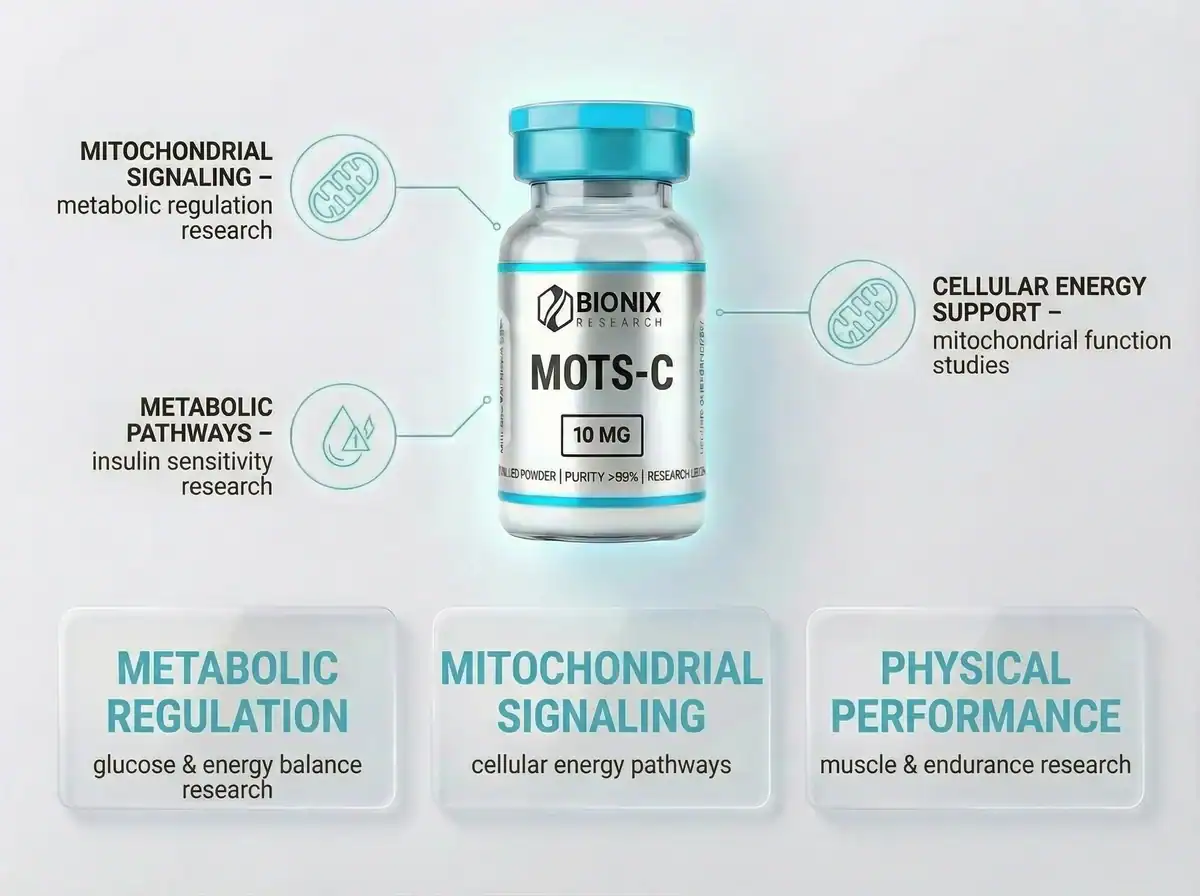
MOTS-c: The Mitochondrial Signal That Regulates Metabolism
A comprehensive research guide to the mitochondrial-derived peptide reshaping metabolic and longevity science.
MOTS-c: Key Facts at a Glance
| Aspect | Details |
|---|---|
| What is MOTS-c? | A 16-amino acid peptide encoded directly by mitochondrial DNA—not nuclear DNA |
| Core Function | Regulates metabolism, enhances insulin sensitivity, activates cellular energy pathways |
| Research Areas | Longevity & aging, metabolic health (Type 2 diabetes), muscle function & exercise mimetics |
| Classification | Mitochondrial-Derived Peptide (MDP), also called a "mitokin" |
| Unique Feature | One of the few peptides produced directly in the cell's "power plant" |
| Research Stage | Primarily preclinical; limited human intervention data |
Research Use Only (RUO) Disclaimer:
All substances and research findings described in this article are intended exclusively for scientific and research purposes. They are not intended for human consumption, medical applications, or as dietary supplements. The information presented does not constitute medical advice and does not replace consultation with a qualified physician.
The peptide revolution is happening now
Unlock the Advantage: Biological Optimization & Longevity Research Peptides
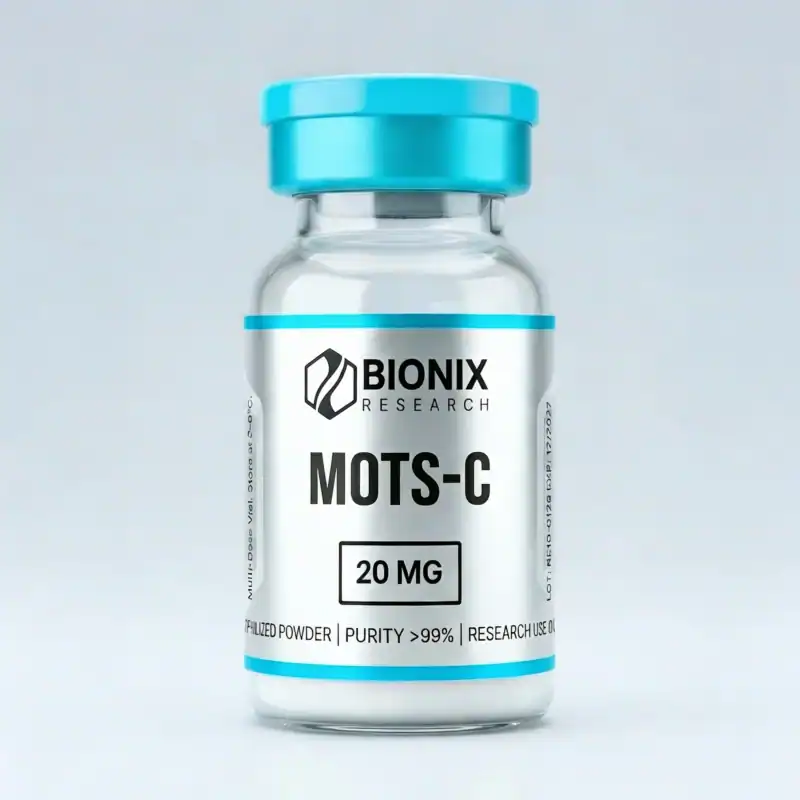
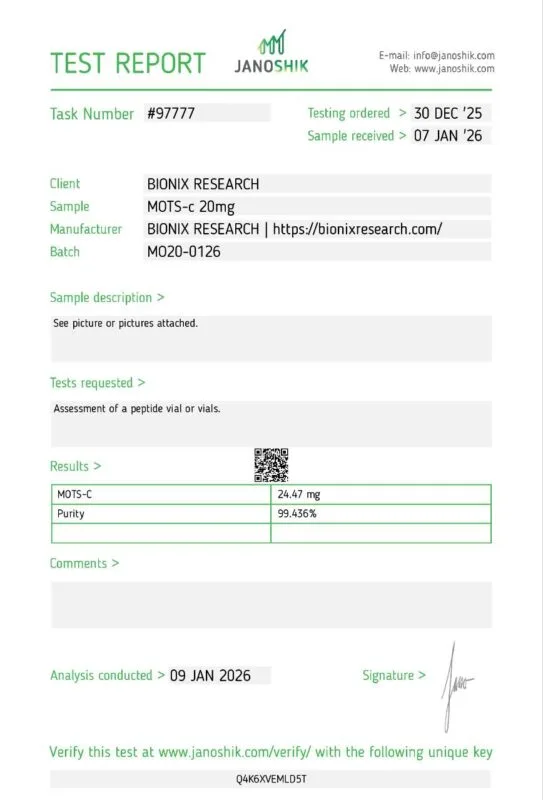
MOTS-c
49,90 € Vialincl. VAT
plus Shipping Costs
Delivery time: 1–6 Working Days
A Signal from the Cell's Power Plant
Your mitochondria don't just produce energy—they send signals. MOTS-c is one of those signals: a 16-amino acid peptide encoded directly by mitochondrial DNA that regulates how the body handles glucose, stress, and aging.
Most proteins and peptides in the body are built according to blueprints from the cell nucleus. MOTS-c works differently. It's produced by the mitochondria themselves—the organelles that generate energy in every cell. This makes it a direct messenger between cellular energy status and systemic metabolism.
The problem with many metabolic disorders is often disrupted communication between these cellular organelles. This is where research begins.
In this article, we explore:
- What MOTS-c is and where its name comes from
- How it works at the cellular level
- Which research areas are investigating it
- The latest 2024-2025 discoveries
- Safety considerations and open questions
- What the current evidence means
What is MOTS-c?
The Cell as a City: An Analogy
Think of a cell as a city. The nucleus is city hall—that's where the main blueprints (DNA) for almost all proteins and molecules the city needs are stored. The mitochondria are the power plants. They produce the energy (ATP) that keeps everything running.
Here's where it gets interesting: The power plants have their own, smaller blueprints—the mitochondrial DNA (mtDNA). This mtDNA is much smaller than the DNA in city hall, but it contains instructions for a few special molecules. MOTS-c is one of them.
💡 Key Insight: While nearly all of your body's 20,000+ proteins come from nuclear DNA, MOTS-c belongs to an exclusive group of just a few dozen peptides encoded by mtDNA.
Where Does the Name Come From?
MOTS-c stands for "Mitochondrial Open Reading Frame of the 12S rRNA-c". Let's break it down:
| Component | Meaning |
|---|---|
| Mitochondrial | Originates from mitochondria |
| Open Reading Frame (ORF) | A DNA segment containing instructions for a protein or peptide |
| 12S rRNA | The specific region in mtDNA where MOTS-c originates |
| -c | The "c" variant of this ORF |
In short: MOTS-c is a "message" from a small, hidden section of mitochondrial DNA.
The Uniqueness of Its Origin
Most peptides and proteins arise from instructions in the cell nucleus. MOTS-c breaks this pattern. It's encoded directly by mtDNA. This means:
- It arises directly in the cell's engine room
- It functions as a direct messenger between mitochondria and the rest of the body
- It belongs to a small, exclusive group of molecules—the Mitochondrial-Derived Peptides (MDPs)
| MDP Family Member | Gene Origin | Length | Primary Function |
|---|---|---|---|
| MOTS-c | 12S rRNA | 16 aa | AMPK activation, metabolic regulation |
| Humanin | 16S rRNA | 24 aa | Cytoprotection, anti-apoptotic |
| SHLP1-6 | 16S rRNA | 20-38 aa | Various protective effects |
This origin makes MOTS-c an important signaling molecule. It reports to the body how the mitochondria are doing—and conversely enables adaptations.
The Structure
MOTS-c consists of 16 amino acids. The sequence is:
MRWQEMGYIFYPRKLR
| Position | Amino Acid | Properties |
|---|---|---|
| 1 | Met (M) | Sulfur-containing, N-terminus |
| 2 | Arg (R) | Positively charged |
| 3 | Trp (W) | Aromatic, hydrophobic |
| 4-7 | Gln-Glu-Met-Gly | Mixed properties |
| 8-11 | Tyr-Ile-Phe-Tyr | Aromatic cluster |
| 12 | Pro (P) | Conformational constraint |
| 13-16 | Arg-Lys-Leu-Arg | Positively charged cluster |
This short chain is remarkably stable and travels between different cell compartments—from the cytoplasm (the cell's "city center") to the nucleus (the "city hall").
💡 Key Insight: The cluster of positively charged residues (Arg, Lys) at the C-terminus likely facilitates nuclear entry and DNA interaction.
Research Forms and Specifications
In scientific studies, MOTS-c is typically used as a synthesized peptide. The stability of the peptide is a key factor in experiments, which is why the powder form is usually preferred.
| Property | Value |
|---|---|
| Molecular Formula | C₁₀₁H₁₅₂N₂₈O₂₂S₂ |
| Molecular Weight | 2,174.6 Da |
| Sequence | Met-Arg-Trp-Gln-Glu-Met-Gly-Tyr-Ile-Phe-Tyr-Pro-Arg-Lys-Leu-Arg |
| CAS Number | 1627580-64-6 |
| Form | Lyophilized powder |
| Purity | ≥99% (HPLC-verified) |
| Storage | -20°C long-term |
How Does MOTS-c Work?
MOTS-c operates on multiple levels. The primary mechanisms are AMPK activation, nuclear translocation, and a recently discovered direct protein interaction with CK2.
Mechanism 1: AMPK Activation
AMPK stands for AMP-activated Protein Kinase. This enzyme functions as a "master switch" for the cell's energy balance. During energy shortage, AMPK switches to "conservation mode" and activates processes that generate energy.
The Pathway:
Trigger: Metabolic stress or energy shortage
    ↓
Action: MOTS-c inhibits the folate cycle
    ↓
Result: AICAR accumulates → AICAR activates AMPK
    ↓
Outcome: Increased glucose uptake in muscles, improved insulin sensitivity
Analogy: The factory (cell) is running on reserve power. MOTS-c is the technician who overrides the energy-saving mode and optimizes the factory for maximum efficiency.
Connection to Metformin: Interestingly, MOTS-c's effect on folate metabolism shows similarities to metformin's mechanism—both influence one-carbon metabolism pathways. This metabolic signature includes alterations in purine, dipeptide, acylcarnitine, and methionine cycles.
Mechanism 2: Nuclear Translocation
Under certain conditions—particularly oxidative stress—MOTS-c migrates from the cytoplasm directly into the cell nucleus.
The Pathway:
Trigger: Oxidative stress (e.g., from free radicals)
    ↓
Action: MOTS-c travels to the nucleus
    ↓
Result: Activates protective genes, including NRF2 response
    ↓
Outcome: Cell becomes more resistant to stress and damage
Analogy: The engine room sends a messenger directly to government headquarters with the message: "We need more protective measures!"
Mechanism 3: CK2 Binding (2024 Discovery)
A 2024 study identified Casein Kinase 2 (CK2) as a specific binding partner for MOTS-c in skeletal muscle, providing direct mechanistic insight into its exercise-mimetic effects.
| Aspect | Finding |
|---|---|
| Binding Partner | CK2 (Casein Kinase 2) |
| Tissue | Skeletal muscle |
| Consequence | Direct AMPK activation, metabolic enhancement |
| Significance | First identified direct molecular target |
💡 Key Insight: This discovery explains how MOTS-c can mimic exercise effects at the molecular level—it directly binds to the same protein machinery activated during physical activity.
Mechanism Overview
| Signaling Pathway | What Happens | Result |
|---|---|---|
| AMPK Activation | Inhibits folate cycle → AICAR accumulates → AMPK activated | More glucose uptake, better insulin sensitivity |
| Nuclear Translocation | Migrates to nucleus under stress | Activation of protective genes (e.g., NRF2) |
| CK2 Binding | Direct protein-protein interaction | Exercise-mimetic effects in muscle |
| Retrograde Signaling | Communicates between mitochondria and nucleus | Adaptation of gene expression to energy status |
Research Areas
Research on MOTS-c is young but rapidly expanding. The 2024-2025 period has brought significant new findings. Here are the main research areas:
1. Metabolic Health & Insulin Sensitivity
Observed effects include improved glucose homeostasis (blood sugar regulation) and reduced inflammation in adipose tissue. In preclinical models, increased glucose uptake into muscles was observed—similar to what happens after physical activity.
2024-2025 Updates:
- Studies in T2D rat models show MOTS-c treatment effectively delays weight gain and restores mitochondrial function in cardiac tissue
- Research demonstrates prevention of pancreatic islet senescence, potentially delaying diabetes onset
- MOTS-c levels correlate inversely with BMI and insulin resistance in human studies
Research Connection: This area overlaps thematically with research on incretin mimetics like Tirzepatide, though MOTS-c uses a different mechanism of action.
2. Physical Performance & Muscle Function
MOTS-c appears to increase exercise tolerance and optimize fatty acid metabolism. Observations suggest improved metabolic flexibility—the cells' ability to switch between different energy sources (sugar vs. fat).
Key Findings:
- Human studies link higher serum MOTS-c levels to greater muscle mass and improved jumping performance
- Rodent models show enhanced endurance capacity
- MOTS-c appears to suppress myostatin expression—a protein that limits muscle growth
Research Connection: In regeneration research, this is often considered parallel to peptides like TB-500, which also support tissue repair.
3. Longevity & Age-Related Conditions
A particularly exciting field. MOTS-c activates protective genes that play a role in age-related diseases.
The Longevity Connection:
- MOTS-c levels decline with age, correlating with poorer metabolic health
- The peptide delays cellular senescence in multiple tissue types
- A specific polymorphism in the MOTS-c gene has been associated with exceptional longevity in Japanese centenarian populations
The Japanese Centenarian Study: Genetic analysis revealed that a specific MOTS-c variant (m.1382A>C) is significantly more common in Japanese individuals who live beyond 100 years. This variant appears to produce a functionally different MOTS-c peptide that may contribute to metabolic resilience during aging.
Evidence Snapshot
| Research Area | Model | Key Observation | Reference |
|---|---|---|---|
| Insulin Sensitivity | Mouse models, human correlations | Glucose homeostasis, adipose inflammation reduction | Lee et al., 2015 |
| Physical Performance | Rodents, human biomarkers | Exercise tolerance, fatty acid metabolism | Reynolds et al., 2021 |
| Longevity | Japanese centenarians, cell models | Genetic association, senescence delay | Fuku et al., 2015 |
| Diabetes/Cardiac | T2D rat models (2024-2025) | Weight delay, mitochondrial restoration | PMC 2025 |
| Muscle CK2 | Skeletal muscle (2024) | Direct binding, exercise mimicry | 2024 publication |
Clinical Development: CB4211
While MOTS-c itself presents bioavailability challenges for therapeutic development, an analog called CB4211 has entered clinical trials:
| Development Aspect | Status |
|---|---|
| Developer | CohBar Inc. |
| Phase | 1a/1b completed |
| Target Indication | NAFLD/NASH, obesity |
| Results | Safe in healthy and fatty liver subjects; injection site reactions noted |
| Challenge | Low oral bioavailability requires injection |
This clinical work validates the research interest in MOTS-c pathways, though the research peptide remains distinct from therapeutic development.
Safety Considerations & Open Questions
What We Know
MOTS-c is an endogenous peptide—the body produces it naturally. However, exogenous administration at research doses is a different context. The safety profile for administered MOTS-c has not been established in humans.
Current Safety Data
| Aspect | Status |
|---|---|
| Endogenous safety | MOTS-c is naturally produced; higher levels correlate with favorable metabolic outcomes |
| Exogenous safety (humans) | Not established |
| CB4211 analog (Phase 1) | Safe in short-term trials; persistent injection site reactions noted |
| Long-term data | Not available |
| Drug interactions | May interact with other AMPK modulators; unstudied |
Areas Requiring Further Investigation
Cell Proliferation Concerns: Some preclinical studies show contradictory findings regarding cell proliferation pathways. While MOTS-c demonstrates protective effects in most models, its interaction with growth signaling in certain cancer cell lines requires further investigation. Individuals with active malignancies should avoid MOTS-c unless directed by a physician.
Metabolic Interactions: MOTS-c's effects on AMPK may theoretically interact with:
- Metformin and other AMPK activators
- mTOR pathway modulators
- Insulin and glucose-lowering agents
These interactions remain unstudied in controlled settings.
Open Research Questions
How exactly does MOTS-c interact with other signaling pathways? Hints of interactions with the insulin signaling pathway and mTOR pathway exist, but details remain unclear. The relationship between AMPK activation and mTOR inhibition is particularly relevant for understanding metabolic effects.
What factors regulate endogenous MOTS-c production? Initial data suggest exercise increases production, but the exact mechanism is open. Understanding this could reveal why physical activity produces MOTS-c-like metabolic benefits.
What are the long-term effects? Most studies are short-term. Long-term data on effects and safety are lacking. The decline of MOTS-c with age raises questions about whether maintaining levels could influence healthspan.
Tissue-specific effects? While muscle and metabolic tissues are well-studied, MOTS-c's role in brain, heart, and other tissues requires further investigation.
Preclinical Research Protocols
The following dosing information is provided for research reference only. These are protocols used in published preclinical studies—not recommendations.
| Study Type | Model | Protocol | Reference |
|---|---|---|---|
| Infection resistance | Mouse | 20 mg/kg pretreatment (4h prior) | ADDF Report |
| Infection resistance | Mouse | 50 mg/kg post-treatment (2h after) | ADDF Report |
| Metabolic studies | Rodent | Variable; no standardized protocol | Multiple |
| Human-equivalent dosing | — | Not established | — |
Note: Rodent dosing does not translate directly to other species. Allometric scaling and pharmacokinetic differences make cross-species extrapolation unreliable without specific study data.
Research Context & Limitations
The described observations come from preclinical models and in vitro studies. Clinical studies in humans on efficacy and safety are largely pending. All findings are limited to the experimental research context.
| Evidence Level | Status |
|---|---|
| In vitro (cell studies) | Extensive |
| Preclinical (animal models) | Strong foundation |
| Human biomarker studies | Correlational data available |
| Human intervention trials | Limited (CB4211 only) |
| Long-term safety data | Not available |
MOTS-c is a promising molecule in basic research. The idea that a peptide comes directly from mitochondria and regulates metabolism is scientifically significant. However: The research is early. Most data come from animal models, and transferability to humans is not yet fully clarified.
Summary
MOTS-c is a unique peptide produced directly by mitochondria. It functions as a messenger between the cell's energy balance and the rest of the body.
Key Points:
| Aspect | Summary |
|---|---|
| Origin | Encoded by mitochondrial 12S rRNA gene—one of few mitochondrial-derived peptides |
| Mechanism | Activates AMPK via folate cycle inhibition; translocates to nucleus under stress; binds CK2 in muscle |
| Research | Metabolic health, exercise mimetics, longevity—with 2024-2025 studies adding CK2 mechanism and diabetes model data |
| Safety | Endogenous peptide; exogenous safety profile not established; some contradictory findings in proliferation models |
| Limitation | Most evidence is preclinical; human intervention data limited |
The data are promising, but most findings come from preclinical models. Research continues to explore this fascinating "message from the power plant."
The peptide revolution is happening now
Unlock the Advantage: Biological Optimization & Longevity Research Peptides
MOTS-c
49,90 € Vialincl. VAT
plus Shipping Costs
Delivery time: 1–6 Working Days
Frequently Asked Questions (FAQ)
What is MOTS-c?
MOTS-c is a small peptide of 16 amino acids encoded by mitochondrial DNA. It regulates metabolism and insulin sensitivity at the cellular level, functioning as a "mitokin"—a mitochondrial-derived signaling molecule.
Where does the name MOTS-c come from?
The name stands for "Mitochondrial Open Reading Frame of the 12S rRNA-c." It describes the region in mitochondrial DNA from which the peptide originates.
Why is MOTS-c a "mitochondrial" peptide?
Because it's encoded directly by DNA in the mitochondria—not by DNA in the cell nucleus. This makes it a direct messenger between the cell's "power plants" and the rest of the body, belonging to the exclusive group of Mitochondrial-Derived Peptides (MDPs).
Is MOTS-c a hormone?
Not in the classical sense. It's a signaling molecule that communicates between different cell compartments. It could be described as "hormone-like" because it regulates metabolic processes and can act systemically.
What role does MOTS-c play in aging research?
MOTS-c activates protective genes that play a role in age-related diseases. MOTS-c levels decline with age, and a specific genetic variant has been associated with exceptional longevity in Japanese centenarians. The hypothesis: By supporting mitochondrial function, it influences the aging process at the cellular level.
Is MOTS-c production influenced by exercise?
Yes. Research shows that physical activity increases MOTS-c production and release. A 2024 study identified CK2 binding as a mechanism through which MOTS-c mimics exercise effects in skeletal muscle. This explains why exercise has similar metabolic effects to MOTS-c—such as improved insulin sensitivity.
How does MOTS-c compare to other longevity peptides?
MOTS-c is unique in its mitochondrial origin and AMPK-focused mechanism. While peptides like Epitalon target telomerase and NAD+ focuses on sirtuin activation, MOTS-c directly addresses mitochondrial-nuclear communication and metabolic flexibility.
Is MOTS-c safe?
MOTS-c is naturally produced in the body, and higher endogenous levels correlate with favorable metabolic outcomes. However, the safety profile for exogenous (administered) MOTS-c has not been established in humans. Some preclinical studies show contradictory findings in cell proliferation models, and individuals with active malignancies should consult a physician before any research involvement.
Is MOTS-c FDA-approved?
No. MOTS-c is not FDA-approved for any therapeutic use. It is available for research purposes only. An analog (CB4211) has completed Phase 1 trials but has not received approval.
Glossary
| Term | Explanation |
|---|---|
| Mitochondria | The "power plants" of the cell—organelles that produce energy (ATP) |
| mtDNA | Mitochondrial DNA—the small, separate DNA in mitochondria |
| Peptide | Short chain of amino acids (building blocks of proteins) |
| AMPK | AMP-activated protein kinase—the "master switch" for cellular energy balance |
| Insulin Sensitivity | How well cells respond to insulin (important for blood sugar regulation) |
| Metabolism | All chemical processes in the body that generate and consume energy |
| Retrograde Signaling | Communication from mitochondria back to the cell nucleus |
| NRF2 | A protective protein that shields cells from oxidative stress |
| AICAR | 5-Aminoimidazole-4-carboxamide ribonucleotide—a molecule that activates AMPK |
| Oxidative Stress | Damage from free radicals (unstable molecules) |
| CK2 | Casein Kinase 2—a protein MOTS-c directly binds in skeletal muscle |
| Mitokin | A mitochondrial-derived peptide that acts as a systemic signaling molecule |
| MDP | Mitochondrial-Derived Peptide—the family of peptides encoded by mtDNA |
| mTOR | Mechanistic target of rapamycin—a pathway regulating cell growth and metabolism |
References
Lee C et al. (2015). "The Mitochondrial-Derived Peptide MOTS-c Promotes Metabolic Homeostasis and Reduces Obesity and Insulin Resistance." Cell Metabolism. PMID: 25738459
Fuku N et al. (2015). "The mitochondrial-derived peptide MOTS-c: A player in exceptional longevity?" Aging Cell. PMID: 26950378
Reynolds JC et al. (2021). "MOTS-c is an exercise-induced mitochondrial-encoded regulator of age-dependent physical decline and muscle homeostasis." Nature Communications. PMID: 33473109
Kim KH et al. (2018). "The Mitochondrial-Derived Peptide MOTS-c Regulates Metabolic Homeostasis in Mice and Humans." Cell Reports. PMID: 30044998
"Mitochondria-derived peptide MOTS-c restores mitochondrial function in diabetic models." PMC, 2025.
"Mitochondrial-encoded peptide MOTS-c prevents pancreatic islet cell senescence to delay diabetes." Exp Mol Med, 2025.
"MOTS-c binds CK2 in skeletal muscle." 2024 publication.
Alzheimer's Drug Discovery Foundation. "MOTS-c Cognitive Vitality Report." 2024.
Research Use Only (RUO) Disclaimer: All substances and research findings described in this article are intended exclusively for scientific and research purposes. They are not intended for human consumption, medical applications, or as dietary supplements. The information presented does not constitute medical advice and does not replace consultation with a qualified physician.
Disclaimer: The information provided on this blog is for general information and education purposes only. It does not constitute professional advice (e.g., medical advice). Content relating to research results, studies, or scientific findings reflects the status at the time of publication. As research is constantly evolving, no guarantee can be given for the timeliness, accuracy, or completeness of the cited data and conclusions. Use of the content is at your own risk.

