


Knowledge Base
What Is NAD+? The Cellular Fuel That Powers Longevity, Energy & DNA Repair

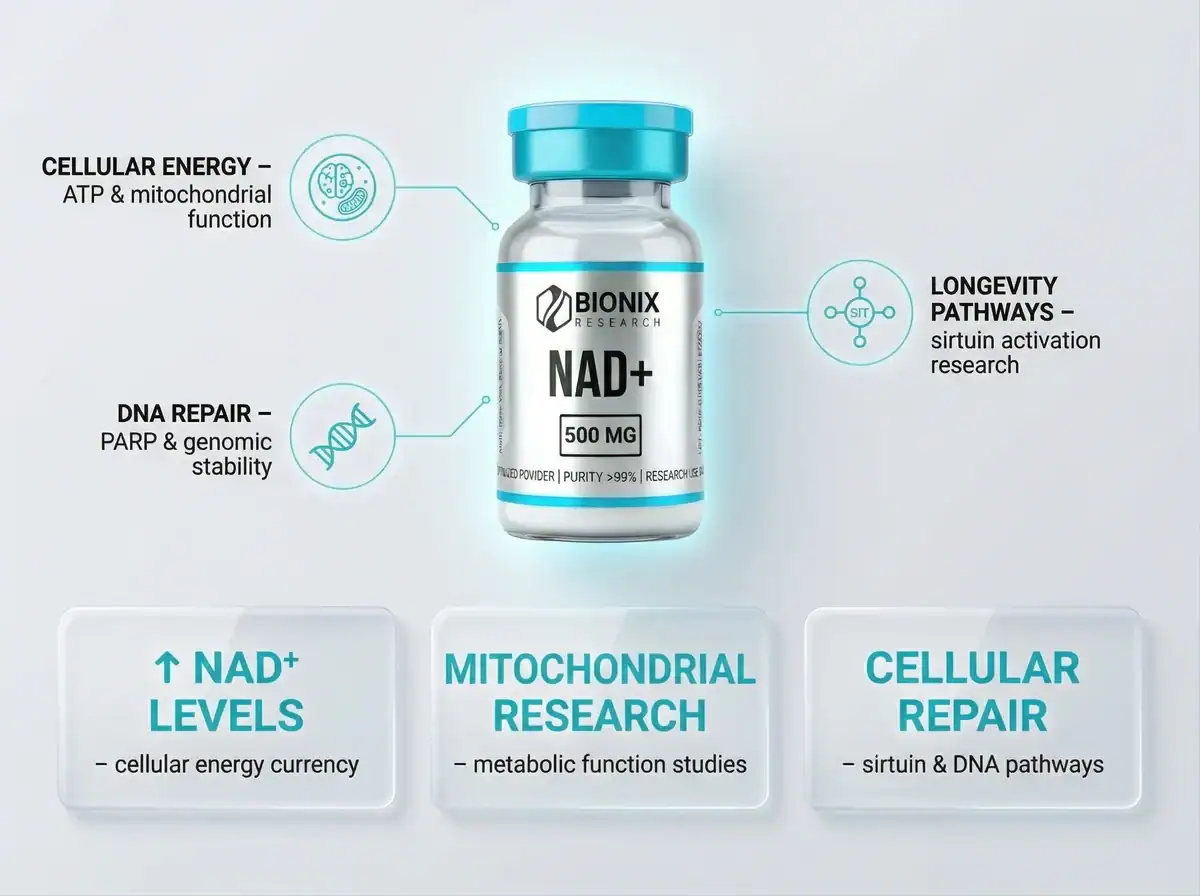
NAD⁺: The Master Coenzyme in Cellular Energy and Longevity Research
A comprehensive research guide to the essential coenzyme that powers over 500 enzymatic reactions in every living cell.
NAD⁺: Key Facts at a Glance
| Aspect | Details |
|---|---|
| What is NAD⁺? | Nicotinamide Adenine Dinucleotide—an essential coenzyme present in every living cell |
| Core Function | Electron transport for ATP production; substrate for sirtuins, PARPs, and CD38 enzymes |
| Research Areas | Cellular energy metabolism, longevity/aging, DNA repair, neuroprotection, metabolic health |
| Classification | Pyridine dinucleotide coenzyme |
| Unique Feature | The human body recycles approximately its own weight in NAD⁺ molecules daily |
| Research Stage | Extensive preclinical data; growing human clinical trials (2024-2025) on precursors |
Research Use Only (RUO) Disclaimer:
All substances and information described in this article are intended exclusively for research and educational purposes. They are not intended for diagnosis, treatment, cure, or prevention of any disease. Use outside controlled scientific studies is not intended. Always consult medical professionals for health-related questions.
The peptide revolution is happening now
Unlock the Advantage: Biological Optimization & Longevity Research Peptides
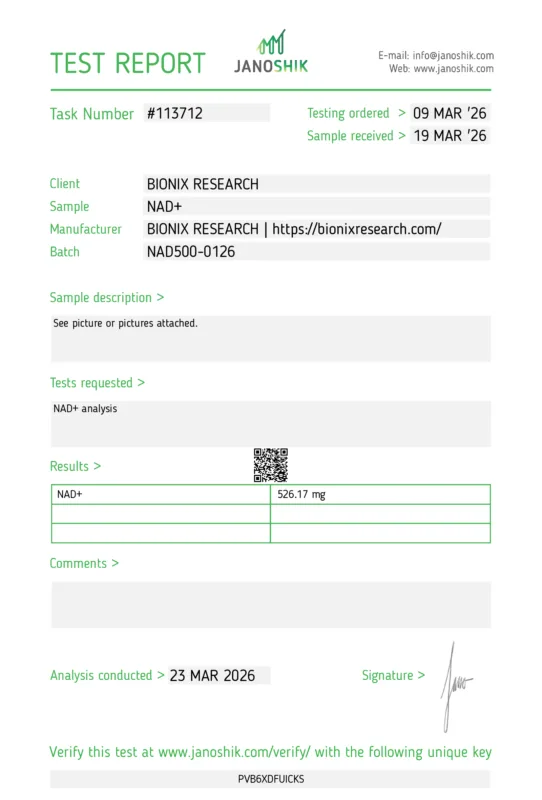
NAD+
59,90 € Vialincl. VAT
plus Shipping Costs
Delivery time: 1–6 Working Days
The Universal Currency of Cellular Life
Every heartbeat, every thought, every cellular repair process requires a single molecule that most people have never heard of.
That molecule is NAD⁺.
Without adequate NAD⁺, the human body's 37 trillion cells would cease functioning within seconds. It is the essential electron shuttle powering mitochondrial ATP production—and simultaneously the irreplaceable fuel that activates longevity genes and DNA repair systems.
Here is the challenge: NAD⁺ levels in the human body decline approximately 50% every 20 years after age 30. By age 60, most individuals retain only a fraction of the NAD⁺ they possessed in youth. This decline correlates with reduced mitochondrial function, accumulated DNA damage, and decreased sirtuin activity.
A 2021 comprehensive review in Nature Reviews Molecular Cell Biology documents this age-related NAD⁺ decline as a hallmark of cellular aging, driving research into strategies for NAD⁺ maintenance (Covarrubias et al., PMID: 33353981).
In this article, we examine:
- What NAD⁺ is and its molecular specifications
- The three biosynthesis pathways: de novo, Preiss-Handler, and salvage
- The dual mechanism: energy transport vs. enzyme substrate consumption
- Current research across metabolism, aging, DNA repair, and neuroprotection
- 2024-2025 clinical trial updates on NAD⁺ precursors
- Safety considerations, limitations, and open research questions
What is NAD⁺?
Chemical Identity
NAD⁺ stands for Nicotinamide Adenine Dinucleotide—the oxidized form of this essential coenzyme. The "+" indicates a positive formal charge on the nitrogen atom of the nicotinamide ring.
It is a dinucleotide—two nucleotide units (adenine and nicotinamide) connected by a pyrophosphate bridge. This structure enables NAD⁺ to accept and donate electrons, making it central to cellular redox chemistry.
| Property | Value |
|---|---|
| Molecular Formula | C₂₁H₂₇N₇O₁₄P₂ (oxidized form) |
| Molecular Weight | 663.4 g/mol |
| CAS Number | 53-84-9 |
| Appearance | White amorphous powder, hygroscopic |
| Solubility | Highly water-soluble |
| Stability | Stable at neutral pH (4°C); degrades in acidic/alkaline solutions |
| Redox Potential | −0.32 volts (NAD⁺/NADH pair) |
| NADH Form | C₂₁H₂₉N₇O₁₄P₂ (665.4 g/mol, reduced form) |
💡 Key Insight: The −0.32 volt redox potential makes NADH a moderately strong reducing agent—ideal for transferring electrons in metabolic reactions without excessive reactivity.
The Battery Analogy: NAD⁺ vs. NADH
The relationship between NAD⁺ and NADH is best understood through a rechargeable battery model:
| Form | State | Function |
|---|---|---|
| NAD⁺ | Empty battery (oxidized) | Ready to accept electrons |
| NADH | Charged battery (reduced) | Carrying electrons to mitochondria |
The conversion follows this equation:
RH₂ + NAD⁺ → NADH + H⁺ + R
A hydride ion (H⁻) transfers from the substrate to NAD⁺, reducing it to NADH. This NADH then delivers electrons to the mitochondrial electron transport chain, where they drive ATP synthesis. The NAD⁺ is regenerated, allowing continuous cycling without consumption.
Analogy: Think of NAD⁺ as a molecular delivery truck that picks up "energy packages" (electrons) from food breakdown and delivers them to the mitochondrial "power plant." The truck returns empty (NAD⁺) to pick up more packages—thousands of times per second.
The Molecular Scale
The numbers illustrate NAD⁺'s importance:
| Metric | Value | Significance |
|---|---|---|
| Enzymatic reactions requiring NAD⁺ | 500+ | More than any other coenzyme |
| Daily NAD⁺ turnover | ~Body weight equivalent | Constant synthesis and recycling |
| NAD⁺ decline rate | ~50% per 20 years (after age 30) | Correlates with aging hallmarks |
| Intracellular concentration | 0.3-1.0 mM | Tightly regulated |
NAD⁺ Biosynthesis: Three Pathways
The human body synthesizes NAD⁺ through three distinct pathways. Understanding these routes is essential for comprehending how precursor supplementation research functions.
Pathway 1: De Novo Synthesis (From Tryptophan)
The de novo pathway builds NAD⁺ from scratch using the essential amino acid tryptophan (Trp).
Tryptophan (dietary amino acid)
        ↓
    [Multiple enzymatic steps requiring O₂]
        ↓
    Quinolinic acid
        ↓ (QPRT enzyme)
    Nicotinic acid mononucleotide (NAMN)
        ↓
    [Merges with Preiss-Handler pathway]
        ↓
    NAD⁺
Key characteristics:
- Requires molecular oxygen at multiple steps
- Cannot function under anaerobic conditions
- Least efficient pathway (~50x less efficient than niacin)
- Occurs primarily in liver and kidney
Pathway 2: Preiss-Handler Pathway (From Nicotinic Acid/Niacin)
This pathway uses nicotinic acid (NA)—vitamin B3/niacin—as the starting precursor.
Nicotinic Acid (Niacin/Vitamin B3)
        ↓ (NAPRT enzyme)
Nicotinic Acid Mononucleotide (NAMN)
        ↓ (NAAD synthase)
Nicotinic Acid Adenine Dinucleotide (NAAD)
        ↓ (NADSYN enzyme + glutamine + ATP)
NAD⁺
Key enzymes:
| Enzyme | Function | Location |
|---|---|---|
| NAPRT | Converts NA → NAMN | Liver, kidney (absent in muscle) |
| NAAD synthase | Converts NAMN → NAAD | Cytosol/nucleus |
| NADSYN | Converts NAAD → NAD⁺ | Liver, kidney |
Key characteristic: Preferred pathway when dietary niacin is abundant.
Pathway 3: Salvage Pathway (From Nicotinamide)
The salvage pathway is the dominant NAD⁺ source in most mammalian tissues. It recycles nicotinamide (NAM) released when NAD⁺-consuming enzymes complete their reactions.
Nicotinamide (NAM) — recycled from sirtuin/PARP activity
        ↓ (NAMPT enzyme — rate-limiting step)
Nicotinamide Mononucleotide (NMN)
        ↓ (NMNAT enzymes)
NAD⁺
Alternative entry points:
Nicotinamide Riboside (NR)
        ↓ (NRK enzymes)
NMN → NAD⁺
Key enzymes:
| Enzyme | Function | Forms |
|---|---|---|
| NAMPT | Rate-limiting; NAM → NMN | iNAMPT (intracellular), eNAMPT (extracellular) |
| NRK1/NRK2 | NR → NMN | Tissue-specific expression |
| NMNAT1 | NMN → NAD⁺ | Nuclear |
| NMNAT2 | NMN → NAD⁺ | Cytoplasm, Golgi |
| NMNAT3 | NMN → NAD⁺ | Mitochondrial |
💡 Key Insight: The three NMNAT isoforms allow precise NAD⁺ compartmentalization—nuclear, cytoplasmic, and mitochondrial pools are independently regulated.
Biosynthesis Pathway Overview
| Pathway | Starting Precursor | Key Enzyme | Efficiency | Primary Tissues |
|---|---|---|---|---|
| De Novo | Tryptophan | QPRT | Lowest | Liver, kidney |
| Preiss-Handler | Nicotinic acid (niacin) | NAPRT | Moderate | Liver, kidney |
| Salvage | Nicotinamide, NR, NMN | NAMPT, NRK | Highest | All tissues (dominant) |
How Does NAD⁺ Work?
NAD⁺ operates through two fundamentally different mechanisms—one reversible, one irreversible. This dual function explains why NAD⁺ depletion has such profound effects.
Mechanism 1: Electron Transport (Redox Reactions)
Trigger: Nutrient breakdown (glycolysis, citric acid cycle)
Action: NAD⁺ accepts electrons from metabolic substrates, becoming NADH. This NADH delivers electrons to the mitochondrial electron transport chain, driving ATP synthesis.
Glucose/Fatty Acids (nutrients)
        ↓
    Metabolic breakdown
        ↓
    Electrons released
        ↓
    NAD⁺ accepts electrons → becomes NADH
        ↓
    NADH enters mitochondria
        ↓
    Electron Transport Chain
        ↓
    ATP production (cellular energy)
        ↓
    NAD⁺ regenerated (cycle repeats)
Key characteristic: This process is reversible—NAD⁺ is regenerated after each cycle, allowing continuous reuse.
Analogy: A fleet of delivery trucks (NAD⁺) constantly picking up packages (electrons) from the warehouse (cytoplasm) and delivering them to the factory (mitochondria). The trucks return empty to repeat the process.
Mechanism 2: Enzyme Substrate (Consumption Reactions)
Trigger: DNA damage, cellular stress, metabolic signaling
Action: Specialized enzyme families consume NAD⁺ as an irreversible substrate. The NAD⁺ molecule is broken down, releasing nicotinamide (NAM) as a byproduct.
Cellular stress / DNA damage
        ↓
    Enzyme activation (Sirtuins, PARPs, CD38)
        ↓
    NAD⁺ consumed as substrate
        ↓
    Enzyme function completed
        ↓
    NAM released (must be recycled via salvage pathway)
        ↓
    NAD⁺ pool depleted (requires resynthesis)
Key characteristic: This process is irreversible—NAD⁺ is destroyed and must be resynthesized.
The Three Major NAD⁺-Consuming Enzyme Families
| Enzyme Family | Function | NAD⁺ Consumption | Impact on NAD⁺ Pool |
|---|---|---|---|
| Sirtuins (SIRT1-7) | Protein deacetylation, gene regulation, longevity | Moderate | Steady consumption |
| PARPs (PARP1-17) | DNA damage detection and repair | High (especially under stress) | Can rapidly deplete NAD⁺ |
| CD38/CD157 | Calcium signaling, immune function | High (increases with age) | Major contributor to age-related decline |
Sirtuins: The "Longevity Enzymes"
Sirtuins are a family of seven enzymes (SIRT1-7) that require NAD⁺ to function. They regulate:
- Gene expression (epigenetic modifications)
- Metabolic efficiency
- Stress resistance
- Mitochondrial biogenesis
- Inflammation
| Sirtuin | Location | Primary Functions |
|---|---|---|
| SIRT1 | Nucleus, cytoplasm | Metabolism, stress response |
| SIRT2 | Cytoplasm | Cell cycle, metabolism |
| SIRT3 | Mitochondria | ATP production, oxidative stress |
| SIRT4 | Mitochondria | Fatty acid oxidation |
| SIRT5 | Mitochondria | Urea cycle, metabolism |
| SIRT6 | Nucleus | DNA repair, telomere maintenance |
| SIRT7 | Nucleolus | Ribosome biogenesis |
💡 Key Insight: When NAD⁺ levels decline, sirtuin activity decreases proportionally—potentially explaining the correlation between NAD⁺ depletion and hallmarks of aging.
PARPs: The DNA Repair Responders
Poly-ADP-Ribose Polymerases (PARPs) are the first responders to DNA damage. When PARP1 detects a DNA strand break, it consumes NAD⁺ to build poly-ADP-ribose chains that signal repair machinery.
The challenge: Under conditions of high DNA damage, PARPs can consume NAD⁺ faster than it can be resynthesized, leading to acute NAD⁺ depletion.
DNA damage occurs
        ↓
    PARP1 activated
        ↓
    Massive NAD⁺ consumption
        ↓
    If damage exceeds repair capacity:
        ↓
    NAD⁺ depletion → ATP depletion → Cell death (parthanatos)
CD38: The Age-Related NAD⁺ Consumer
CD38 is an ectoenzyme whose expression increases with age. It degrades NAD⁺ and its precursors (NMN, NR) with high efficiency.
Research indicates CD38 may be a primary driver of age-related NAD⁺ decline—its inhibition has restored NAD⁺ levels in aged animal models.
Mechanism Overview: The Two Faces of NAD⁺
| Role | Function | Process | Result | NAD⁺ Fate |
|---|---|---|---|---|
| Electron Transport | Energy production | NAD⁺ ↔ NADH cycling | ATP synthesis | Regenerated |
| Enzyme Substrate | DNA repair, gene regulation | NAD⁺ → NAM + products | Sirtuin/PARP/CD38 activity | Consumed (requires resynthesis) |
Research Areas
Given the fundamental role of NAD⁺ in cellular function, research spans multiple domains. The focus on precursor supplementation stems from NAD⁺'s poor direct bioavailability.
1. Cellular Energy Metabolism
NAD⁺ is essential for mitochondrial ATP production. Research investigates correlations between NAD⁺ levels and:
- Mitochondrial function and biogenesis
- Metabolic flexibility
- Insulin sensitivity
- Lipid metabolism
2024-2025 Clinical Evidence: Studies with NAD⁺ precursors (NR, NMN) demonstrate blood NAD⁺ elevation of 1.5-2.7x in humans, with ongoing investigation of metabolic outcomes.
2. Aging and Longevity (Sirtuin Research)
The "NAD⁺-sirtuin axis" is central to longevity research. The hypothesis: declining NAD⁺ reduces sirtuin activity, contributing to aging hallmarks.
Observed correlations in research:
- NAD⁺ depletion → decreased SIRT1 activity → altered gene expression
- NAD⁺ restoration in aged models → improved mitochondrial function
- Sirtuin activation → enhanced stress resistance, metabolic efficiency
2024-2025 Update: A systematic review confirms NAD⁺ supplementation maintains cellular functions in preclinical aging models, with ongoing human trials examining longevity-relevant biomarkers (PMID: 33353981).
3. DNA Repair and Genomic Stability
PARPs require NAD⁺ for DNA damage detection and repair initiation. Research examines:
- NAD⁺ levels and PARP activity
- Genomic stability under varying NAD⁺ conditions
- DNA repair efficiency in aging models
Clinical relevance: Conditions with high DNA damage burden may deplete NAD⁺ faster than resynthesis capacity.
4. Neuroprotection (Emerging)
NAD⁺ research in neurological conditions includes:
- Axonal degeneration models
- Cognitive function in aging
- Neurodegenerative disease models
2024-2025 Clinical Data:
- Long COVID trial (n=58): 2,000mg NR/day for 20 weeks raised blood NAD⁺; post-hoc analysis showed self-reported improvements in fatigue, sleep, mood, and executive function in participants taking NR ≥10 weeks
- NADage trial (NCT06208527): Ongoing study examining NR effects on cognition and frailty in elderly populations
5. Rare Disease Applications
NAD⁺ supplementation is being studied in conditions with underlying mitochondrial or DNA repair deficiencies:
2024-2025 Clinical Evidence:
- Ataxia-telangiectasia (A-T): 2-year open-label trial (n=10) with 500mg NR/day showed increased blood NAD⁺, slowed neuromotor symptom progression, improved IgG in immunodeficient patients, and was well-tolerated
- Werner syndrome: NR supplementation improved clinical features and raised tissue NAD⁺ levels
Evidence Snapshot
| Research Area | Investigated Effect | Research Stage | Key Finding | Source |
|---|---|---|---|---|
| Metabolic Health | Insulin sensitivity, lipid profile | Preclinical + limited human | Correlation between NAD⁺ levels and metabolic flexibility | PMID: 29514064 |
| Neuroprotection | Cognitive function, axonal protection | Preclinical + human pilots | Protection of neurons from degeneration in models | PMID: 26785480 |
| Longevity | Sirtuin activation, cellular function | Preclinical + ongoing human | Maintenance of cellular functions with optimized NAD⁺ | PMID: 33353981 |
| Long COVID | Fatigue, cognition | Human trial (n=58) | NAD⁺ elevation; self-reported symptom improvements | Science Daily, 2025 |
| Ataxia-telangiectasia | Neuromotor function | Human trial (n=10, 2-year) | Slowed progression, well-tolerated | PMC12727671 |
| Frailty/Aging | Gait speed, cognition | Ongoing RCT (n=100) | NADage trial in progress | NCT06208527 |
Clinical Development Status
Human Data Summary (As of 2025)
| Study Type | Precursor | Sample Size | Finding | Limitation |
|---|---|---|---|---|
| Long COVID | NR (2,000mg/day, 20 weeks) | n=58 | NAD⁺ elevated; limited group differences; post-hoc improvements | No overall significance vs. placebo |
| Ataxia-telangiectasia | NR (500mg/day, 2 years) | n=10 | Slowed progression, improved immune markers | Open-label, no placebo |
| Parkinson's (NAD-PARK, NR-SAFE) | NR (up to 3,000mg/day) | Multiple trials | Potential neuroprotective effects | Ongoing |
| NADage (elderly frailty) | NR (2,000mg/day, 52 weeks) | n=100 (target) | In progress | Recruiting |
| Werner syndrome | NR | Multiple | Improved clinical features | Limited sample |
Research Volume
| Category | Status |
|---|---|
| Preclinical studies (NAD⁺/precursors) | Extensive (hundreds of studies) |
| Human trials (NR) | Multiple completed and ongoing |
| Human trials (NMN) | Growing (primarily from Asia) |
| Long-term safety data | Limited (max 2 years published) |
⚠️ Critical Gap: While precursor supplementation reliably raises blood NAD⁺ levels in humans, translation to clinical outcomes requires larger, longer randomized controlled trials.
NAD⁺ Precursors: A Comparison
Because NAD⁺ itself has poor oral bioavailability (degraded in the digestive tract), research focuses on precursor molecules that the human body can convert to NAD⁺ intracellularly.
Precursor Comparison Table
| Precursor | Full Name | Pathway | Bioavailability | Clinical Doses Studied | EU Status |
|---|---|---|---|---|---|
| NMN | Nicotinamide Mononucleotide | Salvage (direct) | Rapid absorption (mice); variable in humans | 250-1,200mg/day | Novel food (under review) |
| NR | Nicotinamide Riboside | Salvage (via NRK) | Well-documented; 2.7x NAD⁺ increase | 100-3,000mg/day | Novel food (approved) |
| Niacin | Nicotinic Acid (Vitamin B3) | Preiss-Handler | Efficient; causes flushing | Standard vitamin doses | Fully approved |
| NAM | Nicotinamide | Salvage (via NAMPT) | Good; may inhibit sirtuins at high doses | Vitamin doses | Fully approved |
| Tryptophan | L-Tryptophan | De novo | Lowest efficiency (~50x less than niacin) | Dietary amino acid | Fully approved |
Key Distinctions
NR (Nicotinamide Riboside):
- Best human clinical data
- 2.7x NAD⁺ increase documented with single oral doses
- No flushing (unlike niacin)
- EU-approved as novel food
NMN (Nicotinamide Mononucleotide):
- Direct NAD⁺ precursor (one step closer than NR)
- Rapid absorption in animal models
- SLC12A8 transporter allows direct cellular uptake
- EU novel food status under review
Niacin (Nicotinic Acid):
- Most established (vitamin B3)
- Causes uncomfortable flushing at higher doses
- Efficient NAD⁺ elevation
- Fully regulated as vitamin
Safety Considerations & Limitations
What We Know
NAD⁺ precursors (particularly NR and NMN) have demonstrated favorable safety profiles in clinical trials. However, long-term data remains limited, and certain populations require caution.
Current Safety Data
| Aspect | Status |
|---|---|
| NR/NMN acute safety | Well-tolerated in trials (doses up to 3,000mg/day) |
| Common mild effects | Headaches, fatigue, nausea, GI discomfort (dose-dependent) |
| Niacin-specific | Flushing above 50mg/day |
| Long-term safety | Limited (max 2-year data published) |
| Drug interactions | Potential with blood pressure and diabetes medications |
Reported Side Effects (NAD⁺ Precursors)
| Side Effect | Frequency | Notes |
|---|---|---|
| Headaches | Occasional | Dose-dependent |
| Fatigue | Occasional | May be transient |
| Nausea/GI discomfort | Occasional | More common at higher doses |
| Flushing | Common (niacin only) | Rare with NR/NMN |
| Elevated liver enzymes | Rare | Observed in some high-dose studies |
Contraindications and Cautions
| Population | Recommendation | Reason |
|---|---|---|
| Pregnant individuals | Avoid | Insufficient fetal safety data |
| Breastfeeding individuals | Avoid | Insufficient infant safety data |
| Children/adolescents | Avoid | No pediatric safety data |
| Liver disease | Caution/avoid | Hepatic metabolism required |
| Kidney disease | Caution/avoid | Renal excretion required |
| Active malignancy | Consult physician | Theoretical concern (see below) |
Theoretical Concerns
Cancer Consideration:
NAD⁺ supports cellular survival and proliferation—functions that could theoretically benefit cancer cells that have already developed. This does not mean NAD⁺ supplementation causes cancer, but individuals with active malignancies should exercise caution.
| Concern | Mechanism | Current Evidence |
|---|---|---|
| Cancer cell survival | NAD⁺ supports all cellular metabolism | Theoretical; no direct evidence of promotion |
| Tumor angiogenesis | Not a primary NAD⁺ function | No direct evidence |
| Cancer causation | Not indicated | "Boosting NAD⁺ does not cause cancer" (NAD.com, 2024) |
⚠️ Important: No studies demonstrate that NAD⁺ precursor supplementation promotes cancer. However, individuals with active malignancies or strong family history should consult physicians before supplementation.
Drug Interactions
NAD⁺ precursors may interact with:
- Blood pressure medications
- Diabetes medications
- Other supplements affecting NAD⁺ metabolism
Medical consultation is essential before combining NAD⁺ precursors with prescription medications.
Open Questions in NAD⁺ Research
1. Optimal Dosing
Clinical trials use doses ranging from 100mg to 3,000mg/day for NR. No standardized optimal dose has been established for different populations or goals.
2. NMN vs. NR
Which precursor is superior? Current evidence slightly favors NR for human data, but NMN may have advantages in direct cellular uptake. Head-to-head human trials are lacking.
3. Long-Term Effects
Most studies run weeks to months. Effects of years-long supplementation are unknown. Does benefit persist? Are there cumulative risks?
4. Tissue-Specific Effects
Blood NAD⁺ elevation is well-documented. Do tissue NAD⁺ levels (brain, muscle, heart) increase proportionally? This remains under investigation.
5. CD38 Inhibition
If CD38 drives age-related NAD⁺ decline, should research focus on CD38 inhibitors rather than precursor supplementation?
6. Optimal Age to Intervene
When should NAD⁺ maintenance strategies begin? At first decline (age 30+)? Earlier? Later? No consensus exists.
Research Context & Limitations
The observations described in this article come from a combination of preclinical models, in vitro studies, and a growing body of human clinical trials. While precursor supplementation reliably raises blood NAD⁺ levels, translation to clinical outcomes requires continued investigation.
| Evidence Level | Status |
|---|---|
| In vitro (cell studies) | Extensive |
| Preclinical (animal models) | Strong foundation |
| Human bioavailability | Well-established (NR, NMN raise blood NAD⁺) |
| Human clinical outcomes | Growing but limited |
| Long-term human safety | Limited (max 2-year data) |
| Randomized controlled trials | Ongoing (NADage, others) |
NAD⁺ represents a fundamental molecule in cellular biology. Its role in energy metabolism, DNA repair, and longevity pathways is well-established. The research question has shifted from "Is NAD⁺ important?" to "Can maintaining NAD⁺ levels improve human health outcomes?"
Current evidence is promising but requires larger, longer trials for definitive conclusions.
Summary
NAD⁺ is an essential coenzyme present in every living cell, serving dual functions as an electron carrier for ATP production and an irreplaceable substrate for longevity enzymes (sirtuins), DNA repair systems (PARPs), and signaling molecules (CD38).
| Aspect | Summary |
|---|---|
| Identity | Nicotinamide Adenine Dinucleotide (C₂₁H₂₇N₇O₁₄P₂), 663.4 g/mol |
| CAS Number | 53-84-9 |
| Primary Mechanisms | Electron transport (NAD⁺ ↔ NADH); enzyme substrate (sirtuins, PARPs, CD38) |
| Key Property | Human body recycles ~body weight in NAD⁺ daily |
| Age-Related Decline | ~50% reduction every 20 years after age 30 |
| Research Focus | Energy metabolism, longevity, DNA repair, neuroprotection |
| Precursors Studied | NR (most human data), NMN (growing data), niacin (established) |
| Research Stage | Extensive preclinical; growing human trials (2024-2025) |
| Safety | Well-tolerated in trials; long-term data limited; liver/kidney caution |
| Limitations | Optimal dosing unknown; NMN vs. NR comparison incomplete; long-term effects unstudied |
The data are compelling. NAD⁺ decline correlates with aging hallmarks, and precursor supplementation reliably raises blood NAD⁺ levels. Controlled human trials examining clinical outcomes are essential before definitive conclusions about health applications.
The peptide revolution is happening now
Unlock the Advantage: Biological Optimization & Longevity Research Peptides
NAD+
59,90 € Vialincl. VAT
plus Shipping Costs
Delivery time: 1–6 Working Days
Frequently Asked Questions (FAQ)
What is NAD⁺?
NAD⁺ (Nicotinamide Adenine Dinucleotide) is an essential coenzyme present in every living cell. It functions as an electron carrier for cellular energy production (ATP synthesis) and as a substrate for enzymes involved in DNA repair (PARPs), gene regulation (sirtuins), and cellular signaling (CD38). Without adequate NAD⁺, cellular metabolism ceases within seconds.
Why do NAD⁺ levels decline with age?
NAD⁺ decline results from multiple converging factors: (1) increased consumption by DNA repair enzymes (PARPs) responding to accumulated cellular damage, (2) decreased efficiency of biosynthesis pathways, (3) elevated activity of CD38, an enzyme that degrades NAD⁺ and increases with age, and (4) chronic low-grade inflammation ("inflammaging"). The net result is approximately 50% NAD⁺ reduction every 20 years after age 30.
What is the difference between NAD⁺ and NADH?
NAD⁺ is the oxidized form (electron acceptor), while NADH is the reduced form (electron carrier). NAD⁺ functions like an empty battery ready to accept electrons from nutrient breakdown. When it accepts electrons, it becomes NADH—a "charged battery" that delivers electrons to mitochondria for ATP production. The NAD⁺ is then regenerated, allowing continuous cycling.
Can NAD⁺ be taken directly as a supplement?
NAD⁺ has poor oral bioavailability—it is largely degraded in the digestive tract before reaching cells. For this reason, research focuses on precursor molecules (NMN, NR, niacin) that the human body can absorb and convert to NAD⁺ intracellularly. These precursors bypass digestive degradation and enter cellular biosynthesis pathways.
What are NAD⁺ precursors?
Precursors are molecules the human body converts into NAD⁺ through biosynthesis pathways. The primary precursors are:
- NMN (Nicotinamide Mononucleotide): Direct precursor, one enzymatic step from NAD⁺
- NR (Nicotinamide Riboside): Converted to NMN, then NAD⁺; best human clinical data
- Niacin (Nicotinic Acid): Vitamin B3; efficient but causes flushing
- Nicotinamide (NAM): Recycled from NAD⁺-consuming reactions </details>
What is the difference between NMN and NR?
Both are NAD⁺ precursors entering the salvage pathway. NMN is one step closer to NAD⁺ (requires only NMNAT enzyme). NR requires two steps (NRK converts NR → NMN, then NMNAT converts NMN → NAD⁺). NR has more published human clinical data; NMN may have advantages in direct cellular uptake via the SLC12A8 transporter. Head-to-head human comparison data is limited.
What do the latest clinical trials show?
2024-2025 human trials demonstrate:
- NR at 2,000mg/day for 20 weeks raised blood NAD⁺ in long COVID patients (n=58)
- NR up to 3,000mg/day was well-tolerated in Parkinson's disease trials
- A 2-year NR trial (500mg/day) in ataxia-telangiectasia patients showed slowed neuromotor progression
- Ongoing NADage trial (NCT06208527) examining NR effects on frailty and cognition
Note: These findings are from ongoing research. Clinical applications are still being studied.
What are sirtuins and why do they need NAD⁺?
Sirtuins (SIRT1-7) are a family of enzymes that regulate gene expression, metabolism, stress resistance, and cellular repair. They are often called "longevity enzymes" due to their association with lifespan extension in model organisms. Sirtuins require NAD⁺ as a substrate—they cannot function without it. When NAD⁺ levels decline, sirtuin activity decreases proportionally.
Is NAD⁺ supplementation safe?
NAD⁺ precursors (NR, NMN) have demonstrated favorable safety profiles in clinical trials with doses up to 3,000mg/day. Common mild side effects include headaches, fatigue, and GI discomfort. However, long-term safety data (beyond 2 years) is limited. Individuals with liver or kidney disease, pregnant or breastfeeding individuals, and those with active malignancies should consult physicians before supplementation.
What is the regulatory status of NAD⁺ precursors?
Regulatory status varies by jurisdiction and compound:
- NR: EU-approved as novel food; available as supplement
- NMN: EU novel food status under review; available in some markets
- Niacin: Fully approved as vitamin B3 globally
- NAD⁺ (direct): Not approved as pharmaceutical; research use only for direct forms
Glossary
| Term | Explanation |
|---|---|
| ATP | Adenosine triphosphate—the universal energy currency of the cell |
| CD38 | Ectoenzyme that degrades NAD⁺; expression increases with age |
| Coenzyme | A helper molecule required for enzyme function |
| De novo pathway | NAD⁺ synthesis from scratch using tryptophan |
| Mitochondria | Cellular organelles producing ATP—the "powerhouses" of the cell |
| NAD⁺ | Nicotinamide Adenine Dinucleotide (oxidized form)—central coenzyme for energy and repair |
| NADH | Reduced form of NAD⁺—carries electrons to mitochondria |
| NAMPT | Nicotinamide phosphoribosyltransferase—rate-limiting enzyme in salvage pathway |
| NMN | Nicotinamide Mononucleotide—direct NAD⁺ precursor |
| NMNAT | Nicotinamide mononucleotide adenylyltransferase—converts NMN to NAD⁺ |
| NR | Nicotinamide Riboside—NAD⁺ precursor with extensive human data |
| NRK | Nicotinamide riboside kinase—converts NR to NMN |
| PARPs | Poly-ADP-Ribose Polymerases—DNA repair enzymes consuming NAD⁺ |
| Precursor | A molecule converted to another compound in the body |
| Preiss-Handler pathway | NAD⁺ synthesis from nicotinic acid (niacin) |
| Redox reaction | Chemical reaction involving electron transfer |
| Salvage pathway | NAD⁺ recycling from nicotinamide—dominant pathway in mammals |
| Sirtuins | Enzyme family (SIRT1-7) regulating genes and longevity; require NAD⁺ |
References
Foundational Scientific Publications:
Yoshino J et al. NAD⁺ Intermediates: The Biology and Therapeutic Potential of NMN and NR. Cell Metab. 2018. PMID: 29514064
Covarrubias AJ et al. NAD⁺ metabolism and its roles in cellular processes during ageing. Nat Rev Mol Cell Biol. 2021. PMID: 33353981
Verdin E. NAD⁺ in aging, metabolism, and neurodegeneration. Science. 2015. PMID: 26785480
2024-2025 Clinical Research:
Long COVID NR Trial. "NAD+ supplement shows early promise for long COVID fatigue." Science Daily. December 2025.
Ataxia-telangiectasia NR Study. "Promising Results With NAD Supplementation in Rare Diseases." PMC. 2025. PMC12727671
NADage Study. "Nicotinamide Riboside Replenishment Therapy." ClinicalTrials.gov. NCT06208527
NAD+ Precursors Review. "NAD+ Precursors Nicotinamide Mononucleotide (NMN) and Nicotinamide Riboside (NR)." PMC. 2023. PMC10240123
Molecular Data Sources:
PubChem. Nicotinamide Adenine Dinucleotide. CID: 10897651
Sigma-Aldrich. NAD (CAS 53-84-9) Product Specification.
Research Use Only (RUO) Disclaimer: All substances and information described in this article are intended exclusively for research and educational purposes. They are not intended for diagnosis, treatment, cure, or prevention of any disease. Use outside controlled scientific studies is not intended. Always consult medical professionals for health-related questions.
Disclaimer: The information provided on this blog is for general information and educational purposes only. It does not constitute professional advice (e.g., medical advice). Content relating to research results, studies, or scientific findings reflects the status at the time of publication. As research is constantly evolving, no guarantee can be given for the timeliness, accuracy, or completeness of the cited data and conclusions. Use of the content is at your own risk.

