


Knowledge Base
What Is Selank? The Anxiety-Crushing Nootropic That Boosts Focus Without the Brain Fog

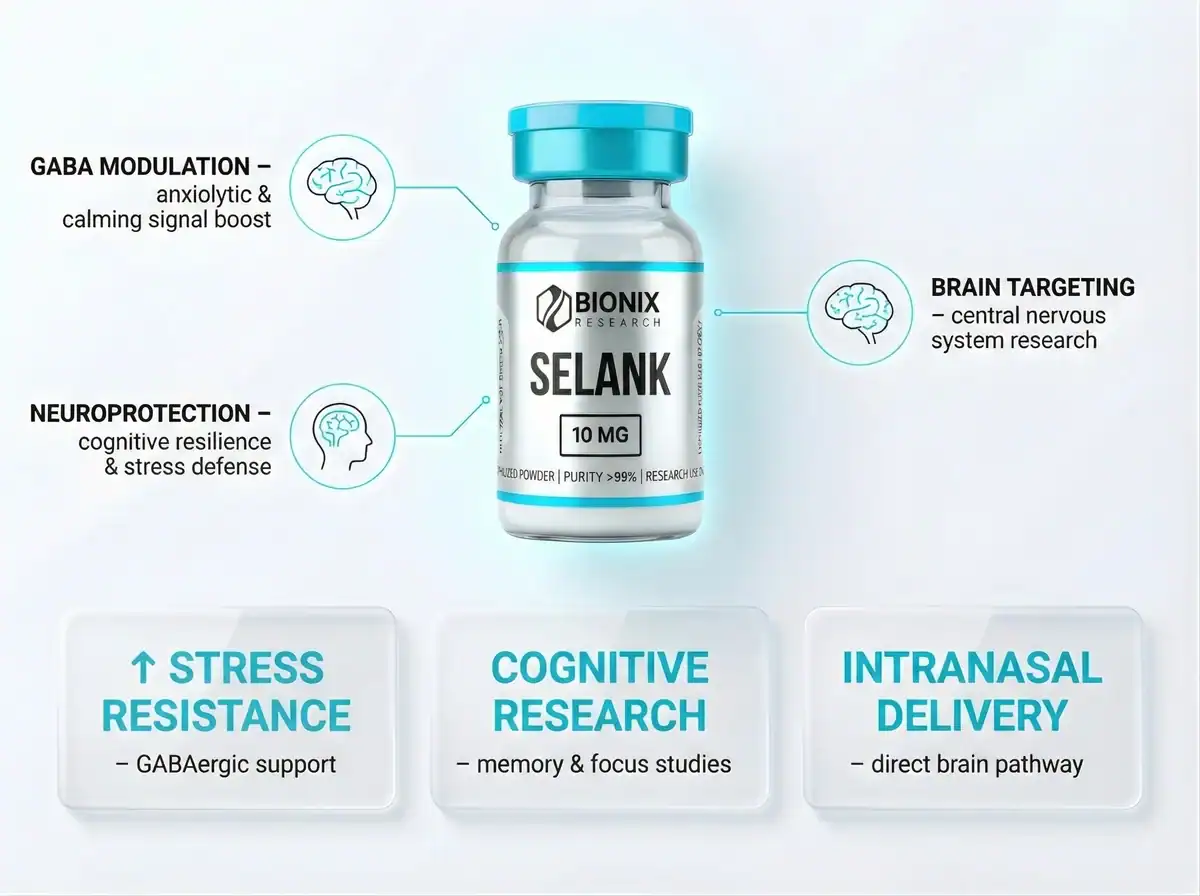
Selank: The Dual-Action Peptide in Anxiolytic and Immunomodulatory Research [2026]
A comprehensive research guide to the synthetic heptapeptide derived from human tuftsin, investigated for anxiety reduction, cognitive enhancement, and immune regulation.
Selank: Key Facts at a Glance
| Aspect | Details |
|---|---|
| What is Selank? | A synthetic 7-amino acid peptide derived from the human immunopeptide tuftsin |
| Core Function | Modulates GABA transmission, enhances BDNF expression, protects endogenous enkephalins |
| Research Areas | Anxiety disorders (GAD), cognitive enhancement, stress resilience, immunomodulation |
| Classification | Synthetic anxiolytic-nootropic heptapeptide |
| Unique Feature | Dual action—simultaneously targets nervous and immune systems without sedation or dependence |
| Research Stage | Approved medication in Russia (since 2009); research compound status in EU/USA |
Research Use Only (RUO) Disclaimer:
All substances and information described in this article are intended exclusively for research and educational purposes. They are not intended for diagnosis, treatment, cure, or prevention of any disease. Use outside controlled scientific studies is not intended. Selank is classified as a research substance in most countries outside Russia. Always consult medical professionals for health-related questions.
The peptide revolution is happening now
Unlock the Advantage: Biological Optimization & Longevity Research Peptides
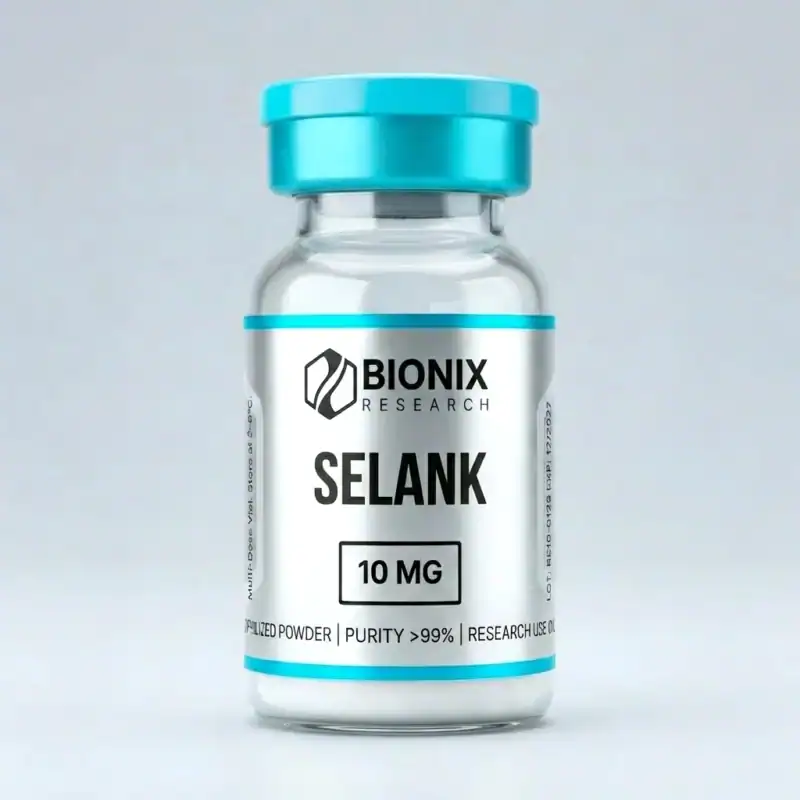
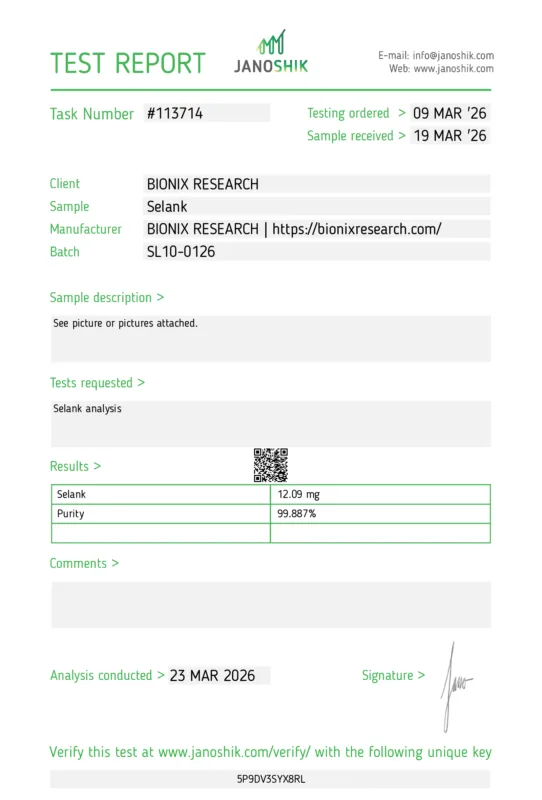
Selank
29,90 € Vialincl. VAT
plus Shipping Costs
Delivery time: 1–6 Working Days
A Peptide That Bridges Two Systems
Most bioactive compounds target either the nervous system or the immune system. Selank bridges both.
This synthetic heptapeptide emerged from a seemingly routine modification: Russian researchers extended a four-amino-acid immune peptide (tuftsin) by three additional amino acids to improve its stability. The unexpected result was a molecule that retained its immunomodulatory properties while gaining pronounced anxiolytic and nootropic effects.
The mechanism is distinct from conventional anxiolytics. While benzodiazepines suppress neural activity broadly—causing sedation, cognitive impairment, and dependence—Selank modulates the GABAergic system with precision. Clinical observations report anxiety reduction comparable to low-dose benzodiazepines, without the characteristic side effects.
A 2017 study confirmed that Selank enhances the anxiolytic effect of diazepam in chronic stress models, suggesting synergistic rather than competing mechanisms (PMID: 28236107).
In this article, we examine:
- What Selank is and its molecular specifications
- The tuftsin connection and structural modifications
- The three primary mechanisms: GABA modulation, BDNF expression, and enkephalin protection
- Current research across anxiety, cognition, and immune function
- Comparison with Semax and other regulatory peptides
- Safety considerations, limitations, and open research questions
What is Selank?
Chemical Identity
Selank is a synthetic heptapeptide—a chain of exactly seven amino acids. Its name derives from its development designation at the Institute of Molecular Genetics, Russian Academy of Sciences.
The amino acid sequence is:
Thr-Lys-Pro-Arg-Pro-Gly-Pro
Or in single-letter code: TKPRPGP
| Property | Value |
|---|---|
| Molecular Formula | C₃₃H₅₇N₁₁O₉ |
| Molecular Weight | 751.87 g/mol |
| CAS Number | 129954-34-3 |
| PubChem CID | 11765600 |
| Alternative Names | TP-7, TP7, SEL-729 |
| Appearance | White to off-white lyophilized powder |
| pKa | 3.43 ± 0.20 (predicted) |
| Melting Point | 134-136°C |
| Solubility | Water-soluble; soluble in DMSO |
| Storage | -20°C (lyophilized); -80°C (in solution) |
| Purity | ≥98% (HPLC-verified) |
💡 Key Insight: Selank's molecular weight (751.87 Da) is small enough for efficient cellular uptake and CNS penetration via intranasal administration, yet large enough to interact with specific receptor systems.
The Tuftsin Connection
Selank is a modified, stabilized version of tuftsin—a naturally occurring tetrapeptide (four amino acids) in the human body.
What is Tuftsin?
Tuftsin is a fragment of Immunoglobulin G (IgG)—the most abundant antibody in human blood. Its sequence is:
Thr-Lys-Pro-Arg (TKPR)
Tuftsin's natural function is immunomodulatory: it activates macrophages and other immune cells, enhancing the body's defense mechanisms.
The Modification:
Russian researchers at the Institute of Molecular Genetics added three amino acids to tuftsin's C-terminus:
Tuftsin:        Thr-Lys-Pro-Arg (TKPR)
                        +
Added sequence:                 Pro-Gly-Pro (PGP)
                        =
Selank:         Thr-Lys-Pro-Arg-Pro-Gly-Pro (TKPRPGP)
Why the Extension?
| Problem | Solution |
|---|---|
| Tuftsin degrades within minutes (peptidases) | Pro-Gly-Pro extension acts as molecular shield |
| Short half-life limits activity | Extended sequence increases stability |
| Primarily immune effects | Modification adds neuroactive properties |
The Pro-Gly-Pro sequence creates a "glyproline" tail—a structural motif that resists enzymatic degradation and fundamentally altered the peptide's biological profile.
Structure Comparison: Tuftsin vs. Selank
| Property | Tuftsin | Selank |
|---|---|---|
| Amino acids | 4 | 7 |
| Sequence | TKPR | TKPRPGP |
| Molecular weight | ~500 g/mol | 751.87 g/mol |
| Half-life | Minutes | Significantly extended |
| Primary effects | Immunomodulation | Anxiolytic + Nootropic + Immunomodulation |
| Stability | Low | High |
Analogy: Think of tuftsin as a message that gets lost in transit—it degrades before reaching its destination. Selank is the same message with protective packaging, ensuring delivery while unexpectedly expanding the message content.
Development History
| Year | Milestone |
|---|---|
| 1990s | Development at Institute of Molecular Genetics, Russian Academy of Sciences |
| 2000s | Clinical trials in Russia for anxiety disorders |
| 2009 | Added to Russian List of Vital and Essential Drugs |
| Present | Approved medication in Russia; research compound in EU/USA |
Selank represents a rare case of a research peptide achieving regulatory approval—albeit limited to Russia. In Western jurisdictions, it remains classified for research use only.
How Does Selank Work?
Selank operates through multiple neurochemical pathways simultaneously. Unlike single-target pharmaceuticals, it functions as a multi-mechanism modulator—affecting GABAergic transmission, neurotrophic factor expression, and endogenous opioid protection.
Mechanism 1: GABA-A Receptor Modulation
Trigger: Stress, anxiety states, or excessive neural excitation
Action: Selank enhances the binding and effect of GABA (gamma-aminobutyric acid) at GABA-A receptors—the primary inhibitory neurotransmitter system in the mammalian brain.
Stress / Anxiety state
        ↓
    Neural overexcitation
        ↓
    Selank administration
        ↓
    Enhanced GABA transmission at GABA-A receptors
        ↓
    Increased inhibitory signaling
        ↓
    Anxiolytic effect WITHOUT sedation
        ↓
    Maintained cognitive function
How It Differs from Benzodiazepines:
| Aspect | Benzodiazepines | Selank |
|---|---|---|
| GABA modulation | Allosteric enhancement (locks receptor open) | Modulatory enhancement (optimizes natural signaling) |
| Sedation | Pronounced | Absent |
| Cognitive impairment | Common | Not observed |
| Dependence potential | High | Not observed |
| Withdrawal syndrome | Significant | Not reported |
Research Data: A 2016 study examining gene expression changes after Selank administration (300 µg/kg intranasal) in rat frontal cortex found alterations in 84 genes involved in neurotransmission, including GABA receptor subunits. GABA levels showed positive correlation at 1 hour (r=0.86) and negative correlation at 3 hours (r=-0.39), suggesting dynamic modulation rather than static enhancement (PMC4757669).
Analogy: Benzodiazepines are like a sledgehammer that forces the GABA system into overdrive—effective but crude. Selank is like a precision tuner that optimizes the system's natural function without overwhelming it.
Mechanism 2: BDNF Expression Enhancement
Trigger: Demand for synaptic plasticity, learning, or neural repair
Action: Selank increases mRNA expression of BDNF (Brain-Derived Neurotrophic Factor) in the hippocampus—the brain region central to memory formation and learning.
Learning demand / Neural stress
        ↓
    Selank administration
        ↓
    Increased BDNF mRNA expression in hippocampus
        ↓
    Elevated BDNF protein levels
        ↓
    Enhanced synaptic plasticity
        ↓
    Improved learning capacity + Neuroprotection
What is BDNF?
BDNF is a neurotrophin—a protein that supports neuron survival, encourages growth of new neurons (neurogenesis), and strengthens synaptic connections. It is often described as "fertilizer for the brain."
Research Data: Transcriptome analysis of rat hippocampus after Selank administration demonstrated increased BDNF mRNA expression, along with changes in genes associated with synaptic plasticity. These findings provide mechanistic support for observed cognitive enhancement effects (PMID: 24931487).
Analogy: If neurons are plants, BDNF is the fertilizer that helps them grow stronger roots and branches. Selank increases fertilizer production.
Mechanism 3: Enkephalinase Inhibition
Trigger: Degradation of endogenous opioids (body's natural mood regulators)
Action: Selank inhibits enkephalinases—enzymes that break down enkephalins in the bloodstream.
Enkephalins (endogenous opioids) released
        ↓
    Normally: Rapid degradation by enkephalinases
        ↓
    With Selank: Enkephalinase inhibition
        ↓
    Prolonged enkephalin activity
        ↓
    Extended natural pain relief + Mood elevation
        ↓
    Enhanced stress resilience
What are Enkephalins?
Enkephalins are endogenous opioid peptides—the body's natural painkillers and mood elevators. They bind to opioid receptors, producing analgesia and positive affect without external drugs.
Key Distinction: Selank does not introduce foreign opioids—it protects the body's own opioid peptides from premature degradation.
Analogy: Selank acts as a bodyguard for the human body's natural "feel-good" molecules, preventing their rapid breakdown and extending their beneficial effects.
Mechanism 4: Cytokine and Immune Modulation
Trigger: Immune system activation, inflammation, or stress-induced immune changes
Action: Through its tuftsin heritage, Selank modulates cytokine expression and T-helper cell balance.
Immune challenge / Chronic stress
        ↓
    Selank administration
        ↓
    IL-6 modulation (inflammatory cytokine)
        ↓
    T-helper cell balance regulation (Th1/Th2)
        ↓
    Anti-inflammatory cytokine increase
        ↓
    Immune homeostasis
Research Data: Studies indicate Selank influences Interleukin-6 (IL-6) concentrations and regulates the balance between T-helper cell subtypes. Human trials in anxiety-asthenic disorders demonstrated increased anti-inflammatory cytokines (PMID: 18501007).
Mechanism Overview: Selank's Four Pathways
| Signaling Pathway | What Happens | Result |
|---|---|---|
| GABA-A Modulation | Enhanced inhibitory neurotransmission | Anxiolysis without sedation |
| BDNF Expression | Increased neurotrophic factor in hippocampus | Neuroprotection, learning enhancement |
| Enkephalinase Inhibition | Endogenous opioids protected from degradation | Mood elevation, stress resilience |
| Cytokine Balance | IL-6 modulation, T-cell regulation | Immunomodulation |
💡 Key Insight: Selank's multi-pathway action explains its broad effect profile—it doesn't simply suppress anxiety but optimizes the neurological and immunological systems that regulate stress response.
Research Areas
Selank research spans domains where anxiety, cognition, and immune function intersect. The peptide's unique dual-action profile makes it relevant to conditions involving both nervous and immune system dysfunction.
1. Anxiety Disorders
The most extensively studied application of Selank involves generalized anxiety disorder (GAD) and related conditions.
Observed Effects in Clinical Studies:
| Parameter | Observation | Comparison |
|---|---|---|
| Anxiety reduction | Significant | Comparable to low-dose benzodiazepines |
| Sedation | Absent | Unlike benzodiazepines |
| Cognitive impairment | Not observed | Unlike benzodiazepines |
| Dependence | Not observed | Unlike benzodiazepines |
| Withdrawal symptoms | Not reported | Unlike benzodiazepines |
Clinical Data: Russian trials involving 62 patients with GAD and neurasthenia demonstrated anxiolytic efficacy equivalent to medazepam (a benzodiazepine), with a superior side-effect profile—no sedation or cognitive impairment (PMID: 19089336).
Synergy Research: A 2017 study found that Selank (300 µg/kg intranasal) enhanced the anxiolytic effects of diazepam in chronically stressed rats, as measured by elevated plus maze testing. This suggests potential for combination approaches (PMC5322660).
2. Cognitive Enhancement (Nootropic Research)
Selank's BDNF-enhancing properties position it within nootropic research—the study of cognitive enhancement.
Observed Effects:
| Parameter | Observation | Mechanism |
|---|---|---|
| BDNF mRNA expression | Increased in hippocampus | Direct gene expression effect |
| Learning capacity | Enhanced in animal models | BDNF-mediated plasticity |
| Memory consolidation | Improved | Hippocampal function support |
| Synaptic plasticity genes | Upregulated | Transcriptome changes |
Research Data: Transcriptome analysis revealed Selank-induced changes in genes associated with synaptic plasticity in the hippocampus—the brain region most critical for learning and memory formation (PMID: 24931487).
Gene Expression Changes: A 2016 study identified alterations in 84 neurotransmission-related genes in rat frontal cortex following Selank administration, including dopamine receptor D5 (Drd5) activation associated with synaptic plasticity (PMC4757669).
3. Stress Resilience
Research examines Selank's effects on chronic stress adaptation.
Observed Effects:
| Parameter | Observation | Model |
|---|---|---|
| Chronic stress adaptation | Improved | Rat models |
| Stress hormone modulation | Regulatory effects | Multiple models |
| Behavioral stress markers | Reduced | Elevated plus maze |
4. Immunomodulation
Through its structural relationship to tuftsin, Selank maintains immunomodulatory properties.
Observed Effects:
| Parameter | Observation | Significance |
|---|---|---|
| IL-6 modulation | Regulatory effect | Anti-inflammatory potential |
| T-helper cell balance | Th1/Th2 regulation | Immune homeostasis |
| Anti-inflammatory cytokines | Increased | Observed in human trials |
| Macrophage activation | Enhanced (tuftsin heritage) | Immune defense |
Research Data: Human trials in anxiety-asthenic disorders demonstrated increased anti-inflammatory cytokines with Selank administration (PMID: 18501007).
Evidence Snapshot
| Research Area | Investigated Effect | Research Stage | Key Finding | Source |
|---|---|---|---|---|
| Anxiety (GAD) | Anxiolytic efficacy | Clinical (n=62, Russia) | Comparable to benzodiazepines without sedation/dependence | PMID: 19089336 |
| Cognition | BDNF expression, memory | Preclinical + transcriptome | Increased hippocampal BDNF mRNA | PMID: 24931487 |
| Gene expression | Neurotransmission genes | Preclinical | 84 genes altered in frontal cortex | PMC4757669 |
| Stress resilience | Chronic stress adaptation | Preclinical | Improved adaptation markers | Russian studies |
| Immunomodulation | Cytokine balance | Clinical (human) | Increased anti-inflammatory cytokines | PMID: 18501007 |
| Synergy | Diazepam enhancement | Preclinical | Enhanced anxiolytic effect | PMC5322660 |
Clinical Development Status
Regulatory Status by Jurisdiction
| Jurisdiction | Status | Notes |
|---|---|---|
| Russia | Approved medication (since 2009) | Listed as Vital and Essential Drug |
| USA | Not FDA-approved; Research Use Only | FDA notes insufficient safety data for compounded forms |
| EU | Not approved; Research Use Only | No EMA authorization |
| Other | Generally research compound | Varies by country |
Human Data Summary
| Study Type | Sample Size | Finding | Limitation |
|---|---|---|---|
| GAD clinical trial | n=62 | Anxiolytic efficacy comparable to medazepam | Russian study; limited Western replication |
| Anxiety-asthenic disorders | Multiple studies | Increased anti-inflammatory cytokines | Primarily Russian literature |
| Phase III (Western) | None | N/A | Critical gap |
Research Volume
| Category | Status |
|---|---|
| Preclinical studies | Extensive (primarily Russian) |
| Human clinical trials | Limited to Russian studies |
| Western replication | Minimal |
| Long-term safety data | Limited |
⚠️ Critical Gap: The overwhelming majority of Selank research originates from Russian institutions. Independent Western replication studies are notably absent, limiting confidence in translating findings to broader populations.
Selank vs. Semax: Comparison
Selank and Semax are both synthetic regulatory peptides developed at the same Russian research institute. While structurally and mechanistically distinct, they are often discussed together due to their shared origin and complementary profiles.
Comparison Table
| Feature | Selank | Semax |
|---|---|---|
| Amino acids | 7 (heptapeptide) | 7 (heptapeptide) |
| Parent molecule | Tuftsin (immune peptide) | ACTH (4-10) fragment |
| Primary effect | Anxiolytic (calming) | Nootropic (stimulating) |
| GABA modulation | Primary mechanism | Not primary |
| BDNF expression | Yes | Yes (more pronounced) |
| Ideal applications | Anxiety, stress, mood disorders | Focus, motivation, cognitive decline |
| Sedation | None | None |
| Energy effect | Neutral/calming | Stimulating |
| Regulatory status | Approved in Russia | Approved in Russia |
When Research Protocols Might Use Each
| Research Focus | Selank | Semax |
|---|---|---|
| Anxiety reduction | ✓ Primary | Secondary |
| Cognitive enhancement | ✓ Secondary | ✓ Primary |
| Stress resilience | ✓ Primary | ✓ |
| Immunomodulation | ✓ Primary | Limited |
| Mood elevation | ✓ | ✓ |
| Focus/motivation | Secondary | ✓ Primary |
Analogy: If the nervous system were an orchestra, Semax would be the conductor pushing for a faster, more energetic performance. Selank would be the sound engineer ensuring the acoustics are balanced and free of distortion.
Forms of Selank
Two primary forms of Selank are distinguished in research, differing in stability and pharmacokinetic characteristics.
Standard Selank vs. N-Acetyl Selank Amidate
| Property | Selank (Standard) | N-Acetyl Selank Amidate |
|---|---|---|
| Modifications | None (base peptide) | Acetyl group (N-terminus) + Amide (C-terminus) |
| Stability | Moderate | High |
| Half-life | Short (rapid peptidase degradation) | Significantly extended |
| Storage requirements | -20°C, moisture-protected | More stable at higher temperatures |
| Primary use | Acute research applications | Extended duration research |
| CNS penetration | Good (intranasal) | Potentially enhanced |
Why the Modifications?
N-Acetylation (N-terminus):
- Protects against aminopeptidases (enzymes that degrade peptides from the N-terminus)
- May enhance lipophilicity and membrane penetration
Amidation (C-terminus):
- Protects against carboxypeptidases (enzymes that degrade peptides from the C-terminus)
- Common modification in bioactive peptides
Analogy: Standard Selank is like a letter in an envelope—functional but vulnerable to damage. N-Acetyl Selank Amidate is the same letter in a reinforced, waterproof container—same message, better protection.
Safety Considerations & Limitations
What We Know
Selank has demonstrated a favorable safety profile in Russian clinical studies spanning over two decades. However, Western safety data is limited, and long-term effects beyond typical study durations remain unknown.
Current Safety Data
| Aspect | Status |
|---|---|
| Acute toxicity | Not observed in studies |
| Chronic toxicity | Not observed in available studies |
| Organ damage | Not reported |
| Dependence potential | Not observed (unlike benzodiazepines) |
| Withdrawal syndrome | Not reported |
| Sedation | Absent |
| Cognitive impairment | Not observed |
| Glucose disruption | Not observed |
| Antibody formation | Not reported |
Reported Side Effects
Based on available literature, Selank demonstrates minimal side effect profile. No significant adverse events have been reported in published studies.
| Side Effect | Frequency | Notes |
|---|---|---|
| Major adverse events | Not reported | In available literature |
| Minor adverse events | Rare | Limited reports |
| Injection site reactions | Possible (parenteral routes) | Standard peptide consideration |
Regulatory Cautions
| Agency | Position |
|---|---|
| FDA (USA) | Flags immunogenicity risk for compounded peptides; insufficient human safety data |
| EMA (EU) | No authorization; no formal position |
| Russian Federation | Approved; considered safe for indicated uses |
Theoretical Concerns
| Concern | Basis | Current Evidence |
|---|---|---|
| Immunogenicity | FDA warning for compounded peptides | No confirmed cases with Selank |
| Long-term effects | Limited study duration | Unknown |
| Drug interactions | Unstudied | Unknown |
Contraindications and Cautions
| Population | Recommendation | Reason |
|---|---|---|
| Pregnant individuals | Avoid | No fetal safety data |
| Breastfeeding individuals | Avoid | No infant safety data |
| Children | Avoid | No pediatric data |
| Autoimmune conditions | Caution | Immunomodulatory effects |
| Concurrent immunotherapy | Caution | Potential interaction |
⚠️ Important: While Selank's safety profile appears favorable in published research, the absence of large-scale Western clinical trials represents a significant limitation. All findings should be interpreted within this context.
Open Questions in Selank Research
1. Western Replication
The overwhelming majority of Selank research originates from Russian institutions. How reproducible are these findings in independent Western laboratories and clinical settings?
2. Long-Term Effects
Most studies span weeks to months. What are the neurochemical and immunological effects of Selank administration over years? Does tolerance develop? Are there cumulative effects?
3. Optimal Dosing Protocols
Research uses various dosing regimens. What are the optimal doses for specific effects (anxiolysis vs. cognition vs. immunomodulation)? Does route of administration (intranasal vs. subcutaneous) significantly affect outcomes?
4. Mechanism Specificity
Selank affects multiple pathways simultaneously. Which mechanisms are primary vs. secondary? Can effects be predicted based on individual neurochemistry?
5. Combination Research
The 2017 diazepam synergy study suggests potential for combination approaches. What other compounds might synergize with Selank? Are there contraindicated combinations?
6. Population-Specific Effects
How do Selank's effects vary across different populations (age, sex, genetic background, baseline anxiety levels)?
Research Context & Limitations
The observations described in this article come primarily from Russian clinical studies and preclinical models. While Selank has achieved regulatory approval in Russia, Western-standard Phase III trials are absent.
| Evidence Level | Status |
|---|---|
| In vitro (cell studies) | Available |
| Preclinical (animal models) | Extensive (primarily Russian) |
| Human clinical trials | Multiple (Russian); none Western |
| Randomized controlled trials (Western) | None |
| Long-term safety data | Limited |
| Independent replication | Minimal |
Selank represents a compelling molecule in anxiolytic and nootropic research. Its dual-action mechanism and favorable safety profile distinguish it from conventional anxiolytics. However, the geographic concentration of research in Russian institutions—and the absence of Western replication—represents a fundamental limitation that must be acknowledged.
The peptide's approval status in Russia demonstrates regulatory confidence within that healthcare system, but translation to Western contexts requires independent validation.
Summary
Selank is a synthetic heptapeptide derived from the human immunopeptide tuftsin. Through structural modification (addition of Pro-Gly-Pro), researchers created a stable molecule with dual anxiolytic and immunomodulatory properties—a rare combination in bioactive compounds.
| Aspect | Summary |
|---|---|
| Identity | Synthetic heptapeptide (C₃₃H₅₇N₁₁O₉), 751.87 g/mol |
| Sequence | Thr-Lys-Pro-Arg-Pro-Gly-Pro (TKPRPGP) |
| CAS Number | 129954-34-3 |
| Parent molecule | Tuftsin (TKPR) + Pro-Gly-Pro extension |
| Primary mechanisms | GABA-A modulation; BDNF expression; enkephalinase inhibition; cytokine balance |
| Key property | Anxiolytic effect without sedation or dependence |
| Research focus | Anxiety disorders, cognitive enhancement, stress resilience, immunomodulation |
| Regulatory status | Approved in Russia (2009); research compound in EU/USA |
| Safety profile | Favorable in available studies; no major adverse events reported |
| Critical limitation | Research predominantly Russian; limited Western replication |
The data from Russian studies are promising—demonstrating anxiolytic efficacy comparable to benzodiazepines without the characteristic side effects. Independent Western validation through rigorous clinical trials remains essential before broader conclusions about clinical utility.
The peptide revolution is happening now
Unlock the Advantage: Biological Optimization & Longevity Research Peptides
Selank
29,90 € Vialincl. VAT
plus Shipping Costs
Delivery time: 1–6 Working Days
Frequently Asked Questions (FAQ)
What is Selank?
Selank is a synthetic heptapeptide (seven amino acids) derived from the human immunopeptide tuftsin. Developed in Russia, it combines anxiolytic (anxiety-reducing) properties with nootropic (cognitive-enhancing) and immunomodulatory effects. Its sequence is Thr-Lys-Pro-Arg-Pro-Gly-Pro (TKPRPGP).
How does Selank differ from benzodiazepines?
Both Selank and benzodiazepines modulate the GABAergic system for anxiety reduction. However, Selank does so without causing sedation, cognitive impairment, or dependence—the primary drawbacks of benzodiazepines. Clinical studies report comparable anxiolytic efficacy with a superior side-effect profile.
Is Selank a nootropic?
Yes. Selank qualifies as a nootropic due to its enhancement of BDNF expression in the hippocampus, supporting learning, memory, and synaptic plasticity. However, unlike stimulant nootropics, Selank produces calming rather than activating effects.
What is the relationship between Selank and tuftsin?
Tuftsin is a naturally occurring tetrapeptide (four amino acids: TKPR) in the human body, derived from Immunoglobulin G. It activates immune cells but degrades rapidly. Selank extends tuftsin by three amino acids (Pro-Gly-Pro), creating a more stable molecule with added neuroactive properties.
Which neurotransmitters does Selank affect?
Selank modulates GABA (enhances inhibitory signaling), protects enkephalins (endogenous opioids) from degradation, and indirectly influences serotonin and dopamine systems through BDNF expression and gene regulation. Research identifies changes in 84 neurotransmission-related genes.
Why is intranasal administration common for Selank research?
Intranasal administration enables direct access to the central nervous system via the olfactory mucosa, bypassing the gastrointestinal tract where peptidases would degrade the molecule. This route enhances bioavailability and CNS penetration for a peptide compound.
How does Selank compare to Semax?
Both are synthetic heptapeptides developed at the same Russian institute. Selank (derived from tuftsin) is primarily anxiolytic and calming, modulating GABA. Semax (derived from ACTH fragment) is primarily nootropic and stimulating, emphasizing BDNF expression. They are often considered complementary rather than competing compounds.
What is N-Acetyl Selank Amidate?
N-Acetyl Selank Amidate is a modified form of Selank with an acetyl group added to the N-terminus and an amide group to the C-terminus. These modifications protect against enzymatic degradation, significantly extending half-life and potentially enhancing CNS penetration.
Is Selank safe?
Russian clinical studies report a favorable safety profile with no major adverse events, sedation, cognitive impairment, or dependence. However, Western regulatory agencies (FDA, EMA) have not approved Selank, and independent long-term safety data is limited. The FDA has flagged immunogenicity concerns for compounded peptides generally.
What is Selank's regulatory status?
Selank has been an approved medication in Russia since 2009, listed among Vital and Essential Drugs. In the USA and EU, it is not approved for medical use and is classified as a research compound. Regulatory status varies by jurisdiction—most countries outside Russia classify it for research use only.
Glossary
| Term | Explanation |
|---|---|
| Anxiolytic | Anxiety-reducing—a property that decreases anxiety symptoms without strongly suppressing consciousness |
| BDNF | Brain-Derived Neurotrophic Factor—a protein that promotes neuron growth, survival, and synaptic plasticity |
| Enkephalins | Endogenous opioid peptides involved in pain modulation and mood regulation |
| Enkephalinase | Enzymes that degrade enkephalins in the bloodstream |
| GABA | Gamma-Aminobutyric Acid—the primary inhibitory neurotransmitter in the mammalian brain |
| GABA-A receptor | Ligand-gated ion channel that mediates GABA's inhibitory effects |
| Glyproline | A structural motif (Pro-Gly-Pro) that confers stability against enzymatic degradation |
| Heptapeptide | A peptide consisting of exactly seven amino acids |
| Hippocampus | Brain region critical for learning, memory formation, and spatial navigation |
| IL-6 | Interleukin-6—a cytokine involved in inflammation and immune regulation |
| Immunomodulation | Regulation of immune system function (enhancement or suppression) |
| Nootropic | A substance that enhances cognitive function (memory, focus, creativity) |
| Peptidase | An enzyme that breaks down peptides by cleaving amino acid bonds |
| Synaptic plasticity | The ability of synapses to strengthen or weaken over time, underlying learning |
| Tetrapeptide | A peptide consisting of exactly four amino acids |
| Tuftsin | Natural immunomodulatory tetrapeptide (TKPR) derived from IgG; Selank's parent molecule |
References
Primary Scientific Publications:
Kolomin T et al. (2014). "Transcriptome analysis of rat hippocampus after Selank administration." Genomics. PMID: 24931487
Zozulya AA et al. (2008). "The anxiolytic efficiency of Selank in patients with generalized anxiety disorder." Zh Nevrol Psikhiatr Im S S Korsakova. PMID: 19089336
Kasian A et al. (2017). "Peptide Selank Enhances the Effect of Diazepam in Reducing Anxiety in Rats." Bull Exp Biol Med. PMC5322660
Volkova A et al. (2016). "Selank Administration Affects the Expression of Some Genes Involved in GABAergic Neurotransmission." Front Pharmacol. PMC4757669
Ashmarin IP et al. (1997). "Stability of Glyprolines in Biological Media and their Antiamnestic Effect." Neuroscience and Behavioral Physiology. PMID: 9352659
Uchakina ON et al. (2008). "Immunomodulatory effects of Selank in patients with anxiety-asthenic disorders." Zh Nevrol Psikhiatr Im S S Korsakova. PMID: 18501007
Review Articles:
- Seredenin SB et al. (2013). "A New Generation of Drugs: Synthetic Peptides Based on Regulatory Peptides." Neuroscience and Behavioral Physiology.
Chemical Data Sources:
PubChem. Selank. CID: 11765600
ChemicalBook. CAS 129954-34-3 Selank peptide.
Research Use Only (RUO) Disclaimer: All substances and information described in this article are intended exclusively for research and educational purposes. They are not intended for diagnosis, treatment, cure, or prevention of any disease. Use outside controlled scientific studies is not intended. Selank is classified as a research substance in most countries outside Russia. Always consult medical professionals for health-related questions.
Disclaimer: The information provided on this blog is for general information and educational purposes only. It does not constitute professional advice (e.g., medical advice). Content relating to research results, studies, or scientific findings reflects the status at the time of publication. As research is constantly evolving, no guarantee can be given for the timeliness, accuracy, or completeness of the cited data and conclusions. Use of the content is at your own risk.

