


Knowledge Base
What is BPC-157? The ‘Wolverine Peptide’ That Supercharges Your Body’s Healing Power

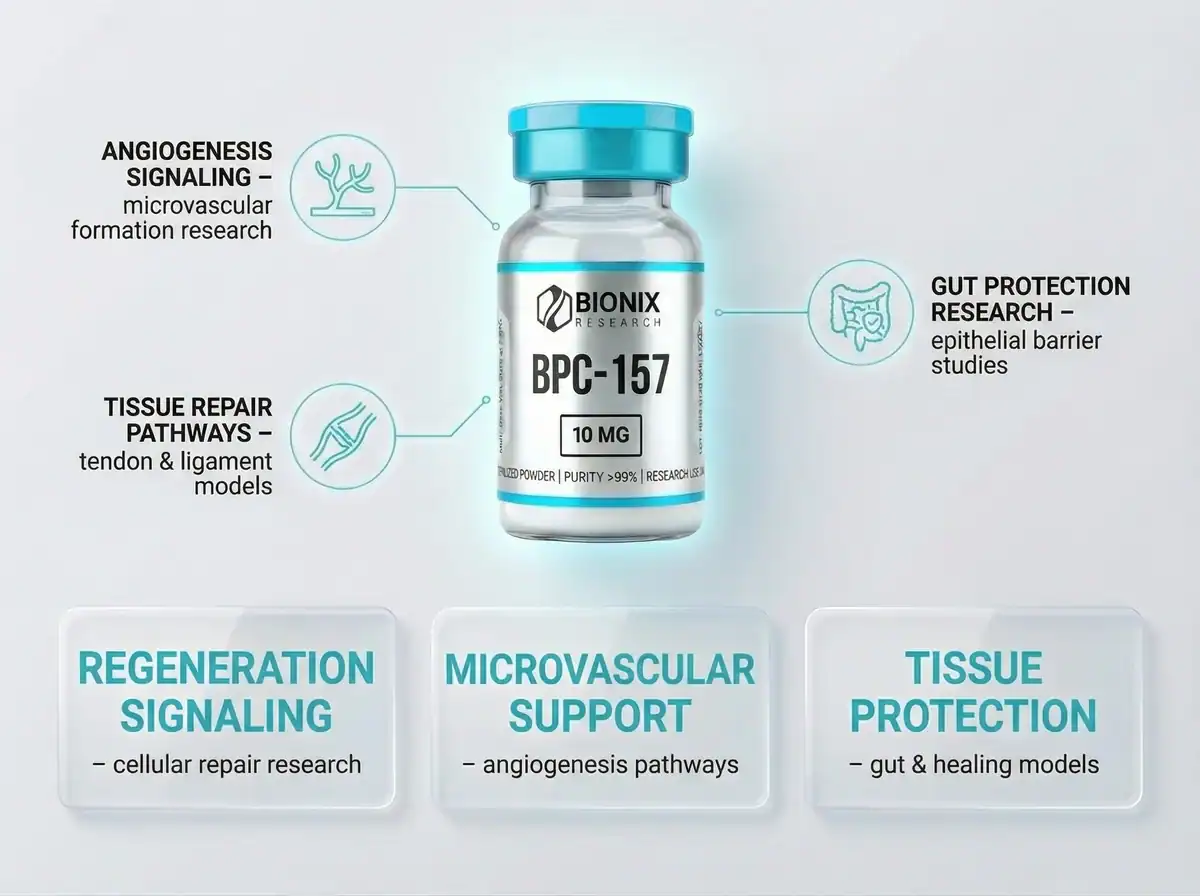
BPC-157: The Gastric Peptide in Regenerative Medicine Research
A comprehensive research guide to the pentadecapeptide derived from human gastric proteins, investigated for tissue repair and regeneration.
BPC-157: Key Facts at a Glance
| Aspect | Details |
|---|---|
| What is BPC-157? | A synthetic 15-amino acid peptide fragment derived from a protective protein in human gastric juice |
| Core Function | Promotes angiogenesis (new blood vessel formation), activates cellular migration, modulates nitric oxide system |
| Research Areas | Tendon/ligament healing, gastrointestinal protection, wound repair, musculoskeletal regeneration |
| Classification | Synthetic gastric pentadecapeptide |
| Unique Feature | Exceptional stability in acidic environments—>90% intact after 5 hours in gastric acid (pH 1-2) |
| Research Stage | Primarily preclinical; limited human data (1 clinical study + 2025 pilot) |
Research Use Only (RUO) Disclaimer:
All substances and information described in this article are intended exclusively for research and educational purposes. They are not intended for diagnosis, treatment, cure, or prevention of any disease. Use outside controlled scientific studies is not intended. Always consult medical professionals for health-related questions.
The peptide revolution is happening now
Unlock the Advantage: Biological Optimization & Longevity Research Peptides

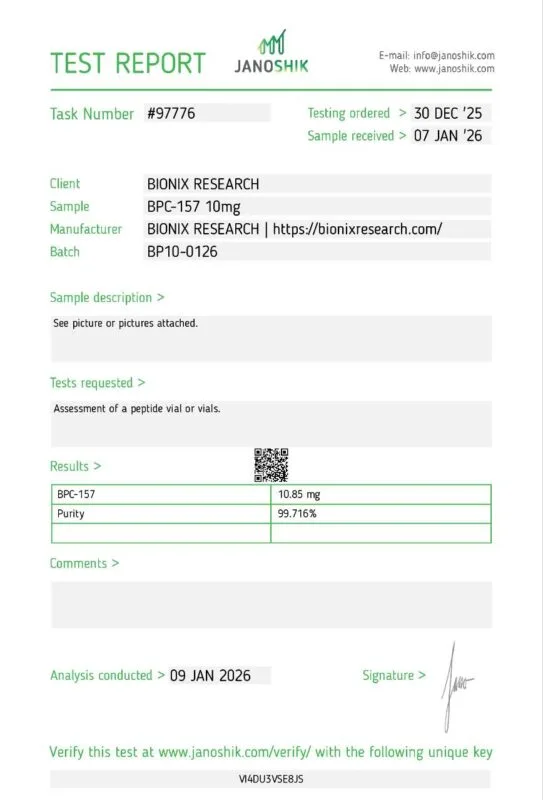
BPC-157
24,90 € Vialincl. VAT
plus Shipping Costs
Delivery time: 1–6 Working Days
A Molecular "Foreman" for Cellular Repair
The human stomach operates at pH 1-2—an environment so acidic it dissolves most proteins within minutes. Yet the stomach lining survives. The reason: specialized protective proteins that shield the mucosa from its own acid.
BPC-157 is a synthetic fragment of one such protein. Its name—Body Protection Compound—reflects its origin as a cytoprotective molecule. What makes it compelling for regenerative research is that this protective function appears to extend beyond the gut: BPC-157 activates multiple healing pathways involving blood vessel formation, cellular migration, and tissue repair.
A 2025 systematic review analyzing 36 studies (1993-2024) confirms BPC-157's preclinical effects on growth factor expression, angiogenesis, and inflammatory cytokine reduction across musculoskeletal injury models. However, human data remains extremely limited.
In this article, we examine:
- What BPC-157 is and its molecular structure
- The multi-pathway mechanism: VEGFR2, FAK-paxillin, and NO modulation
- Current research across tendons, gut, wounds, and bone
- 2024-2025 research updates including the first IV human pilot
- Safety considerations and theoretical concerns
- Open questions and research gaps
What is BPC-157?
Chemical Identity
BPC-157 stands for Body Protection Compound 157—a name referencing its origin as a cytoprotective molecule isolated from gastric proteins.
It is a pentadecapeptide—a chain of exactly 15 amino acids. The sequence is:
Gly-Glu-Pro-Pro-Pro-Gly-Lys-Pro-Ala-Asp-Asp-Ala-Gly-Leu-Val
Or in single-letter code: GEPPPGKPADDAGLV
| Property | Value |
|---|---|
| Molecular Formula | C₆₂H₉₈N₁₆O₂₂ |
| Molecular Weight | 1,419.53 g/mol |
| Sequence | Gly-Glu-Pro-Pro-Pro-Gly-Lys-Pro-Ala-Asp-Asp-Ala-Gly-Leu-Val |
| CAS Number | 137525-51-0 |
| Form | Lyophilized powder |
| Purity | ≥98% (HPLC-verified) |
| Storage | -20°C long-term |
| Half-life | <30 minutes (plasma) |
💡 Key Insight: BPC-157's molecular weight (1,419 Da) is small enough to cross cell membranes, yet large enough to interact with specific receptor systems—an ideal range for bioactive peptides.
Origin: From Gastric Juice to Laboratory
BPC-157 is a synthetic fragment of a larger protein naturally present in human gastric juice. The stomach represents one of the most hostile environments in the body—with a pH of 1-2, gastric acid denatures most proteins within seconds to minutes.
The existence of protective proteins in this environment is not accidental: they must shield the gastric mucosa from the stomach's own acid. BPC-157 represents the active fragment of one such protective molecule.
The Isolation Process:
| Stage | Description |
|---|---|
| Natural source | Protective protein in human gastric juice |
| Isolation | Active peptide sequence identified |
| Synthesis | 15-amino acid fragment produced synthetically |
| Optimization | Salt forms developed (Acetate, Arginate) |
This synthetic approach ensures:
- Consistent purity and composition
- Elimination of biological contaminants
- Standardized research material
The Defining Property: Acid Stability
Most peptides are extremely fragile. They degrade in gastric acid within seconds. BPC-157 is different.
Stability Data:
| Condition | Result | Significance |
|---|---|---|
| Gastric acid (pH 1-2), 5 hours | >90% intact | Exceptional for peptides |
| Plasma half-life | <30 minutes | Rapid clearance |
| Detection window (urine) | ~4 days | Relevant for sports testing |
This acid stability is why BPC-157 is uniquely interesting as an oral research compound—most peptides require injection to avoid gastric degradation.
Analogy: Think of BPC-157 as a molecular "Swiss Army knife"—equipped with multiple tools (mechanisms) that deploy depending on the situation. It can activate blood vessel growth, protect cells from stress, or guide repair cells to injury sites.
How Does BPC-157 Work?
BPC-157 does not operate through a single pathway. Research indicates it functions as a "biological switch," rapidly activating gene expression cascades that sustain healing processes independently. The primary mechanisms involve angiogenesis, cellular migration, and nitric oxide regulation.
Mechanism 1: Angiogenesis Activation (VEGFR2 Pathway)
Trigger: Tissue hypoxia (oxygen deprivation) or injury
Action: BPC-157 activates VEGFR2 (Vascular Endothelial Growth Factor Receptor 2)—a protein on the surface of endothelial cells that controls blood vessel formation.
The Pathway:
Tissue injury / Hypoxia
    ↓
BPC-157 administration
    ↓
VEGFR2 activation on endothelial cells
    ↓
Endothelial cell migration and proliferation
    ↓
Angiogenesis (sprouting of new capillaries)
    ↓
Improved oxygen and nutrient delivery to damaged tissue
    ↓
Accelerated healing
Supporting Pathways:
- AKT phosphorylation — Cell survival signaling
- eNOS activation — Nitric oxide production for vasodilation
- ERK1/2 signaling — Cell proliferation
Analogy: A remote village is struck by disaster. BPC-157 acts as the engineer who immediately builds an express highway directly to the disaster zone—rescue teams (oxygen, nutrients, repair cells) arrive faster.
Mechanism 2: Cellular Migration (FAK-Paxillin Pathway)
Trigger: Mechanical tissue defect (e.g., tendon rupture, wound)
Action: BPC-157 activates the FAK-paxillin signaling pathway (Focal Adhesion Kinase).
FAK is a protein that helps cells anchor to their environment and move purposefully. When BPC-157 activates FAK, fibroblasts—the cells that produce collagen and build connective tissue—are guided toward the injury site.
The Pathway:
Tissue damage detected
    ↓
BPC-157 administration
    ↓
FAK gene expression upregulated
    ↓
Paxillin pathway activation
    ↓
Enhanced cellular adhesion, migration, proliferation, survival
    ↓
Fibroblasts migrate to injury site
    ↓
Collagen synthesis and tissue rebuilding
2024-2025 Research Update:
A 2025 systematic review confirmed that BPC-157 increases FAK and paxillin gene expression specifically in tendon fibroblasts, providing mechanistic validation for observed tendon healing effects in preclinical models.
Analogy: The signal horn that calls all workers to the construction site—and also shows them the fastest route.
Mechanism 3: Nitric Oxide Modulation (NO System)
Trigger: Blood pressure fluctuations, inflammation, vascular stress
Action: BPC-157 regulates the release of nitric oxide (NO)—a gas that relaxes blood vessels.
The NO system requires precise balance:
- Too much NO → Inflammation, tissue damage
- Too little NO → Vasoconstriction, poor blood flow
BPC-157 appears to modulate this system toward homeostasis through eNOS (endothelial nitric oxide synthase) regulation.
The Pathway:
Vascular stress / Inflammation
    ↓
BPC-157 administration
    ↓
eNOS modulation
    ↓
Nitric oxide balance restored
    ↓
Vasodilation normalized
    ↓
Reduced oxidative stress, stabilized blood flow
Analogy: A thermostat that perfectly balances system pressure—neither too high nor too low.
Mechanism 4: Growth Factor Enhancement (2024-2025 Update)
Recent research identifies additional pathways:
| Pathway | Observed Effect | Tissue Type |
|---|---|---|
| Growth hormone receptor expression | Increased | Musculoskeletal |
| Akt1 activation | Cell survival signaling | Multiple |
| KRAS expression | Cell proliferation | Wound healing |
| Inflammatory cytokine reduction | Anti-inflammatory | Multiple |
💡 Key Insight: BPC-157 appears to act as a "master switch" that rapidly activates gene expression cascades, triggering healing processes that then continue independently.
Mechanism Overview
| Signaling Pathway | What Happens | Result |
|---|---|---|
| VEGFR2 Activation | New blood vessels sprout from existing capillaries | Improved oxygen and nutrient supply |
| FAK-Paxillin | Fibroblasts migrate to injury site | Faster collagen synthesis |
| NO Modulation | Nitric oxide balance regulated | Vascular protection, reduced stress |
| Growth Factor Enhancement | GH receptor, Akt1, KRAS upregulation | Enhanced cell survival and proliferation |
| Cytokine Modulation | Inflammatory markers reduced | Anti-inflammatory environment |
Research Areas
BPC-157 research focuses on domains where regeneration and protection are central. The peptide is often studied alongside other regenerative molecules like TB-500 (Thymosin Beta-4), which operates through complementary mechanisms.
1. Tendon and Ligament Healing
The most extensively studied application of BPC-157 involves musculoskeletal repair, particularly tendons and ligaments.
Observed Effects in Preclinical Models:
| Parameter | Observation | Model |
|---|---|---|
| Collagen Type I deposition | Accelerated | Rat Achilles tendon |
| Biomechanical strength | Faster return to baseline | Multiple tendon models |
| Regeneration time | Significantly reduced | Tendon rupture models |
| FAK-paxillin expression | Increased in tendon fibroblasts | In vitro/in vivo |
2025 Systematic Review Findings:
A comprehensive review of 36 studies (1993-2024) in orthopaedic sports medicine confirmed:
- BPC-157 promotes healing by boosting growth factors
- Enhanced cell growth and angiogenesis observed
- Inflammatory cytokine reduction documented
- Effects demonstrated across tendons, ligaments, muscles, and fractures
Limited Human Data:
One clinical study reported relief in 7 of 12 patients with chronic knee pain (>6 months duration) after a single intra-articular injection. However, this was a small, uncontrolled study.
2. Gastrointestinal Tract
Given BPC-157's origin in gastric proteins, its effects on the digestive system are extensively studied.
Observed Effects:
| Condition | Observation | Model |
|---|---|---|
| Gastric ulcers | Accelerated healing | Rat models |
| NSAID-induced damage | Protective effect | Multiple models |
| Intestinal barrier | Enhanced integrity | In vitro/in vivo |
| Mucosal protection | Cytoprotective | Gastric models |
Gut-Brain Axis:
Research indicates BPC-157 may modulate serotonergic and dopaminergic systems via the gut-brain axis, though mechanisms remain under investigation.
Research Connection: This gastrointestinal focus distinguishes BPC-157 from peptides like MOTS-c, which primarily target metabolic pathways.
3. Wound Healing and Skin
BPC-157's angiogenesis-promoting properties make it relevant for wound repair research.
Observed Effects:
- Accelerated wound closure in skin models
- Enhanced granulation tissue formation
- Reduced scar formation (limited data)
- Improved vascularization of wound bed
Mechanistic Basis:
- VEGFR2-mediated angiogenesis
- ERK1/2 signaling for cell proliferation
- FAK-paxillin pathway for fibroblast migration
4. Bone Healing
Emerging research examines BPC-157's effects on bone regeneration.
Observed Effects:
| Parameter | Observation | Model |
|---|---|---|
| Synergy with osteogenic factors | Enhanced healing | Segmental bone defects |
| Fracture healing rate | Improved | Animal models |
| Bone-tendon junction | Enhanced repair | Enthesis models |
5. Neuroprotection (Emerging)
Limited research suggests potential CNS effects:
- Dopaminergic system modulation
- Serotonergic pathway interaction
- Potential in neurodegenerative models (very early stage)
Evidence Snapshot
| Research Area | Investigated Effect | Research Stage | Key Finding |
|---|---|---|---|
| Tendons/Ligaments | Collagen deposition, biomechanical strength | Preclinical (36 studies reviewed) | Accelerated healing, enhanced growth factors |
| Gastrointestinal | Ulcer healing, barrier protection | Preclinical | Cytoprotective, mucosal repair |
| Wound Healing | Angiogenesis, scar reduction | Preclinical | Enhanced vascularization |
| Bone | Synergistic healing with growth factors | Preclinical | Improved regeneration |
| Human (Knee Pain) | Pain relief | Clinical (n=12, uncontrolled) | 7/12 patients reported relief |
| Human (IV Safety) | Tolerability | Pilot (n=2, 2025) | Well-tolerated, no adverse events |
Clinical Development Status
Human Data Summary (As of 2025)
| Study Type | Sample Size | Finding | Limitation |
|---|---|---|---|
| Knee pain trial | n=12 | 7/12 reported relief after single injection | Uncontrolled, no placebo |
| 2025 IV pilot | n=2 | Well-tolerated, no adverse events, plasma baseline return in 24h | Extremely small sample |
| Phase I trial (2015) | n=42 | Unpublished/cancelled | No public data |
Research Volume
| Category | Number of Studies |
|---|---|
| Total studies (1993-2024) | 36 |
| Preclinical | 35 |
| Clinical | 1 |
⚠️ Critical Gap: The ratio of 35 preclinical to 1 clinical study highlights the fundamental limitation in BPC-157 research—extensive animal data but minimal human validation.
Forms of BPC-157
Two primary chemical forms are distinguished in scientific research, differing in stability characteristics.
Arginate vs. Acetate
| Form | Description | Primary Use |
|---|---|---|
| BPC-157 Acetate | Classical salt form; effective but less acid-stable | Systemic research, injection models |
| BPC-157 Arginate | Bound to L-Arginine ("Stable BPC"); enhanced acid stability | Oral research, gastrointestinal models |
Arginate Development:
The Arginate form was developed to optimize BPC-157's natural acid stability for oral administration research. The L-Arginine binding provides:
- Enhanced protection in gastric environment
- Potentially improved bioavailability (under investigation)
- Suitability for gut-focused research protocols
Note: Comparative human data between forms does not exist. Selection is based on research application and route of administration.
Safety Considerations & Limitations
What We Know
BPC-157 is derived from a naturally occurring gastric protein. Preclinical studies spanning over 30 years report no acute adverse events across multiple organ systems. However, human safety data is extremely limited.
Current Safety Data
| Aspect | Status |
|---|---|
| Preclinical safety (<6 weeks) | No adverse events across organ systems |
| Human safety (2025 pilot, n=2) | Well-tolerated, no adverse events |
| Plasma half-life | <30 minutes |
| Metabolism | Hepatic (liver) |
| Excretion | Renal (urine); detectable ~4 days |
| Long-term safety | Unknown |
| Drug interactions | Unstudied |
Theoretical Concerns
Cancer Risk Consideration:
The FAK-paxillin pathway that BPC-157 activates is involved in cell migration. This same pathway can theoretically be exploited by cancer cells for metastasis.
| Concern | Mechanism | Current Evidence |
|---|---|---|
| Pro-migratory effect | FAK-paxillin activation enhances cell migration | Theoretical concern |
| Angiogenesis in tumors | VEGFR2 activation could theoretically support tumor vascularization | No direct evidence |
| Preclinical cancer studies | Limited investigation | Insufficient data |
⚠️ Important: No studies have demonstrated that BPC-157 promotes cancer. However, individuals with active malignancies or history of cancer should exercise caution and consult physicians. The theoretical mechanism warrants further investigation.
Regulatory Status
| Jurisdiction | Status |
|---|---|
| FDA (USA) | Not approved; Research Use Only |
| EMA (EU) | Not approved |
| WADA | Banned in sports |
| Commercial availability | RUO only; unregulated sources raise contamination concerns |
Open Questions in BPC-157 Research
1. Human Translation
Almost all data comes from animal models. The transferability to humans remains unclear. Does the robust preclinical effect translate to clinical benefit?
2. Optimal Dosing
Studies use doses ranging from 10 µg/kg to 10 mg/kg—a 1,000-fold range with no clear guideline. No standardized human dosing protocol exists.
3. Long-Term Effects
Most studies run weeks to a few months. Effects of prolonged use over years are unknown. Does benefit persist? Are there cumulative risks?
4. Cancer Safety
The theoretical concern about pro-migratory FAK-paxillin activation requires direct investigation. Is BPC-157 safe for individuals with pre-malignant conditions?
5. Form Comparison
No comparative human data exists between Acetate and Arginate forms. Is one superior for specific applications?
6. Mechanism Specificity
BPC-157 activates multiple pathways. Which are primary vs. secondary? Can effects be isolated or predicted?
Preclinical Research Protocols
The following information is provided for research reference only. These are protocols from published studies—not recommendations.
| Study Type | Model | Protocol Range | Reference |
|---|---|---|---|
| Tendon healing | Rat | 10 µg/kg - 10 mg/kg | Multiple studies |
| Gastric protection | Rat | Various doses | Sikiric et al. |
| IV administration | Human pilot | Not disclosed | Lee & Burgess, 2025 |
Note: The 1,000-fold dose range across studies reflects the lack of standardization. Animal dosing does not translate directly to humans.
Research Context & Limitations
The observations described in this article come from preclinical models and in vitro studies. Clinical studies on human efficacy and safety are extremely limited. All findings must be interpreted within the experimental research context.
| Evidence Level | Status |
|---|---|
| In vitro (cell studies) | Extensive |
| Preclinical (animal models) | Strong foundation (35 studies) |
| Human pilot data | Minimal (n=2 for safety, n=12 for efficacy) |
| Human RCTs | None |
| Long-term safety data | Not available |
BPC-157 represents a compelling molecule in regenerative medicine research. Its multi-pathway mechanism and exceptional acid stability make it unique among bioactive peptides. However, the scientific foundation requires dramatic expansion—particularly through controlled human trials.
The 35:1 preclinical-to-clinical study ratio is the defining limitation of current BPC-157 research.
Summary
BPC-157 is a synthetic pentadecapeptide derived from a protective protein in human gastric juice. It activates multiple signaling pathways—from angiogenesis (VEGFR2) to cellular migration (FAK-paxillin) to nitric oxide regulation.
| Aspect | Summary |
|---|---|
| Identity | Synthetic 15-amino acid peptide (GEPPPGKPADDAGLV), 1,419.53 Da |
| Origin | Fragment of human gastric protective protein |
| Primary Mechanisms | VEGFR2-mediated angiogenesis; FAK-paxillin cellular migration; NO modulation |
| Key Property | >90% stability in gastric acid after 5 hours |
| Research Focus | Tendon/ligament healing, gastrointestinal protection, wound repair |
| Research Stage | 35 preclinical studies; 1 clinical study; 2025 human pilot (n=2) |
| Safety | No adverse events in preclinical or limited human data; theoretical cancer concern (FAK pathway); long-term unknown |
| Limitations | Minimal human data; no standardized dosing; no RCTs |
The data are preclinical but promising. The exceptional stability and multi-pathway mechanism make BPC-157 a unique research compound. Controlled human trials are essential before any conclusions about clinical utility.
The peptide revolution is happening now
Unlock the Advantage: Biological Optimization & Longevity Research Peptides
BPC-157
24,90 € Vialincl. VAT
plus Shipping Costs
Delivery time: 1–6 Working Days
Frequently Asked Questions (FAQ)
What is BPC-157?
BPC-157 (Body Protection Compound 157) is a synthetic peptide consisting of 15 amino acids. It is a fragment of a protective protein naturally found in human gastric juice. It is investigated in research for its regenerative properties across multiple tissue types.
Is BPC-157 a steroid?
No. BPC-157 is a peptide—a chain of amino acids. Steroids are a completely different molecular class (lipids with ring structures). BPC-157 does not work through steroid receptors and has no hormonal effect in the classical sense.
Where does the name "Body Protection Compound" come from?
The name refers to the originally observed protective effect in the gastrointestinal tract. The peptide was isolated from a protein that protects the gastric mucosa from its own acid. "Body Protection" describes this cytoprotective (cell-protecting) function.
How stable is BPC-157?
Exceptionally stable for a peptide. While most peptides degrade in gastric acid (pH 1-2) within minutes, BPC-157 remains >90% intact after 5 hours. This stability is particularly notable for the L-Arginate form ("Stable BPC").
What areas are being researched with BPC-157?
The main research areas are tendon and ligament healing, gastrointestinal health (ulcers, barrier protection), wound healing, and bone regeneration. A 2025 systematic review analyzed 36 studies across these domains. All research is primarily preclinical—only one clinical study and one small human pilot exist. </details>
Are there human clinical trials for BPC-157?
Very limited. As of 2025, only one clinical study (n=12 for knee pain) and one pilot safety study (n=2, IV administration) have been published. A 2015 Phase I trial with 42 volunteers was cancelled or remains unpublished. No large-scale randomized controlled trials exist.
What is the difference between BPC-157 Acetate and Arginate?
BPC-157 Acetate is the classical salt form, effective but less acid-stable. BPC-157 Arginate is bound to L-Arginine for enhanced stability in acidic environments, making it more suitable for oral research applications. No comparative human data exists between forms.
Is BPC-157 safe?
Preclinical studies over 30+ years report no adverse events. A 2025 human pilot (n=2) found IV administration well-tolerated. However, long-term safety is unknown, and a theoretical concern exists regarding the FAK-paxillin pathway potentially aiding cancer cell migration. Individuals with active malignancies should exercise caution.
Is BPC-157 legal?
BPC-157 is not approved as a pharmaceutical drug in the US, EU, or most countries. It is available for Research Use Only (RUO). It is banned by WADA for use in sports. Commercial products from unregulated sources may pose contamination risks.
How does BPC-157 compare to TB-500?
Both peptides are studied for regenerative properties but work through different mechanisms. BPC-157 primarily activates VEGFR2 (angiogenesis) and FAK-paxillin (cell migration). TB-500 (Thymosin Beta-4) works through actin sequestration and different growth factor pathways. Some research examines them in combination.
Glossary
| Term | Explanation |
|---|---|
| Amino Acid | Building block of proteins and peptides—20 different types form all proteins in the body |
| Angiogenesis | Formation of new blood vessels from existing capillaries |
| Cytoprotective | Cell-protecting; shielding cells from damage |
| eNOS | Endothelial nitric oxide synthase—enzyme producing NO in blood vessels |
| FAK | Focal Adhesion Kinase—protein controlling cell migration and adhesion |
| Fibroblast | Cell that produces collagen and builds connective tissue |
| NO | Nitric oxide—gas that relaxes blood vessels |
| Paxillin | Adaptor protein working with FAK in cell migration signaling |
| Pentadecapeptide | Peptide consisting of exactly 15 amino acids |
| Peptide | Short chain of amino acids (typically 2-50) |
| Preclinical | Research phase before human testing (cell culture, animal models) |
| RUO | Research Use Only—approved only for scientific research |
| VEGFR2 | Vascular Endothelial Growth Factor Receptor 2—triggers angiogenesis |
References
Chang CH, et al. (2011). "The promoting effect of pentadecapeptide BPC 157 on tendon healing." J Appl Physiol. PMID: 21071640
Sikiric P, et al. (2018). "Stable gastric pentadecapeptide BPC 157, novel therapy in gastrointestinal tract." Curr Pharm Des. PMID: 29879871
Sikiric P, et al. (1999). "The influence of a novel pentadecapeptide, BPC 157, on N(G)-nitro-L-arginine methylester and L-arginine effects on stomach mucosa integrity and blood pressure." Eur J Pharmacol. PMID: 10030561
"Emerging Use of BPC-157 in Orthopaedic Sports Medicine." SAGE Journals, 2025. PMC12313605
"Regeneration or Risk? A Narrative Review of BPC-157." PMC, 2025. PMC12446177
Lee & Burgess (2025). IV BPC-157 pilot study in healthy adults.
Sikiric P, et al. (Multiple publications 1990-2024). St. Petersburg and Zagreb research groups.
Research Use Only (RUO) Disclaimer: All substances and information described in this article are intended exclusively for research and educational purposes. They are not intended for diagnosis, treatment, cure, or prevention of any disease. Use outside controlled scientific studies is not intended. Always consult medical professionals for health-related questions.
Disclaimer: The information provided on this blog is for general information and educational purposes only. It does not constitute professional advice (e.g., medical advice). Content relating to research results, studies, or scientific findings reflects the status at the time of publication. As research is constantly evolving, no guarantee can be given for the timeliness, accuracy, or completeness of the cited data and conclusions. Use of the content is at your own risk.

